
Contact

Workforce requirements for net zero: transport and construction
Scotland’s transition to net zero will reshape the workforce and the skills needed across the transport and construction sectors.
This report looks at how these changes could unfold between 2026 and 2045. It focuses on activities that will help reduce emissions, including renewable energy, improving the energy efficiency of existing buildings, and the move to electric vehicles.
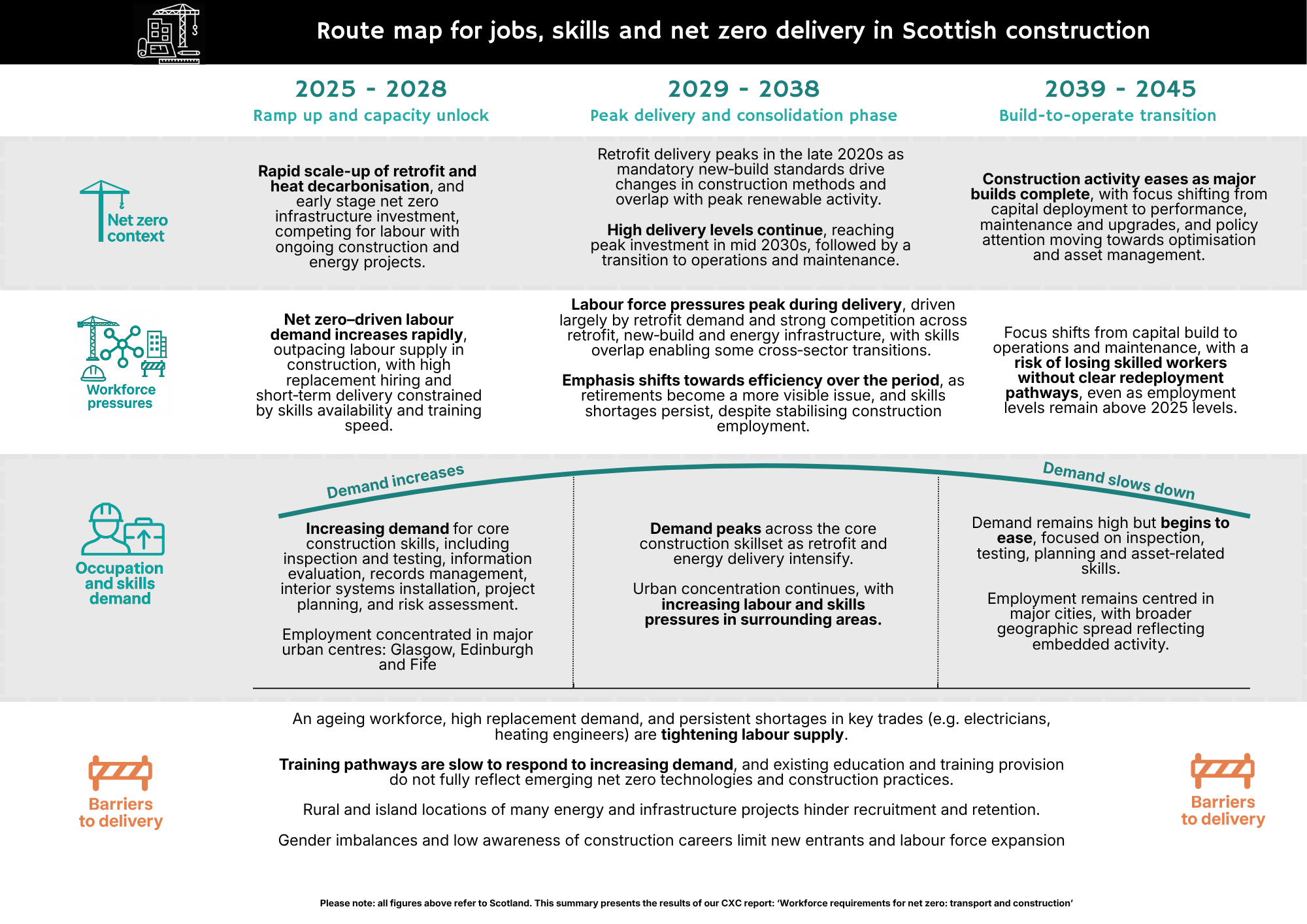
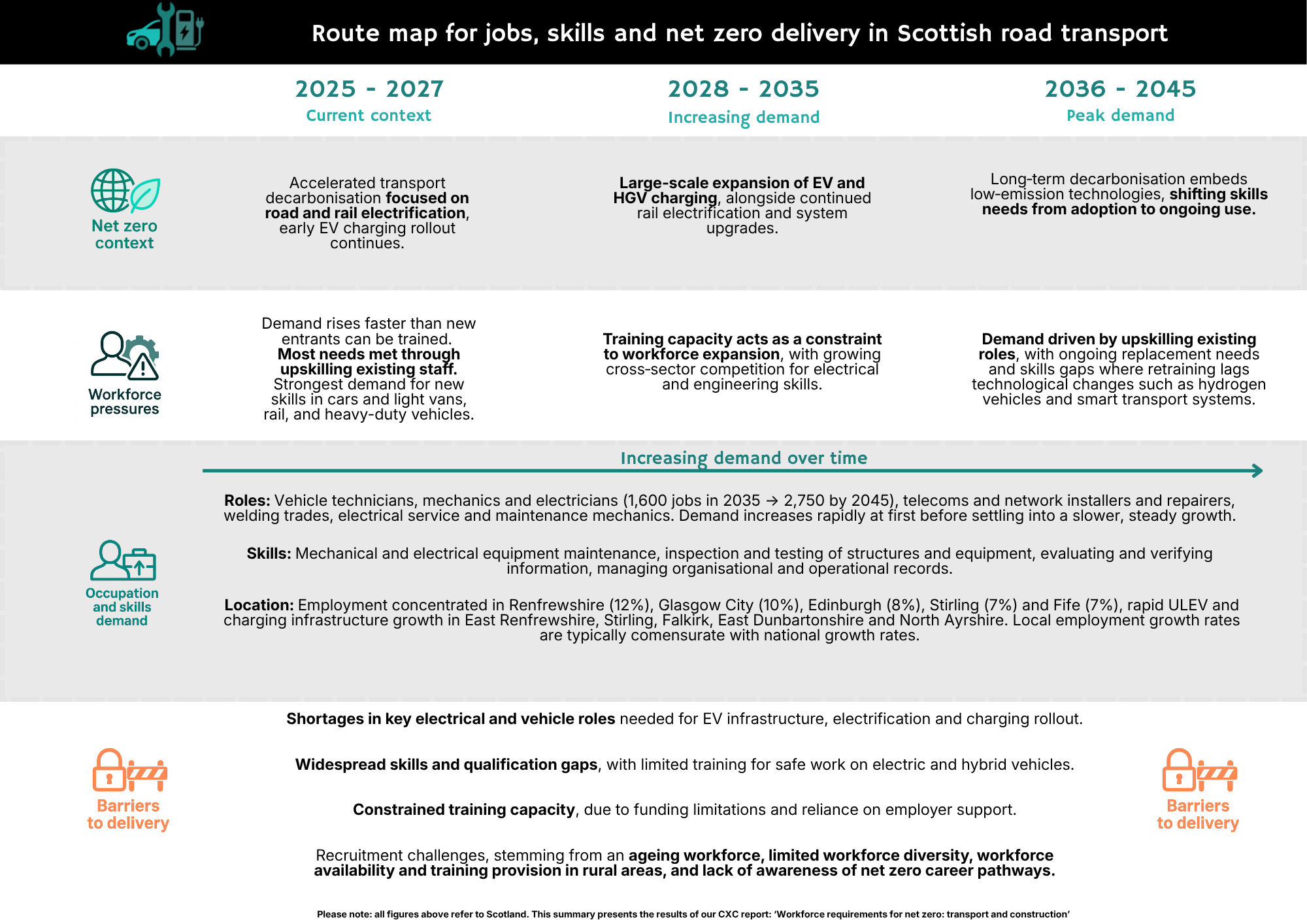
Route maps for the construction sector and transport sector illustrate the expected workforce and skills needs at different stages of the transition.
Key findings
- Transport employment: Employment in vehicle and equipment repair and maintenance is expected to decline slightly by 2045. The additional employment needs associated with net-zero grows from around 200 jobs in 2026 to 2,800 additional jobs by 2045. This reflects the projected growth in Scotland’s electric car fleet, from around 122,000 in 2025 to nearly 3 million by 2045.
- Construction employment: Overall construction employment is expected to grow modestly. Additional employment needs associated with net zero rises from 2,000 jobs in 2026 to around 13,800 additional jobs by 2035. The rollout of technologies such as air source heat pumps will increase demand for workers in renewable energy installation and building retrofit, with installations projected to rise from around 7,000 in 2025 to 1.7 million by 2045. Training will also need to expand to meet demand for specialist construction skills.
- Emerging skills: New technical skills will be needed as electric, renewable energy and digital technologies become more widely used. Workers will also need to adapt their existing skills, with reskilling helping those with petrol and diesel engine expertise move into EV-related roles.
- Moving between sectors: Many technical and practical skills are transferable between transport, construction and other sectors, creating opportunities for workers to move between industries as demand changes. However, sector-specific qualifications and experience may limit how quickly they can transition, making accessible training and clear routes into new roles important.
- Geographical variation: Net zero-related employment in transport and construction is likely to remain concentrated in Scotland’s main urban and industrial regions, including Glasgow, Edinburgh and Aberdeen. These areas already have a large share of the workforce needed to support the transition.
The report concludes that coordinated workforce planning across sectors will be needed to ensure Scotland has the skills required for the net zero transition. Policy priorities include expanding training, supporting upskilling and reskilling, keeping training aligned with new technologies, and making it easier for workers to move between sectors.
If you require the report in an alternative format, such as a Word document, please contact info@climatexchange.org.uk or 0131 651 4783.
Page cover photo by Jeriden Villegas on Unsplash.