
Contact

Impact case study: Identifying and understanding emissions-reduction actions for Scottish agriculture
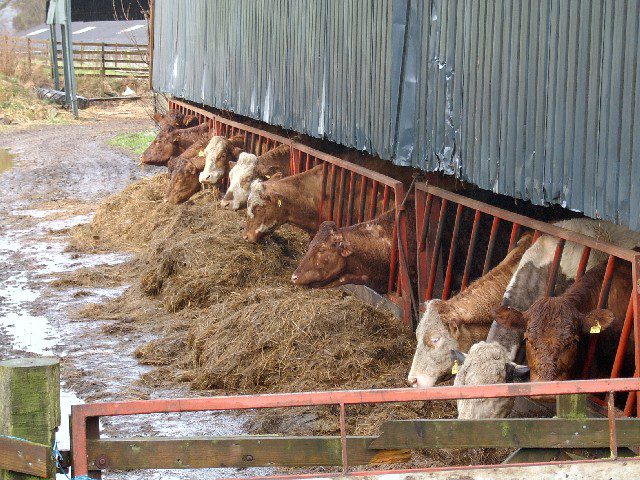
Agriculture accounts for 19% of Scottish greenhouse gas (GHG) emissions and is the third largest emitting sector. Reducing these emissions is critical. ClimateXChange designed and coordinated a programme of research and knowledge exchange that has transformed how the Scottish Government, farmers and the wider agriculture sector have identified ways to reduce emissions on the path to net zero by 2045.
Through a series of influential reports, our work has driven innovative policy development and effective and practical engagement with the sector, providing a solid foundation for agricultural climate mitigation in Scotland. It has enabled and supported collaboration across the agricultural sector with a focus on the feasibility of a wide range of different emission reduction measures.
Accessible and useable research
Over the last two decades Scottish Government’s Strategic Research Programme has developed a robust and highly respected evidence base for emissions reduction in agriculture, measuring GHG reduction interventions by their cost-effectiveness (known as a marginal abatement cost curve (MACC)).
While the MACC has been published in peer-reviewed journals and expert reports (including for the UK Climate Change Committee), it is highly technical analysis that is not easily accessible to non-technical policy and industry actors.
Working closely with Scottish Government’s Rural and Environment Science and Analytical Services (RESAS), ClimateXChange designed and coordinated a series of research projects that would provide accessible and useable research insights from the MACC for policymakers.
Starting in 2021, our Marginal abatement cost curve for Scottish agriculture report (MACC report) set out an accessible assessment of the mitigation potential. It examined the difference between the emissions arising from agricultural activities before and after mitigation measures are implemented and the resulting GHG savings. The report updated estimates of practical cost-effectiveness for a selection of agricultural mitigation options and provided previously unavailable detail on specific measures that have the potential to reduce emissions from the sector.
A second research project in 2023 – A scenario-based approach to emissions reduction targets in Scottish agriculture (Scenarios report) – examined those options in more detail while also drawing out challenges between UK-based methodologies and Scotland-specific data.
CXC has continued to work on detailed research reports – covering specifics from reducing methane emissions in livestock to decarbonising mobile machinery – demonstrating the potential to drill into the detail of each measure.
Engaging with farmers and the reality on farms
Farmer-led groups were established by the Scottish Government in 2020 to develop advice and proposals for the Scottish Government on how to cut emissions and tackle climate change. Our reports provided clear and accessible interpretations of complex analysis. This ensured that these groups could make direct, time-critical use of information that would otherwise have been inaccessible to all but highly experienced economists.
“The ClimateXChange work on the MACC for agriculture and related scenarios was essential in providing the baseline evidence we needed to assess the mitigation potential for emission reductions on farm. The combination of access to serious research expertise and the clear communication of the findings meant we could assess the measures with a wider range of internal and external stakeholders who are not expert economists.”
Macroeconomist, Office of the Chief Economic Advisor, Scottish Government
By presenting individual options in detail and with a wide audience – especially farmers – in mind, our MACC report supported subsequent discussions on practical actions that could realistically be applied on farm. As well as being cited in each of the farmer-led group sector reports and their supporting analysis, our report directly informed the development of a new approach to agricultural support payments.
Supporting the Climate Change Plan and beyond
The MACC and Scenarios reports have proved foundational for the agricultural emissions reductions proposed in the Climate Change Plan. Policymakers took measures outlined in the reports to the farmer-led groups as the starting point for their deliberations, and the groups’ reports in turn reference the CXC evidence. This feedback loop between research, stakeholder engagement, and policymaking has reinforced the credibility and uptake of the findings.
The Climate Change Plan 2026-2040 cites the Scenarios report as the basis for estimating mitigation potential across the Agricultural Reform Programme. Drawing on input from farmer-led groups, stakeholders, and academic analyses to outline practical and technically feasible pathways for emissions reduction across Scotland’s farming systems, its insights fed directly into identifying which measures should be supported within the Programme. This has directly informed the emissions calculation in the Climate Change Plan and what emissions reduction measures were selected for support based on their reduction potential and cost.
“These reports were critical in informing the estimates of abatement that went into the Climate Change Plan. They are our most important sources of estimates, and it would have been impossible to prepare our contribution to the plans without them. In addition to the reports themselves we have hugely valued regular contact with the authors to talk things through and ensure our interpretations are up to date.”
Senior economist, RESAS
Potential measures to reduce emissions from agricultural machinery were identified in both the MACC report, the Scenarios report and specific research. These are cited in the Climate Change Plan as key evidence for the policy package to address agricultural combustion.
Scottish Government colleagues, including the Cabinet Secretary for Environment, Climate Change and Land Reform, as well as farmers and academics have recognised the significant impact of CXC’s suite of research on agriculture’s pathway to net zero. Our work has been referenced extensively in Scottish Government policy documents and supporting published evidence – some of which are linked to below.
Responding to continuing challenges
Despite significant efforts across the sector, agricultural emissions remain largely unchanged. As other sectors cut their emissions this means agricultures share of overall emissions is increasing.
Agriculture faces key challenges in reducing greenhouse gas emissions through the combination of biological processes in the production of a secure food supply, the lack of market-ready technologies and the capital investment required for change.
Our work is continuing to drive policy development, sector engagement, innovation and further research, compounding our impact for years to come. Our research findings and approach to co-developing and co-delivering useable research outputs will continue to have impact for the lifetime of the Climate Change Plan and beyond.
Related projects
Breeding for reduced methane emissions in livestock
Increasing low-carbon energy in Scottish agriculture through a whole systems approach
Decarbonisation of mobile agricultural machinery – an evidence review
Nutritional strategies to reduce enteric methane emissions
Related policy documents
Agricultural reform – list of measures
Pig Sector Farmer-Led Climate Change Group: climate change and greenhouse gas evidence
Arable Farmer-led Group: climate change evidence
Hill, Upland and Crofting Farmer-led Group: climate change evidence
Reducing emissions from agriculture – the role of new farm technologies
Dairy Farmer-led Group: climate change evidence
Greenhouse gas inventory: estimated arable emissions and their mitigation