

Securing Scotland’s soils in a changing climate – technical report
Research completed: June 2026
Note: For an HTML or Word version of the Appendices, please contact: saoirse.docherty@ed.ac.uk
Executive summary
Soils underpin Scotland’s natural capital, providing vital ecosystem services, supporting nature-based solutions and essential for societal wellbeing and Scotland’s economic profitability. However, unlike air, water and biodiversity (which all rely on soils) there is no soil-specific policy in Scotland to support the protection, restoration and enhancement of this vital resource. The consideration of soils is fragmented across various nature-based policies and so overarching governance is limited, making the implementation of sustainable soil management strategies challenging to coordinate.
An initial framework was published by ClimateXChange in 2025 as a ‘Soil Route Map for Scotland’ with preliminary actions for delivering improved soil security across Scottish landscapes and support the delivery of wider nature-based policies in Scotland. It provides six initial, overarching objectives of Lead, Protect, Restore, Enhance, Mobilise and Evidence as a response to address risks to soils and to achieve the vision of ‘thriving soils for Scotland’s communities, economy and environment’ in Scotland’s third National Adaptation Plan.
Key points
The second phase of research explored specific issues under the Protect – Restore – Enhance objectives, with actions that could frame a more sustainable approach to soil management in the following key areas:
- soil sealing and soils in construction
- soil compaction and physical degradation
- chemical and biological soil health
- soils in the private sector
- soil monitoring and metrics
This report presents the underlying research undertaken within this phase to support the design and implementation of a pathway to healthy soils for Scotland.
Glossary/Abbreviations
Carbon-rich soils | Organo-mineral and peat soils are known as carbon-rich soils. A peat soil is defined in Scotland as when soil has an organic layer at the surface which is more than 50cm deep. Organo-mineral soil or peaty soil is soil which has an organic layer at the surface less than 50cm thick and overlies mineral layers (e.g., sand, silt and clay particles). There is also a relatively rare group of soils in Scotland known as humose soils. These have organic rich layers with between 15 and 35% organic matter. These are mineral soils but also considered to be carbon rich. |
Deep peat | Deep Peat is a defined soil type that has at least 1 m of organic horizon. NatureScot use Ramsar Convention’s definition of peatland: “Peatlands are ecosystems with a peat deposit that may currently support vegetation that is peat-forming, may not, or may lack vegetation entirely”. The Soil Survey for Scotland states that peat should have an organic layer or layers that exceed 50 cm deep from the soil surface and an organic matter content of more than 60%. |
Ecosystem services | Ecosystem Services are the direct and indirect contributions ecosystems (known as natural capital) provide for human wellbeing and quality of life. This can be in a practical sense, providing food and water and regulating the climate, as well as cultural aspects such as reducing stress and anxiety. In fact, the vast number of services provided by ecosystems can be categorised into more manageable groups of: provisional; regulating; cultural; and the slightly more ambiguous, supporting services. |
Eutrophication | The gradual increase in the concentration of nutrients (e.g., nitrogen and phosphorus) in aquatic ecosystem. |
Flood resilience | Reduce the intensity and/or frequency of flood events and severity. |
Food security | When all people, at all times, have physical and economic access to sufficient, safe and nutritious food that meets their dietary needs and food preferences for an active and healthy life. |
Nature Networks | A Nature Network is a joined-up system of places important for wild plants and animals, on land and in water. It allows plants, animals, seeds, nutrients and water to move from place to place and enables the natural world to adapt to change, providing plants and animals with places to live, feed and breed. Effectively functioning nature networks will connect existing nature rich areas through habitat corridors, habitat ‘stepping stones’, or habitat restoration areas. |
Net zero | A target of completely negating the amount of greenhouse gases produced by human activity, to be achieved by reducing emissions and implementing methods of absorbing carbon dioxide from the atmosphere. |
Fourier Transform Infrared (FTIR) | FTIR (Fourier Transform Infrared) spectroscopy is an analytical technique used to identify organic, and sometimes inorganic materials by measuring how they absorb infrared light. |
Land Capability for Agriculture (LCA) | Land Capability for Agriculture Classification of land on the basis of its potential productivity and cropping flexibility determined by the extent to which its physical characteristics (soil, climate and relief) impose long term restrictions on its agricultural use. |
Land Capability for Forestry (LCF) | Classification of land on the basis of its potential to grow trees and flexibility for growth and management based on a number of factors including soil, climate and topography. |
LiDAR (Light Detection and Ranging) | The use of Lasers mounted on special aircraft to carry out high resolution 3D mapping to generate to generate high resolution digital surface models. |
Living Lab | User-centred, place-based and transdisciplinary research and innovation ecosystems, which involve land managers, scientists and other relevant partners in systemic research and co-design, testing, monitoring and evaluation of solutions, in real-life settings, to improve their effectiveness for soil health and accelerate adoption. |
Organo-mineral soils | Also known as peaty soil. Soils In Scotland, soils with topsoil organic carbon concentrations greater than 35% and less than 50cm thick. The term should not be confused with organic-mineral which is used to denote a highly organic-rich topsoil. |
Peat | Peat is a defined soil type that has at least 50 cm organic horizon. The Soil Survey for Scotland states that peat should have an organic layer or layers that exceed 50 cm deep from the soil surface and an organic matter content of more than 60%. |
Peatland | Defined by the presence of peat soil or peaty soil types. This means that “peat-forming” vegetation is growing and actively forming peat or it has been grown and formed peat at some point in the past. |
Soil acidification | Soil acidification is the lowering of soil pH due to an accumulation of hydrogen ions. Soils with a pH of less than 5.5 is considered ‘acidic’. |
Soil carbon sequestration | Soils are in constant exchange with the atmosphere, they take in carbon (via photosynthesis, root exudates and the addition of organic material) and release carbon (through gas emissions associated with respiration or indirectly via leaching). Where a net gain in carbon exists, the soils are considered to be ‘sequestering’ carbon. |
Soil classification | Soil classification (also termed soil taxonomy) is the scientific discipline of grouping soils according to similar or comparable soil forming properties and that exhibit a similar sequence of soil horizons. Many countries in the world have national soil classification systems but those of World reference Base and the US Soil Taxonomy are used internationally. |
Soil carbon stock | The mass of carbon stored in the soil organic matter per area |
Soil compaction | Soil compaction is a form of physical degradation in which soil biological activity and soil productivity for agricultural and forest cropping are reduced, resulting in environmental consequences away from the immediate area directly affected. |
Soil contamination | Soil contamination is when soil is polluted, implying the presence of chemicals and materials in soil that have a significant adverse effect on any organisms or soil functions. Soil pollutants include inorganic and organic compounds, some organic wastes and the so-called “chemicals of emerging concern”. |
Soil degradation | Soil degradation is defined as a change in the soil health status resulting in a diminished capacity of the ecosystem to provide goods and services for its beneficiaries. |
Soil enhancement | To improve soil health and resilience beyond its current state and the status quo. |
Soil erosion | The process of soil being gradually damaged and removed by the waves, rain, or wind, or the result of this process. |
Soil function/ functionality | Soil function refers to the six key roles that soil plays in an ecosystem, inc. providing a medium for plant growth, supplying and purifying water, recycling nutrients and organic wastes, serving as a habitat for soil organisms, modifying the atmosphere, and acting as an engineering medium. |
Soil health | Healthy soil is a continued capacity of soil to function as a vital living system. Soil is the basis of 95% of our food. If soils are healthy, they provide essential ecosystem services such as clean water and habitats for biodiversity. They are major carbon reservoirs, which help slow the onset of climate change while making us more resilient to extreme climatic events. Soils are a key part of the landscapes that we all cherish and are the basis of our economy and prosperity. |
Soil management | A collective term describing a range of practices and applications imposed on soils for a range of purposes (e.g., food production, ground preparation, urban developments, conservation etc). |
Soil organic matter | Soil organic matter means all living, or once-living, materials within, or added to, the soil. This includes roots developing during the growing season, incorporated crop stubble or added manures and slurries. |
Soil protection | Activities which contribute to the prevention of degradation of soils. |
Soil resilience | Soil’s ability to buffer or ‘cope’ with stresses such as extreme weather events and disturbance. |
Soil restoration | To ‘repair’ soils which have been degraded in some way (e.g., physical, chemical or biological degradation). |
Soil sealing | The covering of soil (generally with an impermeable material) for the purpose of urban development. |
Soil structure | The spatial arrangement of soil particles (called aggregates, crumbs, blocks or peds). Soil structure influences soil functions, for example how water moves through it and susceptibility to degradation such as erosion and compaction. |
Visual Evaluation of Soil Structure (VESS) | Visual Evaluation of Soil Structure (VESS) Indicative of the quality of soil structure. |
Whole Farm Plan | Under the new Agricultural Route Map for Scotland, farmers and crofters will be required to undertake a series of initiatives as part of a Whole Farm Plan if they wish to apply for support payments through the Basic Payment Scheme (BPS) from 2025 onwards. The initiative has been designed to help farmers and crofters take a holistic view of their farm/croft in terms of efficiency, sustainability, carbon emissions and biodiversity. The idea behind the Whole Farm Plan is to help businesses identify areas for improvement, and to subsequently allow them to assess the effectiveness of the improvements they carried out. |
Woodland | Land under stands of trees with a canopy cover of at least 20%, or having the potential to achieve this, including integral open space, and including felled areas that are awaiting restocking (replanting). The minimum area is 0.1 ha and there is no minimum height. |
X Ray Diffraction (XRD) | XRD (X-ray diffraction) is a non-destructive analytical technique used to determine the atomic and molecular structure of a material. |
Note – sources used to develop the glossary are set out in Appendix A4.
An introduction to Scotland’s Soil Route Map
Soils underpin our natural and managed environments and provide vital ecosystem functions such as climate regulation, water storage, productivity and support national biodiversity. Recent policy developments reflect the increasing awareness of soils and the important role they play, particularly in terms of their ability to contribute to climate regulation, flood resilience, food security, support forestry and assist biodiversity.
An initial framework was published by ClimateXChange in 2025 as a ‘Soil Route Map for Scotland[1]’ with preliminary actions for delivering improved soil security across Scottish landscapes and support the delivery of wider nature-based policies in Scotland. It provides six initial, overarching objectives of Lead, Protect, Restore, Enhance, Mobilise and Evidence (see Table 1) as a response to address risks to soils and to achieve the vision of ‘thriving soils for Scotland’s communities, economy and environment’ in Scotland’s third National Adaptation Plan[2]. This addendum report provides results from additional research to identify actions that will support the design and implementation of a pathway for healthier and more resilient soils in Scotland.
Table 1 Initial recommendations presented in the Soil Route Map for Scotland (2025) report.
Recommendations | |||
|---|---|---|---|
LEAD | L1 | Assemble a ‘Soil Policy Team’ within Scottish Government | |
L2 | Update the Scottish Soil Framework | ||
L3 | Review the potential of statutory targets to be introduced and potential alignment with EU Soil Monitoring Law and Nature Restoration Law | ||
Protect, Restore, Enhance | PREn1 | Coordinate task groups for shared best practice | |
PREn2 | Place-based evidence reviews to identify actions needed | ||
Mobilise | M1 | Identify existing legal/regulatory avenues for implementing actions for soil protection, restoration and enhancement via implementation plans | |
M2 | Identify existing and new avenues to implement actions for soil protection, restoration and enhancement via landscape-scale implementation plans | ||
Evidence | Ev1 | Baseline soil ‘status’ across land cover types of Scotland | |
Ev2 | Identify evidence gaps and future improvement options across different land uses | ||
Ev3 | A Scottish Soil Monitoring Framework | ||
Ev4 | Evidence-led recommendations for future soil protection, restoration and enhancement | ||
Steps to implementation
The route map suggests a collaborative, cross-sectoral approach to mobilise Scottish soil security through evidence-led leadership, soil protection, soil restoration and soil enhancement for the future (Figure 1). To achieve this collaborative approach, Objective 2 (Table 1) suggests topic-specific task groups to come together to review and share knowledge and suggest best practice relating to soil protection, restoration and enhancement opportunities for Scotland.
This second report explores this objective in more detail. It examines current policies and practice across 5 topic areas relating to identified risks to Scottish soils presented in the 2025 report and explores how soils can be considered more effectively in policy. The report also considers options to support the implementation of suggested actions within the route map (see section 7) through transferable knowledge, actions and guidance that will co-deliver to multiple policy objectives.
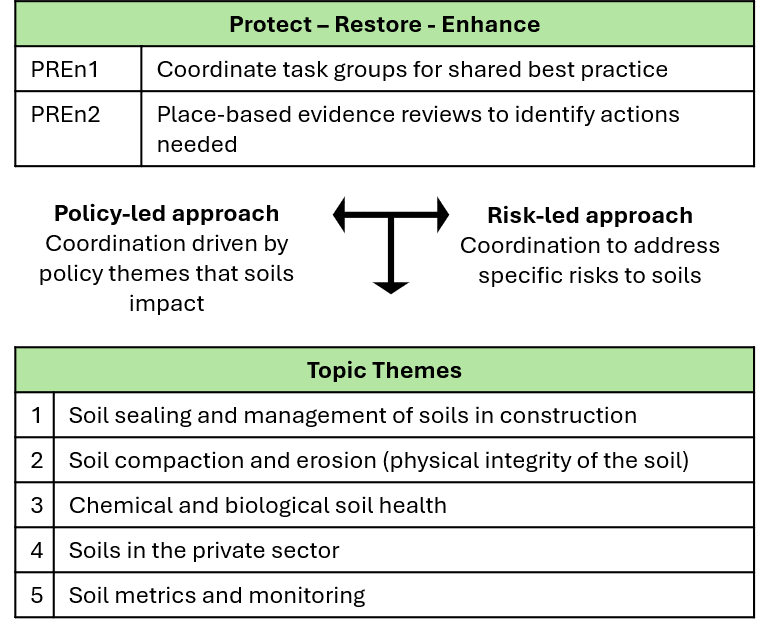
Figure 1. Themes identified in the Soil Route Map of Scotland
Stakeholder engagement
We reviewed policies and scientific evidence across 5 topic themes (Figure 1) to propose further actions for delivery and how these align with policy objectives.
Theme 2 (Figure 1) a workshop with stakeholders was conducted to discuss and collate opinions on the different causes and impacts of soil physical degradation across Scotland and identify potential interventions that could be applied to protect and restore soils. How these activities can support the delivery of policy objectives were also explored (further details can be found in Appendix C). We also conducted a survey to gather feedback on the route map report published in 2025, which highlighted the importance of cross-sectoral engagement and the need for soil monitoring to support and inform evidence-led recommendations for best practice (further details can be found in Appendix A3).
Sections 2 to 6 of this report provide an overview of each Theme (Figure 1) providing some preliminary suggestions for each task group to consider. Each theme is approached in turn.
Soil sealing and management of soils in construction (Theme 1)
This task group could take a broad overview of the challenges around balancing future development pressures and the impacts of soil sealing, particularly with a view to protect high value soils and scope further opportunities to reduce negative implications on soil functions and where possible reuse and recycle soil resources. In addition, the task group will share knowledge on soil ‘value’ across different land uses, land capabilities and the provision of ecosystem services and nature-based solutions.
Background
Soil sealing can be defined as the covering of soil with completely or partially impermeable material (e.g. shallow covers like tarmac, paving stones or large concrete permanent structures), with some of the most significant impacts on soil properties occurring as a result of activities associated with construction management (Defra, 2009[3]). Soil sealing negatively impacts soil functions (e.g. its ability to store water) and associated ecosystem services (Appendix B1) and therefore is identified as being a high risk to Scottish soils (Appendix A2) and is a key Landscape Indicator[4] for monitoring changes in Scotland’s species, habitats and landscapes.
The challenge is to balance a range of development pressures (for example, housing and energy infrastructure) while protecting soils. The soil route map (2025)1 proposed the establishment of a task group to examine how high value soils might be better protected from sealing and urban development in the future.
Scotland’s 2024 National Planning Framework 4[5] (NPF4) is a long-term plan looking to 2045 that guides spatial development, sets out national planning policies, designates national developments and highlights regional spatial priorities.
Local planning authorities preparing their local development plans (LDP) will be instrumental in taking forward NPF4 across Scotland, each council area responding to their unique challenges and opportunities within their areas of responsibility (Appendix B2). The role of sustainable soils in supporting the delivery of NPF4 policies is set out in Table 2.
Table 2. How soils are related to policies in NPF4 (author’s analysis)
NPF4 Policy | Connection to soils | |
|---|---|---|
1 | Tacking climate and nature crises | Soils are a core component of natural capital |
2 | Climate mitigation and adaptation | Soil management to conserve soil carbon stores. Ensure soils are a net carbon sink rather than source of GHGs. To ensure soils are managed and protected to mitigate and adapt to the impacts of climate change. |
3 | Biodiversity | Soils promote nature recovery, adaptation, restoration and resilience. This includes the inherent biodiversity of soils as well as above ground biodiversity that soils support. |
4 | Natural places | Soils are an important natural asset that should be protected as part of spatial strategies. |
5 | Soils | Focuses on the protection of prime agricultural land, carbon-rich soils, restoration of peatlands and minimising disturbance to soils from developments. |
6 | Forestry, woodland and trees | Soils support forest, woodlands and trees. |
8 | Greenbelt | The protection of greenbelt land contributes to the protection of soil functions. |
9 | Brownfield, vacant and derelict land and empty buildings | Sustainable reuse of brownfield land such as remediating soil contamination, is likely to have positive implications for soil health and functioning. |
10 | Coastal development | Sustainable soil management contributes to nature-based solutions that support the resilience of coastal communities. |
11 | Energy | There’s a need to understand the implications and trade-offs renewable energy developments on different soils. |
12 | Zero waste | Promoting the sustainable reuse of soils and minimising soils going to landfill. Ensuring the application of wastes to land are in line with SEPA regulations (EASR). |
More detail on Policy 5 is set out in Appendix B3. Its specific intended outcomes include that (1) valued soils with specific reference to peatlands and carbon-rich are protected and restored, (2) soils are sequestering and storing carbon and (3) soils are healthy and providing essential ecosystem services for nature, people and our economy.
Key areas of consideration for Theme 1
How are the risks to soils captured in new development applications in Scotland?
Soils are a material consideration for large scale developments at plan and project level through Strategic Environmental Assessments (SEA) and Environmental Impact Assessments (EIA), with more detail set out in Appendix B4.
Guidance, such as Historic Environment Scotland’s EIA Handbook (2018)[6], provides direction on the types of soil impacts and mitigation measures to consider with respect to construction, operation and decommissioning. Scotland’s Soils Website[7] states that EIA should use available soil information to assess the extent of resources, but that this should also be complemented by more detailed field observations to assess the impact of the development and work out options for restoration or mitigation.
More recently, the Institute of Environmental Management & Assessment (IEMA) Guide: A New Perspective on Land and Soil in Environmental Impact Assessment (2022)[8] provides a framework for identifying and categorising soil-specific receptors, sensitivities and potential impacts. This guidance provides an overarching UK-wide framework to improve and standardise the approach to soils and land use within EIAs and recognises the connectivity of different soil functions. The framework identifies key receptors and soil sensitivities when assessing the potential risks to soils (see Appendix B4).
Protection of Scottish peatlands, carbon-rich soils and prime agricultural land through NPF4
Peatlands and carbon-rich soils
NPF 4 states that development on peatland and priority peatland habitats (habitats that are commonly defined by the presence of peat or peaty soil types[9]) and carbon-rich soils will only be supported in limited circumstances, with specified restrictions (Appendix B5). Policy 5d notes that where development is proposed on priority peatland habitats, peatlands and carbon-rich soils, there is a requirement to conduct a detailed site-specific assessment.
NatureScot guidance[10] outlines the surveys to be completed to support achievement of NPF4’s policy intentions and mitigation hierarchy and guidance from SEPA is available at Guidance and advice notes | Scottish Environment Protection Agency (SEPA)[11].
In relation to windfarm developments as an example, the National Planning Framework 4: delivery programme V4 (January 2026) report[12] refers to a continuation of the work of the ‘Peatland Expert Advisory Group’ (established in 2023) to provide advice on managing the development of windfarms on peatland in Scotland. It also signposts recent ClimateXChange research on the process for assessing the potential impact of windfarms on peatland[13] and the reuse of excavated peat soil on wind farm development sites[14]. The latter investigates the opportunities, impacts, and challenges associated with the reuse of excavated peat soil from windfarm construction sites, providing greater understanding of the current knowledge concerning wind farm development on peatland and carbon-rich soils across Scotland.
Prime agricultural land
Policy 5b provides some restriction of developments on prime agricultural land. The term ‘Prime’ agricultural land refers to land with climate and soil characteristics outlined in classes 1 to 3.1 of the Land Capability Classification for Agriculture (LCA) framework (Appendix B8) and described more fully by Bibby et al (1991)[15].
Anecdotal evidence suggests that in some cases the LCA groupings of ‘prime’ (LCA Class 1 to 3.1) and ‘non-prime’ (LCA Class 3.2 to 7) are being misinterpreted as categories of profitability and not in terms of the flexibility of crops that can be supported. An amended phrasing might be useful in the context of planning to avoid misinterpreting or not fully appreciating land potential in a given area. E.g., LCA classes 3.2 and 4 are still suitable for arable production, just for a narrower range of crops.
Mapping Scotland’s agricultural capability was undertaken in the 1980’s with national (1:250 000 scale) and partial-cover, higher resolution (1:50 000 scale) maps available on Scotland’s Soil Website[16]. Research is ongoing (through Scottish Government’s Environment, Natural Resources and Agriculture Strategic Research Programme[17]) to explore how digital tools can improve understanding of the impact of climate on Scotland’s soils and estimate land capability under future climatic conditions (Udugbezi et al, 2022[18]).
Soils in the wider context of NPF4
Appendix B2 outlines the 13 policies included in NPF4’s ‘Sustainable Places’ along with requirements and considerations for LDPs. In addition to Policy 5, sustainable soil management is a core component to many other NPF4 policies shown in Table 2. This becomes more relevant with the increasing focus on integrated land use.
Sustainable management of soils during and post-development
Appendix B9 summarises technical guidance available for the management of soils in the design and construction phases of development, with the majority of Scotland-specific guidance referring to peatland protection. Some local authorities in Scotland, have developed guidance in the form of Soil Management Plans (SMP) for submission alongside planning applications. These refer to Defra’s Code of Practice for Sustainable Use of Soils in Construction3, which is not specific to Scottish regulations (in particular the movement of soils on and offsite with respect to Scottish waste regulations, see Appendix B9).
Consideration of soils in wider urban context
This report has focused on NPF4 Policy 5. However, soils underpin other aspects of the urban landscape with impacts on soil ecosystem functions, for example, climate and flood mitigation, as outlined in Table 3.
Table 3. Soils in the urban landscape
Urban context | Considerations for Scotland’s soils resource |
|---|---|
Urban creep | Annual loss of greenspaces due to activities such as paving driveways, building extensions, use of artificial grass and hard landscaping. Leads to cumulative impacts on local drainage, runoff (flood risk) and diffuse pollution. For example, CREW research by Rowland et al (2019)[19] quantified the extent of urban creep in Edinburgh showing that the average annual rate of urban creep (around buildings and their gardens and grounds), between 1990 and 2015 was 6.44ha/year – equivalent to losing over eight football pitches of vegetated land per year. |
Recreational | E.g., parks, allotments, sports pitches, golf courses (turf management). Soil compaction and soil stability, drainage and water management, nutrient deficiencies and managing nutrient leaching), thatch management. |
Landscaping and engineering | Quality of soil for landscaping (e.g., utilising British Standards). Soil stability and bearing capacity (landslide risk). |
Soil reuse | Consideration of both the re-use of soil on construction sites to avoid valuable soil resources going to landfill and the re-use of soil wastes e.g., repurposes excavation waste to produce recycled aggregates and topsoil for construction and landscaping industries. |
Green infrastructure | The role of soils in green infrastructure such as rain gardens and constructed wetlands as part of nature-based solutions contributing to climate and flood mitigation strategies. |
Urban soils E.g., Management of man-made/ artificial soils | Urban soils are often highly disturbed (e.g., from excavation, filling and grading) with variable composition and may be degraded through compaction and/or contamination depending on the land use and the origin of deposited materials. Therefore, consideration is needed in terms of best practice and potential for re-purposing these soils to optimise the potential ecosystem functions they could offer (e.g., flood management, supporting biodiversity and storing carbon) or to mitigate potential impacts they may have on wider ecosystems (E.g., diffuse pollution and risks to water quality and biodiversity). |
Options for action for Theme 1
T1-O1. Develop Scotland-specific guidance to support soil protection, restoration and enhancement in Local Development Plans (LDPs)
Soil resources vary across Scotland’s local planning authorities (prime soil, peatland, carbon-rich soils, greenfield and brownfield land as well as varied soil types and climatic constraints). Some targeted advice is provided by SEPA and NatureScot, but comprehensive guidance, with an overview on the national extent of different soils and land covers, could include advice on best practice for soil protection, restoration and enhancement within LDPs and SEAs and identify appropriate mitigation to avoid and minimise soil degradation.
T1-O2. Expand guidance for identifying and protecting carbon-rich soils:
The majority of Scotland-specific guidance focuses on peatland habitats. There are opportunities to further support the protection of carbon-rich soils in Scotland i.e., soils that have high organic matter and carbon contents but do not fall within the classification of peatland habitats:
- Clarify and align terminology: NPF4-Policy 5 refers to peatland, priority peatland habitat and carbon-rich soils. Additional terms such as peat as a soil class, organo-mineral and humose soils need to be clarified and used coherently to support effective communication and decision making.
- Develop guidance on best practice: The soils that fit within the category of ‘carbon-rich’ soils are typically distributed across Scotland’s upland, moorland, and heathland environments and commonly interspersed with areas of peat.
T1-O3. Develop targeted guidance for conducting Land Capability for Agriculture (LCA) assessments:
The primary mechanism for identifying land of ‘prime’ characteristics is through the use of land capability maps and conducting field soil surveys. Updated guidance on how to interpret soil survey data to determine LCA classes would support appropriate application of the LCA classification system relating to prime soils in Policy 5 of NPF4.
T1-O4. Review and develop guidance of soils within EIAs:
Review how potential impacts to soils are assessed in the EIA scoping process to ensure soils are not scoped out the EIA process without due considerations. and explore opportunities to encourage. To accompany this, sustainable soil management proposals should be encouraged for all developments, even where an EIA is not required.
T1-O5. Review opportunities to better link the sustainable management of soils during development projects to support wider environmental net gains:
Sustainable soil management contributes to Scotland’s natural capital, supporting range of nature-based solutions and habitats for biodiversity. There are opportunities to better link effective soil management to tangible net gains in ecosystem services and nature resilience. This could include:
- Combine and review research on soil health metrics and benchmarks in the context of the built environment and their applicability to Scotland.
- Review opportunities to progress guidance and tools available to assess soil ‘value’ to provide further support for informed decision-making in relation to new developments.
T1-O6. Develop procedures which promote the sustainable use and reuse of Scottish soils:
In line with the priority to protect soil, explore and develop procedures to minimise soil disturbance and promote and improve the reuse of valuable soil during developments.
- Further guidance on applying the mitigation hierarchy across different soil systems, i.e., where developments should be avoided (linked to T1-O4), how to minimise disturbance (see below) and appropriate restoration methods across Scottish soils.
- Explore whether there is a need for Scotland-specific guidance relating to the sustainable use of soils in construction (e.g., best practice for soil handling, storage and on-site use/reinstatement of soil during construction)
- Review whether further guidance is needed to support the sustainable reuse of excavated soils in line with Scotland-specific regulation. This support Scotland’s Circular Economy and Waste Route Map to 2030[1] by working with industry to investigate and promote ways to reduce the disturbance and movement of soil and the volumes going to landfill.
[1] https://www.gov.scot/publications/scotlands-circular-economy-waste-route-map-2030/pages/5/ (Accessed May 2026)
Soil compaction and the physical degradation of Scottish soils (Theme 2)
Background
Theme 2 of the route map1 considers the physical degradation of Scottish soils through compaction. Physical degradation has wide-reaching and cross-sectoral implications that can jeopardise Scotland’s environmental goals and impact our communities and economy including on site impacts and the increase in the risk of loss of soils by erosion and landslides. For example, soil compaction can physically restrict root growth and accessibility water and nutrients which can impact the growth of crops and vegetation. Reduced water infiltration and storage leading to increased surface runoff. Changes to water movement through soil leads to
- increased risk of soil erosion
- increased risk of flooding
- exacerbates diffuse pollution
- potential for anaerobic conditions leading to increases in GHG emissions
- Impacts soil biodiversity
These impacts of soil compaction potentially jeopardise Scotland’s ambitions across policy themes such as climate change and national net zero targets, food security and agricultural productivity, flood resilience and water quality as well as Scotland’s nature and biodiversity recovery.
A ClimateXChange (2018)[21] report highlights the link between soil compaction and soil erosion. Compacted soils have a restricted capacity to store rainfall compared to soils of the same type that are not compacted, which in turn generates overland flow that exacerbates the risk of soil erosion.
It is estimated that 26% of Scotland’s cultivated topsoils are compacted, leading to an estimated loss of yield costing between £16 million and £49 million per year with an additional £9 million to £26 million for increased fuel use (Baggaley et al., 2024[22]). The offsite costs of soil erosion, including the decline in water quality and GHG emissions, were calculated as £21 million and £40 million (if drinking water treatment costs were included). These estimated costs are expected to increase if soil erosion derived from increased runoff due to soil compaction is considered.
The combination of compaction and sealing could lead to a 1% increase in flood area or flood intensity, costing local authorities £2.6 million and each affected home claiming an average £57,000 to £76,000 in insurance per flood event.
Scotland’s soil vulnerability (risk) to degradation maps (Figure 2. ) Provide a useful tool for assessing appropriate land management with respect to a soils’ inherent vulnerability to erosion. This is particularly valuable for landscape-scale management planning and building resilience to risks such as flooding through nature-based solutions. Forests, woodlands and peatlands support climate adaptation and resilience through functions such as flood mitigation, reductions in soil erosion and the provision of shade and shelter against temperature extremes as outlined in Scotland’s Climate Change Plan: 2026–2040[23].
As soil compaction is an issue pertinent to all land uses and sectors, this section reviews options to mitigate the key causes of soil compaction and consequential soil erosion. Options for action that enhance the identification and alleviation of physical soil degradation that can be applied across land uses to address soil compaction nationally are explored.
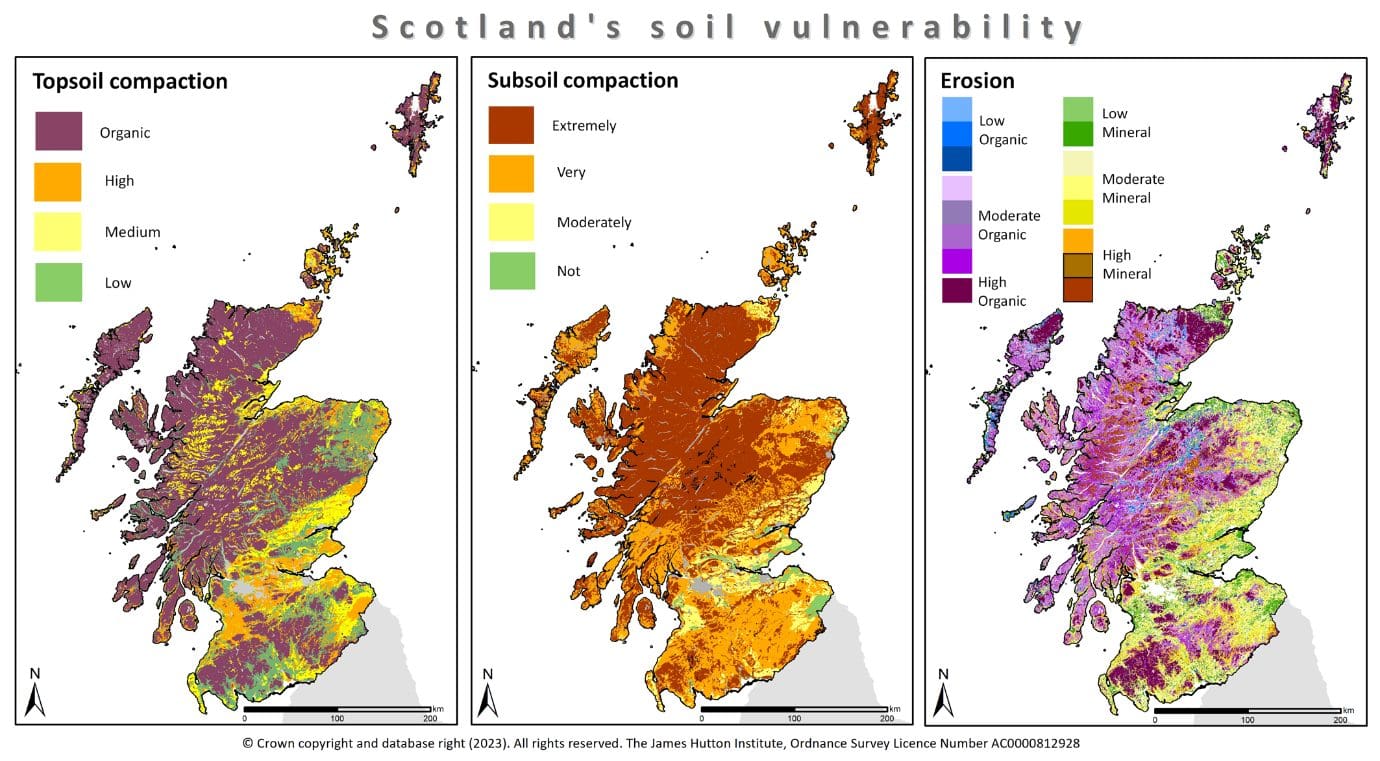
Figure 2. Scotland’s soil vulnerability maps based on Soil maps of Scotland at a scale of 1:250 000[24].. Higher resolution digital maps based on the Partial Cover 1:25,000 soil map and descriptions of the classes can be found on Scotland’s soils website
Key areas of consideration for Theme 2
In October 2025, we held a stakeholder workshop on soil physical degradation to identify potential cross-sectoral opportunities for better protection and restoration of soil across Scottish landscapes. The workshop aimed to review the current guidance available to:
(a) Understand the causes of soil physical degradation
(b) Identify soils affected by physical degradation or at risk of future degradation and
(c) Support and advice available to alleviate issues and restore soil physical health.
This generated useful evidence on the causes and impacts of physical soil degradation. The workshop outputs are shown in Appendix C.
Causes of physical soil degradation
The use of heavy machinery (e.g., for cultivation or in construction) was highlighted as one of the main drivers, specifically on wet soils which are more vulnerable to degradation. This was seen to be potentially exacerbated by the presence and condition of artificial drainage across agriculture, forestry and peatlands.
The removal and/or sealing of soils was a key issue in altering the response of the land to rainfall (surface water infiltration, runoff and erosivity) with impacts on flood risk as well as potentially affecting soil and land stability (creeping / landslide). Physical degradation extends to developments such as renewables and the installation of essential infrastructure, where there is perhaps less research for developing specific guidance relating to various types of developments and soil handling conditions (see Section 2.2.3). Climate change can exacerbate the risks of physical soil degradation which may further impact Scottish landscapes.
Available guidance for physical soil degradation
During the stakeholder workshop participants noted that there is useful guidance relevant to agricultural soils, such as the Valuing Your Soils brochure[25] and Scottish Government’s Good Agricultural and Environmental Conditions (GAECs)[26] set out standards to minimise disturbance to soils. There are GAECs that aim to protect soils from compaction and physical degradation through the timing of management, choice of machinery, and maintenance and enhancement soil organic matter levels. They also include regulatory measures to help mitigate the impacts of soil physical degradation such as the adding of buffer strips and sediment fences along water courses. In addition, the use of uncultivated land or semi natural areas for intensive agricultural purposes or forestry systems must seek an EIA screening decision.
UK Forest Standards (2023)[27] outlines sustainable forest management principles for mitigating soil degradation relevant to compaction, such as to minimise compaction and damage to soil structure during forest operations, choosing appropriate machinery, considering the timing of operations, using brash mats to protect the soil from heavy loads and remediation options if compaction occurs that restricts tree growth.
Forest Research provide considerations for soil compaction as it is a common problem at many brownfields and contaminated sites due to activities relating to the removal, storage and reinstatement of soil materials during mineral extraction or mining activities where the ground has been subjected to heavy machinery traffic[28]. To minimise the risk of soil compaction during construction, particularly from heavy machinery, best practice guidance is provided, for example through Defra’s code of practice3 and the Institute of Quarrying soil guidance[29] (described in Appendix B9).
Better integration of guidance and technical support was identified as a key factor for better protecting the physical condition of Scotland’s soils. This includes the integration of wider soils guidance into peatland, forestry and water policies and the need for better practical tools across land covers to help with decision making.
Appendix C2 provides a summary of the key recommendations generated from the workshop and indicates available guidance that can provide support. It notes whether the guidance is specific to a particular land use (agriculture, forestry, peat or planning sectors) and where there are potential for expanding guidance across different sectors. Knowledge sharing through cross-sector networks and peer to peer learning provides beneficial pathways to identifying and alleviating soil physical issues, as well as exploring opportunities to financially support the adoption of best practice in the field (e.g., public and private sector initiatives).
Options for action for Theme 2
T2-O1: Develop cross-sector guidance on soil compaction and soil physical degradation:
Produce cross-sectoral guidance on preventing, identifying and alleviating soil compaction for a range of management scenarios including case studies across sectors (agriculture, forestry, peatlands and planning). These should include details on the links between soil compaction and risk of soil erosion, providing, information on available guidance and regulatory measures associated with mitigating its impacts.
T2-O2: Explore opportunities for soil compaction to be identified and alleviated through existing programmes:
For example, explore opportunities to include measures for soil compaction tests while also including a record of erosion occurrence within the Whole Farm Plan soil tests (see Section 4.1.2.1)
T2-O3: Update guidance and tools informing the risk of Scottish soils to physical degradation and compaction:
Scotland’s soils website[30] provides national (partial cover) maps showing soil vulnerability (risk) to degradation. There are opportunities to develop these further with additional and broader evidence and improve guidance for use at more local scales. For example, a national field-based assessment of the extent of both topsoil and subsoil compaction (similar to recommendations in the draft EU Soil Monitoring and Resilience Directive[31]) to provide improved understanding of the relationships between land management intensity, erosion, runoff and compaction.
This will support continued understanding of these issues and appropriate decision making for improved soil protection. There could also be the development of materials produced for the agricultural sector such as the ‘Valuing your Soils’25 brochure.
Chemical and biological soil health (Theme 3)
Background
Soil chemistry plays a vital role in soil fertility in terms of soil nutrient content, retention (solubility and leaching risk) and availability to crops/plants. The chemical composition of soils is governed by dynamic interactions between inherent soil properties (e.g. soil organic matter content, inorganic mineral composition, clay content, water holding capacity, pH and biological activity etc), soil structure (controlling in part the availability of water, oxygen and nutrient), land use (both present day and historical land management) and the acute and/or chronic exposure to chemical hazards.
The application of soil fertilisers and amendments are widely conducted in modern agriculture to enhance productivity. However, poor soil nutrient management and the introduction of chemicals in managed systems (e.g., nitrogen management in forestry / farming systems) can lead to issues such as soil acidification, detrimental impacts on nearby habitats (particularly sensitive habitats like peatlands) and potentially the eutrophication of local watercourses. In urban and industrial areas, the accumulation of hazardous heavy metals like lead and cadmium can occur, posing further risks to soil and water quality. Degradation of soils in this way can negatively impact soil microbial communities and beneficial organisms, which can further exacerbate degradation of soils and lead to a decline of soil functions. There is also new awareness of emerging contaminants such as pesticides, microplastics and per- and polyfluoroalkyl substances (PFAS) being introduced to soils through the application of soil amendments (e.g., sewage sludge, rock dust and biochar) and the long-term impacts in terms of their persistence, accumulation and subsequent impact on soil health and functioning over time. Potential subject areas for a Theme 3 task group to consider are;
Soil contamination
Contaminated land
Soil contamination is primarily a consequence of industrial processes in the past but also arises from other processes such as air pollution and atmospheric deposition (ESS report 2024[32]). SEPA[33] recognises that historic land contamination arose from a lack of knowledge about potential environmental hazards and poor practices being conducted in the past (for example previous industrial processes, disposal of waste by landfilling and illegal tipping, and leaks and spills of raw materials, process effluents and fuels). It is difficult to accurately judge the total number of affected sites in Scotland as individual local authorities have chosen a variety of assessment methods, but a 2009 SEPA report[34] demonstrated the extent of contaminated and potentially contaminated land in Scotland.
The contaminated land regime (Part IIA of the Environmental Protection Act 1990[35]) is designed to address the legacy of historic contamination through local authorities, who are responsible for the identification of contaminated land in their respective areas. In terms of soil remediation, the regime is designed on the ‘polluter pays’ principle. However local authorities have powers to carry out remediation work where polluters/owners cannot be traced, cannot pay for remediation for reasons of hardship, or where the local authority owns the land (Environmental Protection Act 199030). A recent scoping report27, by Environmental Standards Scotland suggested that local authorities are not utilising powers under Part IIA routinely. Industrial activities are regulated under the Environmental Authorisation (Scotland) Regulations 2018 (EASR)[36] [superseding Pollution Prevention Control and Controlled Activities Regulations amongst others] and the Environmental Liability Regulations, which offers support for limiting the risk of future soil contamination.
Nutrient Management and Diffuse Pollution
Nutrient Management in Agriculture
It is acknowledged that the addition of fertilisers is an important agricultural practice for the improvement of growing condition and overall agricultural productivity. However, poor nutrient management can lead to the leaching and runoff of nutrients into groundwater and watercourses reducing water quality (and contributing to indirect GHG emissions). Defra Agri-climate report 2024[37], estimated that agriculture was responsible for 70% of total nitrous oxide emissions in 2022 with the majority of agricultural nitrous oxide emissions coming from soils, particularly as a result of nitrogen fertiliser application, manure and leaching/run off. Buckingham et al (2023)[38] showed that the reduction of synthetic nitrogen fertiliser uses and/or the optimisation of nitrogen application (including the use of legumes and cover crops to offset the dependence on synthetic N use) was listed as a top priority for GHG and ammonia emissions mitigation.
Scotland’s Climate Change Plan: 2026–2040 Annex 2 – Sectoral Annexes23 outlines that Scottish Government will support Scottish farmers and crofters to reduce GHG emissions while maintaining and/or improving their soil for agricultural productivity. Scottish Government produced the Action Programme for Nitrate Vulnerable Zones (Scotland) Regulations 2008[39] (as amended), to meet Scotland’s legal and environmental obligations for NVZs which set out requirements for from farmers to comply with the NVZ rules such as nitrogen application limits, compliant manure storage, manure spreading restrictions and buffer zones where no applications are permitted.
In Scotland, registration authorisation is required through SEPA EASR authorisations[40] for the use of waste on land for the purposes of soil improvement including the use of sewage sludge on agricultural land (discussed further in Section 4.1.2.2). The good practice guidance Good Agricultural and Environmental Conditions26 (GAEC) is also relevant here, notably, (GAEC 1) to protect against pollution through the restricting the storage, application of fertilisers and pesticides and cultivations along watercourses. Other GAECs will also contribute to reduced nutrient leaching and diffuse pollution through reducing soil erosion risks including maintenance of soil organic matter and the minimising of time with minimum soil cover. Scotland’s Climate Change Plan: 2026–2040 Annex 2 – Sectoral Annexes23 highlights research and development have identified new, innovative ways to reduce nitrogen emissions from soil and our findings will have been translated to practical, real-world solutions.
In addition, 2028 farmers and crofters will also be asked to produce a nutrient management plan (NMP) to complement their soil analysis as part of the Whole Farm Plan (WFP)[41] although this is not yet compulsory. Scottish Government currently recommends NMP are prepared using PLANET (Planning Land Applications of Nutrients for Efficiency and the Environment[42]) or programmes which allow you to produce a nutrient management plan are also acceptable as long as they are relevant to Scottish conditions and fertiliser recommendations. It also highlights fertiliser recommendations (i.e., based on relevant SRUC technical notes) to reduce excess soil nutrients which may be leached or mineralised (leading to direct and indirect GHG emissions).
Whole Farm Plan41 guidance also highlights that many other factors can also affect the uptake of nutrients for growing crops including soil compaction and poor soil structure limiting root growth and therefore uptake of nutrients (The Visual Evaluation of Soil Structure – VESS[43] guide can be used to measure soil structure). This is also supported in The Code of Practice on Sustainable and Regenerative Agriculture[44] as part of the Agricultural Reform Programme and associated list of regenerative measures outlined in their Vision for Agriculture[45] (which the WFP sits within), which focuses on nature restoration, climate mitigation (reducing greenhouse gases/carbon sequestration), and high-quality food production.
Soil amendments
Soil amendments are materials added to soil to improve soil health or functioning (e.g., aeration, pH and nutrient levels). As an important component of Scotland’s ambitions to reduce wastes and improve circularity, there is growing interest in the application of certain materials and wastes to land to improve soil nutrient status. However, there is the potential for exposing soils to known and emerging contaminants (Section 4.1) and so the application of waste to land is regulated by SEPA[46] (Section 4.1.2.1), with the overarching aim being to ensure materials provide genuine agricultural or ecological benefit without causing pollution.
Biochar is a carbon rich material often derived from the pyrolysis of organic waste. It has attracted significant attention in recent years, particularly in terms of potential to sequester carbon in soils over long periods and ongoing research into its potential to improve soil fertility, but significant evidence gaps remain regarding the efficacy of biochar under Scottish conditions. There is also a lack of data outlining the cost-effectiveness, supply chain logistics, and farmer perceptions in the Scottish context. ClimateXChange is currently researching the evidence for how biochar performs (e.g., in relation to organic-rich soils and high-rainfall environments typical to Scotland), its potential interactions with existing land management practices and uncertainties around the lifecycle emissions (publication on the ClimateXChange website is expected summer 2026).
The application of rock dust, or enhanced rock weathering (ERW) to soils has gained commercial attention due it’s potential for creating a pathway for enhanced long-term carbon storage. ERW[47] comprises volcanic material being added to soils. In Scotland, the rock material is usually considered a by-product of activities such as quarrying (not classified as a waste) and so there are no regulations regarding its application to soil at present.
The Environment Agency (2025)[48] highlight several issues, including potential risks to soil health. A Scottish Government Advisory note[49] (August 2024) discussed soil-based carbon storage activities and highlighted enhanced rock weathering as being less well-evidenced in terms of potential outcomes on the broader environment and that potential impacts water quality and biodiversity in catchments and near shore needs investigation.
Nutrient management in forestry
Version 5 of the UK Forestry Standard (UKFS) (2025)[50] provides the technical standard for forestry in Scotland and sets out the legal and good practice requirements to be followed. Section 8 of the UKFS (2025) refers directly to soils offering guidance on best forestry practice to protect soils and limit nutrient losses. To mitigate the risks of potential nutrient loss arising from soil disturbance and erosion caused by forestry practices, guidance (Table 5) is provided by Scottish Forestry and UKFS.
Table 4. UKFS48 recommendations to reduce soil disturbance, erosion and nutrient loss.
UKFS | Description |
10 | Base forest management decisions on an informed knowledge of its soil types. |
11 | Consider the potential impacts of soil disturbance when planning operations involving cultivation, harvesting, drainage and road construction; minimise the soil disturbance necessary to secure management objectives and amend practices to manage the risks posed. |
12 | Avoid removing stumps unless for tree health reasons or the purposes of restoration, or where a risk-based assessment has shown that adverse impacts on soil carbon can be mitigated. |
13 | Consider woodland creation to protect erosion-prone soils, stabilise slopes and intercept sediment run-off from upslope. |
14 | Address the risks of soil erosion as part of the forest and operational planning processes, ensuring mitigation measures are implemented when the soil will be exposed. |
15 | on steep slopes where there is a risk of slope failure or serious erosion, use native species and low impact silvicultural systems including continuous cover forestry where possible. |
18 | Minimise the use of fertilisers and confine these to areas where analysis clearly shows management benefits; if they will be used, plan applications to minimise the risk of nutrient loss. |
Forever Chemicals and Contaminants of Increasing Concern
Forever chemicals, or PFAS (per- and poly-fluoroalkyl substances), comprise a group of thousands of chemicals that are persistent in our environment through accumulation in soils, plants and animals. The UK Government (on behalf of all devolved governments) has recently published ‘PFAS Plan: building a safer future together’[51] (February 2026) to address this issue by:
- understanding PFAS sources
- tackling PFAS pathways, including reducing PFAS at source and preventing PFAS from entering and circulating in the environment
- reducing ongoing exposure to PFAS.
Action 1.3 of the plan relates specifically to soils, aiming to improve monitoring of PFAS in soils by supporting the British Geological Survey’s feasibility study and initiating pilot sampling. The plan also outlines the need to review the risks of PFAS in sewage sludge being spread to land.
Contaminants of Increasing Concern (CICs) comprise chemical groups such as pharmaceuticals and pesticides, biological contaminants such as pathogens and antimicrobial-resistant (AMR) genes, nanomaterials, and microplastics. A comprehensive report by CREW (2024)[52] (Helwig et al., 2024) highlighted that no emerging contaminant groups can be discounted for Scotland and that many national and international databases are available to aid understanding of emerging contaminants, which should be reviewed and consolidated for Scotland. The report also recommends that new partnerships are considered for certain contaminant groups to refine the knowledge gaps, that funding is made available to address these and that international policy options are reviewed for integrated approaches and approaches to mixtures, including effect-based monitoring.
Fidra (2024)[53] reported that a build-up of persistent contaminants from agricultural activities (e.g., PFAS, microplastics, and pseudo-persistent contaminants such as bisphenols) has resulted in a ‘cocktail’ effect of contaminants within the soil causing detrimental impacts on these essential functions. In addition, the report highlights that the accumulation of these contaminants is expected to continue with the full effects on soils’ ecosystem services currently unknown, prompting the recommendation for a precautionary approach.
Options for action for Theme 3
T3-O1. Support the identification and remediation of contaminated land:
Review opportunities to improve the identification of contaminated soils and mechanisms that would support appropriate remediation.
T3-O2. Review and further develop guidance to support nutrient management planning in agriculture:
Incentivise the adoption of nutrient management planning within the Whole Farm Plan, providing training and guidance where needed.
T3-O3. Develop research and guidance on the application or soil amendments for nutrient management:
As we strive to improve circularity and recycle wastes, there is the need for research to fully understand the long-term implications of novel amendments on the health of Scottish soils and wider environmental impacts.
T3-O4. Monitor progress of the Whole Farm Plan:
Explore the potential to collate data generated from the Whole Farm Plan scheme (e.g., soil analysis and nutrient management planning) to feed back into research, soil monitoring, soil model calibration and validation as well as contributing to more widely to future decision-making processes
T3-O5. Advance research on forever chemicals and emerging contaminants in Scottish soils:
Support research into the risks of emerging contaminants, particularly with respect to identifying and prioritising new contaminants, limiting routes to exposure, benchmarks relating to soil health, opportunities for circularity and assessing the long-term risks to soil and human health.
Soils in the private sector (Theme 4)
Background
All businesses rely on nature in some way and are therefore susceptible to nature-based risks which can lead to significant operational and supply chain disruptions. Potential risks to soil stability, resilience and soil health can lead to cascading environmental and socio-economic impacts. Examples of nature-based risks to businesses include:
- water scarcity (e.g., from overuse or over extraction of water sources)
- extreme weather (droughts, flooding, storm damage)
- natural disasters (e.g., landslides)
- invasive species (pests and diseases)
- soil degradation or erosion (affecting crop and timber production, catchment water management and water quality etc).
“Making the Case for Nature” (2025)[54] highlights that Scotland’s economy is highly reliant on natural capital and the need to maintain natural capital assets in good condition to ensure sustainable economic growth. The report also highlights that both public funding and private finance will be essential to ensure sufficient investment to meet nature restoration goals. The Natural Capital Market Framework (2024)[55] outlines that enhancing our natural capital is a public and private responsibility with the Scottish Government already investing significantly into the creation of woodlands, the restoration of peatlands, and the protection of biodiversity.
In February 2025 Scottish Government published the Invest in Nature[56] plan outlining their plan of action to support the creation of a nature finance system that enables funding and finance to flow into high integrity biodiversity outcomes. This highlights the ambition to improve market mechanisms that align with broader market trends, such as the Taskforce on Nature-related Financial Disclosures (TNFD) as UK companies increasingly integrate nature-based solutions into their financial disclosures, transition planning, and supply chain management.
The Scottish Government is funding research into ‘Understanding the value of Scotland’s agricultural soil natural capital[57]’ as part of Scottish Government’s Environment, natural resources and agriculture – strategic research 2022-2027[58], which aims to identify the underpinning natural capital assets for key ecosystem services produced by agricultural soils, the appropriate biophysical metrics, and indicators to measure the extent and condition of agricultural soils and determine and apply the appropriate valuation methods to agricultural soils.
Key areas of consideration for Theme 4
Soils in carbon management frameworks
The Scottish Government has proposed a legally binding target of net-zero emissions by 2045. UK territorial GHG emissions are reported annually (by the Department for Energy Security and Net Zero) in line with Intergovernmental Panel on Climate Change (IPCC) reporting requirements[59] across key sectors[60] to track progress towards international and domestic GHG emissions reduction targets. Soils are a core component of global carbon cycling (Appendix D1) contributing to both carbon emissions, reductions and removals. For example, nitrogen emissions are also considered in terms of soil nutrient management (see Section 4.1.2).
Carbon management forms an integral part of a company’s ESG (environmental social and governance) reporting through climate-related frameworks such as International Financial Reporting Standards (IFRS) S2 Climate-related Disclosures[61]. The ISSB and IFRS Standards[62] offer a global framework to understand and disclose material climate risks through reporting on governance, strategy, risk management, and metrics utilised in the assessments. Environmental Reporting Guidelines[63] are also available to help companies understand how to meet climate-related financial disclosure requirements.
The GHG Protocol Corporate Accounting and Reporting Standard[64] provides requirements and guidance for companies and other organisations preparing a corporate-level GHG emissions inventory, which aligns to IPCC reporting requirements59 Guidance on how to estimate scope 3 emission reductions are provided in the GHG Protocol’s Corporate Value Chain (Scope 3) Standard[65] and more specific to land-based carbon management guidance is provided in the Land Sector and Removals Standard[66] (released January 2026). The Land Sector and Removals Standard66 can be used by companies to better understand the GHG emissions and removal impacts of land management, land use change, biogenic products and other CO₂ removal activities across their supply and value chains. It can provide the baseline from which to set emission reduction targets and performance to be tracked and report progress toward GHG mitigation goals. The Science Based Targets Initiative[67] provides resources specific to Forest, Land and Agriculture (FLAG)[68] for reducing land-based emissions and enhancing carbon removals in line with science and climate targets.
The role of soils in nature-based solutions
A recent report by Cole et al (2026)[69] highlighted the effectiveness of applying a natural capital approach to identifying and prioritising investments for nature-based solutions (NbS) within Scottish catchments. Aligning the interests of beneficiaries with the delivery of ecosystem services can promote the implementation of sustainable soil management as part of NbS. These can promote operational resilience within a business which can lead to new innovative investments to protect natural assets, provide nature-based mitigation strategies and perhaps lower the insurance burden.
A COSLA briefing note (2020)[70] highlighted that local authorities are taking steps to support nature-based solutions (NbS) as part of their response to climate change, promote wellbeing and protect biodiversity. To date, investments for nature-based solutions (NbS) are largely publicly funded but efforts can be amplified with private investments. The COSLA briefing describes how NbS can help both climate change mitigation and adaptation through improved carbon storage and reducing carbon emissions, preventing the loss of biodiversity and protecting our natural capital. It also highlights the role of NbS in supporting a green recovery and a just transition to a net-zero economy (Figure 3).
Soils play a central role in NbS through:
- Peatland restoration to conserve and enhance carbon stores (a priority to reduce emissions and restore biodiversity in Scotland)
- Agricultural soil health to protect soil organic matter and improve water retention
- Tree planting to improve soil structure, stability (reduce erosion) and carbon sequestration
- Green infrastructure (e.g., rain gardens, green roofs, bioswales, permeable pavements, urban trees, and wetlands) to support improved air quality, water management, urban heating as well as supporting green spaces important for our general wellbeing
- Protection and enhancing capacity of blue carbon in terms of coastal soils, saltmarshes and sediments.
A 2020 report by Scottish Environment Link[71] demonstrates how land can be managed with nature in mind through nature networks[72], nature friendly farming (e.g. Nature Friendly Farming Network[73]). It recommends a range of actions such as terminating peat extraction, improving peat restoration, creating native woodlands and protecting ancient woodlands as well as provisioning new agri-environment schemes that support and incentivise land managers to maintain, restore and create species-rich grasslands at scale.
Diagram showing nature-based solutions at the centre, linked to five benefits: addressing the climate emergency, supporting young people, creating stronger communities, improving health and wellbeing, and promoting inclusive economic growth.
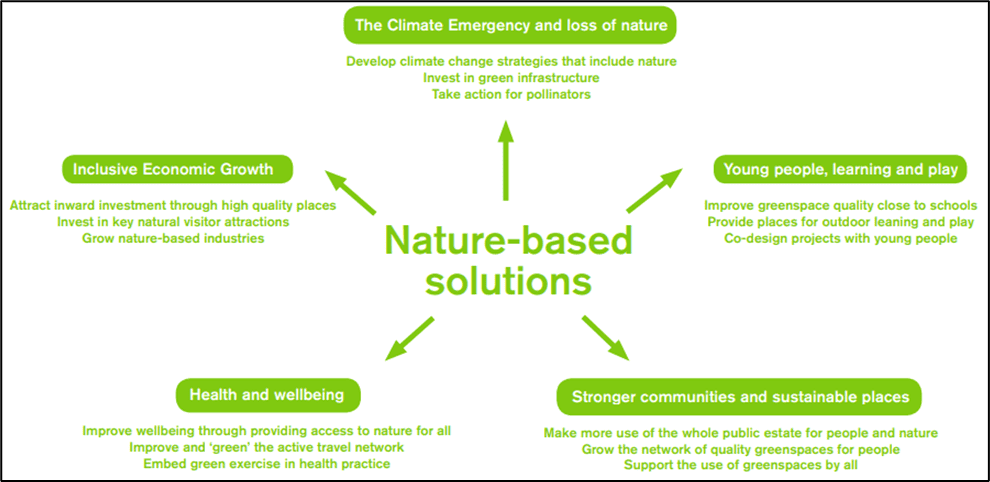
Figure 3. The role of Nature Based Solutions in Scotland
Soils in Nature-Related Financial Disclosures frameworks
The Taskforce for Nature-Related Financial Disclosures (TNFD)[74] is an international framework that provides a mechanism for business and financial institutions to assess, report and act on their nature-related dependencies, impacts, risks and opportunities. The standardised approach allows companies to integrate nature into their business strategy and decision making. The TNFD framework comprises a set of disclosure recommendations and sector-specific guidance that is consistent with carbon management reporting (e.g., ISSB Standards47). This involves 4 core pillars of disclosures including:
- Governance of nature-related dependencies, impacts, risks and opportunities
- Strategy and financial planning to manage nature-related dependencies, impacts, risks and opportunities in the organisation’s business model
- Risk and impact management processes used by the organisation to identify, assess, prioritise and monitor nature-related dependencies, impacts, risk and opportunities
- Metrics and targets used to assess and manage material nature-related dependencies, impacts, risks and opportunities.
Scottish Government’s ambition through the Invest in Nature plan is to support investment into Scottish biodiversity and climate adaptation, to improve market mechanisms by aligning with broader market trends with growing influence, such as TNFD. As UK companies increasingly integrate nature-based solutions into their financial disclosure, transition planning, and supply chain management, the demand for voluntary biodiversity and nature markets is expected to rise. An Ecosystem Restoration Code[75] (an outcome of Scotland’s Natural Capital Market Framework[76] and Principles for Responsible Investment in Natural Capital[77]) strengthens Scotland’s position in ensuring responsible private investment to support sustainable and high-integrity ecosystem restoration projects.
A review of TNFD’s sector specific guidance shows all sectors have a dependency on soil and sediment retention or soil quality regulation (Table 5) with 12 of the 15 sectors having ‘Very High’ dependency on soil and sediment retention or soil quality regulation (see Appendix D2 and D3 for specific activities these dependencies relate to). However, despite soil’s intrinsic link to ecosystem services, the TNFD 2025 Progress Report[78] showed that only 16% of companies surveyed noted soil degradation as a priority area for corporate engagement. The report highlights ‘pollutants’ released to soil as a key indicator, but only 10% felt this was a very feasible metric to report and 36% saying it was not feasible as all (Appendix D4). This highlights that there are opportunities to support further knowledge, guidance and monitoring of soils within corporate reporting.
Draft sector guidance for Technology and Communications[79] and Alternative Fuels[80] has been issued for consultation. Both refer to soils as important natural capital assets to consider within nature-related financial risk assessments. For example, in relation to technology and communication, soils are considered in connection to the impacts on soils from mining for materials, development of data centres and in terms of managing contamination from wastes. For alternative fuels, the guidance explores evaluating possible benefits and impact on soil health from biofuel and bioenergy production. Although not all of these sectors will be pertinent to the health and vulnerability of Scottish soils, Table 6 shows how soils underpin our natural resources and feed into economic stability.
Table 5. Soil-specific ecosystem services that each sector typically depends on as outlined within TNFD sector-specific guidance[81]
Sector | Dependency on soil & sediment retention or soil quality regulation |
|---|---|
Very High – Low | |
Medium | |
Medium – Low | |
Very High – Low | |
Very High – Low | |
Very High – Very Low | |
Very High – Very Low | |
High – Low | |
High – Very Low | |
High – Very Low | |
Very High – Low | |
Very High – Low | |
Very High – Low | |
Medium – Low | |
High – Very Low |
Soils in nature-based financial markets
The Peatland Code[82] and Woodland Carbon Code[83] are established UK voluntary carbon standards. The Peatland Code launched in 2015 by the IUCN UK Peatland Programme supports peatland restoration by facilitating private investments. Similarly, the Woodland Carbon Code provides a framework for landowners to verify and sell carbon credits created through woodland creation and its associated carbon sequestration. Making the Case for Nature54 report showed that the investment in carbon credits generated by woodland creation and peatland restoration has been significantly focused on Scotland, accounting for 81% of UK Woodland Carbon Code projects and 87% of Peatland Code projects. A 2023 Scottish Government report84 assessing private finance in natural capital highlighted that public investment in peatland restoration has increased in recent years but remains below what is needed to restore this natural asset at scale alongside some investment from private sources[84].
In terms of soils in agricultural land use, Black et al (2022)[85] conducted a global review of farmland soil carbon codes and explored the potential for an overarching standard for soil carbon codes to be used in the UK against which existing codes (and other schemes already generating soil carbon credits) could be assessed and benchmarked.
There are many parameters influencing organic matter input, decomposition and carbon losses to a soil system (for example geochemical properties; soil physical, chemical and biological characteristics, local climate, topography, current and historic land use including the range of management practices applied). The dynamic and heterogeneous nature of soils means it is difficult to accurately quantify sequestered soil organic carbon stocks spatially. There are also challenges in identifying new (additional) carbon storage generated as a direct result of a given management practice and in being able verify the permanence of the additional carbon stocks over time.
In this context it is important to consider soils in terms of net balance of carbon – it is not just about adding more carbon, but also mitigating against carbon losses (directly as CO2 emission or indirect emissions from leached soil carbon). A core component is evidencing soil carbon stock baselines from which changes can be monitored.
Options for action for Theme 4
T4-O1. Continued support for peatland restoration and woodland creation:
The benefits of peatland restoration and woodland creation in mitigating the impacts of climate change and nature recovery are well documented. Voluntary carbon schemes offer a valuable mechanism for private investments to support policy objectives, but we need to improve our understanding of the carbon cycling in soils in woodlands and their overall GHG mitigation potential.
T4-O2. Review policies for aligning a soil monitoring framework with environmental sustainability reporting standards:
There are opportunities to explore how a Scottish Soil Monitoring Framework (Section6, Theme 5) could better align and contribute to technical standards (e.g. GHG Protocol) that feed into UK Sustainability Reporting Standards[86] and Sustainability Disclosure Requirements[87]. For example, the EU Soil Monitoring Law provides a legal framework that supports the collection of quantitative soil data that feeds directly into several European Sustainability Reporting Standards (ESRS). This makes soil monitoring a key component of ESG compliance for sectors such as agriculture, construction and manufacturing that rely on soil resources. Activities within the Land Use for Net Zero Hub could offer opportunities to explore this further and identify mechanisms for alignment where soil monitoring (e.g. Loades et al., 2026[88]) can inform transition plans towards improved sustainability and net zero (e.g. LUNZ projects[89]).
T4-O3. Review policies for aligning a soil monitoring framework with nature-based frameworks:
There are opportunities to consider Scottish soils more through the lens of natural capital reporting to support further implementation of nature-based solutions and the delivery of climate-risk mitigation. For example, by exploring the linkages between soil health assessments with dynamic ecosystem services to inform decision making and support the adoption of nature-based solutions.
T4-O4. Develop guidance on appropriate use and limitations of soil metrics in corporate reporting and verification:
Consider how Scottish Government funded research might support the use of appropriate, robust data in the verification of soil carbon stock changes (and terrestrial GHG emissions).
T4-O5. Review the guidance and incentivise further mobilisation of soil protection, restoration and enhancement through the adoption of financial frameworks:
Initiatives such as the TNFD are not legally mandatory in the UK. However, advancing the adoption of such initiatives would benefit Scottish soil resources and wider nature networks and offer a mechanism for mobilising action.
Soil monitoring and metrics (Theme 5)
Background
Soil monitoring is a vital component of evidence-based policy across all Scottish land covers and soil types. However, soil systems are heterogeneous and naturally change over space and time with respect to climate and biogeochemical processes, while supporting a range of ecosystem functions. Layered on top of these natural features are anthropogenic impacts on soils through land use and management practices across sectors and landscapes.
Despite these challenges, the 2025 route map1 highlighted that Scotland already has a wealth of data and knowledge on soils. Data already gathered can provide baselines for an assessment of the magnitude and duration of changes and how these impact upon soil’s contribution to wider ecosystem services.
To effectively understand these linkages, soil data and metrics is required across field, regional and national scales. Field-scale knowledge is useful for making land management decisions that directly affect local soil resource security and soil health. It feeds into regional and national knowledge important for landscape scale decision making or for forecasting and modelling scenarios for future planning.
Key areas of consideration for Theme 5
Supporting a soil monitoring framework for Scotland
As highlighted in Section 5, soils are integral to Scotland’s natural capital and so there is potential to embed a national soil monitoring framework across policy to support the delivery of various nature-based policy objectives. The development of a framework requires a clear vision and purpose that will provide transparent knowledge on Scottish soil systems for multiple end users.
The Scottish Soil Framework (2009)[90] and Soil Route Map for Scotland Report 20251 outline broad objectives for soil protection, restoration and enhancement. In order to monitor soils and the various components of soil systems, establishing a baseline from which changes in soil condition can be benchmarked is a key starting point. It is also important to consider the appropriate data resolution (spatially and temporally) required to capture adequate detail to allow for robust analyses and interpretation (discussed further in Appendix E1).
Through the Strategic Research Programme 2022-202758Scottish Government is investing in the optimisation of Scottish legacy soil data and working to develop an operational monitoring framework. Appendix E2 outlines the range of datasets being reviewed to inform the development of a Scottish soil monitoring framework and Appendix E3 provides a description of the National Soil Inventory of Scotland (NSIS)[91] that provides a key platform describing Scotland’s soil resources. Key development components in the current programme include:
- The statistical design with which to identify change and how to build on Scottish legacy data sets such as the National Soil Inventory of Scotland (NSIS) described in Appendix E.
- The development of new statistical techniques that can be used to combine data sets and create a larger and more robust baseline against which change can be assessed.
- An assessment of measurement techniques and the availability of baseline data for new indicators such as eDNA and the quantification of emerging contaminants such as PFAS and microplastics.
- The use of novel analytical techniques (e.g., FTIR/XRD[92]) that could increase the value of the data measured in Scotland.
- The value of data from big data sets and commercial soil assessments and the implications for designing standard protocols so samples can be used together with data from more robust statistically designed data sets.
Recent research has explored existing datasets to identify metrics which could support the monitoring of Scotland’s soil health and measure the vulnerability if Scottish soils to a changing climate[93]. The potential to align soil metrics used in soil monitoring across the four UK nations has been reviewed through a UK Land Use for Net Zero (LUNZ) funded project (Loades et al., 202688). This reviewed appropriate indices for informing soil health characteristics across the home nations and whether specific indicators are already present in national data sets. It also considered where further research and data gathering may be required, including the need to test and validate more novel indicators to fully understand inherent heterogeneity and uncertainty. This would improve appropriate interpretation as part of soil-related decision making.
Peatland restoration monitoring in Scotland
The Scottish National Adaptation Plan2 and Scottish Biodiversity Delivery Plan 2024-2030[94] both include a commitment to develop a national peatland restoration monitoring framework and this work is being progressed by NatureScot.
In March 2026, Scottish Government released initial development plans for new Official Statistics on Scotland’s Peatlands[95]. The peatland statistics will be developed by Scottish Government’s Rural and Environment Science and Analytical Services Division (RESAS) incrementally with stakeholder engagement. As outlined by Peatland ACTION’s Five Year Partnership Plan 2025-2030[96], the plan is the first in a series of rolling five-year plans designed to deliver Scotland’s long-term vision for peatland restoration.
While acknowledging that there are specific properties of peatlands (such as water table depth) that are important for understanding peatland restoration, the monitoring of peatlands could be integrated into the wider soil monitoring. This will ensure that the full range of soils from deep peats to peaty soils with differing drainage characteristics are properly represented within a monitoring framework.
Monitoring soils in the context of the wider environment
It is important to align the soil monitoring framework to wider environmental monitoring. This section examines the different data sources that are currently available for different contexts.
Soil sealing and urban expansion
Soil sealing is one of NatureScot’s indicators of built environment pressures derived from analysis of Ordnance Survey MasterMap Greenspace[97] (a commercially available map and database of fixed features) and broadly follows the typology used in Planning and Advice Note 65: Planning and Open Space[98] and NatureScot records of windfarm sites. There are opportunities to better monitor soil sealing/urban expansion in Scotland (for example through satellite imagery) and relate this to landscape scale changes in soil resources and ecosystem services.
Assessments of contaminated land
There is ongoing discussion around responsibility for the identification of contaminated land (Section 4.1.1.1). Sites where local authorities have confirmed the presence of contamination are publicly available (e.g., central repository such as Spatial Hub[99]). However public records show sites of confirmed contamination and do not indicate sites that have not yet been confirmed, i.e., sites of potential contamination.
Environmental Impact Assessments
In Scotland, there is no central registry of EIAs from development applications. EIA associated with energy-related developments are available through the Energy Consents Unit [100]. Other documentation may be held across individual local authority (and other planning authority) on-line portals and so it is unclear the extent to which there may be valuable soil information these may contain. Scottish EIA data is divided by sector (planning, agriculture, forestry) and maintained by the relevant consenting authority. Therefore, EIAs relating to planning applications will be held by LAs. Agricultural EIA register is[101] maintained by Scottish Governments Rural Payments and Inspections Division. For Forestry, Forest Scotland provide public records of EIA application details on their Public Register of EIA screening opinions with open access to Current Applications for EIA Con[102]sent and Historic Applications for EIA Consent[103].
Monitoring emerging contaminants and forever chemicals
There is growing awareness of the presence of emerging contaminants in Scotland (e.g. Helwig et al 202452). Continued support to expand experimental evidence available is also needed to understand the release of contaminants into other parts of the environment including plants and waters.
Collating data from the Whole Farm Plan
There are opportunities to collate and store data gathered from the Whole Farm Plan in order to monitor progress and feed into national monitoring for changes in soil health with the adoption of different land management practices. This could, in turn, further incentivise the adoption of Scottish Government Agricultural Reform Measures[104] to address climate mitigation, adaption and nature restoration.
Use of remote sensing to assess soil management in the context of diffuse pollution and habitat management
Data and information derived from the use of remote sensing imagery such as satellite and airborne (aircraft/drones) sensors can provide valuable contribution to the monitoring and mapping of soils particularly across regional and national geographical scales. Light Detection and Ranging (LiDAR) uses lasers mounted on special aircraft to boost three-dimensional mapping[105]. The Scottish Government has recently funded a national LiDAR programme[106] to generate high resolution digital surface models to help understand environmental and agricultural issues, such as mapping the state of Scotland’s peatlands, woodlands and forests to support and inform progress towards national climate, tree planting and nature restoration objectives. The Agri-Food and Bioscience Institute (AFBI)[107] in Northern Ireland have demonstrated the benefits of LiDAR application through improved mapping of soil runoff potential and high-risk flow pathways. When combined with data from Northern Ireland’s soil nutrient health scheme[108], there are opportunities to better identify areas that may require diffuse pollution mitigation to be adopted. The use of LiDAR data could also contribute to multivariate modelling of soil functions to explore the connectivity of soils with wider environmental monitoring (e.g. water flow, habitat extent and habitat condition) and mapping including the land cover maps used in the supporting evidence for Scotland’s forth Land Use Strategy Scotland’s fourth Land Use Strategy[109] to support decision making related to natural capital condition and NbS.
Third party soil data
As companies engage with mandatory and voluntary nature-related corporate reporting frameworks, so too does the investment into measuring and monitoring to support baseline reporting and the need to verify changes over time. For example, monitoring peatland restoration projects, conducting natural capital accounting and soil surveys for land capability assessments are often conducted in the private sector. Some form of access to this data would provide value to ongoing research and soil monitoring, but there are significant challenges with data confidentiality, governance and accessibility that restricts the potential to consolidate. In addition, extensive data collected through public research funding could be made publicly available for further analysis.
Soil monitoring across the EU
The EU Directive on Soil Monitoring and Resilience (Soil Monitoring Law31) entered into force on 16 December 2025. This aims to address key soil threats in the EU, such as soil erosion, loss of soil organic matter, contamination, compaction and sealing and the loss of soil biodiversity. Article 1 of The Directive lays down a framework for and measures on:
- monitoring and assessment of soil health;
- soil resilience;
- management of contaminated sites.
The Directive acknowledges that a monitoring framework is required to better understand both the extent of soil degradation and the effectiveness of measures put in place to restore soil health. Article 6 outlines that EU Member States will establish an appropriate soil monitoring framework[110]. The core areas of soil security and soil health are key strategic objectives within the current Scottish Soil Framework (2009). Therefore, developments made in EU implementation present an opportunity for Scotland to apply shared learning.
Options for action for Theme 5
T5-O1. Review strategic objectives in the soil framework:
Develop clear objectives and questions that can be addressed through soil monitoring with soil indicators and the use of existing data sets from national to plot scale data. A key publication to assist this is the LUNZ 4 Nations soil monitoring report (Loades et al., 202688).
T5-O2. Support the design of a monitoring framework based on the integration of data sets from different sources:
Scotland’s soil legacy data such as the National Soil Inventory of Scotland (NSIS) is a valuable tool in developing baselines against which change can be measured. This includes exploring how these can be combined with new data using the most appropriate statistical techniques to answer specific questions aligned to strategic objectives for Scottish Soils. This includes the integration of peatland monitoring into a wider soil monitoring framework.
T5-O3. Develop research to provide robust scientific data to support the use of novel indicators in soil monitoring:
There have been several reviews of data and indicators for monitoring soils. This includes the use of data from intensively monitored sites designed to link changes in these indicators to changes in soil function. Novel indicators include those from soil biology and those measuring emerging contaminants.
T5-O4. Review the potential for collation and use of supplementary data:
This includes exploring opportunities to access data that will be collected as part of the Whole Farm Plan and explore other potential data sources, such as soil data collected as part of LCA and EIAs and monitoring conducted by commercial companies for corporate reporting purposes.
T5-O5. Support Scotland’s Soil Website to host soil data, guidance and tools:
This platform provides access to soils data for a wide range of public and commercial stakeholders. Provision of guidance would support understanding and appropriate use of data and highlight limitations. This could include guidance for plot scale use such as guidelines for LCA field assessments and data collected by farmers as part of the whole farm plan.
Mobilising soil protection, restoration and enhancement in Scotland
This report proposes a range of options that could initiate progress for further soil protection, restoration and enhancement in Scotland. These are presented in Table 6which indicates the readiness to implement each option and how they support the delivery of multiple Scottish policies.
Further detail is provided in Appendix F2, which highlights how different nature-based Scottish Government policies and strategies can address various risks to soils with Table 6 showing direct and indirect links to support these different policy areas. For example, Appendix F3 highlights how PREn1 options for action can directly support the delivery of the Scottish Biodiversity Delivery Plan 2024–203094.
Table 6. Initial objectives and options for action suggested within the Soil Route Map for Scotland with an indication of how they contribute to the delivery of Scottish nature-focused policies
| AP | Actions are already in progress or could be readily initiated with some investment of resources | NM | These options would need more research and/or resources to initiate | DC | These options are likely to have a direct contribution to policy delivery | IC | These options are likely to have an indirect contribution to policy delivery |
Where options for action could contribute to policy delivery | |||||||
|---|---|---|---|---|---|---|---|
Options for action | Climate & circularity | Biodiversity & Nature | Agriculture & Food security | Peatland & Forestry | Water & catchment management | Planning & developments | |
T1-O1 | Develop Scotland-specific guidance to support soil protection, restoration and enhancement in Local Development Plans (LDPs)(AP) | Protection and enhancement of soil carbon stores (IC) | Protecting soils will support habitat resilience (IC) | Protect prime agricultural land (IC) | Better protect priority peatlands (IC) | Protecting soils contributes to NbS (IC) | Support the delivery of NPF4-policy 5 |
T1-O2 | Expand guidance for identifying and protecting carbon-rich soils (AP) | Protection and enhancement of soil carbon stores (IC) | Protecting soils will support habitat resilience (IC) |
| Contribute to the protection of peat soils | Protecting soils contributes to NbS (IC) | Support the delivery of NPF4-policy 5 |
T1-O3 | Develop targeted guidance for conducting Land Capability for Agriculture (LCA) assessments (AP) |
| Protecting soils will support habitat resilience (IC) | Protect prime agricultural land |
| Protecting soils contributes to NbS (IC) | Support the delivery of NPF4-policy 5 |
T1-O4 | Review and develop guidance of soils within EIAs (AP) | Protection and enhancement of soil carbon stores | Protecting soils will support habitat resilience | Protect prime agricultural land | Protect priority peatlands & contribute to NbS | Protecting soils contributes to NbS | Support the delivery of NPF4-policy 5 |
T1-O5 | Review opportunities to better link the sustainable management of soils during development projects to support wider environmental net gains (NM) | Protection and enhancement of soil carbon stores | Protecting soils will support habitat resilience | Protect prime agricultural land | Protect peatlands and carbon rich soils /potential for woodland creation | Soil management for water quality and water flow (flood/drought) | Support the delivery of NPF4-policy 5 |
T1-O6 | Develop procedures which promote the sustainable use and reuse of Scottish soils (NM) | Contributes to circularity objectives and contributes to soil carbon storage potential | Soil resources support natural Scotland’s capital and biodiversity (IC) | Reusing healthy soils can support Scotland’s productivity | Contributes to conserving peat and forest soils | Soils contribute to water movement, holding capacity and cycling and therefore water quantity and quality (IC) | Reusing soils during construction contributes to the sustainability of a development project |
T2-O1 | Develop cross-sector guidance on soil compaction and soil physical degradation (AP) | Alleviate soil compaction and reduce soil physical degradation to conserve soil functions & and mitigate impacts on ecosystem services. | |||||
T2-O2 | Explore opportunities for soil compaction to be identified and alleviated through existing programmes (AP) | The delivery of soil compaction management will directly mitigate the consequences of soil compaction including on water quality, flooding, food security and GHG emissions. |
|
| |||
T2-O3 | Update guidance and tools informing the risk of Scottish soils to physical degradation and compaction (NM) | Further understanding of soil vulnerability and risks to physical degradation and compaction will contribute to nature recovery and understanding soil as a natural capital asset. | |||||
T3-O1 | Support the identification and remediation of contaminated soils (NM) | Healthier soils for climate mitigation and adaptation | Healthier soils to support diverse habitats |
|
| Healthier soils to reduce diffuse pollution | Support NPF4 – Policy 9 (IC) |
T3-O2 | Review and further develop guidance to support nutrient management planning in agriculture (AP) | Reduce terrestrial GHG emissions derived from excess nutrients |
| Reduce dependency on chemical fertilisers |
| Reduce leaching of excess nutrients |
|
T3-O3 | Develop research and guidance on the application or soil amendments for nutrient management (AP) | Understand the impacts of amendments to circularity and soil health without damaging soils. (IC) | Understand the impacts of amendments on wider biodiversity and nature (IC) | Understand the contribution to soil health without leading to contamination. |
| Understand soil amendment impacts on ground and surface water (IC) |
|
T3-O4 | Monitor progress of the Whole Farm Plan (NM) | Identify mechanisms that are contributing to climate mitigation and adaptation (IC) | Identify mechanisms that are contributing to biodiversity and nature benefits (IC) | Data to support future research, soil monitoring, national models, policy and decision-making |
| Identify mechanisms that are contributing to changes in water quality and quantity (IC) |
|
T3-O5 | Advance research on forever chemicals and emerging contaminants in Scottish soils (NM) |
| Healthier soils to support healthier habitats, peatlands, forests and woodlands and food production |
| |||
T4-O1 | Continued support for peatland restoration and woodland creation (AP) | Contributes to carbon storage and climate mitigation | Peatlands and forest soils can contribute to biodiversity and nature resilience (IC) |
| Contributes to conserving and enhancing peatlands and forest soils | Peatlands and forest soils can contribute to NbS (IC) |
|
T4-O2 | Review policies for aligning a soil monitoring framework with environmental sustainability reporting standards (NM) | Can support further private investment relating to sustainable soil management |
| ||||
T4-O3 | Review policies for aligning a soil monitoring framework with nature-based frameworks (NM) | Can support further private investment relating to sustainable soil management |
| ||||
T4-O4 | Develop guidance on appropriate use and limitations of soil metrics in corporate reporting and verification (NM) | Supports appropriate use of soil data and the potential for combining it to improve the understanding and modelling of soil functions and impacts of changes in soil health to wider ecosystem services. | |||||
T4-O5 | Review the guidance and incentivise further mobilisation of soil protection, restoration and enhancement through the adoption of financial frameworks (NM) | Nature-related financial disclosure frameworks offer holistic assessment (dual materiality) of a business’ interaction with nature to mitigate negative implications | |||||
T5-O1 | Review strategic objectives in the soil framework (AP) | Clarity and agreement in soil monitoring framework objectives will provide direction to progress forward and refine indicators sample points and wider scientific objectives that can be addressed by data collection. | |||||
T5-O2 | Support the design of a monitoring framework based on the integration of data sets from different sources (AP) | Use research on combining data from different sources within a monitoring framework to support future research, soil monitoring, national models, practical application, policy making and decision-making | |||||
T5-O3 | Develop research to provide robust scientific data to support the use of novel indicators in soil monitoring (NM) | Build and understanding of the application of novel indicators and how they can support understanding changes in soil and soil functions modelling of future scenarios and impacts of threats to soils, local decision-making and policy development. | |||||
T5-O4 | Review the potential for collation and use of supplementary data (NM) | Can inform on future developments of the soil monitoring framework and provide supplementary data to inform on wider environmental issues. | |||||
T5-O5 | Support Scotland’s Soil Website to host soil data, guidance and tools (AP) | Use Scotland’s Soils Website and apps to provide data, tools to inform decision making and information on specific properties and risks. | |||||
Potential pathways to implementation
Soils are a core natural capital asset and so inextricably linked to Scotland’s net zero targets, biodiversity delivery plan, flood resilience and water quality. The Scottish National Adaptation Plan 2024-20292 recognises the crucial importance of a healthy natural environment in supporting Scotland’s resilience to climate change. A key priority is to build resilience against multiple and cascading risks by managing water and soil as our primary natural assets.
There is no ‘one rule fits all’ that would address the challenges identified to ‘protect, restore and enhance’ Scottish soils. However, the mitigation hierarchy is a useful, universal tool to help navigate measures to avoid, minimise, restore and enhance soils. A shared cross-sectoral goal is to achieve healthy and resilient soils, but what does this look like across different sectors and land uses?
The principles within the mitigation hierarchy are core to the NPF4 strategy, although readily used in planning applications it is not commonly referred to in the context of agricultural or peatland management. This framework provides an opportunity for land managers to reflect on each management decision – firstly considering whether soil impacts can be avoided and if not, reviewing options to minimise any negative consequences (Figure 4). For example, in an agricultural context this can be applied (alongside compliance26 requirements and other guidance) in terms of identifying ways farmers and crofters assess their land management practices and review where there are options to avoid, reduce, retore and enhance. This approach would also align well with EIAs.
There are also opportunities to align the route map objectives to corporate frameworks relating to carbon and nature management within environment, social and governance (ESG) goals. This would help to leverage and support private sector input to drive soil security in Scotland. Taking a natural capital approach to soil management offers the benefit of aligning to wider ecosystem service benefits (and policy themes) such as climate mitigation and adaptation, water management in terms of resilience to flood/drought as well as safeguarding water quality.
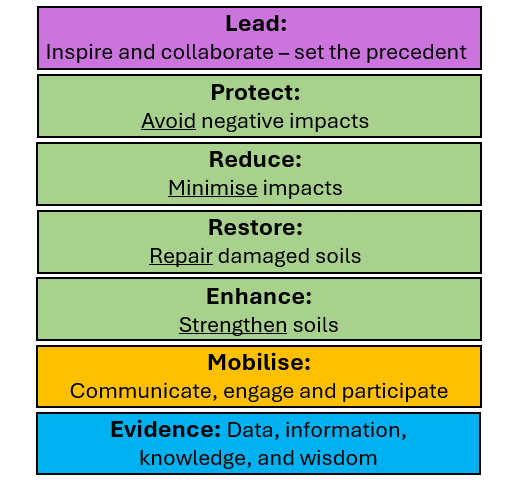
Figure 4. Objectives of the Soil Route Map for Scotland 2026
Next Steps and Conclusions
The soil route map outlines key objectives and initial options for action to accelerate soil protection, restoration and enhancement in Scotland to achieve thriving soils for Scotland’s community, environment and economy. Underpinning the mobilisation of activities is leadership and evidence and this research emphasises the value of concerted action across all stakeholders in the coming years.
In March 2026, Scottish Government announced their Environment, Natural Resources and Agriculture Research Strategy 2027 to 2032[111] outlining a range of missions that Scottish Government will strive to achieve and the areas of research identified as being fundamental to addressing specific environmental challenges. With respect to soils, the strategy outlines specific research aims shown in Table 7 to address the mission of ‘restoring nature and protecting our environment’.
Table 7. Soil specific areas of research interests outlined in the Environment, Natural Resources and Agriculture Research Strategy 2027 to 2032.
Challenge | Areas of Research Interest |
|---|---|
Protecting and restoring Scotland’s soils | What soils data, metrics, and other information do we need, across the full continuum of Scotland’s soils from mineral to deep peats, to understand the current land status and to develop policy-relevant insights? |
What is the impact of climate change, extreme weather and variability on soil function, across the full continuum of Scotland’s soils from mineral to deep peats, and its relation to water and biodiversity? | |
What does healthy soil biodiversity and biological activity look like for different ecosystems and land management systems (for example, including agricultural, urban, semi-natural and peatland)? | |
Protecting and restoring Scotland’s peatlands | What does successful peatland restoration look like, now and in the medium and long-term? |
Which peatland data gaps should be addressed as a priority? | |
How does renewable and other energy infrastructure impact carbon rich soils in Scotland? |
Areas of interest include developing soil monitoring capabilities, exploring impacts of climate change on soil functions and wider environmental conditions (e.g., biodiversity and water) and peatland restoration. Wider areas of research interest outlined in Scottish Government’s Environment, Natural Resources and Agriculture Research: Strategy 2027 to 203215 that directly and indirectly support future progression of soil knowledge in Scotland are described in Appendix G1.
The Soil Route Map1, Scottish Government’s Environment, natural resources and agriculture: strategic research programme 2022-202758 and the strategy for work to 203215 provide a platform for soil specific policy delivery (e.g. Soil-specific objectives in the Scottish Biodiversity Delivery Plan 2024–203056 outlined in Appendix G2). They support policy developments for Scottish soils going forward, such as a formal update of the Scottish Soil Framework (2009)90 as a key step forward for achieving thriving soils for Scotland’s communities, environment and economy.
References
[1] Buckingham S, Baggaley NJ. (2025) Securing soils in a changing climate: A soil route map for Scotland. ClimateXChange https://www.climatexchange.org.uk/projects/a-soil-route-map-for-scotland/ (Accessed May 2026)
[2] Scottish Government (2024) Scottish National Adaptation Plan (Version3: 2024 – 2029) Actions today, for a climate resilient future, ISBN: 978-1-83601-729-5 (web only) https://www.gov.scot/binaries/content/documents/govscot/publications/strategy-plan/2024/09/scottish-national-adaptation-plan-2024-2029-2/documents/scottish-national-adaptation-plan-2024-2029/scottish-national-adaptation-plan-2024-2029/govscot%3Adocument/scottish-national-adaptation-plan-2024-2029.pdf (Accessed May 2026)
[3] UK Government. 2009) UK Code of practice for the sustainable use of soils on construction sites https://assets.publishing.service.gov.uk/media/5b2264ff40f0b634cfb50650/pb13298-code-of-practice-090910.pdf (Accessed May 2026)
[4] NatureScot. (2025) Scotland’s Trends, Indicators and Official Statistics https://www.nature.scot/information-hub/scotlands-trends-indicators-and-official-statistics (Accessed May 2026)
[5] Scottish Government. (2024) Scotland’s National Planning Framework- 4 https://www.gov.scot/publications/national-planning-framework-4/ (Accessed May 2026)
[6] Historic Environment Scotland (2018) Environmental Impact Assessment Handbook https://www.historicenvironment.scot/archives-and-research/publications/publication/?publicationId=6ed33b65-9df1-4a2f-acbb-a8e800a592c0 (Accessed May 2026)
[7] SEPA (2025) Scotland’s soils: Planning and Development https://soils.environment.gov.scot/resources/planning-and-development/#planningSystem (Accessed May 2026)
[8] Institute of Environmental Management & Assessment (IEMA) (2022) Guide: A New Perspective on Land and Soil in Environmental Impact Assessment https://www.iema.net/media/3xejdu0u/2022-iema_land_and_soils_guidance.pdf (Accessed May 2026)
[9] Bruneau PMC, Johnson SM. (2014) Scotland’s peatland – definitions & information
resources. NatureScot Heritage Commissioned Report No 701 https://www.nature.scot/doc/naturescot-commissioned-report-701-scotlands-peatland-definitions-and-information-resources (Accessed May 2026)
[10] NatureScot. (2023) Advising on peatland habitats and carbon-rich soils in development management https://www.nature.scot/doc/advising-peatland-habitats-and-carbon-rich-soils-development-management (Accessed May 2026)
[11] SEPA (2025) Planning guidance and advice notes https://www.sepa.org.uk/environment/land/planning/guidance-and-advice-notes/ (Accessed May 2026)
[12] Scottish Government (2024) National Planning Framework 4: delivery programme V4 https://www.gov.scot/publications/national-planning-framework-4-delivery-programme-v4/documents/ (Accessed May 2026)
[13] Maynard H, Maskrey R, Bavington A, Hurley P, Murray B, (2024) Carbon Calculator for wind farms on Scottish peatlands: an evidence assessment. ClimateXChange Report https://www.climatexchange.org.uk/projects/carbon-calculator-for-wind-farms-on-scottish-peatlands/ (Accessed May 2026)
[14] Crotty F, Dowson F, Schofield K, Barker M, Ginns B, David T, Herold L (2025) Reuse of excavated peat on wind farm development sites ClimateXChange https://www.climatexchange.org.uk/wp-content/uploads/2025/08/IQ26-2024-Reuse-of-excavated-peat-on-wind-farm-development-sites.pdf (Accessed May 2026)
[15] Bibby JS, Douglas HA, Thomasson AJ, Robertson JS, (1991) Land Capability for Agriculture Classification the Macaulay Institute for Soil Research https://www.hutton.ac.uk/wp-content/uploads/2024/05/LAND-CAPABILITY-CLASSIFICATION-FOR-AGRICULTURE.pdf (Accessed May 2026)
[16] Scotland’s Soils Website (2017) Land Capability for Scotland Maps https://soils.environment.gov.scot/maps/capability-maps/ (Accessed May 2026)
[17] Scottish Government (2022) Environment, natural resources and agriculture strategic research: main research providers. https://www.gov.scot/publications/environment-agriculture-and-food-strategic-research-main-research-providers/ (Accessed May 2026)
[18] Udugbezi E, Rivington M, Lilly A, Nolan A, Wardell-Johnson D, (2022) The Land Capability for Agriculture: building a tool to enable climate change assessments. ClimateXChange https://www.climatexchange.org.uk/wp-content/uploads/2023/09/cxc-the-land-capability-for-agriculture-building-a-tool-to-enable-climate-change-assessments-march-2022.pdf (Accessed May 2026)
[19] Rowland C, Scholefield P, O’Neil A, Miller J (2019) Quantifying rates of urban creep in Scotland: results for Edinburgh between 1990, 2005 and 2015 Centre of Expertise for Waters https://www.crew.ac.uk/publication/urban-creep (Accessed May 2026)
[20] Scottish Government (2024) Scotland’s circular economy and waste route map to 2030 Chapter 2. Actions to 2030 – Scotland’s circular economy and waste route map to 2030 – gov.scot (Accessed May 2026)
[21] Lilly A, Baggaley NJ, Loades KW, McKenzie BM, Troldborg M. (2018) Soil erosion and compaction in Scottish soils: adapting to a changing climate. ClimateXChange https://www.climatexchange.org.uk/wp-content/uploads/2023/09/soil-erosion-and-compaction-in-scottish-soils-adapting-to-a-changing-climate.pdf (Accessed May 2026)
[22] Baggaley NJ, Fraser F, Hallett P, Lilly, A, Jabloun, M, Loades K, Parker T, Rivington M, Sharififar M, Zhang Z, Roberts M. (2024) Assessing the socio-economic impacts of soil degradation on Scotland’s water environment. CRW2022_04. Centre of Expertise for Waters https://www.crew.ac.uk/publication/socio-economic-impacts-soil-degradation (Accessed May 2026)
[23] Scottish Government (2025) Scotland’s Climate Change Plan: 2026–2040. https://www.gov.scot/publications/scotlands-climate-change-plan-2026-2040-annexes/ (Accessed May 2026)
[24] Soil Survey Staff Macaulay Institute for Soil Research (1981) National Soil Map of Scotland DOI: 10.5281/zenodo.4646891 (Soil Survey of Scotland Staff (1981)) https://soils.environment.gov.scot/maps/soil-maps/national-soil-map-of-scotland/ (Accessed May 2026)
[25] Cloy J, Audsley R, Hargreaves P, Ball B, Crooks B, Griffiths B. (2016). Valuing Your Soils Practical guidance for Scottish farmers. https://www.farmingandwaterscotland.org/soil-nutrients/valuing-your-soils/ (Accessed May 2026)
[26] Scottish Government (2024) Good Agricultural and Environmental Conditions (GAECs) https://www.ruralpayments.org/topics/inspections/all-inspections/cross-compliance/detailed-guidance/good-agricultural-and-environmental-conditions/good-agricultural-and-environmental-conditions.pdf (Accessed May 2026)
[27] Forest Research (2023) The UK Forestry Standard The governments’ approach to sustainable forest management https://assets.publishing.service.gov.uk/media/651670336a423b0014f4c5c0/Revised_UK_Forestry_Standard_-_effective_October_2024.pdf (Accessed May 2026)
[28] Forest Research (2008) Soil compaction – practical considerations. https://www.forestresearch.gov.uk/tools-and-resources/fthr/urban-regeneration-and-greenspace-partnership/practical-considerations-and-challenges-to-greenspace/soil-compaction-practical-considerations/ (Accessed May 2026)
[29] Institute of Quarrying (2021) Good practice guide for handling Soils: In Mineral Workings. https://www.quarrying.org/soils-guidance (Accessed May 2026)
[30] Scotland’s Soils Website (2017) Scotland’s Soils Risk (Vulnerability) maps https://soils.environment.gov.scot/maps/risk-maps/ (Accessed May 2026)
[31] European Parliament and The Council of the European Union (2025) Directive (EU) 2025/2360 of the European Parliament and of the Council of 12 November 2025 on soil monitoring and resilience (Soil Monitoring Law). Directive – EU – 2025/2360 – EN – EUR-Lex (Accessed May 2026)
[32] Environmental Standards Scotland (2024) The risks to Scotland’s soils: a scoping report. https://environmentalstandards.scot/our-work/our-analytical-work/the-risks-to-scotlands-soils-a-scoping-report/ (Accessed May 2026)
[33] SEPA (2000) Contaminated land Regulations https://www.sepa.org.uk/regulations/land/contaminated-land/ (Accessed May2026)
[34] SEPA (2008) Dealing with land contamination in Scotland A review of progress 2000-2008 https://www.sepa.org.uk/media/28314/dealing-with-land-contamination-in-scotland.pdf (Accessed May 2026)
[35] Scottish Government (2006) Environmental Protection Act 1990 – Part IIA Contaminated Land: statutory guidance edition 2 https://www.gov.scot/publications/environmental-protection-act-1990-part-iia-contaminated-land-statutory-guidance/documents/ (Accessed May 2026)
[36] UK Government (2018) The Environmental Authorisations (Scotland) Regulations 2018 Scottish Statutory Instruments https://www.legislation.gov.uk/ssi/2018/219/contents/made (Accessed May 2026)
[37] UK Government (2024) Official Statistics: Agri-climate report 2024 https://www.gov.uk/government/statistics/agri-climate-report-2024/agri-climate-report-2024 (Accessed May 2026)
[38] Buckingham S, Topp CFE, Smith P, Eory V, Chadwick DR, Drewer J , Duffy C, Baxter CK, Cloy JM, Connolly S, Cooledge EC, Cowan NJ , Fox NJ, Jebari A, Jenkins B, Krol DJ, Marsden KA, Mcauliffe GA, Morrison SJ, O’Flaherty V, Ramsey R, Richards KG, Roehe R, Smith J, Smith K, Takahash T, Thorman RE, Williams J, Wiltshire J, Ree RM (2023) Greenhouse Gas And Ammonia Emission Mitigation Priorities For Uk Policy Targets Engineering Agriculture.10(2).268 -280. https://doi.org/10.15302/J-FASE-2023495 (Accessed May 2026)
[39] UK Government (2008) The Action Programme for Nitrate Vulnerable Zones (Scotland) Regulations 2008 You are here: Scottish Statutory Instruments 2008 No. 298 https://www.legislation.gov.uk/ssi/2008/298/contents/made (Accessed May 2026)
[40] SEPA (2025) Soil improvement using waste https://beta.sepa.scot/regulation/authorisations-and-compliance/easr-authorisations/waste-activities/soil-improvement-using-waste/ (Accessed May 2026)
[41] SEPA (2026) Rural Payments and Services Whole Farm Plan full guidance https://www.ruralpayments.org/topics/all-schemes/whole-farm-plan/ (Accessed May 2026)
[42] UK Government (2026) PLANET Nutrient Management Tool https://www.planet4farmers.co.uk/Content.aspx?name=PLANET (Accessed May 2026)
[43] Cloy J, Guimarães R, Batey T, Lars Munkholm L (2012) Visual Evaluation of Soil Structure (VESS) https://www.sruc.ac.uk/media/xbrfn4x3/vess-colour-chart.pdf (Accessed May 2026)
[44] Scottish Government (2026) Sustainable and regenerative agriculture: code of practice https://www.gov.scot/publications/code-practice-sustainable-regenerative-agriculture-2/ (Accessed May 2026)
[45] Scottish Government (2022) Sustainable and regenerative farming – next steps: statement https://www.gov.scot/publications/next-step-delivering-vision-scotland-leader-sustainable-regenerative-farming/ (Accessed May 2026)
[46] SEPA (2025) Use of waste on a single site for soil improvement https://beta.sepa.scot/regulation/authorisations-and-compliance/easr-authorisations/waste-activities/soil-improvement-using-waste/use-of-waste-on-a-single-site-for-soil-improvement/ (Accessed May 2026)
[47] Farm Advisory Service (2024) What is ‘Rock Dust’ (Enhanced Weathering) and how it can Affect Soil Health and Carbon Sequestration https://www.fas.scot/article/what-is-rock-dust-enhanced-weathering-and-how-it-can-affect-soil-health-and-carbon-sequestration/ (Accessed May 2026)
[48] Environment Agency (2025) Enhanced rock weathering – evidence on potential environmental impacts and social implications Chief Scientist’s Group report https://assets.publishing.service.gov.uk/media/68bec4c8c771153e08e0dd19/Enhanced_rock_weathering_-_evidence_on_potential_environmental_impacts_and_social_implications.pdf (Accessed May 2026)
[49] Scottish Government (2024) Academic Advisory Panel – soil carbon and natural capital markets: advisory note https://www.gov.scot/publications/academic-advisory-panel-soil-carbon-and-natural-capital-markets-advisory-note/ (Accessed May 2026)
[50] Scottish Government (2025) The UK Forestry Standard (UKFS): Technical standard for sustainable forest management across the UK https://www.forestry.gov.scot/uk-forestry-standard-ukfs (Accessed May 2026)
[51] Department for Environment, Food & Rural Affairs (2026) Policy paper: PFAS Plan: building a safer future together https://www.gov.uk/government/publications/pfas-plan/pfas-plan-building-a-safer-future-together (Accessed May 2026)
[52] Helwig K, Cooper A, Pagaling E, Henderson F, Avery L, Roberts J, Mattar S, Devalla S, Hunter C, Frascaroli G, Pahl O, Escudero A, Shortall O, Zhang Z, Troldsborg M (2024) Emerging Contaminants: Informing Scotland’s strategic monitoring and policy approaches on substances of increasing concern CRW2022_06 Centre of Expertise for Waters (CREW) https://www.crew.ac.uk/sites/www.crew.ac.uk/files/publication/CRW2022_06_Emerging%20contaminants%20report%20and%20appendices_0.pdf (Accessed May 2026)
[53] Fidra (2024) Emerging Chemical Contaminants in Agriculture: Soil Health Impacts and Mitigation Measures https://fidra.org.uk/download/soil-health/ (Accessed May 2026)
[54] Scottish Government. (2025) Making the Case for Nature: insights from Scotland’s Natural Capital analyses https://www.gov.scot/publications/making-case-nature-insights-scotlands-natural-capital-analyses/pages/5/ (Accessed May 2026)
[55] Scottish Government (2024) Natural Capital Market Framework https://www.gov.scot/binaries/content/documents/govscot/publications/advice-and-guidance/2024/11/natural-capital-market-framework/documents/natural-capital-market-framework/natural-capital-market-framework/govscot%3Adocument/natural-capital-market-framework.pdf (Accessed May 2026)
[56] Scottish Government (2025) Investing in Nature A plan to support investment in biodiversity and climate adaptation in Scotland https://www.gov.scot/binaries/content/documents/govscot/publications/strategy-plan/2025/02/investing-nature-plan-support-investment-biodiversity-climate-adaptation-scotland/documents/biodiversity-investment-plan/biodiversity-investment-plan/govscot%3Adocument/biodiversity-investment-plan.pdf (Accessed May 2026)
[57] SEFARI (2022) Understanding the value of Scotland’s agricultural soil natural capital, RESAS 2022-2027 https://sefari.scot/research/projects/understanding-the-value-of-scotland%E2%80%99s-agricultural-soil-natural-capital (Accessed May 2026)
[58] Scottish Government (2024) Environment, natural resources and agriculture – strategic research 2022-2027: overview. https://www.gov.scot/publications/environment-agriculture-and-food-strategic-research-2022-27-overview/pages/strategic-research-programme-2022-to-2027/ (Accessed May 2026)
[59] Intergovernmental Panel on Climate Change (IPCC)(2019) Task Force on National Greenhouse Gas Inventories. https://www.ipcc-nggip.iges.or.jp/public/index.html (Accessed May 2026)
[60] UK Government (2026) Accredited official statistics 2025 UK greenhouse gas emissions: provisional figures – statistical release: Electricity supply, fuel supply, domestic transport, buildings and product uses, industry, agriculture, waste, and emissions/removals from Land Use, Land-Use Change and Forestry (LULUCF) https://www.gov.uk/government/statistics/provisional-uk-greenhouse-gas-emissions-statistics-2025/2025-uk-greenhouse-gas-emissions-provisional-figures-statistical-release (Accessed May 2026)
[61] Integrated into the International Sustainability Standards Board (ISSB) global Standard (formerly the Task Force on Climate-related Financial Disclosures – TCFD) https://www.ifrs.org/issued-standards/ifrs-sustainability-standards-navigator/ifrs-s2-climate-related-disclosures/ (Accessed May 2026)
[62] Integrated into the International Sustainability Standards Board (ISSB) global Standard (formerly the Task Force on Climate-related Financial Disclosures – TCFD) https://www.ifrs.org/sustainability/knowledge-hub/introduction-to-issb-and-ifrs-sustainability-disclosure-standards/ (Accessed May 2026)
[63] UK Government (2019) Environmental Reporting Guidelines: Including streamlined energy and carbon reporting guidance https://assets.publishing.service.gov.uk/media/67161e8696def6d27a4c9ab3/environmental-reporting-guidance-secr-march-2019.pdf (Accessed May 2026)
[64] World Resources Institute and World Business Council for Sustainable development (2004) A Corporate Accounting and Reporting Standard Revised Edition https://ghgprotocol.org/corporate-standard (Accessed May 2026)
[65] World Resources Institute and World Business Council for Sustainable development (2011) Corporate Value Chain (Scope 3) Accounting and Reporting Standard; Supplement to the GHG Protocol Corporate Accounting and Reporting Standard https://ghgprotocol.org/corporate-value-chain-scope-3-standard (Accessed May 2026)
[66] World Resources Institute and World Business Council for Sustainable development (2026) Land Sector and Removals Standard Version 1.0: Agriculture and CO2 removal technologies Supplement to the GHG Protocol Corporate Standard and Scope 3 Standard https://ghgprotocol.org/land-sector-and-removals-standard (Accessed May 2026)
[67] Science Based Targets Initiative (2026) Science Based Targets: Ambitious corporate climate action https://sciencebasedtargets.org/ (Accessed May 2026)
[68] Science Based Targets Initiative (2026) Forest, Land and Agriculture (FLAG) Guidance for land-intensive https://sciencebasedtargets.org/sectors/forest-land-and-agriculture (Accessed May 2026)
[69] Cole LJ, McCarthy J, McVittie A, Buckingham S, Barthelmess V, Stevens B, Audsley R. (2026). Natural Capital and River Basin Management Planning Protecting and Improving Scotland’s Water Environment. Main report. CRW2024_04. Centre of Expertise for Waters (CREW). https://www.crew.ac.uk/publications/natural-capital-and-rbmp (Accessed May 2026)
[70] Improvement Service (2021) Elected Member Briefing Note: Nature-based Solutions https://www.cosla.gov.uk/__data/assets/pdf_file/0025/26656/EM-Briefing-Nature-Based-Solutions.pdf#:~:text=NatureScot’s%20baseline%20analysis%20of%20nature%2Dbased,help%20Scotland%20secure%20a%20green (Accessed May 2026)
[71] Scottish Environment Link (2021) Nature-based solutions to societal challenge of climate change https://www.scotlink.org/wp-content/uploads/2020/07/NbS-LINK-briefing-FINAL-8.pdf (Accessed May 2026)
[72] NatureScot (2024) A Framework for Nature Networks in Scotland https://www.nature.scot/doc/nature-networks-framework (Accessed May 2026)
[73] Nature Friendly Farming Network (2026) The home of nature-friendly farming https://www.nffn.org.uk/ (Accessed May 2026)
[74] Taskforce on Nature-related Financial Disclosures (2023) https://tnfd.global/ (Accessed May 2026)
[75] Scottish Government (2026) Ecosystem Restoration Code (ERC): A Competent Model for private investment in nature restoration in Scotland https://www.gov.scot/publications/ecosystem-restoration-code-erc-competent-model-private-investment-nature-restoration-scotland/documents/ (Accessed May 2026)
[76] Scottish Government (2024) Natural Capital Market Framework https://www.gov.scot/publications/natural-capital-market-framework/ (Accessed May 2026)
[77] Scottish Government (2024) Principles for Responsible Investment in Natural Capital. https://www.gov.scot/publications/interim-principles-for-responsible-investment-in-natural-capital/ (Accessed May 2026)
[78] Taskforce on Nature-related Financial Disclosures (2025) TNFD 2025 Status Report https://tnfd.global/wp-content/uploads/2025/09/250918_TNFD-Status-Report_DIGITAL.pdf?v=1758808860 (Accessed May 2026)
[79] Taskforce on Nature-related Financial Disclosures (2026) Draft sector guidance – Technology and communications https://tnfd.global/publication/draft-sector-guidance-technology-communication/ (Accessed May 2026)
[80] Taskforce on Nature-related Financial Disclosures (2026) Draft sector guidance – Alternative fuels https://tnfd.global/publication/draft-sector-guidance-alternative-fuels/ (Accessed May 2026)
[81] Taskforce on Nature-related Financial Disclosures (2026) Publication: Full library of publications including the TNFD Recommendations and Additional Guidance for corporates and financial institutions to support implementation https://tnfd.global/tnfd-publications/?_sft_framework-categories=additional-guidance-by-sector (Accessed May 2026)
[82] International Union for Conservation of Nature (2025) Peatland Program: Peatland Code https://www.iucn-uk-peatlandprogramme.org/peatland-code (Accessed May 2026)
[83] UK Woodland Carbon Code (2026) The Woodland Carbon Code Requirements and guidance for Woodland Carbon Code projects https://www.woodlandcarboncode.org.uk/view-the-code (Accessed May 2026)
[84] Scottish Government (2023) Mobilising private investment in natural capital: report https://www.gov.scot/publications/mobilising-private-investment-natural-capital/pages/3/ (Accessed May 2026)
[85] Black HIJ, Reed MS, Kendall H, Parkhurst R, Cannon N, Chapman PJ, Orman M, Phelps J, Rudman H, Whaley S, Yeluripati J, Ziv G (2022) What makes an operational farm soil carbon code? Insights from a global comparison of existing soil carbon codes using a structured analytical framework. Carbon Management, VOL. 13, NO. 1, 554–580 https://doi.org/10.1080/17583004.2022.2135459 (Accessed May 2026)
[86] UK Government (2026) UK Sustainability Reporting Standards: Information on the UK government’s framework to create UK Sustainability Reporting Standards (UK SRS) by assessing and endorsing the global corporate reporting baseline of IFRS Sustainability Disclosure Standards https://www.gov.uk/guidance/uk-sustainability-reporting-standards (Accessed May 2026)
[87] Financial Conduct Authority (2026) Sustainability Disclosure Requirements (SDR) regime https://www.fca.org.uk/firms/climate-change-and-sustainable-finance/sustainability-disclosure-requirements-sdr-regime (Accessed May 2026)
[88] Loades K, Afriyie E, Buckingham S, Hannam J, Higgins S, Lilly A, Neilson R, Potts J, Seaton F, Vanguelova E, N Baggaley N. (2026) LUNZ Hub 15: Aligning soil monitoring, methods and metrics across the 4 Nations, LUNZ Hub Report. https://lunzhub.com/wp/wp-content/uploads/2026/04/LUNZ-Hub-Calldown-15-Aligning-soil-monitoring-methods-and-metrics-across-the-4-Nations.pdf (Accessed May 2026)
[89] Land Use for Net Zero (LUNZ) (2026) Overview of LUNZ Projects and themes https://lunzhub.com/projects/ (Accessed May 2026)
[90] Scottish Government (2009) The Scottish Soi Framework https://www.gov.scot/publications/scottish-soil-framework/ (Accessed May2026)
[91] Scotland’s Solis Website (2017) National Soil Inventory of Scotland (NSIS 1978-88) https://soils.environment.gov.scot/maps/point-data/national-soil-inventory-of-scotland-nsis-1978-88/ (Accessed May 2026)
[92] Paterson E, Baggaley NJ, Afriyie E, Ghosh U, Potts J, Gray-Wannell N, Gagkas Z (2026) Maximising value from investment in soil data resources https://sefari.scot/sites/www.sefari.scot/files/2025-09/ENRA_Soil_Data_Resources_Paterson_et_al.pdf (Accessed May 2026)
[93] Neilson R, Lilly A, Aitkenhead M, Artz R, Baggaley N, Giles ME, Holland J, Loades K, Ovando Pol P, Rivington M, Roberts M, Yeluripati J (2022) Measuring the vulnerability of Scottish soils to a changing climate DOI: https://hdl.handle.net/1842/37248 (Accessed May 2026)
[94] Scottish Government (2024) Scottish Biodiversity Delivery Plan 2024–2030 https://www.gov.scot/binaries/content/documents/govscot/publications/strategy-plan/2024/11/strategic-biodiversity-framework-delivery-plan-20242030/documents/scottish-biodiversity-delivery-plan-20242030/scottish-biodiversity-delivery-plan-20242030/govscot%3Adocument/scottish-biodiversity-delivery-plan-20242030.pdf (Accessed May 2026)
[95] Scottish Government (2026) Developing Official Statistics on Scotland’s Peatlands https://www.gov.scot/publications/developing-official-statistics-on-scotlands-peatlands/ (Access May 2026)
[96] Scottish Government (2025) Peatland ACTION Five Year Partnership Plan 2025-2030 https://www.gov.scot/binaries/content/documents/govscot/publications/strategy-plan/2025/12/peatland-action-five-year-partnership-plan-2025-2030/documents/peatland-action-five-year-partnership-plan-2025-2030/peatland-action-five-year-partnership-plan-2025-2030/govscot%3Adocument/peatland-action-five-year-partnership-plan-2025-2030.pdf (Accessed May 2026)
[97] NatureScot (2025) Scotland’s Greenspace Map https://www.nature.scot/professional-advice/placemaking-and-green-infrastructure/greenspace-map (Accessed May 2026)
[98] Scottish Government (2008) Planning advice note 65: planning and open space https://www.gov.scot/publications/planning-advice-note-pan-65-planning-open-space/pages/0/ (Accessed May 2026)
[99] Spatial Hub Scotland (2023) Map of Scotland’s Contaminated Land https://data.spatialhub.scot/dataset/contaminated_land-is (Accessed May 2026)
[100] Scottish Government (2026) Energy Consents Unit Portal Home Page https://www.energyconsents.scot/ (Accessed May 2026)
[101] Scottish Government (2017) Environmental Impact Assessment register for or the Agriculture, Land Drainage and Irrigation Projects https://www.ruralpayments.org/topics/inspections/all-inspections/cross-compliance/environmental-impact-assessment/public-register/ (Accessed May 2026)
[102] Scottish Forestry (2026) Public Register of EIA screening scottishforestry-publicregister.oncreate.app/w/webpage/prhome-pep?webpage_subpage_id=PAG0000236GBLNM1&webpage_token=eb1df62ac093774cad10b1decb59d7739b25c61d88b30cfa77d60fb2f718fc74 (Accessed May 2026)
[103] Scottish Forestry (2025) Historic Applications for Environmental Impact Assessment (EIA) Consent https://www.forestry.gov.scot/historic-eia-cases (Accessed May 2026)
[104] Scottish Government (2023) Agricultural Reform List of Measures https://www.ruralpayments.org/topics/agricultural-reform-programme/arp-list-of-measures/ (Accessed May 2026)
[105] Scottish Government (2026) Scotland’s LiDAR revolution: First data release to reveal Scotland’s landscape in unprecedented detail – Blog Post by Prof. Mathew Williams https://blogs.gov.scot/digital/2026/01/29/scotlands-lidar-revolution-first-data-release-to-reveal-scotlands-landscape-in-unprecedented-detail/ (Accessed May 2026)
[106] Scottish Government (2026) Scottish Land LiDAR Programme – 2025 capture – LAS Dataset https://ckan.publishing.service.gov.uk/dataset/scottish-land-lidar-programme-2025-capture-las (Accessed May 2026)
[107] Agri-Food and Biosciences Institute (AFBI) (2024) Soil Nutrient Health Scheme research ‘maps the way ahead https://www.afbini.gov.uk/news/soil-nutrient-health-scheme-research-maps-way-ahead (Accessed May 2026)
[108] Agri-Food and Biosciences Institute (AFBI) (2023) Soil Nutrient Health Scheme Overview https://www.afbini.gov.uk/publications/soil-nutrient-health-scheme-overview (Accessed May 2026)
[109] ENRA Strategic Research Programme (2022-2027) Supporting Evidence for Scotland’s 4th Land Use Strategy: StoryMap https://storymaps.arcgis.com/stories/45b9910cba85426cb5dbc254d11c0ce1 (Accessed May 2026)
[110] European Parliament and The Council of the European Union (2025) Directive (EU) 2025/2360 of the European Parliament and of the Council of 12 November 2025 on soil monitoring and resilience (Soil Monitoring Law). Directive – EU – 2025/2360 – EN – EUR-Lex (Accessed May 2026)
[111] Scottish Government (2026) Environment, Natural Resources and Agriculture Research: Strategy 2027 to 2032 Environment, Natural Resources and Agriculture Research: Strategy 2027 to 2032 – gov.scot (Accessed May 2026)
[112] UN FAO (2015) Soil functions Soils deliver ecosystem services that enable life on Earth https://openknowledge.fao.org/server/api/core/bitstreams/5934eac5-9dfd-4c09-85be-693e4b59a7cc/content (Accessed May 2026)
[113] Scottish Government (2013) Strategic Environmental Assessment: guidance https://www.gov.scot/publications/strategic-environmental-assessment-guidance/ (Accessed May 2026)
[114] UK Government (2017) The Town and Country Planning (Environmental Impact Assessment) (Scotland) Regulations 2017. https://www.legislation.gov.uk/ssi/2017/102/schedule/1/made (Accessed May 2026)
[115] Nature Scot (2023) NatureScot Research Report 1259 – A risk-based approach to peatland restoration and peat instability https://www.nature.scot/doc/naturescot-research-report-1259-risk-based-approach-peatland-restoration-and-peat-instability (Accessed May 2026)
[116] Nature Scot (2023) Peatland ACTION sharing good practice for peatland restoration techniques: – Technical Compendium https://www.nature.scot/doc/peatland-action-technical-compendium (Accessed May 2026)
[117] UK Government (2025) National Planning Policy Framework The revised National Planning Policy Framework sets out government’s planning policies for England and how these are expected to be applied. https://www.gov.uk/government/publications/national-planning-policy-framework–2 (Accessed May 2026)
[118] Welsh Government (2024) Planning Policy Wales Edition 12 | February 2024 https://www.gov.wales/sites/default/files/publications/2024-07/planning-policy-wales-edition-12.pdf (Accessed May 2026)
[119] Northern Ireland Department for Infrastructure (2025) The Strategic Planning Policy Statement, Edition 2 or Northern Ireland https://www.infrastructure-ni.gov.uk/publications/strategic-planning-policy-statement-edition-2 (Accessed May 2026)
[120] Scotland’s Solis Website (2025) Planning and development https://soils.environment.gov.scot/resources/planning-and-development/ (Accessed May 2026)
[121] SEPA (2025) Development Management Consultation Thresholds and Standing Advice https://view.officeapps.live.com/op/view.aspx?src=https%3A%2F%2Fwww.sepa.org.uk%2Fmedia%2Fgzvbn53s%2Fdm-consultation-thresholds-and-standing-advice.docx&wdOrigin=BROWSELINK (Accessed May2026)
[122] NatureScot (2025) Guidance – Development Management and the Natural Heritage https://www.nature.scot/doc/guidance-development-management-and-natural-heritage (Accessed May 2026)
[123] Nature Scot (2026) Advising on peatland habitats and carbon-rich soils in development management https://www.nature.scot/doc/advising-peatland-habitats-and-carbon-rich-soils-development-management (Accessed May 2026)
[124] Historic Environment Scotland (2018) Environmental Impact Assessment: Information on Environmental Impact Assessment, a way to look at the likely environmental effects of a project and apply mitigation measures as necessary https://www.historicenvironment.scot/advice-and-support/planning-and-guidance/environmental-assessment/environmental-impact-assessment/ (Accessed May 2026)
[125] Historic Environment Scotland (2025) Environmental Forestry Environmental Impact Assessment: An Environmental Impact Assessment (EIA) is a systematic process which checks the potential environmental consequences of a proposed development or project https://www.forestry.gov.scot/forestry-environmental-impact-assessment (Accessed May 2026)
[126] UK Government (2018) Code of practice for the sustainable use of soils on construction sites: The code of practice for the sustainable use of soils on construction sites provides relevant advice on the use of soil in construction projects. https://www.gov.uk/government/publications/code-of-practice-for-the-sustainable-use-of-soils-on-construction-sites (Accessed May 2026)
[127] West Lothian Council (2021) PLANNING GUIDANCE (PG) Soil Management and After Use of Soils on Development Sites https://www.westlothian.gov.uk/media/48547/PG-Planning-Guidance-Soil-Management-After-Use-of-Soils-on-Development-Sites-Adopted-April-2021-/pdf/PG_-_Soil_Management___After_Use_of_Soils_on_Development_Sites_-__Adopted_Version_for_Web.pdf?m=637527818523870000 (Accessed May 2026)
[128] Cornwall Council (2022) Building on soil sustainability: Principles for soils in planning and construction Soils in Planning and Construction Task Force Sept 202 https://www.lancaster.ac.uk/lec/sustainable-soils/files/2022/09/Soils-in-Planning-and-Construction-Sept-22.pdf (Accessed May 2026)
[129] Institute of Environmental Management & Assessment (IEMA) (2022) ISEP launch of New EIA Guidance on Land and Soils – Blog https://www.isepglobal.org/resources/blogs/2022/02/17/isep-launch-of-new-eia-guidance-on-land-and-soils-february-2022/ (Accessed May 2026)
[130] British Society of Soil Science (2022) Working with Soil Guidance Note on Benefitting from Soil Management in Development and Construction https://soils.org.uk/wp-content/uploads/2022/02/WWS3-Benefitting-from-Soil-Management-in-Development-and-Construction-Jan-2022.pdf (Accessed May 2026)
[131] Verture (2026) the climate resilience charity Shaped by people and place, building a fairer future for all https://verture.org.uk/ (Accessed May 2026)
[132] Scottish Government (2026) Carbon rich soil, peat and peatland https://soils.environment.gov.scot/media/haabyors/180319_definitions-of-carbon-rich-soil_agreed-text-for-website.pdf (Accessed May 2026)
[133] Lilly A. (2023) Origins of the Soil Survey of Scotland 50 cm threshold to define a Peat soil https://sefari.scot/sites/default/files/documents/Origin%20of%2050%20cm%20Threshold%20for%20Defining%20Peat%20on%20Soil%20Maps%20of%20Scotland.pdf (Accessed May 2026)
[134] Scottish Forestry (2025) Control of Woodland Removal – Policy https://www.forestry.gov.scot/publications/control-woodland-removal-policy (Accessed May 2026)
[135] Scottish Forestry (2025) How to apply to fell trees https://www.forestry.gov.scot/apply-fell-trees (Accessed May 2026)
[136] SEPA (2026) WAS-G-11 On-site Management of Excavated Peat Version 1 – March 2026 https://view.officeapps.live.com/op/view.aspx?src=https%3A%2F%2Fbeta.sepa.scot%2Fmedia%2Fetmkl4ri%2Fwas-g-11-on-site-management-of-excavated-peat.docx&wdOrigin=BROWSELINK (Accessed May 2026)
[137] Scottish Government (2017) Peatland survey: Guidance on carrying out peatland site surveys, updated in 2017. https://www.gov.scot/publications/peatland-survey-guidance/ (Accessed May 2026)
[138] Scottish Government (2017) Proposed electricity generation developments: peat landslide hazard best practice guide https://www.gov.scot/publications/peat-landslide-hazard-risk-assessments-best-practice-guide-proposed-electricity / (Accessed May 2026)
[139] NatureScot and Forestry Commission Scotland (2010) Floating Roads on Peat.https://roadex.org/wp-content/uploads/2014/01/FCE-SNH-Floating-Roads-on-Peat-report.pdf (Accessed May 2026)
[140] NatureScot (2025) Environmental Impact Assessment descriptions and guidance https://www.nature.scot/professional-advice/planning-and-development/environmental-assessment/environmental-impact-assessment (Accessed May 2026)
[141] NatureScot (2025) Guidance – Soils of National Conservation Importance in Scotland. https://www.nature.scot/doc/archive/guidance-soils-national-conservation-importance-scotland (Accessed May 2026)
[142] Scottish Government (2018) Carbon calculator: technical guidance. https://www.gov.scot/publications/carbon-calculator-technical-guidance/ (Accessed May 2026)
[143] Scottish Government (2014) Assessment of peat volumes, reuse of excavated peat and minimisation of waste: guidance. https://www.gov.scot/publications/assessment-of-peat-volumes-reuse-of-excavated-peat-and-minimisation-of-waste-guidance/ (Accessed May 2026)
[144] Ministry of Agriculture Fisheries and Food (2000) Good Practice Guide for Handling Soils. https://gat04-live-1517c8a4486c41609369c68f30c8-aa81074.divio-media.org/filer_public/35/98/359889e9-848f-442a-9569-52f5332e8787/12221.pdf (Accessed May 2026)
[145] The Institute of Quarrying (2021) Good Practice Guide for Handling Soils in Mineral Workings. https://www.quarrying.org/hubfs/Soils%20Guidance/IQ%20Soil%20Guidance%20full%20document%20including%20all%20practitioner%20advice%20updated%20May%202022.pdf (Accessed May 2026)
[146] Society for the Environment (2023) The Ten Principles of Good Soils and Stones Management. https://socenv.org.uk/wp-content/uploads/2023/03/FINAL-Ten-Soils-Stones-Principles.pdf (Accessed May 2026)
[147] Society for the Environment (2025) The SILOtoSOIL Tool. https://socenv.org.uk/silo-to-soil/ (Accessed May 2026)
[148] Society for the Environment (2021) Soils and Stones 2021 Report https://socenv.org.uk/resource/socenv-soils-and-stones-report/ (Accessed May 2026)
[149] Society for the Environment (2023) Evidence featured in EFRA soil health inquiry recommendations https://socenv.org.uk/socenv-evidence-featured-efra-soil-health-inquiry-report/ (Accessed May 2026)
[150] Soils Task Force (2021) Introduction to the Soils in Planning and Construction Task Force https://www.soilstaskforce.com/about (Accessed May 2026)
[151] Local Soils Model Policy and Guide (2025) Soils in Planning & Construction Task Force, Lancaster University, UK https://786141fa-0932-49ad-a74b-e7239fa0aac4.filesusr.com/ugd/7be451_6178ad975e1d44d3b58b3d5fefcee438.pdf (Accessed May 2026)
[152] Farm Advisory Service (Multiple) Soil Structure & Compaction Publications, Helping farmers in Scotland https://www.fas.scot/crops-soils/soils/soil-structure-compaction-publications/ (Accessed May 2026)
[153] Farming and Water Scotland (2016) Valuing Your Soils: Practical guidance for Scottish farmers https://www.farmingandwaterscotland.org/soil-nutrients/valuing-your-soils/ (Accessed May 2026)
[154] Scottish Government (2026) Rural Payments and Services: Ecological Focus Areas. https://www.ruralpayments.org/topics/all-schemes/basic-payment-scheme/basic-payment-scheme-full-guidance/greening—bps/greening-guidance-2026/efa-ecological-focus-areas/ (Accessed May 2026)
[155] UK Government Legislation (2014) The Common Agricultural Policy (Cross-Compliance) (Scotland) Regulations 2014 https://www.legislation.gov.uk/ssi/2014/325/contents (Accessed May 2026)
[156] AHDB (2026) Soil compaction from machinery: traffic on wet soils https://ahdb.org.uk/knowledge-library/soil-compaction-from-machinery#:~:text=Reduce%20machine%20size%20and%20total%20axle%20loads;,deep%2Dseated%20compaction%2C%20even%20with%20large%20low%2Dpressure%20tyres (Accessed May 2026)
[157] Scottish Government (2025) Rural Payments and Services: Agricultural Reform Route Map. https://www.ruralpayments.org/topics/agricultural-reform-programme/arp-route-map/ (Accessed May 2026)
[158] Scottish Government (2016) Rural Payments and Services Regionalisation of payments. https://www.ruralpayments.org/topics/your-business/regionalisation-of-payments/ (Accessed May 2026)
[159] UK Soil Observatory: UKSO (2015) Forest research BioSoil data. https://www.ukso.org/static-maps/forest-research-biosoil-data.html (Accessed May 2026)
[160] UK Soil Observatory: UKSO (2014) National Forest Estate soil. https://www.ukso.org/static-maps/national-forest-estate-soil.html (Accessed May 2026)
[161] UK Soil Observatory: UKSO (2014) National Forest Estate soil. https://www.ukso.org/static-maps/national-forest-estate-soil.html (Accessed May 2026)
[162] Scottish Forestry (2025) Forestry Environmental Impact Assessment https://www.forestry.gov.scot/forestry-environmental-impact-assessment (Accessed May 2026)
[163] Scottish Forestry (2025) Available funding and support: The Forestry Grant Scheme (FGS). https://www.forestry.gov.scot/available-funding-and-support (Accessed May 2026)
[164] NatureScot (2015) Scotland’s National Peatland Plan: Working for our future https://www.nature.scot/doc/scotlands-national-peatland-plan-working-our-future (accessed May 2026)
[165] Scottish Government (2025) Rural Payments and Services: Cross Compliance quick guide. https://www.ruralpayments.org/topics/agricultural-reform-programme/cross-compliance-quick-guide/ (Accessed May 2026)
[166] UK Government (2025) Guidance The UK Forestry Standard. https://www.gov.uk/government/publications/the-uk-forestry-standard (Accessed May 2026)
How to cite this publication:
Buckingham, S. and Baggaley, N. (2026) ‘Securing Scotland’s soils in a changing climate – technical report’, ClimateXChange.
© The University of Edinburgh, 2026
Prepared by SLR Consulting and The James Hutton Institute on behalf of ClimateXChange, The University of Edinburgh. All rights reserved.
While every effort is made to ensure the information in this report is accurate as at the date of the report, no legal responsibility is accepted for any errors, omissions or misleading statements. The views expressed represent those of the author(s), and do not necessarily represent those of the host institutions or funders.
This work was supported by the Rural and Environment Science and Analytical Services Division of the Scottish Government (CoE – CXC).
ClimateXChange
Edinburgh Climate Change Institute
High School Yards
Edinburgh EH1 1LZ
+44 (0) 131 651 4783
If you require the report in an alternative format such as a Word document, please contact info@climatexchange.org.uk or 0131 651 4783.
A soil route map for Scotland | ClimateXChange (Accessed May 2026) ↑
Scottish National Adaptation Plan (2024-2029) (Accessed May 2026) ↑
Defra (2009) Construction Code of Practice for the Sustainable Use of Soils on Construction Sites (Accessed May 2026) ↑
NatureScot. Scotland’s Trends, Indicators and Official Statistics (Accessed May 2026) ↑
Scotland’s National Planning Framework (2024) https://www.gov.scot/publications/national-planning-framework-4/ (Accessed May 2026) ↑
Environmental Impact Assessment Handbook | Hist Env Scotland (Accessed May 2026) ↑
Planning and development | Scotland’s soils (Accessed May 2026) ↑
2022-iema_land_and_soils_guidance.pdf (Accessed May 2026) ↑
NatureScot Report 701: Scotland’s peatland – definitions and information resources (2014) https://www.nature.scot/doc/naturescot-commissioned-report-701-scotlands-peatland-definitions-and-information-resources (Accessed May 2026) ↑
Advising on peatland habitats and carbon-rich soils in development management | NatureScot (Accessed May 2026) ↑
Guidance and advice notes | Scottish Environment Protection Agency (SEPA) (Accessed May 2026) ↑
Supporting documents – National Planning Framework 4: delivery programme V4 – gov.scot (Accessed May 2026) ↑
https://www.climatexchange.org.uk/projects/carbon-calculator-for-wind-farms-on-scottish-peatlands/ ↑
https://www.climatexchange.org.uk/wp-content/uploads/2025/08/IQ26-2024-Reuse-of-excavated-peat-on-wind-farm-development-sites.pdf ↑
https://www.hutton.ac.uk/wp-content/uploads/2024/05/LAND-CAPABILITY-CLASSIFICATION-FOR-AGRICULTURE.pdf (Accessed May 2026) ↑
https://soils.environment.gov.scot/maps/capability-maps/ (Accessed May 2026) ↑
Environment, natural resources and agriculture strategic research: main research providers – gov.scot (Accessed May 2026) ↑
The Land Capability for Agriculture: building a tool to enable climate change assessments (Accessed May 2026) ↑
https://www.crew.ac.uk/publication/urban-creep (Accessed May2026) ↑
https://www.gov.scot/publications/scotlands-circular-economy-waste-route-map-2030/pages/5/ (Accessed May 2026) ↑
soil-erosion-and-compaction-in-scottish-soils-adapting-to-a-changing-climate.pdf (Accessed May 2026) ↑
Assessing the socio-economic impacts of soil degradation on Scotland’s water environment | CREW | Scotland’s Centre of Expertise for Waters (Accessed May 2026) ↑
https://www.gov.scot/publications/scotlands-climate-change-plan-2026-2040-annexes/ (Accessed May 2026) ↑
Macaulay Institute for Soil Research, Aberdeen. DOI: 10.5281/zenodo.4646891 (Soil Survey of Scotland Staff (1981)) ↑
Guidance is available – https://www.farmingandwaterscotland.org/soil-nutrients/valuing-your-soils/ (Accessed May 2026) ↑
https://www.ruralpayments.org/topics/inspections/all-inspections/cross-compliance/detailed-guidance/good-agricultural-and-environmental-conditions/good-agricultural-and-environmental-conditions.pdf (Accessed May 2026) ↑
https://assets.publishing.service.gov.uk/media/651670336a423b0014f4c5c0/Revised_UK_Forestry_Standard_-_effective_October_2024.pdf (Accessed May 2026) ↑
https://www.forestresearch.gov.uk/tools-and-resources/fthr/urban-regeneration-and-greenspace-partnership/practical-considerations-and-challenges-to-greenspace/soil-compaction-practical-considerations/ (Accessed May 2026) ↑
https://www.quarrying.org/soils-guidance (Accessed May 2026) ↑
https://soils.environment.gov.scot/maps/risk-maps/ (Accessed May 2026) ↑
Directive (EU) 2025/2360 of the European Parliament and of the Council of 12 November 2025 on soil monitoring and resilience (Soil Monitoring Law) https://eur-lex.europa.eu/eli/dir/2025/2360/oj (Accessed May 2026) ↑
The risks to Scotland’s soils: a scoping report – Environmental Standards Scotland (Accessed May 2026) ↑
Contaminated land | Scottish Environment Protection Agency (SEPA) (Accessed May 2026) ↑
Dealing with Land Contamination in Scotland: A review of progress 2000 – 2008 (Accessed May 2026) ↑
Environmental Protection Act 1990 – Part IIA Contaminated Land: statutory guidance edition 2 – gov.scot (Accessed May 2026) ↑
The Environmental Authorisations (Scotland) Regulations (EASR) 2018 https://www.legislation.gov.uk/ssi/2018/219/contents/made (Accessed May 2026) ↑
Agri-climate report 2024 – GOV.UK (Accessed 2026) ↑
https://journal.hep.com.cn/fase/EN/10.15302/J-FASE-2023495 (Accessed May 2026) ↑
https://www.legislation.gov.uk/ssi/2008/298/contents/made (Accessed May 2026) ↑
https://beta.sepa.scot/regulation/authorisations-and-compliance/easr-authorisations/waste-activities/soil-improvement-using-waste/ (Accessed May 2026) ↑
https://www.ruralpayments.org/topics/all-schemes/whole-farm-plan/ (Accessed May 2026) ↑
https://www.planet4farmers.co.uk/Content.aspx?name=PLANET (Accessed May 2026) ↑
https://www.sruc.ac.uk/media/xbrfn4x3/vess-colour-chart.pdf (Accessed May 2026) ↑
https://www.gov.scot/publications/code-practice-sustainable-regenerative-agriculture-2/ (May 2026) ↑
https://www.gov.scot/publications/next-step-delivering-vision-scotland-leader-sustainable-regenerative-farming/ (Accessed May 2026) ↑
https://beta.sepa.scot/regulation/authorisations-and-compliance/easr-authorisations/waste-activities/soil-improvement-using-waste/use-of-waste-on-a-single-site-for-soil-improvement/ (Accessed May 2026) ↑
https://www.fas.scot/article/what-is-rock-dust-enhanced-weathering-and-how-it-can-affect-soil-health-and-carbon-sequestration/ (Accessed May 2026) ↑
- https://assets.publishing.service.gov.uk/media/68bec4c8c771153e08e0dd19/Enhanced_rock_weathering_-_evidence_on_potential_environmental_impacts_and_social_implications.pdf (Accessed May 2026) ↑
https://www.gov.scot/publications/academic-advisory-panel-soil-carbon-and-natural-capital-markets-advisory-note/ (Accessed May 2026) ↑
The UK Forestry Standard (UKFS) | Scottish Forestry (Accessed May 2026)
https://www.gov.uk/government/publications/pfas-plan/pfas-plan-building-a-safer-future-together (Accessed May 2026) ↑
https://www.crew.ac.uk/sites/www.crew.ac.uk/files/publication/CRW2022_06_Emerging%20contaminants%20report%20and%20appendices_0.pdf (Accessed May 2026) ↑
https://fidra.org.uk/download/soil-health/ (Accessed May 2026) ↑
Introduction – Making the Case for Nature: insights from Scotland’s Natural Capital analyses – gov.scot (Accessed May 2026) ↑
Market Framework for Natural Capital (Accessed May 2026) ↑
Biodiversity Investment Plan (Accessed May 2026) ↑
Understanding the value of Scotland’s agricultural soil natural capital | SEFARI (Accessed May 2026) ↑
Strategic Research Programme 2022 to 2027 – Environment, natural resources and agriculture – strategic research 2022-2027: overview – gov.scot (Accessed May 2026) ↑
Publications – IPCC-TFI (Accessed May 2026) ↑
Electricity supply, fuel supply, domestic transport, buildings and product uses, industry, agriculture, waste, and emissions/removals from Land Use, Land-Use Change and Forestry (LULUCF). ↑
https://www.ifrs.org/issued-standards/ifrs-sustainability-standards-navigator/ifrs-s2-climate-related-disclosures/ (Accessed Amy 2026) ↑
IFRS – Introduction to the ISSB and IFRS Sustainability Disclosure Standards (Accessed May 2026) ↑
Environmental Reporting Guidelines (Accessed May 2026) ↑
Corporate Standard | GHG Protocol (Accessed May 2026) ↑
Corporate Value Chain (Scope 3) Standard | GHG Protocol (Accessed May 2026) ↑
Land Sector and Removals Standard | GHG Protocol (Accessed May 2026) ↑
Ambitious corporate climate action – Science Based Targets Initiative (Accessed May 2026) ↑
Forests, Land and Agriculture – Science Based Targets Initiative (Accessed May 2026) ↑
Natural Capital and River Basin Management Planning – Protecting and Improving Scotland’s Water Environment | CREW | Scotland’s Centre of Expertise for Waters (Accessed May 2026) ↑
https://www.cosla.gov.uk/__data/assets/pdf_file/0025/26656/EM-Briefing-Nature-Based-Solutions.pdf (Accessed May 2026) ↑
NbS-LINK-briefing-FINAL-8.pdf (Accessed May 2026) ↑
Nature Networks Framework | NatureScot (Accessed May 2026) ↑
https://www.nffn.org.uk/ (Accessed May 2026) ↑
The Taskforce on Nature-related Financial Disclosures (Accessed May 2026) ↑
Supporting documents – Ecosystem Restoration Code (ERC): A Competent Model for private investment in nature restoration in Scotland – gov.scot (Accessed May 2026) ↑
Natural Capital Market Framework – gov.scot (Accessed May 2026) ↑
Principles for Responsible Investment in Natural Capital – gov.scot (Accessed May 2026) ↑
250918_TNFD-Status-Report_DIGITAL.pdf (Accessed May 2026) ↑
Draft sector guidance – Technology and communications – TNFD (Accessed May 2026) ↑
Draft sector guidance – Alternative fuels – TNFD (Accessed May 2026) ↑
https://tnfd.global/tnfd-publications/?_sft_framework-categories=additional-guidance-by-sector (Accessed May 226) ↑
Peatland Code | IUCN UK Peatland Programme (Accessed May 2026) ↑
The Woodland Carbon Code | Woodland Carbon Code (Accessed May 2026) ↑
Executive summary – Mobilising private investment in natural capital: report – gov.scot (Accessed May 2026) ↑
Full article: What makes an operational farm soil carbon code? (Accessed May 2026) ↑
https://www.gov.uk/guidance/uk-sustainability-reporting-standards (Accessed May 2026) ↑
https://www.fca.org.uk/firms/climate-change-and-sustainable-finance/sustainability-disclosure-requirements-sdr-regime (Accessed May 2026) ↑
https://lunzhub.com/wp/wp-content/uploads/2026/04/LUNZ-Hub-Calldown-15-Aligning-soil-monitoring-methods-and-metrics-across-the-4-Nations.pdf (Accessed May 2026) ↑
Projects – LUNZ Hub (Accessed May 2026) ↑
The Scottish Soil Framework – gov.scot (Accessed May 2026) ↑
National Soil Inventory of Scotland (NSIS 1978-88) | Scotland’s soils (Accessed May 2026) ↑
https://sefari.scot/sites/www.sefari.scot/files/2025-09/ENRA_Soil_Data_Resources_Paterson_et_al.pdf (Accessed May 2026) ↑
Measuring the vulnerability of Scottish soils to a changing climate (Accessed May 2026) ↑
scottish-biodiversity-delivery-plan-20242030.pdf (Accessed May 2026) ↑
Developing Official Statistics on Scotland’s Peatlands – gov.scot (Accessed May 2026) ↑
Peatland ACTION Five Year Partnership Plan 2025-2030 (Accessed May 2026) ↑
https://www.nature.scot/professional-advice/placemaking-and-green-infrastructure/greenspace-map (Accessed May 2026) ↑
Contents – Planning advice note 65: planning and open space – gov.scot (Accessed May 2026) ↑
Contaminated Land – Scotland – Dataset – Spatial Hub Scotland (Accessed May 2026) ↑
https://www.energyconsents.scot/ (Accessed May 2026) ↑
https://www.ruralpayments.org/topics/inspections/all-inspections/cross-compliance/environmental-impact-assessment/public-register/ (Accessed May 2026) ↑
scottishforestry-publicregister.oncreate.app/w/webpage/prhome-pep?webpage_subpage_id=PAG0000236GBLNM1&webpage_token=eb1df62ac093774cad10b1decb59d7739b25c61d88b30cfa77d60fb2f718fc74 (Accessed May 2026) ↑
https://www.forestry.gov.scot/historic-eia-cases (Accessed May2026) ↑
https://www.ruralpayments.org/topics/agricultural-reform-programme/arp-list-of-measures/ (Accessed May 2026) ↑
https://blogs.gov.scot/digital/2026/01/29/scotlands-lidar-revolution-first-data-release-to-reveal-scotlands-landscape-in-unprecedented-detail/ (a ↑
Scottish Land LiDAR Programme – 2025 capture – LAS – Dataset – data.gov.uk (Accessed May 2026) ↑
https://www.afbini.gov.uk/news/soil-nutrient-health-scheme-research-maps-way-ahead (Accessed May 2026) ↑
Soil Nutrient Health Scheme Overview | Agri-Food and Biosciences Institute (Accessed May 2026) ↑
Supporting Evidence for Scotland’s 4th Land Use Strategy (Accessed May 2026) ↑
Building on existing monitoring frameworks at national and Union level for soil health (on a soil unit basis) and soil sealing or removal (at a soil district level). https://ai4soilhealth.eu/a-framework-for-monitoring-and-assessing-soil-health-at-national-level/ (Accessed May 2026) ↑
Environment, Natural Resources and Agriculture Research: Strategy 2027 to 2032 – gov.scot (Accessed May 2026) ↑