

Mapping Scotland’s sustainable finance landscape
Research completed April 2026
DOI: https://doi.org/10.7488/era/7318
Executive summary
Scotland’s transition to a net zero economy presents a significant investment opportunity for renewable energy, green infrastructure and other sectors. Implementation of a net zero transition is complex and urgent. The scale of capital investment requires further significant mobilisation of private finance, alongside government investment. This report comes in response to a key recommendation of the Scottish Taskforce for Green and Sustainable Financial Services to produce an evidence-based report, mapping Scotland’s green finance landscape.
This report begins by examining available data on Scottish investment activity since 2020 in green infrastructure and renewable energy, with a minimum value of £10 million. The report then explores future investor appetite among finance institutions located or active in Scotland. It then examines green financial service provision from Scottish public/private initiatives and banks and funding institutions. It concludes by examining analytical methodologies that may further identify Scottish sustainable finance opportunities and gaps, as well as challenges in capturing future investment. The analysis adopts a mixed-methods approach, using commercial datasets and desk-based research alongside a limited number of targeted stakeholder interviews. The findings should be interpreted as indicative, as the start of a conversation on sustainable financing, rather than exhaustive.
Key findings and lessons learned
Key findings on Scotland’s sustainable finance landscape are:
- Approximately £9.5 billion has been deployed in green infrastructure and sustainable energy in Scotland since 2020; with the total annual investment increasing from £500 million in 2021 to £1.8 billion in 2023 and over £5 billion in 2025. This excludes Mergers and Acquisitions and deals under £10 million. This investment activity involved a broad mix of investors, including energy companies, commercial banks, infrastructure funds, institutional investors and public financial institutions.
- While investment activity has grown steadily since 2020 it remains concentrated in a relatively narrow set of mature sectors. For deals partly and fully located in Scotland, electricity transmission had the largest share of total investment (32%), followed by renewable energy (25%), and battery storage (21%). The largest investment sectors included renewable wind energy, electricity transmission and battery storage. These sectors benefit from more established technologies, clearer revenue models and strong policy support. Investment in emerging sectors such as industrial decarbonisation, low-carbon heat & transport and nature-based solutions appears more limited with some evidence suggesting higher risk perception and uncertainty of regulatory support and revenue models.
- Financial Services firms are undertaking a range of activities in this space, with key activities including capital allocation, portfolio management, advisory work and climate analytics.
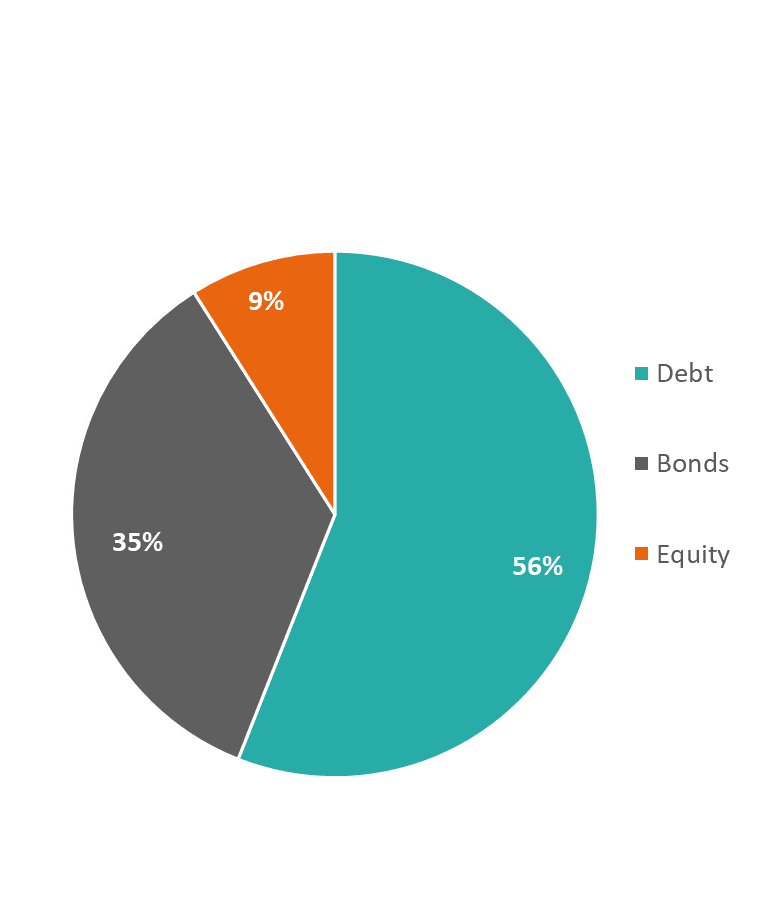
- Financing structures appear to be dominated by debt financing, with 56% of the transactions analysed by the research financed by debt, bonds represented 35%. Equity transactions were relatively low, at 9%.
- The evidence suggests there are strong levels of further investor appetite for green investment in Scotland. Several asset managers, banks and corporate investors have announced plans for further Scottish investment, particularly in renewables, grid infrastructure and storage. Investment decisions tend to be made at a UK or global level rather than targeting Scotland.
- Public financial institutions play important roles across the financing lifecycle, providing patient capital and crowding in private investment. Institutions such as Innovate UK and the British Business Bank support early-stage, higher-risk innovation, while those such as the Scottish National Investment Bank and the National Wealth Fund support businesses as they mature through the crucial scale-up phase in providing patient capital and drawing in private capital.
- Initiatives such as the Global Ethical Finance Initiative and Transition Finance Scotland convene industry and public sector actors. Industry bodies and institutions (e.g. Scottish Financial Enterprise, Scottish Renewables and Scottish Futures Trust) support project development, market coordination and the identification of investment opportunities. Together, these stakeholders form an ecosystem that can support scaling of green investment in Scotland.
Lessons learned
The findings point to several key lessons for unlocking and mobilising greater flows of private capital in Scotland’s green sectors. Many of these challenges are structural, relate to ongoing challenges such as grid capacity, and the deployment of new types of financing. They include:
- Enhancing revenue certainty and policy clarity to reduce perceived investment risk, particularly in low-carbon heat and transport, nature-based solutions, and industrial decarbonisation. These areas are structurally challenging, and will require collaboration from across industry, academia, and government to address.
- Address infrastructure bottlenecks, particularly grid capacity, and improve the efficiency of permitting processes, as critical enablers of greater renewable energy investment. This is also a challenge which cuts across sectors, industry and government.
- More effectively target the use of blended finance and risk-sharing mechanisms to support early-stage and innovative projects where private finance still needs to be unlocked, including in sectors such as industrial decarbonisation, heat, transport and nature-based solutions.
- Explore mechanisms to attract and mobilise more risk capital into emerging green sectors, including venture capital and growth equity, to support innovation and the scaling of new technologies.
Next steps
The analysis presented in this report provides an initial evidence base and highlights areas where further research would support policy development. Further work could therefore build on this analysis to provide a more comprehensive review of Scotland’s green finance opportunities and constraints.
Potential next steps could include:
- Assessing Scotland’s green investment needs from a wider perspective, including sectors not covered in the current analysis, to include more detailed assessment of the scale of investment required to meet policy goals versus expected investment trajectories. This could help identify potential gaps between observed investment activity and sectoral investment needs to reach the net zero target.
- Undertaking a broader assessment of the factors influencing investor decision-making, including both barriers and drivers of investment, drawing on a broader range of stakeholders.
- Conducting a high-level assessment of emerging sectors such as hydrogen, carbon capture and storage, and nature-based solutions, including their investment readiness, project pipeline and key constraints to capital deployment.
- Exploring whether the current mix of financial products sufficiently supports businesses and projects across different stages of development. This would be particularly relevant for innovative or emerging sectors that may require financing between early-stage public support and conventional debt finance.
- Assessing where Scotland’s financial services ecosystem needs to develop further specified sustainable finance expertise to support future growth in green investment and identify opportunities for targeted skills development where gaps exist.
- Exploring approaches to diversify investment risk across green investment opportunities, helping to address challenges associated with project scale, concentration of capital and the limited ability of investors to diversify risks when investing in Scotland.
Glossary / Abbreviations table
BESS | Battery energy storage systems |
CCC | Climate Change Committee |
CCGT | Combined-cycle gas turbines |
CfD | Contract for Difference |
CPI | Climate Policy Initiative |
EV | Electric vehicle |
ESG | Environment, social, and governance |
ETF | Exchange-traded fund |
FDI | Foreign direct investment |
FCGFI | Flow Country Green Finance Initiative |
KPI | Key performance indicator |
LSEG | London Stock Exchange Group |
M&A | Mergers and acquisitions |
PuFin | Public financial institution |
TCFD | Task Force on Climate-related Financial Disclosures |
TRBC | Refinitiv Business Classification |
RQ | Research question |
NOA | Network Options Assessment |
NESO | National Grid Electricity System Operator |
NWF | National Wealth Fund |
OECD | Organisation for Economic Co-operation and Development |
R&D | Research and Development |
SNIB | Scottish National Investment Bank |
SNIFFER | Scotland and Northern Forum for Environmental Research |
SMEs | Small and medium-sized enterprises |
SPV | Special-purpose vehicle |
S&P | Standard & Poor’s |
UNCTAD | UN Conference on Trade and Development |
Introduction
Policy and strategic context
Private sector investment is crucial in the transition to net zero as well as addressing biodiversity loss and broader environmental pollution in Scotland. It requires the greening of key economic sectors alongside the development of new green industries. With an ambitious target of reaching net zero emissions by 2045 (Climate Change (Emissions Reduction Targets) (Scotland) Act 2019, 2019), Scotland offers strong investment opportunities in its transition to a more sustainable economy. Its draft Climate Change Plan 2026-2040 envisions that decarbonisation contributions from the transport, energy supply, business and industrial processes sectors will be particularly important (Scottish Government, 2025b).
The transition is already making a significant contribution to the Scottish economy. One economic model estimates that 105,000 jobs and £10.2 billion in economic value are currently supported in sectors such as energy, manufacturing, engineering and professional services (CBI Economics, 2026).
Reaching net zero requires further substantial, sustained and targeted investment. The Climate Change Committee (CCC) predicts that the cost for Scotland alone will be £145 billion between 2020-2050, equating to a £5.6 billion investment need per year between 2026-2040 (Scottish Government, 2025a). The Scottish Fiscal Commission estimates that around £41 billion of total investment is expected to come from public sources (Scottish Fiscal Commission, 2024). With public sector finances under sustained pressure, private sector investment is pivotal to achieving the transition. The Climate Change Committee estimates that 65-90% of the UK net zero financing required between 2025 and 2050 will need to come from the private sector (Climate Change Committee, 2025).
Following the success of the United Nations Climate Change Conference (COP 26) in Glasgow, in 2021, the Scottish Government announced an industry-led taskforce to develop an action plan to capitalise on the opportunities of financing the global shift to net zero. This resulted in the Scottish Taskforce for Green and Sustainable Financial Services (“the Taskforce”), which was convened by the Global Ethical Finance Initiative (GEFI) with funding from the Scottish Government. The Taskforce aimed to strengthen coordination within Scotland’s sustainable finance sector and position the country as a leading global hub for green and sustainable finance (GEFI, 2024b).
Scotland has well-established strengths in financial services and increasingly in sustainable finance (The Investment Association, 2024). Its financial ecosystem comprises global institutions, international companies alongside small, locally based companies (GEFI, 2024a). In the 2022/23 PwC Green Jobs Barometer, Scotland had the highest proportion of green financial job openings (PwC UK, 2023; Scottish Financial Enterprise, n.d.; Scottish Financial News, 2025).
Scottish Financial Enterprise aims to build on these strengths and to double assets under management in Scotland’s financial services sector, to £1 trillion by 2030 (Scottish Financial Enterprise, n.d.). However, the share of assets under management in the UK managed by investment managers from Scotland fell to 17% in 2023 from 26% in 2013. This was attributed to merger and acquisition activity among Scottish firms and the relatively faster growth of assets managed in London, among other factors (The Investment Association, 2024). Research by the Productivity Institute also indicated private investment in the Scottish economy was lower than other top-performing countries and lower than the wider UK in areas such as Research and Development (R&D) (D. Williams et al., 2025).
Scotland’s Green Industrial Strategy identifies four key areas where Scotland has existing strengths, that are most likely to lead to growth and with export potential (Scottish Government, 2024). These are: (i) maximising the wind energy economy, (ii) developing a self-sustaining carbon capture, utilisation and storage (CCUS) sector, (iii) growing the hydrogen sector, and (iv) establishing Scotland as a competitive centre for the clean energy intensive industries of the future. The strategy also advocates for additional public support to green economy financial services to support growth in these sectors.
By providing patient capital, helping to mobilise private finance and accelerating growth in priority green sectors, public financial institutions play a role in the net zero transition. For example, the Scottish National Investment Bank (SNIB) in its Investment Strategy for 2025-2026 positions itself as a patient capital investor focused on crowding in private capital seeking to invest in sectors contributing to net zero (Scottish National Investment Bank, 2025). The National Wealth Fund and Great British Energy also target green sectors.
Research commissioned by Skills Development Scotland and published in 2023 estimated that “green investments” taking place or expected to take place in 2025-2026 amounted to around £90 billion, with £48 billion of that “already going ahead or with a high likelihood of proceeding in the next 2-3 years” (Skills Development Scotland, 2023, p.4). This includes investments targeted in energy, transport, construction, manufacturing, agriculture and land use. However, no other recent studies have been identified which estimate investment levels in green sectors in Scotland or via Scottish financial institutions.
The environment in which sustainable investors operate continues to evolve, both in the UK and globally. Investment sentiment has been affected by the Russian invasion of Ukraine and instability in the Middle East has been driving up fossil fuel and other input prices, leading to concern over energy security and affordability. According to the Investment Association, some sustainable investment strategies affected by these developments generally delivered lower returns (The Investment Association, 2024).
In this context, the Taskforce report outlined how Scotland can position itself as a global green finance centre, but noted further work was needed to map the Scottish financial services landscape (GEFI, 2024a). This included exploring past investment trends, potential future developments and offerings of current green financial services. It noted this work would help the Scottish Government attract more green finance. This report is the first step in this direction, aiming to provide a baseline mapping of the green finance landscape in Scotland over the past five years.
Research questions and methodology
This research outlines the sustainable financing landscape in Scotland, as per the Taskforce recommendation. The goal is to understand which institutions have invested in Scotland, in which sectors and which types of projects over recent years. The study also evaluates available information on investors’ interest in Scotland in the short and medium-term future. It seeks to answer four research questions (RQs):
- Which private and public institutions have completed deals for investments over £10 million in Scottish green infrastructure and renewable energy projects since 2020? (RQ1)
- Which financial institutions are looking to meaningfully structurally invest in Scottish projects in the short and medium-term future? (RQ2)
- Which funding institutions and initiatives operating in Scotland provide green financial services? (RQ3)
- What methodologies should be used to identify the opportunities that could be leveraged, the gaps, and challenges for future investment? (RQ4)
To answer these questions, we used a mixed-methods approach. To answer RQ1, we used data on past investment deals derived from the London Stock Exchange Group, (LSEG Data & Analytics), and from Standard & Poor’s (S&P) Global databases. These are specialist and comprehensive data providers who maintain the largest financial databases commonly used in academic financial analysis. This was complemented with desk-based research on Scottish investments and financial organisations. To answer RQ2, we further researched company websites and public documents where these contained stated plans and/or announcements on investing in Scottish green sectors. To answer RQ3, we analysed the green financial instruments and services that larger financial service providers located in Scotland currently offer. This report provides an overview of their green targets, commitments and associated strategies towards sustainable investment, based on publicly available information.
To supplement the desktop research, we conducted interviews with eight selected stakeholders representing the key investor types, including banks and asset managers. These stakeholders represented public and private markets as well as trade associations. The interviews gathered information on both past activity and the future plans of the institutions to support analyses for RQ 1, 2 and 3. Due to our sample size, sentiments expressed should not be considered to be fully representative of the wider investment landscape. To answer RQ4, we reviewed methodology guidance documents from various international institutions. A more detailed summary of our methodology is in Appendix A. Whilst this research is not a comprehensive nor exhaustive overview of the sustainable finance landscape in Scotland, it is intended to serve as a starting point for future research.
Definitions adopted in the study
- For the purposes of this study, “investment” in Scottish companies refers to the provision of capital through equity, bonds and loans, or mergers and acquisitions, where a target company or underlying assets are located in Scotland.
- This study adopts the definition of “Green Finance” which was developed by the Taskforce. This states “Green finance refers to any financial initiative, strategy, product or service designed to protect the natural environment and support the transition to a sustainable, low-carbon world, and/or to manage climate-related and other environmental risks impacting finance and investment” (Final Report, Scottish Taskforce for Green and Sustainable Financial Services, 2024, p. 12).
- Where there was uncertainty about whether an investment activity falls within the above definition, we referred to specific technical definitions in the EU Sustainable Finance Taxonomy (European Commission, 2026). Excluded investments judged to be outside the scope of the project were: (i) electric vehicle (EV) manufacturing, (ii) activities associated with oil supply for wind turbines, (iii) electric coach services, and (iv) smart meters. Although these investments may be classified as “green”, RQ1 focussed on renewable energy and green infrastructure.
- Further definitions used in the study relating to for green financial service providers, green instruments, services and finance initiatives are in Appendix B.
Limitations
There is a variety of definitions of green activities within the field. While this report adopts a specific framework and definition, the research may reflect different stakeholder perceptions which may result in slight variations in how the data are interpreted.
The research is unlikely to have identified all relevant deals, especially those which would be considered to constitute lower value deals, activities of small private firms or self-financed projects. To mitigate this, we complemented and cross-checked the information from databases with alternative public sources and news coverage as far as possible. Quantitative data is also supplemented with stakeholder interview evidence. Whilst this qualitative information provides additional detail and context, these insights are neither comprehensive nor necessarily representative of the institutions described in the study or the wider market.
Some investments were only partially located in Scotland, and it was not possible to determine the precise share could be attributed to Scotland. For example, an investment in electricity grids connecting Scotland and the rest of the UK may not specify the share of the total amount spent in Scotland. In other cases, a company may list projects in the UK, including Scotland, but may only publicly state total investment values, not individual amounts. To address this, investments were split into those “fully” and “partially” located in Scotland. It is recognised this is not a precise exercise but is intended to aid interpretation of the available data.
The databases used in the analysis include bonds, debt, equity (see Appendix B for definitions), as well as mergers and acquisitions. However, the databases do not include project equity investments where projects were financed from the balance sheet of a company. In cases where a specific deal reference or location was not explicitly identified within the database, the screening process focused on transactions where the investing or issuing company was headquartered in Scotland. Further desk-based research was then conducted to identify additional information on the underlying projects to confirm whether the investment was linked to projects located in Scotland. However, the UK-level deals may include activity in Scotland which is not captured by the approach taken in this study.
Furthermore, this study focuses on past deals in green energy and infrastructure over £10 million only. Also, it does not capture some broader elements of demand for green investment, such as in energy and energy efficiency.
For details on future investment plans, we have relied on information in the public domain, which may be outdated, incomplete, subject to change and limited in detail given commercial confidentiality and competition. Whilst interviews with stakeholders sought to mitigate this, at least some relevant commercially sensitive information will not be publicly available. Hence, the analysis is likely to reflect the lower end of a true level of investment.
Additionally, a total of eight interviews were conducted, and one institution provided a written response. As the sample size is not statistically representative, the input gathered does not provide a robust reflection of the views of all market participants. Among the interviewed organisations, there were banks (3), asset managers working either in private (2) or in public (1) markets, or both (1), and one trade association. Of the three banks, all are UK-based, with one headquartered in Scotland. The names of the institutions interviewed are not provided. They were selected to include large UK retail and commercial banks, and globally active asset managers.
The analysis of deal activity should be interpreted as indicative rather than exhaustive. It is based on a defined methodological scope, including the use of a dataset (LSEG), complemented by desk-based research and stakeholder interviews. While this approach improves coverage, it remains focused on transactions that are publicly disclosed and meet the study criteria (e.g. deals above £10 million). As a result, certain types of investment activity are not captured, including balance sheet financing. An alternative methodology and data coverage might produce a different but overlapping sample of deals, but the overall trends and aggregate investment values appear broadly consistent across data sources identified.
Investment activity in Scotland’s green sectors since 2020
Introduction
This section analyses completed deals in green infrastructure and renewables over £10 million in value in Scotland since 2020. It identifies patterns in scale, instruments, participating actors and other investment characteristics, alongside further insights from interviews. Further detail on data and methodology is reported in Appendix A.
Data for this section are drawn primarily from the LSEG Data & Analytics using the Sustainability flag incorporated into the database to identify green bonds, green loans, equity issuances and mergers and acquisitions of green Scottish companies. We then cross-checked and complemented the data with desk-based research drawing on public sources, company press releases, investor announcements and industry publications. A full list of sources for the desk-based research is reported in Appendix A.
In total, summing bonds, equity, debt and mergers and acquisitions of Scottish companies, we identified 54 deals between January 2020 and February 2026, with a combined amount of £9.8 billion. This figure captures only private capital market transactions (equity, loans, bonds and M&A involving Scottish companies where Scottish companies were acquired). Excluding M&A the figure is £9.5 billion.
Background
Climate-related investment is significant in both Europe and the UK, although consistent data on green investment is difficult to identify. European Union (EU) level investment averaged around €764 billion per year in activities that reduce greenhouse gas emissions between 2011 and 2020 (European Central Bank, 2025). At UK level, the Office for National Statistics estimates the UK low carbon and renewable energy economy amounted to £77 billion in 2024, an 11.8% increase on 2023, with Scotland accounting for £13.3 billion or one sixth of this total (Office for National Statistics, 2026). Note these figures are not directly comparable to the £9.8 billion estimate of investment in Scotland outlined above and the £48 billion projected by Skills Development Scotland outlined in section 3.1. They include public expenditure, infrastructure programmes and operational capital investment that fall outside the scope of deal data that we collected.
A core ambition in Scotland is to strengthen its contribution to total UK assets under management, putting green and sustainable finance as a core pillar of this growth (GEFI, 2024). This provides context for analysing our dataset of completed green deals in Scotland since 2020, capturing a narrow but growing share of private green investment flows.
Overview of green deals, 2020-2026
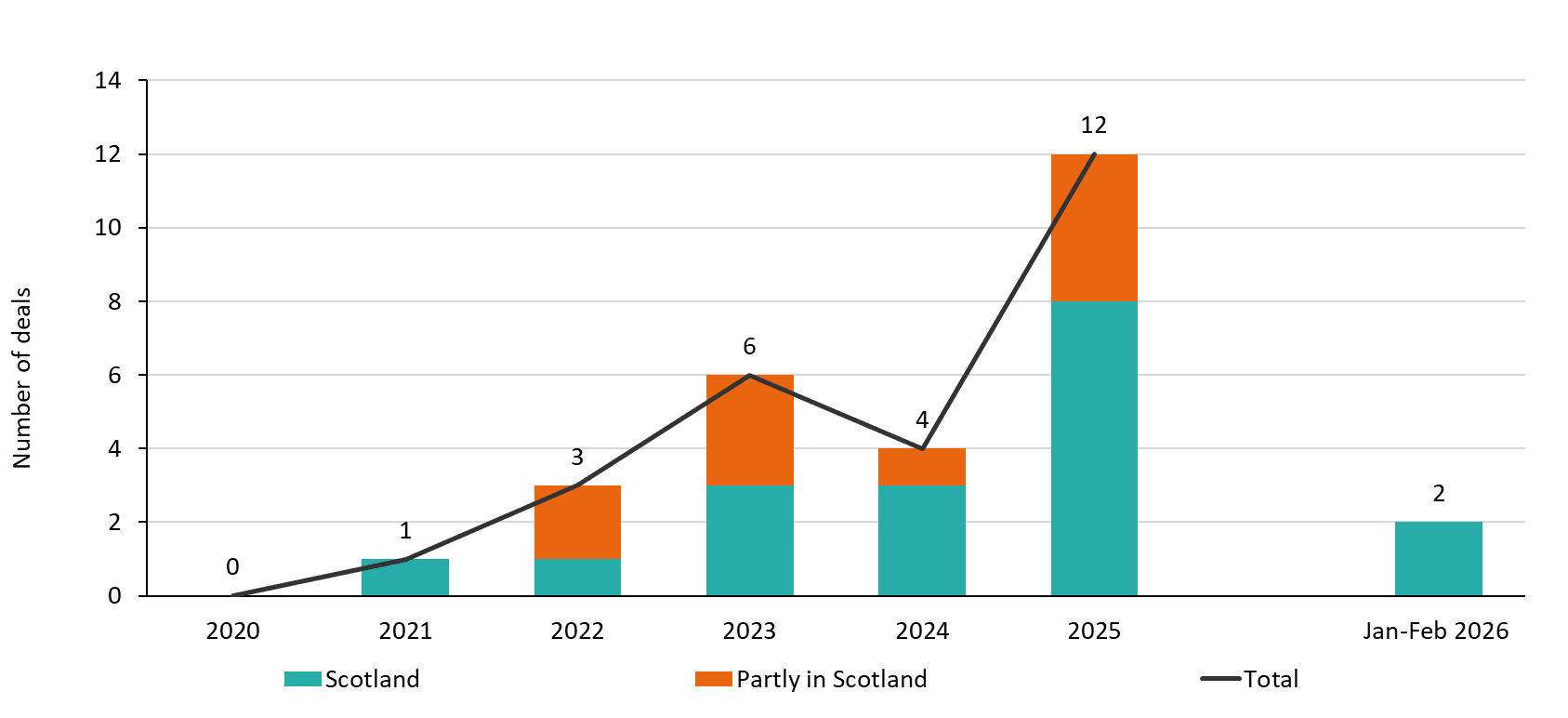
Figure 1 reports the number and annual volume of completed deals over £10 million identified in the research, focusing on bonds, equity and loans only. In total, we identified 28 deals which had completed since 2020. These deals were in green infrastructure and renewable energy as defined in LSEG. They include investments in sectors such as renewable energy, clean infrastructure, hydrogen, carbon capture, electric vehicles and renewable utilities (refer to Appendix B for more detail on the definition). The analysis was deliberately scoped to these sectors, applying a minimum £10 million deal size threshold to identify qualifying transactions. Focusing on equity and debt (loans and bonds) financing transactions, no relevant deals were recorded in 2020, likely reflecting the disruption and economic uncertainty associated with COVID-19. Investment activity for these deals has grown steadily since 2021, with a peak of 12 deals in 2025. For completeness, we included the deals reported in January and February 2026. As a result, 2026 is partial and not directly comparable with the previous years. These figures capture only discrete private capital market transactions, excluding investment financed directly from firms’ own balance sheets and are based on the methodology set out in Appendix A.
We interviewed stakeholders active in Scotland’s financial industry for comment on investment trends in these sectors. These included large UK-based retail and commercial banks, globally active asset managers (across private and public markets), infrastructure investors, and a leading industry body. One reported that investment in Scotland’s renewables and green infrastructure has grown but remained concentrated in a relatively narrow set of mature sectors, largely driven by project opportunities (source – interview with a bank). Public interventions, including subsidies, are seen to be playing an important role, particularly in de-risking capital-intensive projects, but several interviewees felt that inconsistent policy signals have constrained broader investment expansion (source – interviews with two banks, an asset manager (private markets), and a trade association). While specific policy instruments were not always explicitly identified, stakeholders indicated that gaps in long-term revenue certainty and pipeline transparency remain key constraints.
As of the end of February 2026, a combined value of around £9.5 billion has been invested in green deals which involve Scotland since 2020, excluding M&A. The total annual investment reached around £500 million in 2021, increasing to around £1.8 billion by 2023 and to over £5 billion in 2025. To provide context, approximately £5 billion per year of combined public and private investment is estimated to be required by the end of this decade to meet a balanced pathway to net zero for Scotland (R. Watts, 2024).
It is important to note that the total amount includes deals both fully and partially located in Scotland. The share of value attributable to Scottish assets in the latter is not disclosed. Despite this limitation, these deals are retained in the analysis to provide a full picture of the number and sectoral distribution of deals (see Section 4.4below). As a result, the total value figure may overstate the amount attributable solely to Scotland somewhat. Therefore, details of deals fully located in Scotland are also provided.
Figure 1 and Figure 2 report the number and monetary value of deals, respectively. These include deals fully located in Scotland (64%) versus deals partially located in Scotland (36%), respectively. Note, deals fully located in Scotland refer to deals where all investment activity is in Scotland. Deals partially invested in Scotland refer to deals forming part of a wider UK investment where the Scottish share of total value is not separately disclosed and the boundary of the investment extends beyond Scotland to the rest of the UK. In a small number of cases these deals also extend beyond the UK itself. In 2024, over three-quarters of deals were fully located in Scotland.
To contextualise the scale of these figures, it is useful to set them against wider investment activity in Scotland. The Scottish Government’s total capital budget stood at £6.2 billion in 2024–25 (R. Watts, 2024), of which around £2.2 billion was classified as low-carbon capital investment (Scottish Government, 2022). This means that private green investment in each year since 2021 in our sample has exceeded green public capital investment in 2024-2025. On the private side, total private equity investment across all sectors in Scotland reached £9.4 billion in 2024 (G. Williams, 2025). Note these figures are not directly comparable to our sample. They encompass a much broader cross-section of sectors and deal types, but provide confidence in the estimate from the sample, as these deals will likely comprise only a proportion of the total private capital deployed in Scotland each year.
The number of published deals is relatively small but steadily growing. This trend is likely to reflect macro conditions. Survey evidence from the Bank of England shows strong economic contraction and high volatility at the UK-level during and following the COVID-19 crisis. In contrast, some evidence suggests that the energy price shock following the Russian invasion of Ukraine in 2021-2022 may have boosted green investment intentions (Bank of England, 2024). The Bank’s survey response at the UK-level reports a growth of approximately 40% in green investment intentions between 2021 and 2023.
Figure 1. Number of completed deals in green infrastructure and renewables in Scotland 2020-2026 – loans, bonds, equity
|
Source: LSEG databases and desk-based research.
Figure 2. Volume (£ million) of completed deals in green infrastructure and renewables in Scotland 2020-2026 – loans, bonds, equity
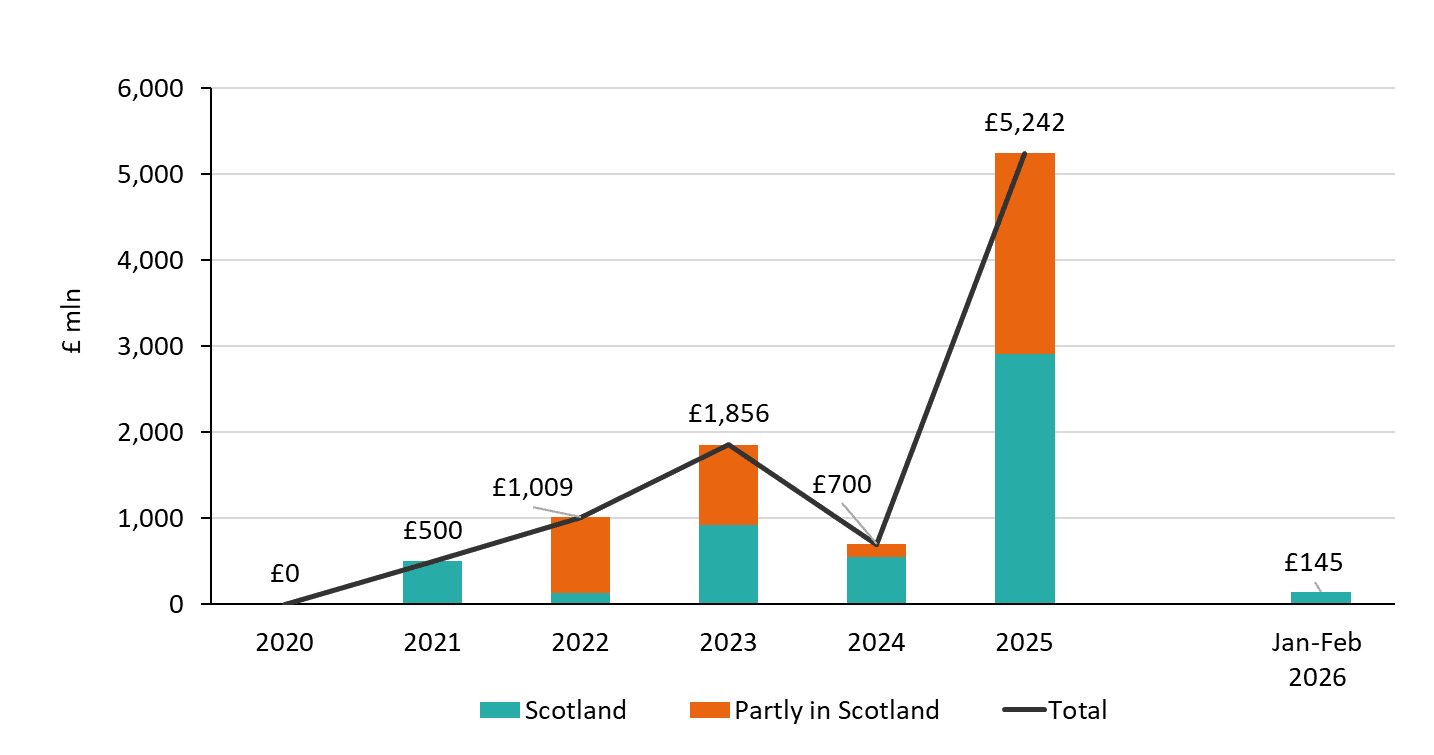
Source: LSEG databases and desk-based research. Note: for deals that are only partly located in Scotland, the reported deal amounts reflect the total value of the larger, international or UK-wide transaction, rather than the share corresponding to Scottish assets.
Table 1 reports cross-border M&A activity, which given its specific nature, is presented separately. The analysis covers acquisitions of Scottish-headquartered companies only; acquisitions made by Scottish companies of targets located elsewhere were excluded.
Observing data on M&A deals involving the acquisitions of green companies in Scotland 2020-2026 provides context to inward foreign direct investment trends, and the attractiveness of Scottish green companies. The data show a total M&A deal value of £307 million, which represents foreign and British companies investing in Scottish assets (so called “pure-play M&As” only) rather than necessarily new physical capital expenditure within the country. The energy and power sector consistently leads in both the number of deals and average deal value, with a notable spike in deal value in 2020 at £162 million. In contrast, the industrials sector has more limited activity, with just one deal in 2024 and 2025 respectively.
Table 1: Average M&A deal value amount per sector and per year
Number of deals | Average of deal Value (GBP, Millions) | |||
|---|---|---|---|---|
Year | Energy and power | Industrials | Energy and power | Industrials |
2020 | 3 | 162 | ||
2021 | 3 | 6 | ||
2022 | 5 | NA | ||
2023 | 3 | NA | ||
2024 | 5 | 1 | 10 | NA |
2025 | 4 | 1 | 29 | 100 |
2026 | 1 | NA | ||
Total | 24 | 2 | 207 | 100 |
Source: LSEG databases and desk-based research. Note: some of the M&A deal amounts are not disclosed in the LSEG dataset. They are listed as NA in this table.
Sectoral distribution
The available data on sub-sectoral distribution remains highly uneven. The evidence suggests a trend toward mature, de-risked technologies. This suggests sectors critical to longer-term climate goals may face investment barriers driven by scalability constraints, uncertain demand and insufficient revenue certainty. This poses a challenge to longer-term decarbonisation ambitions.
Across Scotland’s green infrastructure landscape, stakeholder perspectives reveal a market where capital has flowed mostly into mature, revenue-certain technologies, while emerging sectors continue to face structural barriers for new investment. Interviewees noted that investment activity in renewables and green infrastructure in Scotland had been concentrated in more established sectors, particularly off- and onshore wind, hydro and increasingly in grid infrastructure and storage. Multiple interviewees noted fixed offshore wind as the dominant area of capital deployment but noted growing interest in enabling infrastructure such as transmission networks and battery storage (source – interviews with two banks, an asset manager (private markets), and a trade association). They viewed a notable gap in areas such as hydrogen and nature-based solutions, where uncertainty around revenue models and market structures was perceived to have constrained investment appetite (source – interviews with an asset manager in public markets, and an asset manager in private markets). Also, although peatland and woodland carbon markets in Scotland are considered relatively mature, the National Strategy for Economic Transformation (NSET) has committed to developing a “high-integrity, values-led market” for responsible investment in natural capital (GEFI, 2024a). Similarly, some interviewees noted retrofitting and energy efficiency initiatives in the built environment had struggled to scale due to weak end-user demand and a lack of compelling financing propositions (source – interviews with two banks). These patterns, drawn from stakeholder experience, are broadly corroborated by the deal-level data.
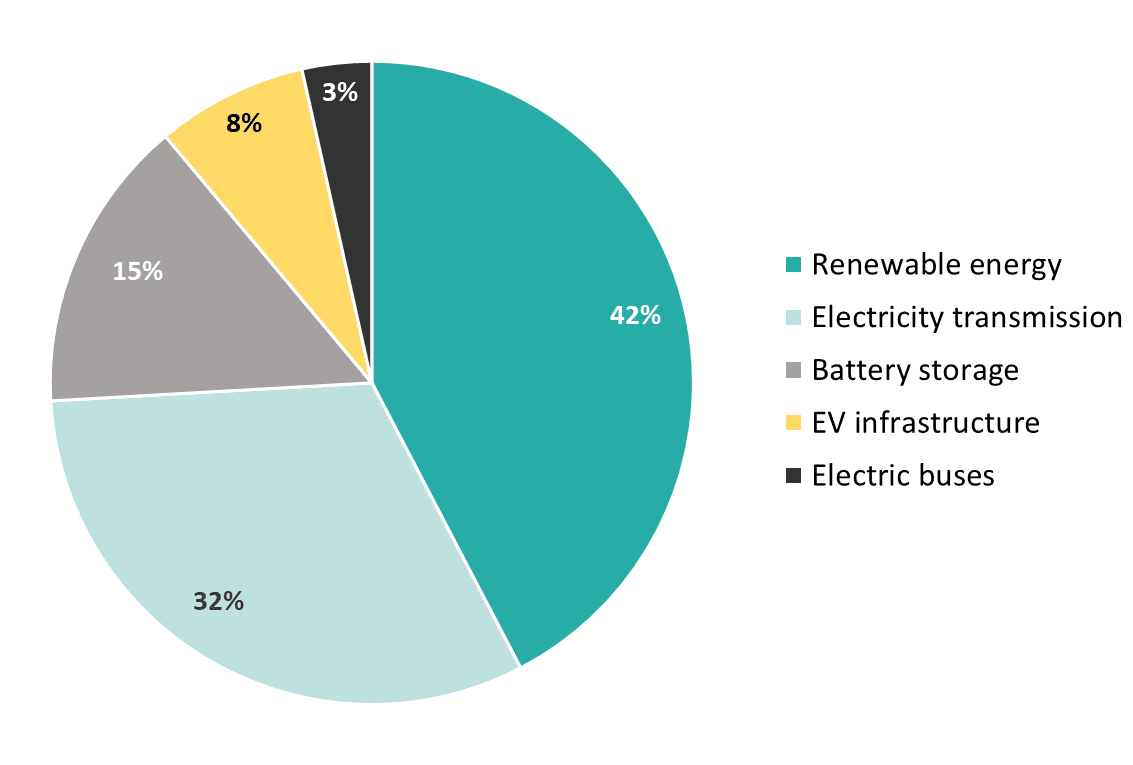
To understand where the deal amounts discussed above have been invested, we analysed the sector allocation of the identified transactions. To do this, we used sector classifications derived from a combination of the Refinitiv Business Classification (TRBC) business sector field and the “use of proceeds” field for each deal, both from LSEG, and supplementary desk-based research to narrow down specific sub-sectors. This was necessary because the dataset does not directly record whether a deal is located in Scotland, requiring us to verify this manually using project-level details. Figure 3 and Figure 4 show the deal total amount disaggregated by sector. We analyse the deals that are partially located (Figure 3) and fully located in Scotland (Figure 4) separately. Table 2 and Table 3 report the same statistics disaggregated by sector and year.
Among the projects partly located in Scotland, renewable wind energy dominates the debt, bonds and equity investments made, representing 42.6% of the total value. This was around £1.8 billion out of £4.3 billion, from the 10 deals spread over 2022 to 2025. The electricity transmission sector attracted the second largest investment total (32%), but this was concentrated in a single large-scale deal. This likely reflects that many Scottish wind projects comprise parts of larger UK-wide or international portfolios. In offshore wind especially, the project company and investors are often headquartered outside Scotland, while the physical asset may sit off the Scottish coast. For deals that are only partly located in Scotland (
Figure 3), the reported deal amounts reflect the total value of the larger, international or UK‑wide transaction, rather than the share corresponding to Scottish assets.
In terms of the projects fully located in Scotland, the largest amounts of investment were directed toward electricity transmission which was 32% of the total investment via three large-scale deals – and battery storage (26%) (Figure 4). High-value electricity transmission projects related to: (i) investment in upgrading grid infrastructure, (ii) improving connectivity and (iii) enabling the transport of renewable energy. One deal related to green/low-carbon real estate has been recorded in 2026 to date.
The dominance of energy sub-sectors in the identified investments is in line with the findings of a CBI Economics study analysing the Scottish net zero economy in 2025. According to their market analysis, the net zero transition has been the most visible in the energy sector in Scotland. A key factor behind this is Scotland’s historic strength in the oil and gas, offshore engineering and subsea capability sectors. These skills and expertise from the traditional fossil fuel sector can be applied in the development of offshore wind, green hydrogen and CCS technologies (CBI Economics, 2026).
Figure 3. Deals partly located in Scotland – percentage of the total amount per sector, 2020-2026 – debt, bonds, equity
Source: LSEG databases, desk-based research.
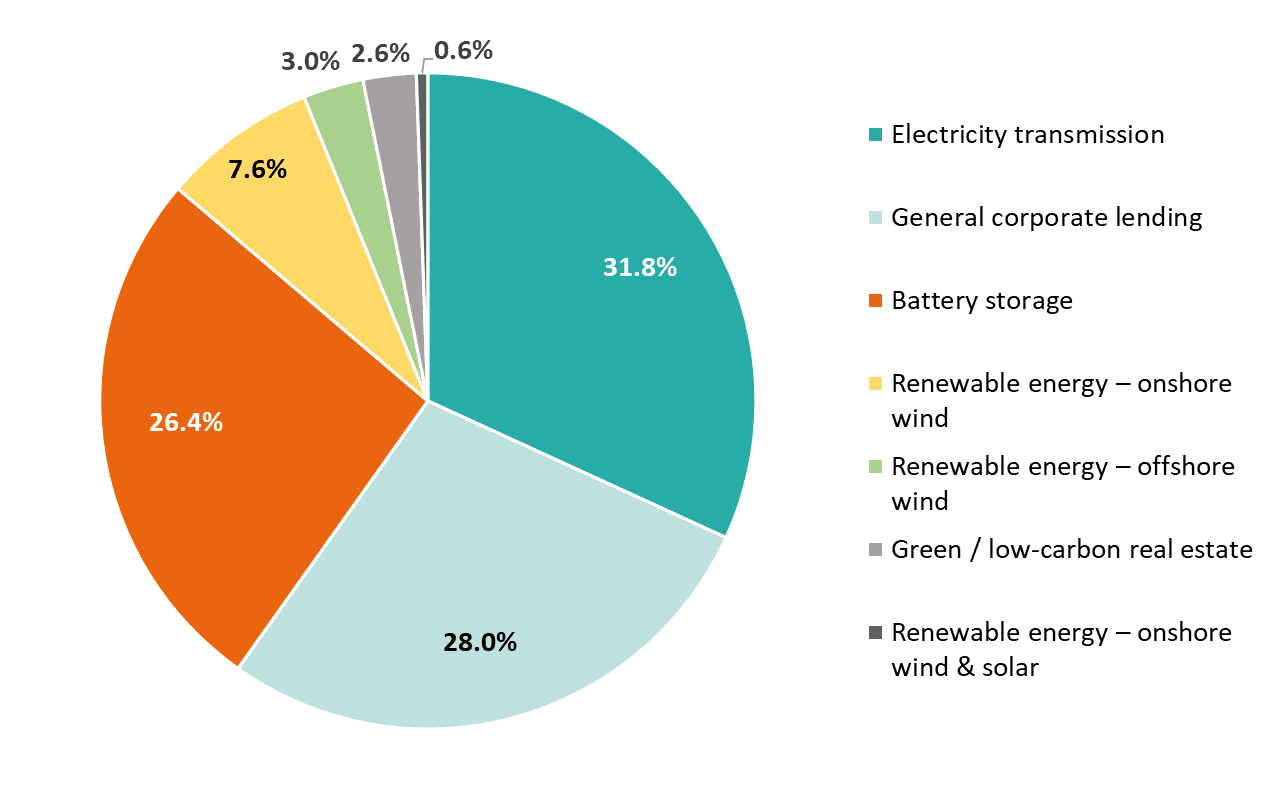 Figure 4. Deals fully located in Scotland – percentage of the total amount per sector, 2020-2026 – loans, bonds, equity
Source: LSEG databases, desk-based research.
Table 2: Sum of deal amount per sector by year for projects partly located in Scotland
Total and breakdown per sector and year | ||
|---|---|---|
Sector | (GBP, Million) | Number of Deals |
TOTAL – Battery storage | 635 | 3 |
2023 | 175 | 1 |
2025 | 460 | 2 |
TOTAL – Electric buses | 150 | 1 |
2024 | 150 | 1 |
TOTAL – Electricity transmission | 1,363 | 1 |
2025 | 1,363 | 1 |
TOTAL – EV infrastructure | 326 | 1 |
2022 | 326 | 1 |
TOTAL – Renewable Energy (Wind) | 1,817 | 4 |
2022 | 551 | 1 |
2023 | 760 | 2 |
2025 | 506 | 1 |
AGGREGATE TOTAL | 4,292 | 10 |
Source: LSEG databases, desk-based research.
Table 3: Sum of deal amount per sector by year for projects fully located in Scotland
Sector | Total and breakdown per sector and by year | |
|---|---|---|
(GBP, million) | Number of deals | |
TOTAL – Battery storage | 1,362 | 4 |
2023 | 281 | 1 |
2025 | 1,081 | 3 |
TOTAL – Electricity transmission | 1,643 | 2 |
2025 | 1,643 | 2 |
TOTAL – Green / low‑carbon real estate | 135 | 1 |
2026 | 135 | 1 |
TOTAL – General corporate Lending | 1,444 | 3 |
2021 | 500 | 1 |
2023 | 450 | 1 |
2024 | 494 | 1 |
TOTAL – Peatland restoration / carbon‑offset projects | NA | 1 |
2024 | 0 | 1 |
TOTAL – Renewable Energy – Offshore Wind | 154 | 2 |
2024 | 56 | 1 |
2025 | 98 | 1 |
TOTAL – Renewable Energy – Onshore Wind | 394 | 4 |
2022 | 132 | 1 |
2023 | 190 | 1 |
2025 | 62 | 1 |
2026 | 10 | 1 |
TOTAL – Renewable Energy – Onshore Wind & Solar | 29 | 1 |
2025 | 29 | 1 |
TOTAL | 5,161 | 18 |
Source: LSEG databases, desk-based research. Note: The three corporate lending deals in this table fall under the Basic Materials and Utilities sectors; no further sector detail is available for these transactions.
Although the total deal value for the peatland restoration project is not publicly disclosed, the landscape-scale nature of the programme, covering 400,000 hectares across Caithness and Sutherland and involving multiple public and private funding streams, suggests a substantial investment value.
Deals partly located in Scotland are characterised by larger deal sizes and are mainly led by larger energy companies, financial institutions and major banks. Their dominance suggests that Scotland’s green finance landscape is concentrated among a limited number of larger, established players. In terms of deal values by sector, electricity transmission deals were in the range of £1-1.3 billion per deal, whilst renewable energy deals were approximately £500–£650 million per deal, both attracting substantial capital. Meanwhile, battery storage, EV infrastructure deals and electric bus financing tend to be smaller in size at around £150 million per deal and typically funded by commercial banks. No detailed information was available on these deals.
Investments fully located in Scotland involve a broader mix of investors and more variation in deal size across sectors. Electricity transmission deals range from around £500 million to £1 billion per deal and are typically backed by a combination of energy companies, public financial institutions and institutional investors buying green bonds, such as pension funds and insurance companies. Renewable energy deals – which include onshore and offshore wind – range from around £50 million to more than £200 million per deal. They are mainly financed through project-specific funding from commercial banks, infrastructure funds, and sometimes public co-investors, e.g. the Scottish National Investment Bank. Battery storage sits in the mid-range, around £60 million to £280 million per deal, with specialist energy investors and banks playing a key role. These patterns may also reflect differences in risk appetite. For example, a commercial bank can typically take on more risk, versus deals in more mature technologies where asset owners may take on more of a role.
Smaller sectors indicate more variety in investor types. For example, “green real estate”, involves properties with low‑carbon design and operations. One example identified involved transforming a major office site in Edinburgh into 282,000 square foot of sustainable high-efficiency office space. These were typically over £100 million per deal and were usually financed by commercial banks through green debt. Nature-based solutions, such as peatland restoration, tend to be much smaller and rely on a mix of public bodies, e.g. NatureScot, private investors and environmental funding schemes. Peatland restoration initiatives are also supported through public-private programmes like the Flow Country Green Finance Initiative.
Around 28% of investment flagged as sustainable in LSEG, is classified as “general corporate lending”. For these investments it was not specified whether the use of proceeds is for specific projects or general activities. Other sectors such as low carbon and green real estate received smaller shares of investment (see Appendix B for definitions).
M&A deals were dominated by activity in the energy and power sector this includes offshore wind, onshore wind, solar and hydro company acquisitions (e.g. the Dalquhandy Wind Farm and Beatrice Offshore Windfarm). The nationality and sector of M&A deals are shown in Figure 5 and Figure 6. The investor base was more geographically diverse, with acquirers split relatively evenly between UK-based investors (52%) and international investors from countries including Germany, the US, Denmark and Japan.
The above trends were consistent with the interviewees’ experiences. They noted that investment activity in renewables and green infrastructure in Scotland had been concentrated in more established sectors, particularly off- and onshore wind, hydro and increasingly grid infrastructure and storage. Multiple interviewees noted offshore wind as the dominant area of capital deployment but commented on growing interest in enabling infrastructure such as transmission networks and battery storage (source – interviews with two banks, an asset manager (private markets), and a trade association). They identified a notable gap in areas such as hydrogen and nature-based solutions, where uncertainty around revenue models and market structures was perceived to have constrained investment appetite (source – interviews with an asset manager in public markets, and an asset manager in private markets). Similarly, they considered some noted retrofit and energy efficiency in the built environment had struggled to scale due to weak end-user demand and a lack of compelling financing propositions (source – interviews with two banks).
Figure 5. Cross-border and intra-border M&A deals in Scotland, 2020-2026, including UK
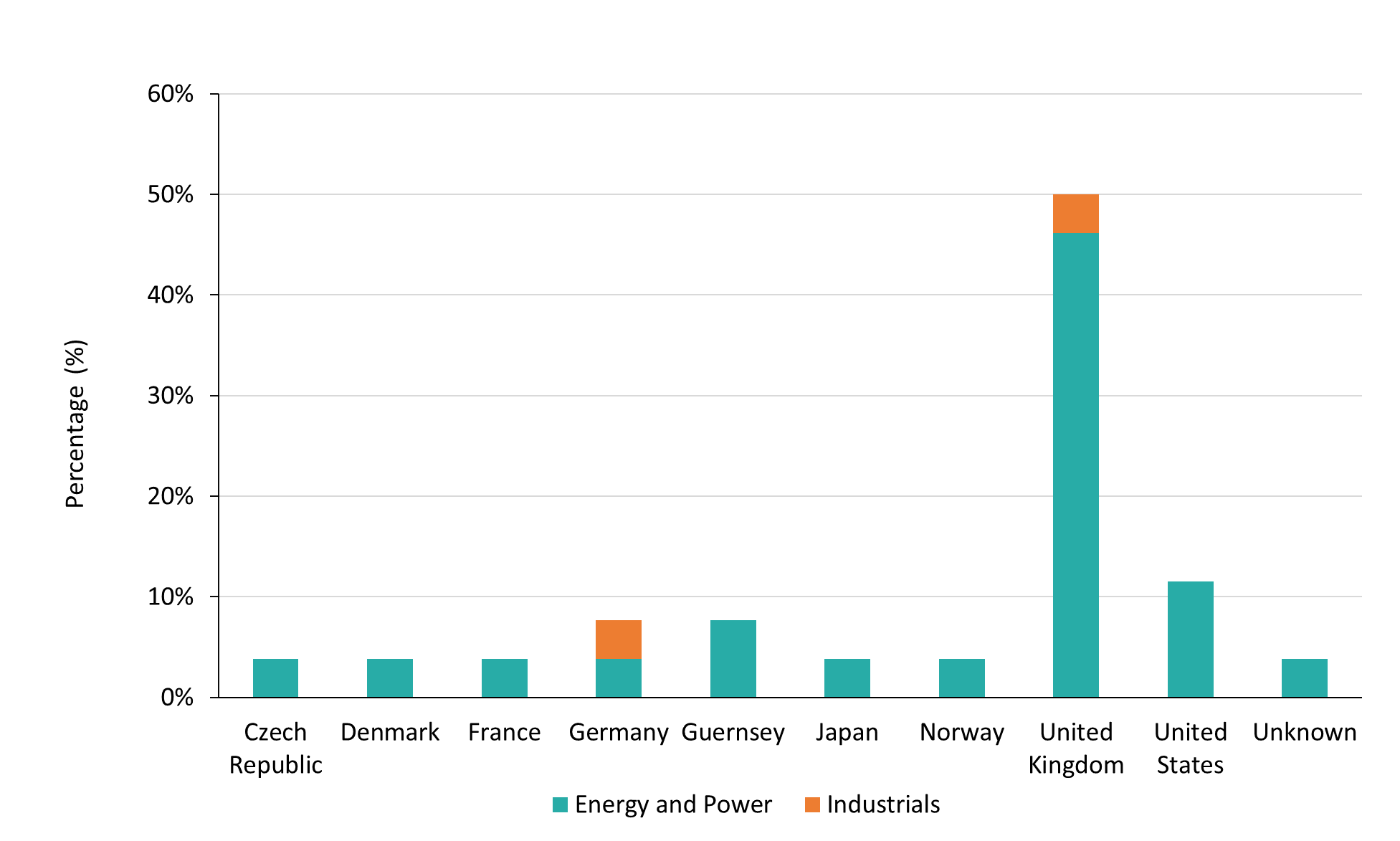
Figure 6. Cross-border and intra-border M&A deals in Scotland, 2020-2026, excluding UK
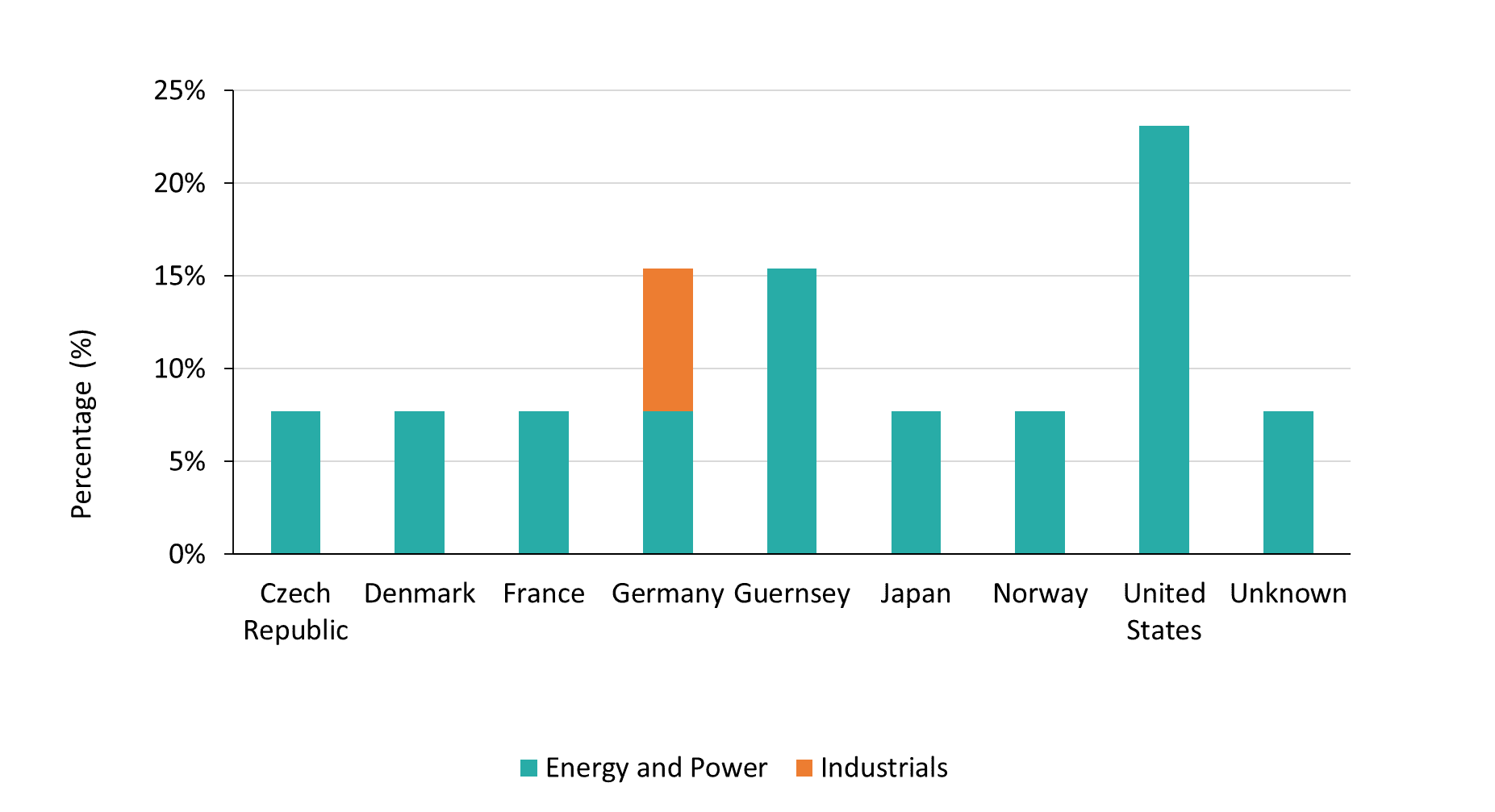
Source: LSEG databases, desk-based research
Financing structures and instruments
Loans were the primary financing instrument, accounting for 56% of the total deal amount. As above, the deals in this section were identified through LSEG’s deals database which captures publicly disclosed financing deals. This financing was predominantly directed towards large-scale renewable energy generation, battery energy storage systems (BESS) and electricity network upgrades. The majority of these deals take the form of term loans and revolving credit facilities tied to a specific green project rather than corporate lending backed by the company balance sheet. Bridge short-term loans and other corporate loan structures account for only three deals, all of which are partly located in Scotland (refer to Table 7 in Appendix A for more detail on the deal categories’ breakdown).
Bonds account for 35% of the total deal amount and are commonly used to finance projects fully located in Scotland, including Euro-medium term notes and retail crowdfunding bonds. They were used to support large-scale renewables, transmission upgrades in northern Scotland, and for general corporate purposes, such as refinancing corporate debt.
Equity-based deals appear to play a minor part in financing the green transition to date, representing 9% of total deal value. They largely comprise early-stage or blended public-private investments, typically the highest-risk but potentially highest-reward transactions in the investment cycle. An example is the Scottish RenewCo £38 million funding, in which both public sector bodies, including the Scottish National Investment Bank, and private investors provided capital to advance a 7GW onshore wind and solar pipeline (ESG News, 2025).
Other equity investments funded environmental restoration projects such as Flow Country peatlands and BESS projects. These supported grid preparation, carbon sequestration, biodiversity and grid stability. The concentration of equity activity in early-stage and blended structures points to a critical juncture in Scotland’s green finance landscape. Where revenue certainty is insufficient to attract debt financing and the risk profile remains too high for conventional lenders, public and mission-driven investors such as the Scottish National Investment Bank and the National Wealth Fund play a key role in absorbing first-loss risk and unlocking subsequent private investment.
The distribution of financing instruments used for green investment is shown in Figure 7. These data are calculated based on the total monetary value of each deal. For a more detailed breakdown see Table 7 in Appendix A.
Figure 7. Shares of the instrument types used in green investments in Scotland based on total monetary value, 2020-2026
Source: LSEG databases.
Interviewees confirmed that financing structures have largely remained conventional. They tend to rely on a mix of balance sheet lending and project finance structures such as a special purpose vehicle (SPV) with equity and senior debt. They also noted the increasing integration of ESG criteria into credit assessments (source – interviews with a bank and an asset manager in private markets). Banks primarily provide traditional lending products, including green loans. Larger infrastructure investors deploy equity through project finance vehicles, direct equity stakes, co-investments and secondary market acquisitions of operational assets, particularly in large-scale infrastructure (source – interviews with a bank, asset manager (private markets), and an asset owner). Investment sizes vary significantly, ranging from lending to SMEs below £1.5 million, to large-scale infrastructure projects exceeding £500 million. A substantial proportion of activity occurs in the secondary market, focused on de-risked, income-generating assets (source – interviews with a bank, and two asset managers (private markets).
The main financing approaches identified were:
- Balance sheet lending and green loans: banks primarily provide traditional lending products, including green debt, to businesses ranging from SMEs (below £1.5 million) to large corporates.
- Project finance via Special Purpose Vehicles (SPVs): entities that combine equity and senior debt for a single project, typically operating under a head contract with a local authority and subcontracting to a Tier 1 contractor, which helps allocate risk clearly.
- Direct equity and co-investment: larger infrastructure investors deploying equity through direct stakes, co-investments and secondary market acquisitions of operational assets, particularly in large-scale infrastructure (source – interviews with a bank, asset manager (private markets), and an asset owner).
- Secondary market: a substantial proportion of activity involves buying and selling existing operational assets rather than financing new ones, reflecting investors’ preference for de-risked, income-generating projects (source – interviews with a bank, and two asset managers (private markets).
- The increasing integration of ESG criteria into credit assessments was also noted (source – interviews with a bank and an asset manager in private markets).
Asset classes
An asset class is defined as a group of investments that have similar attributes, behave similarly in the market, and are subject to the same regulations (A. Ganti, 2025) (see Appendix B for a full list). This section examines the types of assets related to the investments described above, i.e. the main investment categories in which finance was invested.
To provide additional insight into investment patterns, transactions were analysed from two asset-class perspectives. The first considers the type of investment exposure represented by the transaction, such as private equity, private debt or fixed income. The second considers the underlying assets or activities targeted by the investment, such as infrastructure or natural capital. These are represented in the ‘Asset class’ and ‘Asset class subcategory’ columns of Table 4, respectively. Given differences between the financing and M&A datasets used for the analysis, the classification approach varied slightly between them. For financing transactions, the underlying asset class was identified based on the stated use of proceeds, while for M&A transactions, it was determined based on the characteristics of the acquired company or asset.
Across all deals, excluding M&A transactions, private debt was the most common (61% of transactions), followed by fixed income instruments (31%) (see Table 4 below). Private equity transactions accounted for only 8% of deals. Within private debt, infrastructure debt was the prevailing subcategory (50 percentage points (p.p.)), followed by corporate debt (8 p.p.) and real estate debt (3 p.p.). Green bonds accounted for all fixed income transactions. For private equity, the subcategories were growth equity (6 p.p.) and natural capital investment (3 p.p.). Overall, debt-based instruments played a central role in green investment activity during the period analysed.
In our sample, there was a high degree of concentration in infrastructure-related investments, which was not only due to the prevalence of infrastructure debt transactions. Infrastructure assets were also financed through fixed-income and equity transactions, potentially indicating an investor preference for assets with established development pathways and long-term revenue potential. This composition of investment activity has remained relatively stable over the period analysed. While the number and value of transactions have increased, this growth was largely concentrated within existing asset classes. Infrastructure has continued to account for the majority of identified investments. This is partly explained by this research solely investigating deals over £10 million.
The representation of other asset classes, such as investments in natural capital (via private equity) and in green real estate (via private debt), was limited. The small number of transactions may indicate that these markets are less mature. Alternatively, this may be due to such deals financed through channels not captured in this analysis, and/or data not being in the public domain.
Table 4: Asset class types of the completed deals, 2021-Feb 2026
Asset class | Number of investments | Asset class subcategory |
1. Private debt (total) | 22 | Real assets (infrastructure) |
Infrastructure debt | 18 | |
Corporate debt | 3 | |
Real estate debt | 1 | |
2. Fixed income (total) | 11 | Real assets (infrastructure) |
Green bonds | 11 | |
3. Private equity (total) | 3 | |
Growth equity | 2 | Real assets (infrastructure) |
Natural capital investment | 1 | Real assets (natural capital) |
Source: LSEG, desk-based research
The asset class used for M&A activity was less concentrated in infrastructure assets than other deals and included investment in a broad range of green sectors. While the majority of acquisitions still involved companies with exposure to infrastructure assets, many transactions targeted project developers, engineering firms, consultancies, technology providers and other specialised service businesses. As a result, it was not always possible to identify an underlying asset class, especially where the target company’s activities were the provision of services. Overall, M&A activity has facilitated investment in infrastructure assets and supported investment in technical capabilities, development expertise, and specialised services required to deliver the energy transition. Acquisitions have been used not only to obtain ownership of low-carbon assets, but also to strengthen capabilities across the wider green economy value chain. Where data were available, companies were mainly acquired through private equity.
Other investment characteristics
Investors in Scottish renewable and green infrastructure projects were mainly developers or operational firms, headquartered in Scotland or elsewhere in the UK. Operational firms describe those that are neither holding companies nor special purpose vehicles (SPVs), which applies to most corporations in the LSEG dataset. Examples include Pulse Clean Energy Ltd and FirstGroup PLC, whose primary function is to provide a service or good. Our data indicates that most investors were limited companies (65%), with public limited companies accounting for 15%. The remaining 20% are non-company entities such as public authorities. Of the investors from outside of the UK, a small share was from the rest of Europe (7.14%, from Finland and Denmark for example), while 10.7% of deals are from Canada and the United States.
Most deals financed with private capital were in the large-scale offshore wind and battery storage sectors. Public entities participated in strategic, community or blended-finance deals (e.g. Flow Country peatland restoration (discussed in Case Study 2), Orkney community wind and the Caithness-Moray HVDC connection). Debt was used equally by private and public investors. Public entities tend to play a larger role in bond financing, while equity is more commonly provided by private investors or blended capital.
Private investors and corporate subsidiaries were prevalent in M&A activity in Scotland’s renewable energy sector, with publicly listed companies playing a smaller but notable role. A total of 12 deals (48%) involved private investors. Of these, 8 (32%) were subsidiaries of larger groups and 5 (20%) were publicly listed companies, often using SPVs which are common in energy infrastructure deals. While it is not possible to confirm the specific characteristics of these SPVs based on publicly available information, SPVs are typically structured as project-specific entities.
Conditions influencing investment decisions
This section evaluates evidence on the factors influencing investor confidence in Scottish renewable and infrastructure projects. As such, it draws on eight interviews, and a written response from one institution. Where relevant, we also refer to published research to triangulate these views. As the sample size is not statistically representative, the input gathered does not provide a robust reflection of the views of all market participants.
Policy transparency and regulatory stability were perceived as key determinants of investor confidence. Respondents emphasised the importance of a stable legal and regulatory environment, particularly in established sectors such as offshore wind. In these, Scotland was seen to benefit from mature contracting frameworks and predictable governance conditions (source – interviews with a bank and an asset manager (private markets). However, with emerging sectors such as hydrogen, battery storage or nature-based solutions, some interviewees suggest a lack of familiarity and certainty around policy and longer decision processes may have impacted investor confidence (source – interviews with two asset managers (public and private markets), and a trade association). Stakeholders (asset managers, private markets) noted the absence of long-term revenue guarantees for hydrogen projects and limited visibility of local authority pipelines for early-stage renewable energy initiatives. Other research notes the policy landscape is still considered by some to be complex and cumbersome for many green sectors, including building retrofitting and electricity grids (GEFI, 2024a).
Revenue certainty emerged as a critical factor influencing investment decisions, particularly for capital-intensive infrastructure. Projects offering long-term income streams or supported by government appeared to be viewed by interviewees as significantly more attractive to institutional investors (source – interviews with an asset manager (private markets) and an asset owner). These included pension funds seeking stable, long-duration returns (source – interviews with an asset manager (private markets) and a trade association). This involvement was especially important in reducing perceived risk and enabling investment in large-scale assets once key development milestones, such as land access, had been secured (source – interviews with a bank and an asset manager (private markets). One interviewee noted that large infrastructure projects lasting 25 years or more require confidence in a minimum return (source – interview with an asset manager (private markets). The predictability of revenue streams is also important to debt lenders, who require confidence in a project’s cash flows before committing financing.
Interviewees from two banks indicated that their offering of green lending, for green residential real estate, was primarily demand-led, suggesting that capital availability was not the primary constraint where viable opportunities existed (source – interviews with two banks). This aligns with findings from the Scottish Government’s Green Heat Finance Taskforce that private lenders are doing significant work to develop and test products such as green mortgages. It noted the importance of wider measures in creating the overall conditions required for this market to flourish, with demand stimulation being a critical factor (Green Heat Finance Taskforce, 2023). These conditions include regulation, quality assurance standards, a well skilled and knowledge supply chain, and clear consumer protection measures. In relation to capital allocation more broadly, a private markets asset manager noted there is no internal cap or limit on capital allocation in Scotland, with investment decisions driven entirely by the availability of suitable opportunities (source – interview with an asset manager (private markets).
Several structural and delivery-related barriers were identified by interviewees as constraining investment. These included the lack of visible project pipelines and grid-related challenges, which affected project timelines (source – interviews with a bank and a trade association). A lack of a visible pipeline may make it difficult for investors to commit capital in advance or plan resource allocation. While some stakeholders noted the lack of a visible investment pipeline, it was not clear whether this was due to the low number of projects or a transparency issue. Other research has found that when major projects were known to investors, they were focused on a relatively small number of sectors, which meant little opportunity to diversify risk (Investor Panel, 2023).
Given the above, the Scottish Government has published a pipeline of costed and prioritised projects. The Green Investment Portfolio was launched in 2020 comprising ten market-ready projects with the value of £1.16 billion (Scottish Government, 2020). Interviews with stakeholders suggested mixed levels of awareness of the initiative. Further work is currently underway by the Scottish Government to raise awareness and publicise these portals and pipelines as part of its approach to investment.
Additionally, insufficient grid capacity may create uncertainty on whether it will be possible to integrate new RES projects in the energy system. In addition, concerns over weakening public support for decarbonisation and broader sensitivities around energy costs were noted as factors influencing the policy and investment environment (source – interviews with a bank and an asset manager (public markets). These factors may also complicate long-term commitments for investors, increasing the risks and affecting the revenue model.
Challenges were perceived as more acute for projects in emerging or less mature sectors. Hydrogen and nature-based solutions were consistently identified as facing difficulties in securing finance due to uncertain market structures and a lack of clear, reliable revenue streams (source – interviews with two asset managers (public and private markets). Respondents also highlighted the importance of mechanisms such as public guarantees, blended finance and long-term revenue support in enabling investment in these higher-risk areas, where purely commercial financing remained difficult to obtain (source – interviews with a bank, and two asset managers (public and private markets).
Other factors influencing investment decisions were mentioned less frequently but remain relevant. These included specific regulatory constraints such as high charges affecting certain technologies (e.g. pumped storage), as well as the importance of clear pathways for scaling projects from early-stage development to bankable infrastructure (source – interview with a bank and an asset manager (private markets)).
Investment in Scotland’s green and renewable sector is largely driven by existing project opportunities, as well as policy transparency, regulatory stability and revenue certainty. Structural and delivery-related barriers remain, particularly for emerging sectors such as hydrogen and nature-based solutions. While less frequent, other factors such as investor preferences and project scale also influence decision-making, highlighting the need for a stable and supportive environment to sustain growth in green investment.
Public financial institutions
Public financial institutions (PuFins) play complementary roles in crowding in private finance in Scotland. These include the Scottish National Investment Bank, the British Business Bank, the National Wealth Fund, British Patient Capital, Innovate UK, and GB Energy. There are also other public institutions and companies investing or supporting mobilisation of finance in Scotland, such as Scottish Enterprise and Scottish Futures Trust. Each target specific market failures and investment challenges and operates in different sectors based on technology and market maturity. These include: emerging innovations (Innovate UK, British Business Bank); supporting businesses at the growth stage (British Business Bank, GB Energy, National Wealth Fund); to supporting mature markets (British Business Bank, GB Energy, National Wealth Fund) as set out in Figure 8 below (HM Government, 2025).
The Scottish National Investment Bank (SNIB) provides patient capital, while seeking commercial, societal and environmental impacts from its investments. It invests in debt, equity and external funds (Scottish National Investment Bank, 2025). Since its launch in 2020, SNIB has invested £348.5 million and mobilised an additional £1 billion of third-party capital in net zero-related investment opportunities, which accounts for the largest share of its portfolio. These investments are in addition to the volumes described in the previous section, which were sourced from databases, apart from one £29 million deal. Priority sectors for the Bank’s net zero mission are battery and storage technologies, industrial decarbonisation, grid infrastructure, circular business models and materials, natural resources, and offshore wind supply chain and technologies. Relevant housing sectors from the Bank’s place mission include affordable and sustainable mixed tenure housing and decarbonisation at scale (The Scottish National Investment Bank, 2025). In 2024, SNIB held 39 investments, of which 16 deals were in net zero sectors, including renewable energy, energy infrastructure equipment, and alternative fuels. Leverage of private capital has been highest for investments in green sectors (The Scottish National Investment Bank, 2025). The case study in Box 1 below outlines a key project with SNIB involvement. Further case studies addressing projects with different characteristics in different sectors are summarised in Appendix D.
Meanwhile, the British Business Bank and Innovate UK support smaller early stage businesses. The British Business Bank provides loans and debt finance, including to smaller businesses. The Bank acts as a first mover and tends to invest in riskier but innovative businesses. Similarly, Innovate UK finances innovative businesses at the earliest stage, offering flexible finance and patient capital (HM Government, 2025). Innovate UK provides grants and loans, as well as advisory support for accessing business networks, regular engagement, and technology due diligence (British Business Bank, n.d.; Innovate UK, n.d., 2025).
The National Wealth Fund (NWF) invests for the longer-term. While its risk appetite is greater than that of commercial banks, the Fund focuses on technologies at later stages of development, construction, and commercialisation (HM Government, 2025). Clean energy, CCUS, hydrogen, battery manufacturing and EV supply chain, green steel, power grids, and energy storage are among the priority sectors (National Wealth Fund, n.d.). Additionally, the fund plans to target sustainable aviation fuels and critical minerals, and to accelerate the delivery of core infrastructure, including offshore wind, solar, building retrofitting, heat networks, and EV charging. NWF provides loans, equity and guarantees. In Scotland, it has invested £1.6 billion to upgrade the national grid and enable clean power and energy security across the UK. It also provides bespoke project development and investment support to the local government (National Wealth Fund, n.d.).
Some of the PuFins also partner to crowd in private finance. For example, GB Energy, NWF and SNIB invested in the Pentland Floating Offshore Wind Farm in Scotland, which was developed by funds managed by Copenhagen Infrastructure Partners (NWF, 2025). SNIB and NWF also jointly invested in Nova Innovation to scale up production of recyclable and compostable packaging (HM Government, 2025).
PuFins also support community projects in green sectors. In 2025, GB Energy (GBE) pledged to provide finance for local renewable energy projects in Scotland. Scottish Government has already defined a list of projects to be supported, including by its own investment (UK Government, 2025a). This commitment is part of GBE’s Local Power Plan, under which up to £1 billion of public investment is planned to scale community and locally owned energy projects across the UK (DESNZ, 2026). The plan provides for direct funding through grants, debt, and project finance, aiming to unlock wider investment in local and community energy projects. GBE has also established a £5 million Community Fund to support energy projects, though it is currently limited to England. It invests in equity and joint ventures for both clean energy projects and supply chain investments. It also provides grants, loans, blended finance, and capacity support for local government or community groups with a ringfenced Scottish element (HM Government, 2025).
Some public agencies facilitate increasing private investment in green sectors. For example, Crown Estate Scotland (CES) contributes to the development of offshore wind in Scotland by awarding and managing leases and other enabling work (Crown Estate Scotland, n.d.). It deploys patient capital, aiming to create environmental or social value alongside commercial returns. The Crown Estate – a separate entity to CES – focusses on a broader list of sectors such as science and innovation, clean energy, and nature and biodiversity (HM Government, 2025).
Overall, public financial institutions play a key role in addressing market gaps and enabling investment across different stages of the financing lifecycle. In doing so, they help to reduce risks and support the mobilisation of private capital into green sectors in Scotland. The ecosystem of PuFins with diverse mandates and risk appetites helps create financing continuity for businesses in green sectors as they transition from innovation and demonstration to commercial deployment. An important contribution is the provision of patient capital. This is particularly important in green sectors, which face long payback periods, often greater policy uncertainty, and substantial upfront infrastructure costs. In these cases, commercial finance alone may be reluctant to invest at early stages.
There was limited evidence from interviewees on the role of public institutions in mobilising private finance. However, stakeholders stressed the importance of a favourable regulatory environment and support mechanisms for the green sectors. The effectiveness of public finance institutions in mobilising private capital depends not only on the availability of public investment, but also on wider policy and regulatory certainty across the UK, particularly in capital-intensive and technologically nascent sectors.
Figure 8: Map of public financial institutions relevant for Scotland
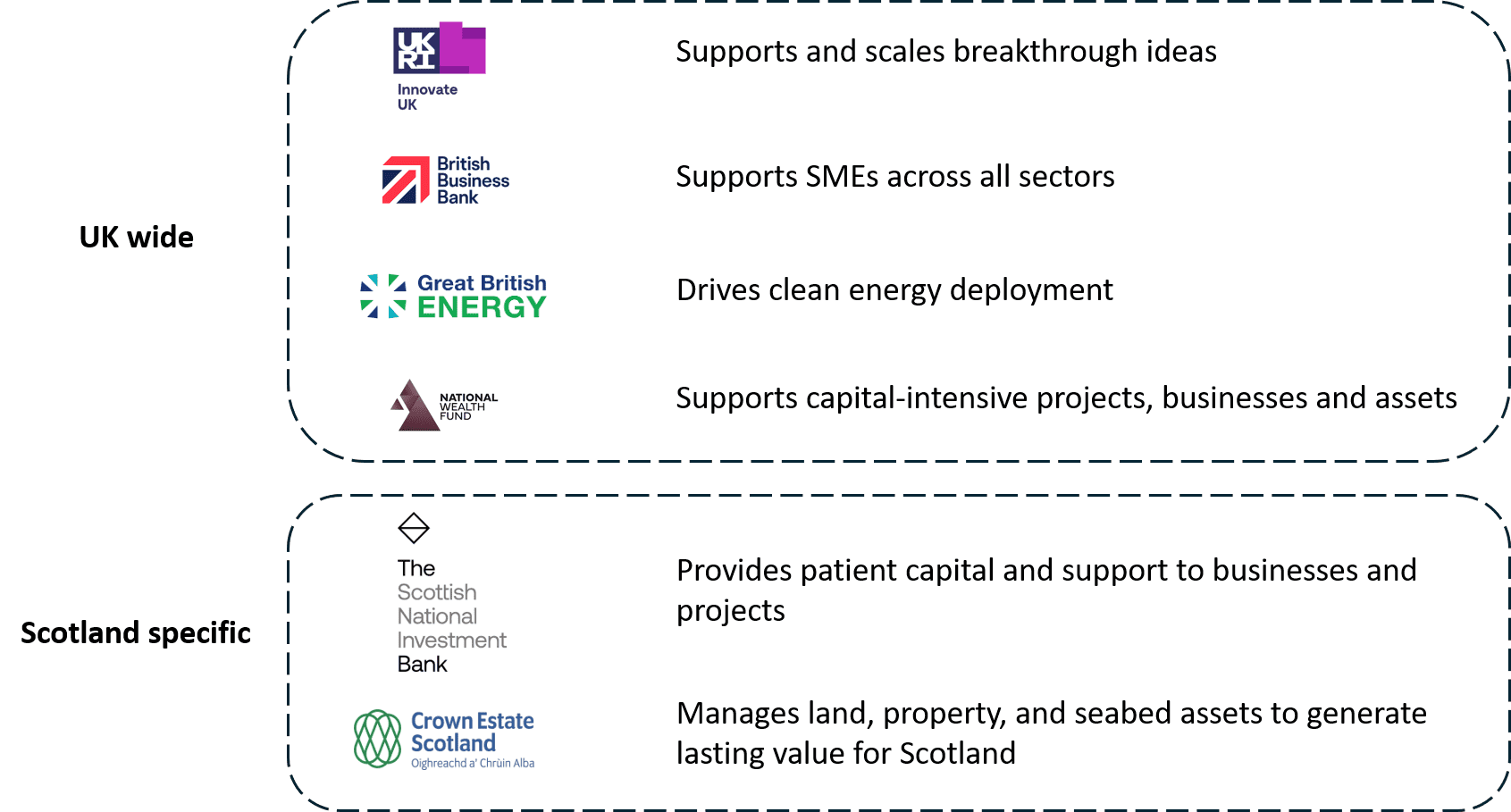
Source: An introduction to the UK public investment landscape, HM Government.
Box 1. Case study: Quanterness Wind Farm loan
The Quanterness wind farm is a 28.8 MW community-owned onshore project in the St Ola region of the Orkney Islands, developed by Orkney Islands Council with financial support from the National Wealth Fund. Approved for investment in 2025, the project forms part of a wider portfolio of community wind developments across the islands. It will consist of six turbines, each with a capacity of 4.8 MW, and has an estimated build cost of £50 million. The project is fully financed through a £62.1 million government loan provided by the NWF, offering favourable interest rates aligned with government bond yields. A 15-year Contract for Difference (CfD) has been secured, ensuring long-term revenue stability and strengthening the project’s financial viability. Construction is expected to begin in 2027, with operations commencing in 2028, and debt repayment planned largely within the CfD period.
The investment is an example of broader policy support for onshore wind capacity in the UK and Scotland, as well as of the efforts to enhance local community benefits from RES projects. Quanterness benefits from proven wind technology, high local wind resource, and the potential to export electricity to the Scottish mainland via a planned interconnector. The project is expected to generate approximately 96.6 GWh of electricity annually – enough to power around 26,000 households – while avoiding approximately 40,000 tonnes of CO₂-eq each year. The project illustrates the role of public financing and revenue stabilisation mechanisms for development of green sectors.
Future investment appetite and priorities
Introduction
As noted in section 3.1, the Scottish government is developing a supportive environment to attract investors towards sustainable finance opportunities. In line with actions originally set out in the Green Industrial Strategy (2024), the government hosted a Global Offshore Wind Investment Forum in 2025, where it highlighted £500 million of investment in the Scottish offshore wind supply chain and outlined a goal of leveraging £1.5 billion of private investment.
The InvestScotland portal, also launched in 2025, is hosted by Scottish Development International, the agency responsible for trade and inward investment as the international arm of Scottish Enterprise. It showcases large-scale investment opportunities in renewable energy and other infrastructure. It is intended to support participation from international investors in major projects already underway or planned. These projects include Orkney energy infrastructure, Green Volt Floating Offshore Wind Farm, and Coire Glas pumped storage hydro.
This section provides an overview of publicly available information on which financial institutions are looking to meaningfully, structurally invest in Scottish projects in the short and medium-term. We focussed on the companies identified in Section 4 with completed deals in Scotland since 2020 and the major financial services firms currently operating in Scotland. Furthermore, we conducted a review of relevant news portals to identify published investor plans in Scotland since 2020. We also asked investors active in Scotland to comment on their investment plans. These stakeholders include large UK-based retail and commercial banks, globally active asset managers (across private and public markets), and infrastructure investors. Data in this section should not be treated as exhaustive. A lack of data on certain sectors does not imply a lack of investor interest. Evidence from stakeholders was used to complement desk-based research. Appendix A provides more details on the specific methodology. It should be noted that while the analysis of past deals in Section 4 does not include balance sheet financing, this form of financing is included in the analysis of future plans. This reflects the data available in public sources.
Institutions planning to invest in Scotland
A total of 28 existing and new investors has announced plans to invest in green sectors in Scotland. Of these, 16 were asset management companies, eight were corporate investors, and four were PuFins (see Figure 9). The asset management category includes those seeking to adopt several different investment strategies, including private equity strategies, such as venture capital and growth equity (see Appendix B for definitions), and infrastructure investing.
The corporate investor category included several that plan to invest in Scotland either via their balance sheets or by raising equity and/or debt from the market. For example, SSE plc has announced significant investment planned in electricity transmission, distribution, flexibility and renewables. It plans to invest £33 billion over the course of 2026-2030, with the financing being sourced through a combination of equity issuance and debt (Latief, 2025). For six of the identified investors, the available information does not specify clearly the method, only that the plan to invest was announced.
Several PuFins were also identified: the National Wealth Fund, the Scottish National Investment Bank, and Great British Energy. These institutions either provide grant capital, guarantees, debt or take equity stakes depending on their mandates and the nature of the deal. The National Wealth Fund, under its five-year strategic plan until 2030-2031, plans to invest in power grids, carbon capture and storage, hydrogen, energy storage, offshore wind, solar and EV charging infrastructure (National Wealth Fund, 2026). As of February 2026, the SNIB has committed over £1 billion to Scottish businesses and projects in the preceding five years. With the Scottish government announcing a £2 billion capitalisation over a 10-year period, the SNIB expects to deploy another £1 billion over the next five years (SNIB, 2026). Finally, GBE was awarded £8.3 billion in the 2025 UK government spending review for projects across the UK, however, the total allocation to Scotland has not been indicated (Great British Energy, 2025). There have, however been standalone announcements on funding for Scotland through GBE for public sector buildings and community and local renewable schemes with £4.85 million allocated in March 2025 (UK Government, 2025b) and another £5.5 million in December 2025 (UK Government, 2025a).
Figure 9: Organisations with future plans to invest in Scotland, announced since 2020
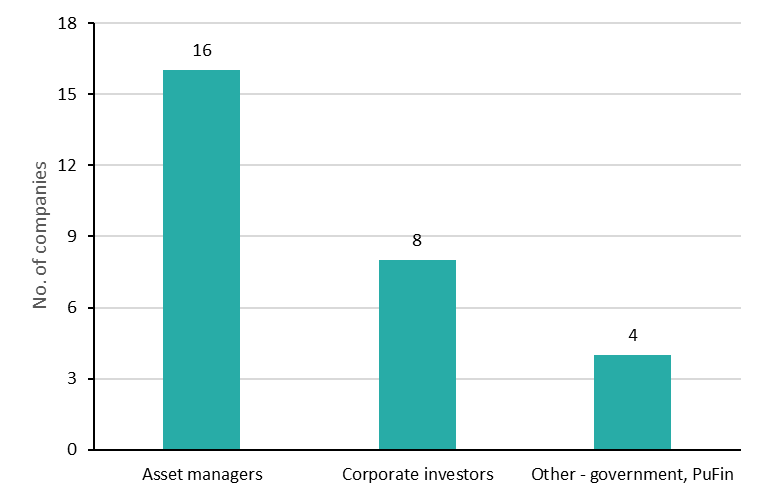
Source: desk-based research conducted in February and March 2026, which focused on identifying investors with plans to invest in Scotland. This included reviewing public announcements from the companies identified in Section 4 with completed deals in Scotland, major financial services firms currently operating in Scotland and relevant news portals. For more detail on methodology and sources, see Appendix CC. The figure only includes organisations that have publicly announced intentions and therefore should not be considered exhaustive.
Short- and medium-term priorities
This section categorises identified investment plans into short (< 5 years) to medium (5-10 years) term and within five broad categories: renewable energy; energy storage; grid infrastructure and transmission networks; nature-based solutions; and carbon capture and storage. These categories are based on themes emerging from desk research as well as insights on sectors of interest gleaned from stakeholder interviewees, publicly available data and investor announcements. These investors themselves are described in section 5.1.
A total of 20 investors were identified. These include investors that announced plans for a specific sector. Note we excluded eight investors that are “open to multiple sectors” from this section. These are discussed in section 3.
Figure 10: Number of investors that plan to invest in Scotland by sector of investment, as announced since 2020
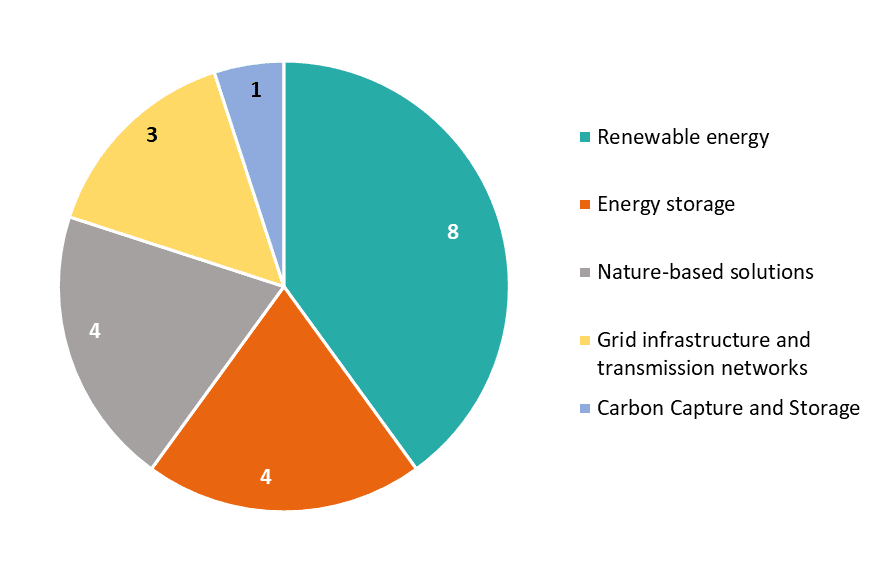
Source: desk-based research conducted in February and March 2026,
The most common form of capital deployment that investors plan to utilise is taking equity stakes in the target project or company. There were 20 investors that intend to invest through equity stakes. The review also identified several instances of investors planning to finance projects through the firm’s own balance sheet. This is followed by the provision of loans by lenders. The least common forms were guarantees or grants, which would be likely to be provided by the UK government or PuFins.
Ticket sizes vary significantly and reflect both the investment need and stage of development of the target business or project. As an example of lower ticket size investments, the Foresight Group’s Foresight Scotland Fund invests between £1-5 million in “growing businesses across Scotland”, with businesses in the renewables sector eligible for investment through various deal types (Foresight, 2026; Scottish Enterprise, n.d.). For large-scale projects or major business expansion plans, investment sizes can run into billions of pounds. An asset manager estimated that wind farm and storage assets may require additional capital of £1 billion over the next four years (source – interview with an asset manager (private markets).
Banks and asset managers investing in the UK do not publicly quantify their Scottish green investment plans. Interviewees referred to two banks active in the UK that do not have specific plans for Scotland, but rather UK-wide environmental spending and sustainable finance goals (source – interviews with two banks). A similar sentiment was expressed by two asset managers. They noted investment allocations in the UK are not regionally based, but rather, on the most attractive investment opportunities which meet their customers’ risk and return expectations across various asset classes (source – interviews with an asset manager (public markets) and an asset owner).
Sector and technology focus
Using the investor categories and the priority investment sectors described above, Figure 11 disaggregates the type of organisations that are planning to invest along with the destination sector. The renewable energy category is the most common sector and has the greatest diversity of investor types, followed by nature-based solutions and energy storage. The “open to multiple sectors” category comprises asset managers with past activities or investment in green sectors that have either announced a plan to invest in several green sectors in Scotland, or have general investment volumes, or funds allocated to Scotland.
Figure 11: Investment plans by sector and type of investor
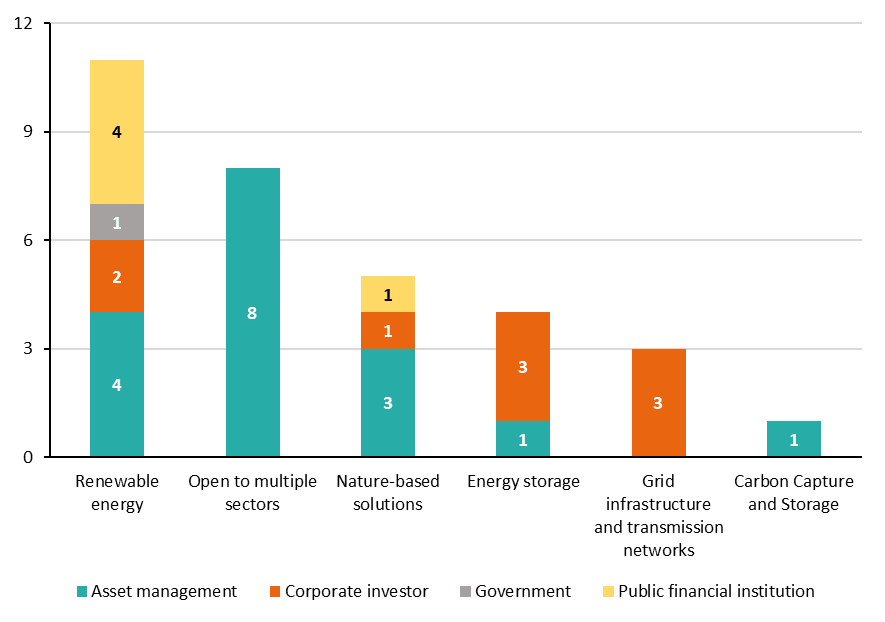
Source: desk-based research conducted in February and March 2026, which focused on identifying investors with plans to invest in Scotland. This included reviewing public announcements from the companies identified in Section 4 with completed deals in Scotland, major financial services firms currently operating in Scotland and relevant news portals. For more details on methodology and sources, please see the Appendices. Note: the investment plans by sector may number more than the plans identified.
Available investment plan evidence suggests that renewable energy is the most common sector of interest for investors with plans for Scotland (see Figure 11). In Scotland, this sector primarily consists of onshore and offshore wind farms, given that onshore wind represents 59% and fixed offshore wind represents 24% of installed renewables capacity in Scotland as of Q3 2025 (UK Government, 2026). A bank interviewed as part of the study noted that it is keen on supporting the UK Clean Power Plan, has developed an internal strategy to align with that plan and has become a financier of the energy transition in the UK (source – interview with a bank). Interviewees also implied increasing interest in complementary sectors key to the rollout of renewables and clean power transition, for instance grid infrastructure, transmission networks and energy storage. Two asset manager interviewees indicated that the pump hydro storage sector will be a priority for them in the near future as such projects provide long term revenue certainty (source – interviews with two asset managers (private markets)).
This is in line with the findings of CBI Economics, which noted that Scotland has a significant role in the UK’s planned energy infrastructure development, with around £211 billion of planned energy infrastructure investment and 88 GW capacity. This is equivalent to 34% of the UK’s total infrastructure pipeline by value. Battery storage (33.4 GW), onshore wind (20.3 GW), offshore wind (17.7 GW) and pumped storage hydroelectricity (9.6 GW) account for the largest shares of planned capacity (CBI Economics, 2026).
Nature-based solutions are another common category of interest for investors. There are a wide variety of projects that fall under this category. The research identified five investment plans in the areas of rewilding, peatland restoration and forestry management. Rewilding typically generates returns through natural capital markets, peatland restoration through carbon credit sales and broader ecosystem services, and forestry management through sustainable timber harvesting and carbon credits. While there is investor interest in nature-based solutions, stakeholders noted uncertainty around offtake and long-term returns, which can reduce their attractiveness relative to other investment opportunities. They judged that if these issues could be mitigated, for example via market-based or government mechanisms, they have potential for further scale in Scotland (source – interviews with an asset manager (public markets) and a bank).
Limited evidence was found of investments plans for the carbon capture and storage (CCS) sector. The research identified one plan for this sector. In addition to publicly disclosed plans, two interviewees expressed that CCS projects could be developed in Scotland (source – interviews with an asset manager (public markets) and a bank). We did not find specific evidence on why the number of companies that have announced plans on CCS was low. This could be due to a lack of viable and attractive investment opportunities, insufficient policy and regulatory support, the carbon dioxide removal market not yet reaching the scale required for supporting revenue streams, the status of non-pipeline transport options for greenhouse gas removals, or simply due to investors not divulging their plans.
These findings align with investor preferences at the UK level, as reported in the Deloitte survey on investing in the energy transition (Deloitte, 2026). This survey comprised of 106 investors and included both institutional and corporate investors, 49% of whom were located in the UK. This indicated that investors have greater interested in energy storage, mature renewables (solar and onshore and offshore wind), grid infrastructure, and some emerging technologies (green hydrogen). These are followed by EV charging infrastructure, CCS, low-carbon buildings, low-carbon transport and others.
Barriers and opportunities for scaling investments
Several interviewed stakeholders had positive views on investment opportunities in Scotland, with one asset manager noting that it will likely have more progress than the rest of the country due to more ambitious climate targets. The preceding analysis highlights the growing scale of investment deals to date. Moreover, according to a 2026 survey by Deloitte, UK investors appear more committed to the energy transition than a year ago (Deloitte, 2026). At the same time, stakeholders identified several structural barriers to scaling investments. In many cases, this reflects challenges in scaling investment and associated activity and cannot be interpreted as indicative of wider sentiment. Similarly, several reflect external factors arising from global conditions. These barriers and opportunities were:
- Project-level investment risk: One bank noted that investment in sustainable finance could be scaled by more targeted blended finance or instruments such as guarantees or insurance that reduce investment risk for banks (source – interview with a bank). This aligns with the findings of Deloitte’s 2026 survey of investors interested in the UK energy transition. This indicated a desire for more direct public funding/support for early-stage projects, such as tax credits, exemptions and public co-funding. While scaling needs blended finance, including CfDs, Regulated Asset Base (RABs) and revenue support (Deloitte, 2026).
- Long-term certainty to reduce risk: The 2026 Deloitte survey found that clear visibility of risk or predictable cash flows is crucial for investments in energy transition (90% of respondents), and that this is a crucial challenge for the sector. In an interview an asset manager underlined that for capital intensive projects, investors require long-term certainty that returns on investment are secure (source – interview with an asset manager (private markets). This is in line with findings from the “net zero: investment panel” report, which recommends the private and public sectors work closely together (Investor Panel, 2023).
- Lack of grid infrastructure: The Deloitte survey noted above found that for most investors (70%), an expanded and modern electricity grid is a key energy transition enabler, with policy support to incentivise investments in grid optimisation, balancing services, data and technology solutions, and hardware manufacturing.
- Inefficiency of permitting processes: The Deloitte survey also confirms that faster planning and permitting should be a key energy policy priority, (77% of respondents).
- Shortage of skilled human capital: Previous research has noted a need to increase understanding of private sector investment skills requirements to better inform upstream policy development and downstream policy implementation (Investor Panel, 2023). It is not clear that this relates to green investments specifically or acknowledges the extent of devolved powers, however. Despite this, the Deloitte survey notes investors are cautiously optimistic that the UK will develop the green skills needed for energy transition by 2030.
- City-level partnerships: One asset manager pointed to city partnerships in England where cities and local authorities appoint a private-sector partner to work with and develop a pipeline for green projects. These are long-term partnerships over 10-15 years working towards specific KPIs. A similar model in Scotland may encourage investors to invest in projects which otherwise may be riskier (source – interview with an asset manager (private markets). There have been recent developments towards such partnerships in Scotland, such as the national Wealth Fund’s Regional Accelerator Project in Glasgow (NWF, 2025).
- Adaptation investment: One bank noted that while there is often a business case for adaptation and resilience investment, many businesses do not yet see it as a revenue generating opportunity. As better climate intelligence and data become available, more investment in this area could be made (source – interview with a bank).
- Nature investment: One asset manager pointed out that the challenge with nature-based solutions is the lack of certainty about the end market for carbon credits, which puts investors’ returns at risk (source – interview with an asset manager (public markets). One bank similarly noted that there is greater equity risk in nature-based investments, as there is relatively less price and offtake guarantee (source – interviews).
In summary, the renewables sector features most prominently in investors’ priorities with complementary plans announced in the grid infrastructure and energy storage sectors. There is also investor interest in nature-based solutions, although they generally seek more certainty around project viability and profitability to scale investment in this sector. There are several opportunities to facilitate further sustainable finance flows in Scotland. They include:
growing investor relations management capacity, providing clarity to investors on who to engage with and how.
devising a pipeline of strategic investment priorities with transparency on Government support. Targeted support to Small and Medium Sized enterprises (SMEs) is likely to be particularly important.
Consider the need for further supporting mechanisms around business models for adaptation and nature-based investments.
Undertake further specific analysis on targeted investment support needs to decrease project level risk.
Green financial service providers in Scotland
Introduction
This section identifies the institutions providing green financial services in Scotland and outlines the services and products they offer. We evaluate their green investment targets, commitments, and note sustainable investment strategies, where data are available. It should be noted that not all investors disclose their activity in Scotland, hence, most findings in this section are based on evidence gleaned via global financial institutions. Appendix C Provides a list of data sources. Green financial initiatives in Scotland are also analysed.
We identified the largest financial service providers present in Scotland using the LSEG database and the Net Zero Finance Tracker of the Climate Policy Initiative. This list was complemented with a further review of financial institutions, which identified one further company. These institutions were screened in terms of the green financial services or products they offer. As noted above, many Scotland-based institutions operate within wider group structures, which report sustainability performance at the international group level. As such, analysis was conducted at the group level where appropriate. A total of 49 institutions were identified and included in the analysis. Desk-based research also identified green services and financial instruments, green targets, associated commitments, and governance structures. The institutions analysed is not exhaustive, reviewing all financial service providers present in Scotland (over 1,700) was outside of the scope of this research. Additionally, nine interviews were conducted, and one institution provided answers in writing. Organisations represented included banks (4), asset managers working either in private (2) or in public (1) markets, or both (1), and a trade association. The names of institutions interviewed are not provided for reasons of confidentiality.
Overview of service providers
Most of the large financial institutions that were analysed have headquarters in Scotland, elsewhere in the UK and the United States. Out of the 49 financial service providers analysed, 27% have either their main or regional headquarters in Scotland. The remaining companies are headquartered in the rest of the UK, mainly London (31%), and the USA (24%), Canada (6%), Australia (4%), Switzerland, Luxembourg, Denmark and France (2% each). This pattern is in line with other published research. For example, the United States was the single biggest originator of Scottish foreign direct investment (FDI) projects in 2024, comprising 27% of Scotland’s total FDI based on analysis from Ernst and Young (EY, 2025).
Among the Scottish providers, we distinguished between four types of institution. These categories are used as practical groupings for the purposes of the analysis and do not imply that institutions’ activities fall exclusively within a single category:
- Asset managers in public markets, defined as companies that manage third-party capital and invest it in public markets, i.e. listed companies.
- Asset managers in private markets, defined as companies that manage third-party capital and invest it in private markets, i.e. projects or non-listed companies.
- Asset owners, defined as institutions that invest their own capital institutions and invest it directly and/or via external managers, e.g. insurance companies or pension funds; and
- Banks.
In terms of the number of investors, asset management companies were the largest category identified as providing green financial services and products (63%), followed by banks (20%) and asset owners (16%). In the asset management category, the majority of institutions focused their overall activity on private markets (33 percentage points (p.p.), although many worked both in public and in private markets (22 p.p.), and a smaller share focused solely on public markets (8 p.p.). Those categories can be further broken down into subcategories:
- Asset managers working in private markets were represented by global alternative asset managers (see Appendix B for definitions) investing across a range of sectors and strategies, including private equity. Those included Blackstone, KKR, Apollo Global Management, Brookfield Asset Management, the Carlyle Group, CVC, Permira, Bain Capital. While these organisations invest in green sectors, this tends not to be the primary investment focus. Brookfield invests across multiple sectors (e.g. infrastructure, real estate, private equity). It appears to have stronger activity in green sectors than those listed, but this is undertaken as part of a broader strategy. The second largest subcategory was investors specialising in green sectors, such as renewables and storage, as well as infrastructure more generally. These tend to invest long-term, alongside developing and operating assets. They include Macquarie/Green Investment Group, Quinbrook, Equitix, IFM, Schroders Greencoat, Copenhagen Infrastructure Partners, InfraRed, and Foresight.
- Asset managers working in public markets allocate capital in listed equities, including those in green sectors. These include Baillie Gifford, Alliance Witan, Scottish American Investment Company. Their role in green finance is mainly indirect, as they invest in listed companies rather than directly fund green projects. They support green outcomes by choosing to invest in greener companies or by influencing companies they own shares in. Hence, their role can become more active through long-term stewardship. While these institutions have a global reach, these managers allocate capital to Scottish companies in addition to international portfolios.
- Asset managers working in private and public markets comprise two types. The first is companies operating globally and investing mainly in public markets with some exposure in private markets. These include BlackRock, State Street Global Advisors, Amundi, Invesco, Pimco, Franklin Templeton, Northern Trust. They act through capital allocation, integration of green and climate aspects in their investments, and stewardship. The second type is UK-based asset managers who, while investing in public markets, have a stronger presence in private markets, for example, abrdn, Schroders, M&G, Foresight.
- Asset owners were represented by pension funds – for example, CPP Investments, Ontario Teachers, and insurance companies – for example, Scottish Widows, Aegon, Prudential, Legal & General, Royal London, Phoenix. Based on publicly available information on their past activity, nearly all have significant exposure to the UK market. However, Scotland does not appear to be identified as a distinct focus market. Some evidence suggests that Pension funds are increasing their investments in renewable infrastructure, such as solar, wind, and hydropower more generally (Pensions Policy Institute, 2024).
The most common sector that institutions in Scotland invest in or finance is renewable energy. Nearly all investors have exposure in renewables, with wind and solar being the most common (see Figure 12). Most of the identified institutions also appear to channel capital into projects or companies involved in energy storage. Despite this, investments portfolios appear to be diversified and include buildings, transport, industry, energy efficiency, circular economy, sustainable water management, nature-based solutions and carbon removal. In terms of specific examples, Equitix and Macquarie Asset Management have supported the offshore wind sector in Scotland, Copenhagen Infrastructure Partners has financed the construction of battery energy storage in South Lanarkshire, and Carlyle has invested in green ammonia company based in Edinburgh (Carlyle, 2022; Copenhagen Infrastructure Partners, n.d.; Equitix, 2023; Macquarie Group, 2024). Banks, such as TSB and Virgin Money, have provided finance for energy efficiency in residential buildings. Some banks are increasingly establishing dedicated teams and platforms to support green infrastructure and emerging low-carbon technologies, including Lloyds Banking Group, NatWest, and HSBC.
Figure 12. Investment sectors of Scottish green financial service providers
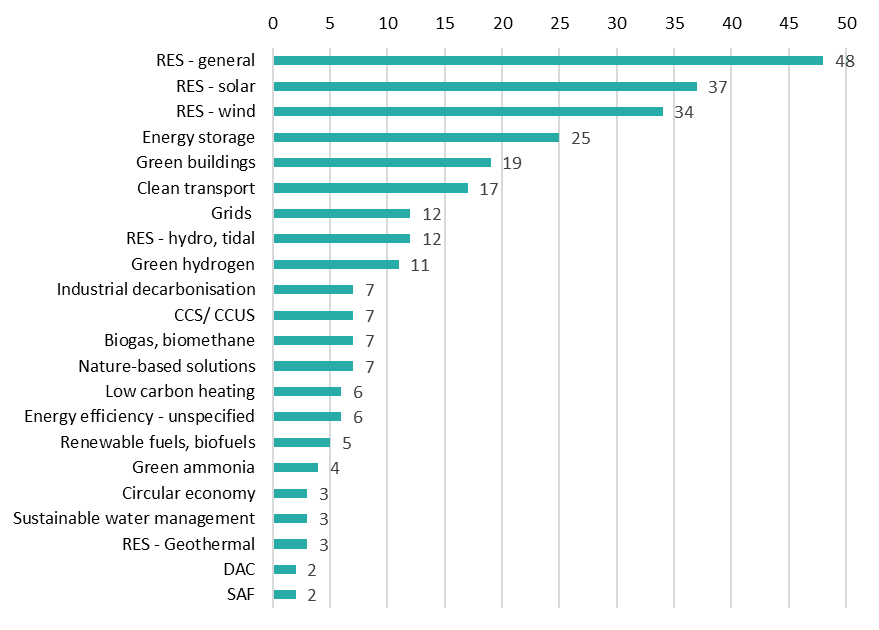
Source: desk-based research, see Appendix C for the list of sources. RES is “renewable energy sources”.
Green financial instruments
Our research indicates financial service providers present in Scotland tend to use the three key types of instruments to finance their activity in green sectors. Those are equity investments that differ between public markets (listed shares) and private markets (direct project or asset ownership), green bonds, and loans. The use of these instruments and their subtypes vary between institutions.
Asset managers in private markets primarily use equity and debt, where equity represents direct ownership in green infrastructure and projects, particularly in the renewables sector. Some large generalist investors may deploy all three instruments, including bonds – for example, Blackstone, KKR, Brookfield, Apollo. More specialist managers, such as Quinbrook, Equitix, and Schroders Greencoat tend to focus on equity. Additionally, some asset managers offer green and sustainable funds or sector-focused investment strategies. For example, Quinbrook manages the Net Zero Power Fund, and Apollo’s Sustainable Investing Platform helps to deploy capital in energy transition and decarbonization (Garcia, 2024).
Conversely, asset managers operating in public capital markets rely more on listed equities and bonds, which reflects their investment strategies. For example, Baillie Gifford, Alliance Witan, and the Scottish American Investment Company. ESG-labelled or sustainability funds with a broader mandate than funds focused on climate and environment objectives are also offered – for example abrdn’s Global Corporate Sustainable Bond Fund, range of ESG ETFs and active funds of Invesco.
Asset owners, such as pension funds and insurers, tend to use all three instruments, i.e. equity, bonds, and debt. This is likely due to their diversified portfolios and long-term strategies that include both public and private markets for example CPP Investments, Ontario Teachers’, Legal & General.
Larger international banks, such as JPMorgan, HSBC, and Barclays, tend to use a mix of equity and debt, while the smaller or domestic banks – e.g. TSB, Hampden & Co, Virgin Money, appear to usually provide debt only. Other banks also use labelled debt instruments – green bonds, sustainability and sustainability-linked loans – for example NatWest, JPMorgan, HSBC.
Green services
Green financial service providers present in Scotland offer a wide range of services, which vary by institution type. Our research indicates that institutions working in private markets tend to invest directly in projects and assets, while institutions working in public markets appear to allocate capital and influence companies through investment decisions and engagement. Banks also help structure transactions, while asset owners primarily supply long-term capital.
Table 5 provides a summary of the services offered, by the types of institution. These services include direct ownership of projects as well as ongoing asset management. In practice, functions such as due diligence, structuring and climate risk assessment also form part of their service but built into the investment process. This reflects the nature of investments in green infrastructure and other real assets, which often require hands-on involvement.
Table 5: Services offered by green financial service providers
Function / Service | Private market asset managers | Public market asset managers |
|
| Smaller banks | ||||
|---|---|---|---|---|---|---|---|---|---|
Capital allocation | Yes | Yes | Yes | Yes | Limited | ||||
Investment portfolio management | Yes | Yes | Yes | Yes | – | ||||
Asset ownership, active management | Yes | – | Partial | – | – | ||||
Lending | Yes, private credit | – | Indirect | Yes | Yes | ||||
Underwriting (bonds/equity) | – | – | – | Yes | – | ||||
Advisory/ structuring | Yes, embedded | Limited, embedded | – | Yes | Limited | ||||
Climate analytics/ scenario tools | Yes, embedded | Yes | Yes, internal | Yes, embedded | Limited | ||||
Stewardship/ engagement | Yes, asset level | Yes, corporate level | Yes, often delegated | – | – |
Source: based on desk-based research, see Appendix C for the full list and Appendix B for definitions. In this report, we understand stewardship and engagement as cases in which investors use their ownership rights to influence company behaviour. Banks do not undertake stewardship in this sense, but may influence counterparties through the credit process, including through lending conditions, covenants, and ongoing borrower engagement. This aspect of banks’ activity was not analysed in the current study.
Private market asset managers appear to provide the most comprehensive range of services. Their activities usually cover the full investment lifecycle, from allocating capital to managing assets in the long run. But public market asset managers also provide a range of services, focussed on investments in listed markets. Their role focuses on portfolio management, supported by research and company analysis, including the integration of climate considerations into investment analysis and decisions. They engage with companies through stewardship activities, such as dialogue with management and voting at shareholder meetings, influencing decision-making and investment strategy. Some firms provide analytical tools, such as climate risk metrics or scenario analysis, although these are usually part of their broader investment offering rather than standalone services – for example, Blackrock, Amundi, Northern Trust Asset Management.
The identified asset owners, such as pension funds and insurers, mainly act as providers of capital. They allocate capital across asset classes and investment managers, with investment strategy typically set in-house but implementation often delegated. While they use climate-related analysis to inform their decisions, these capabilities are typically internal and not offered externally. Their role in green finance is therefore indirect, as they support investment rather than deliver financial services. This role is closely linked to asset managers, with asset owners influencing investment outcomes through the mandates and requirements they set.
Banks provide green financial services via lending and by arranging and structuring transactions, including loans and bond issuance, but the extent and diversity of services differ. Larger banks offer a wider range of services, including lending, underwriting and support with structuring transactions. They may also provide advisory support, for example Lloyds Banking Group, incl. Bank of Scotland, advises on energy transition finance and provides transition planning advisory services. These activities are often supported by internal analytical capabilities. Smaller or more domestically focused banks tend to focus on lending only, such as green mortgages or financing for smaller businesses, with limited involvement in capital markets or advisory services.
Green financial service providers also use proprietary tools and frameworks to support green investment. Several firms have developed internal platforms and methodologies, such as climate scenario analysis tools (e.g. Blackstone), ESG data and analytics systems (e.g. Invesco, Northern Trust Asset Management), and decarbonisation or net zero frameworks used to guide portfolio companies (e.g. Brookfield). These tools are used to support investment decisions, risk assessment, and portfolio monitoring, rather than being offered as standalone services. At the same time, banks also provide client-facing services, including carbon foot printing tools, business transition planning, and assistance with regulatory reporting and ESG ratings – for example, NatWest Group (NatWest and Royal Bank of Scotland), JPMorgan Chase. Some banks also provide more targeted support, such as mentoring or advisory services for climate-focused businesses, e.g. Barclays.
Banks appear to be the most active providers of finance for small and medium enterprises (SMEs). The majority institutions reviewed provide loans to SMEs, including those working in green sectors. Asset managers, both those in public and in private markets, appear to have a mixed approach. While a few firms, e.g. Blackstone, KKR, Carlyle, Schroders, Invesco, Amundi, invest in SMEs, others do not, focusing on large-scale investments only. Overall, SME financing in green sectors appears to be driven mainly by banks, with other institutions contributing either in a more targeted or indirect way. At the same time, SMEs make up the vast majority of Scotland’s net zero economy, accounting for around 90% of identified firms (CBI Economics, 2026).
Limited evidence has been identified that institutions in the sample provide venture capital to companies in green sectors in Scotland. Some asset managers, a small number of banks and asset owners invest in early-stage companies. However, many others, particularly those focused on large-scale infrastructure, do not appear to provide this service. The available data do not specify whether they direct venture capital towards green sectors. As a result, while some institutions provide venture capital, its role in supporting early-stage development in green sectors cannot be established based on the available evidence. We did not identify evidence that private equity firms support the growth and scaling of such companies.
Green targets and commitments, internal governance structures
As a result of regulatory requirements as well as industry initiatives, financial institutions are increasingly required to measure, disclose and reduce emissions, including those associated with their financing and investment activities. Financial institutions are also increasingly being evaluated on the real-economy impact of their transactions, with data providers such as LSEG and Bloomberg incorporating such metrics into their assessments. This section summarises thematic findings on whether the institutions we analysed have published green targets or have associated governance structures supporting green investment activities.
Most of the analysed institutions have adopted targets on greenhouse gas (GHG) emissions reductions, although their scope and level of ambition vary. The most common approach is the adoption of net zero targets by 2050, often supported by interim targets for 2030. In particular, the asset managers and banks in our sample have set such targets, for example Brookfield Asset Management, Carlyle, Schroders and Legal & General. These organisations combine long-term net zero commitments with interim emissions reduction or portfolio alignment targets. Despite this, around a third of institutions do not appear to have adopted explicit 2050 net zero targets. A number of firms either focus on operational emissions only or have not set portfolio-level targets. Some have weakened GHG emission reduction targets or withdrawn from net-zero or climate alliances. Overall, their scope, coverage, and implementation vary.
Often these targets cover financed or portfolio emissions. However, in some cases it was not clear which emissions the targets cover. In private markets, green targets are often linked directly to portfolio companies and assets. For example, Blackstone has introduced an emissions reduction target applied to certain investments where it has operational control, while CVC sets targets for portfolio companies to adopt science-based emissions reduction targets over time. InfraRed Capital Partners also focuses on portfolio alignment with net zero pathways and has committed to engaging with the companies responsible for the majority of its financed emissions. Overall, these investors appear to have more influence over underlying assets compared to public market investors.
In addition to setting targets, many institutions have made commitments to increase financing or investment in green and transition activities over a defined period. Large banks in the sample have been the most active in setting quantified commitments, often in the range of hundreds of billions or more, typically covering lending, underwriting, and investment in green and transition activities. For example, NatWest Group, HSBC, Barclays and JPMorgan have all set substantial targets. The commitments are not typically specifically linked to Scotland or other countries and regions. This is in line with the findings from stakeholder interviews, as several banks confirmed they do not have specific Scottish targets or commitments (source – interviews with two banks).
Among asset managers, several institutions have explicit pledges on green financing, but this practice does not appear widespread. Firms such as Blackstone and Apollo have announced large-scale investment targets in green or decarbonisation strategies, while Brookfield has raised significant capital for funds dedicated to the energy transition. Infrastructure-focused investors sometimes commit to allocate capital to specific green sectors. Copenhagen Infrastructure Partners aims to raise €130 billion by 2030 for greenfield renewable energy investments.
Governance of green investment is usually embedded in broader corporate governance and risk management. Boards and Board committees, e.g. risk, sustainability, or governance committees, often set overall direction, approve strategies, and monitor progress. Executive committees and senior leadership translate strategic objectives into operational processes.
Many companies have dedicated sustainability or responsible investment teams. These teams develop policies, provide analytical support, and coordinate reporting, while working closely with investment, risk, and business units. It is not clear if there are dedicated teams for Scottish investment. Additionally, climate and sustainability aspects are often integrated into existing functions such as risk management frameworks, due diligence processes, and portfolio monitoring.
Moreover, green financial service providers often integrate climate considerations throughout the investment lifecycle. They embed climate risks and opportunities in investment decision-making, instead of treating them as a separate activity. This spans initial screening and due diligence to asset management and stewardship, in particular, for private market investors.
Interviewees suggest climate considerations are integrated into institutions’ strategies in different ways. For banks, this may involve a combination of internal operations, customer products, and supplier engagement (source – an interview with a bank). For asset managers, client demand often determines the way climate change is integrated, depending on the mandates from investors (source – an interview with an, asset manager (public markets)).
Overview of initiatives aimed at mobilising green finance
There are several initiatives that aim to mobilise green finance in Scotland. We have identified some of the key partnership-led efforts to strengthen Scotland’s green finance ecosystem below. They support different stages of the green investment cycle, including early-stage innovation and commercialisation, project pipeline development, system-level coordination and strategy, as well as capital mobilisation and scaling. While some initiatives focus on specific segments, such as climate technologies or nature-based solutions, others take a broader approach to enabling green finance across sectors. The initiatives are as follows (the full list of participants is in Table 6):
- Climate Tech Accelerator supports early-stage climate technology companies by providing mentoring, network access, and business development support (ScotlandIS, 2025). It was founded in 2025 through a partnership between Barclays and Sustainable Ventures (Sustainable Ventures, 2021).
- Facility for Investment Ready Nature in Scotland (FIRNS) focuses on developing a pipeline of investable nature-based projects (NatureScot, n.d.-b). It addresses barriers such as limited sources of revenue and limited pipeline and scale (NatureScot, 2026). While it does not deploy capital directly, it is designed to unlock private investment into nature. It was founded in 2023 by a partnership of the Scottish Government, NatureScot, National Lottery Heritage Fund and Green Finance Institute (Green Finance Institute, 2026).
- Restore Scotland’s Native Woodlands supports the financing of environmental projects such as forestation, targeting landowners interested in nature restoration and carbon capture programmes (NatureScot, 2023). It was founded in 2023 by a partnership of Hampden & Co Bank, NatureScot, Lombard Odier Investment Managers, and Palladium. It aims to mobilise up to £2 billion for landscape-scale native woodland restoration projects.
- Transition Finance Scotland supports the mobilisation of capital into priority decarbonisation sectors (Green Finance Institute, 2025). Objectives of the initiative include unlocking green investments across Scotland, generating economic and employment opportunities and leveraging public finance to crowd in private investment. It was founded in 2025 by a partnership of the Green Finance Institute and 40 leading Scottish organisations across financial services, project developers and the public sector, to help facilitate expansion of investment in net zero initiatives.
- Carbonplace supports the secure and transparent transfer of carbon credits by providing market infrastructure that improves efficiency and trust in carbon markets (Segal, 2023). It was founded in 2021 by a partnership of banks including NatWest Group and other global financial institutions and became independent in 2023.
- The Scottish Taskforce for Green and Sustainable Financial Services supported the development of Scotland’s green finance sector through coordination, strategy, and policy alignment (Global Ethical Finance, 2024). It was active in 2022-2024 and was a partnership of the Scottish Government, Global Ethical Finance Initiative, Scottish Financial Enterprise.
- The accelerating Scotland’s Impact Investing Ecosystem initiative supports the growth of Scotland’s impact investing market by improving coordination, strengthening networks, and increasing visibility of investment opportunities (Impact Investing Institute, n.d.). It is a partnership of the Scottish National Investment Bank and Impact Investing Institute. SNIB supports the design of the initiative as the key partner and shares key insights on the investment landscape in Aberdeen and the larger Scottish ecosystem.
- The Scottish Business Climate Collaboration supports SMEs in developing carbon reduction plans and transition strategies (Scottish Business Climate Collaboration, 2026). It was founded in 2021 by Aggreko, Bank of Scotland, Diageo, EY, Scottish Power, Scottish Water, and Zero Waste Scotland (Newlands, 2021).
Table 6. Initiatives with aims including mobilisation of green finance in Scotland
Name of the initiative | Participants | Theme/Focus |
|---|---|---|
Climate Tech Accelerator in Scotland | Barclays & Sustainable Ventures | Climate-technology, Start-ups |
Transition Finance Scotland | Green Finance Institute | Green Finance |
Scottish Taskforce for Green and Sustainable Financial Services | Scottish Government, Global Ethical Finance Initiative, Scottish Financial Enterprise | Green Finance |
FIRNS – The Facility for Investment Ready Nature in Scotland | Scottish Government, NatureScot, National Lottery Heritage Fund, Green Finance Institute | Nature Finance |
Accelerating Scotland’s impact investing ecosystem | Scottish National Investment Bank, Impact Investing Institute | Impact Investing |
Restore Scotland’s Native Woodlands | Hampden Bank, NatureScot, Lombard Odier Investment Managers, Palladium | Nature Finance |
Scottish Business Climate Collaboration | Aggreko, Bank of Scotland, Diageo, EY, Scottish Power, Scottish Water, and Zero Waste Scotland | SMEs |
Carbonplace | BBVA, BNP Paribas, CIBC, ITAU, NAB, NatWest, SMBC, Standard Chartered, UBS | Carbon Markets |
Source: desk-based review.
Nearly all the identified initiatives involve the Scottish Government as a key partner. This highlights the importance of public–private collaboration in efforts to mobilise green finance in Scotland. In addition to these initiatives, there are other Scotland-based programmes that do not directly mobilise financial capital or address investment barriers but which do contribute to net zero, nature restoration and broader sustainable development objectives more generally (Landscape Finance Lab, 2026; Scottish Government, n.d.). These initiatives leverage existing finance for net zero or adopt a more research and advisory-oriented approach (Adaptation Scotland, 2024). For example, the Clean Transport Accelerator supports early-stage clean transport companies by providing mentoring, expert guidance, and access to networks (Flux Aviation, 2024; NatWest Group, 2023). It was established through a partnership between NatWest Group and Warwick Manufacturing Group and focuses on strengthening innovation and investment readiness in the transport sector.
Frameworks to identify gaps and opportunities
Introduction
This section presents approaches that could be used to identify the opportunities that could be leveraged for green finance in Scotland, as well as the gaps, and challenges for future investment. It is based on a targeted review of international best-practice approaches and guidance that could be adopted by the Scottish Government or their agencies to support identification of market gaps and investment opportunities. We reviewed documents that capture both conceptual and practical approaches to diagnosing how to attract private green investment.
Assessment of investment opportunities
In the documents reviewed, the identification of investment opportunities tended not to be viewed as a separate step, rather as the result of other actions, such as policy prioritisation, analysing sector needs and associated financial flows. However, several principles can be observed. These are discussed below, with examples.
- Climate policy priorities should be a starting point. The available documentation suggests that opportunities for investments in green sectors should be identified by starting from sectors or technologies prioritised in climate and development strategies and then assessing their investment potential. The idea is that opportunities emerge where policy objectives have been translated into sectoral priorities and investment needs. For example, the UNDP guidebook on catalysing climate finance recommends identifying priority mitigation and adaptation technologies based on green and low-emission development objectives, as well as national socio-economic conditions. The toolkit on developing roadmaps by Sustainable Banking and Finance Network (SBFN) notes that sustainable finance roadmaps should help channel finance into priority sectors for which the financing need is the largest.
- Demand for financing within the priority sectors needs to be assessed. The SBFN toolkit highlights the need to identify financing needs or market demand in priority sectors. This implies assessing the scale of investment needed to achieve climate objectives in certain sectors, as well as the extent to which current financing is (in)sufficient. For example, in the energy sector, national strategies may prioritise the expansion of green hydrogen capacities. While this creates a need for investment, access to long-term finance for this sector may be limited either due to projects being perceived as higher risk or due to regulatory framework not providing enough support. To define actions and measures needed to support its development, one of the first steps should be quantifying its finance needs.
- Analysis of the existing financial flows and market patterns. The approach of the Climate Policy Initiative (CPI), an international research organisation specialising in climate finance, in Guidelines for Building a National Landscape of Climate Finance, suggests that comprehensive tracking where finance is currently flowing may reveal areas with potential for scaling up investment. Accordingly, sectors that have attracted low capital flows relative to their importance in national climate strategies can potentially indicate underinvestment and missed opportunities (CPI Guidelines; CPI Global).
- Project pipelines. Several documents, for example, UNCTAD’s Investment Policy Framework for Sustainable Development, highlight that the visibility of project pipelines is important. While policy prioritisation and sector potential are important, without a sufficient pipeline of concrete projects those sectors may struggle to attract investment. As noted in section 5, in 2025, the Scottish Government established the InvestScotland portal to showcase key opportunities for investment. As the portal develops, a greater number of opportunities are expected to increase investment, provided wider awareness of those opportunities among stakeholders is ensured.
Identification of investment gaps
A common recommendation in the identified literature is to identify investment gaps by systematically comparing investment needs by sector in terms of policy targets and priorities with actual finance flows (Climate Policy Initiative, 2025; IMF & SBFN, 2023). Furthermore, some documents encourage analysis of gaps across different layers of the financial system. For example, the OECD report emphasises that assessment should cover “real-economy investments, financial assets, financial institutions, and financial jurisdictions”, meaning the gaps may arise at multiple levels, and investment volumes should not be the only indicator (OECD, 2024, p.18). For example, the report makes a distinction between financial flows, meaning new financing over a period, and stocks or existing financial assets, both of which need to be tracked.
Investment barriers
Policy and regulatory frameworks are responsible for creating enabling environments for investments in green sectors. For example, the EU Strategy for Financing the Transition to a Sustainable Economy highlights a need to have a framework for sustainable finance that is “clear, consistent and robust”. This is not further defined or explored in the document, however. The OECD report also notes that some existing policies still inadvertently create incentives for investments in high-emitting sectors (European Commission, 2021; OECD, 2024). The relevance and severity of the barriers vary across sectors and are influenced by their maturity, with emerging technologies usually facing higher risks, costs, and uncertainty than more mature sectors.
Overall, several barriers are recurring across the reviewed literature. The UNDP framework provides a comprehensive list of possible barriers to attracting finance in the green sectors. It categorises these into behavioural, e.g. knowledge gaps, reliability concerns, higher cost perception, institutional, e.g. weak policy implementation and enforcement, regulatory, e.g. legacy policies, administrative barriers, financial, e.g. higher upfront costs, transaction costs, and technical, e.g. lack of technical skills or certification facilities (UNDP, 2011).
Other documents, including “A Guide to Adaptation Climate Finance” by the Scottish Government, Adaptation Scotland, and SNIFFER (Scotland and Northern Forum for Environmental Research), emphasise market and project-level barriers, such as financial viability, information gaps, and the fact that some investments generate benefits that are not captured by investors, such as improved health, environment, well-being (Adaptation Scotland, 2022). This is particularly relevant for adaptation measures, as they often provide wider societal benefits but struggle to have clear private revenue streams (Adaptation Scotland, 2022).
In addition, the lack of assessment of the scale and distribution of financing needs and related emission reductions across sectors may act as a barrier, limiting effective policy development. In particular, this applies to less well-established areas compared to sectors such as renewable energy. Here, a distinction should be made between the actual needs where businesses have determined them but are struggling to attract finance, and needs based on the gap to policy targets (e.g. in terms of emission reductions, installed RES capacity). It is important to estimate both.
Data requirements and data gaps
In all identified documents, data availability, completeness and consistency appear to be a potential constraint in identifying opportunities, gaps and barriers (Clark, 2018; Climate Policy Initiative, 2021, 2025; OECD, 2024). Common challenges include fragmented and insufficient data availability, particularly for private sector actors.
Some documents also identify challenges of limited data as well as inconsistent methodologies for tracking climate finance. Data on financial flows in different sectors may be incomplete, while definitions of climate finance vary. This may lead to differences in assessments of the gap or their underestimation (CPI Global). These issues lower the reliability of analysis and highlight a need for credible, transparent, and comparable metrics and data on climate finance flows (Adaptation Scotland, 2022; Climate Policy Initiative, 2025; OECD, 2024). This implies that data availability and quality can directly affect the ability to identify opportunities, gaps and barriers.
To improve the identification of opportunities, gaps, and barriers, more granular, consistent data would be required across several areas. This includes:
Data on bank lending to UK businesses, disaggregated by sector and geography (including Scotland).
Information on private investment flows into green sectors in Scotland, including equity, debt, bonds, and project finance.
Estimates of financing needs across sectors and technologies, including actual needs of businesses and financing needs based on policy priorities and targets.
Data on project pipelines, including early-stage and pre-financial close projects, to improve visibility of future investment opportunities.
Data on risk and return profiles of green investments, including cost of capital and revenue stability across sectors.
Information on the use of proceeds for general corporate lending and bond issuance, to better identify alignment with green activities.
Data on SME financing, in particular on access to finance for smaller firms in green sectors.
Addressing these data gaps would likely require regulatory measures. Those may include standardised reporting requirements for financial institutions, improved disclosure of lending and investment activity, and the development of centralised datasets or platforms to aggregate and share information. Such measures should draw on experience from other policy areas, such as the Streamlined Energy and Carbon Reporting regulation, emissions trading, and social value reporting.
Relevance for Scotland
Several of the identified sources are either global in scope or focus on emerging economies. However, many thematic measures they recommend are applicable for advanced economies such as Scotland. For instance, the analysis of opportunities and gaps based on policy priorities, comparing finance flows and needs, and identification of barriers using the key categories are all relevant (Adaptation Scotland, 2022; Climate Policy Initiative, 2025; OECD, 2024).
To define the next steps for addressing gaps and barriers, and for leveraging or creating opportunities for green investments, a deeper understanding of the Scottish sustainable finance landscape is needed. This report is intended as the first step in investigating the landscape of sustainable finance in Scotland and is necessarily limited. Further research alongside regular engagement of the investment and energy sectors are required.
While this study relied on data from closed databases, open sources and interviews, it is likely that details on many past investments are not publicly available. This may be particularly true for project equity investments financed from companies’ balance sheets. Expanding the evidence base, including via the stakeholder engagement noted above would improve the robustness and representativeness of the findings. This will also help to understand whether green financial services and instruments offered by financial service providers differ in Scotland compared to the rest of the UK and other countries. A larger database of deals would allow for the identification of investment trends based on more granular investor categories than in the current study. Those could be different types of banks, asset managers, asset owners, etc. This would support more targeted policy measures.
The current research has analysed gaps and barriers to investments in green sectors raised by stakeholders; however, this was not the primary focus of the study. At the same time, any future efforts to scale green investment will need to be grounded in a robust understanding of the barriers, gaps, and challenges investors face. Future research could analyse them comprehensively and estimate their impact.
More broadly, future research could aim at a strategic assessment of the factors influencing investors’ decision-making, including not only barriers but also drivers of investment. This may include further stakeholder consultation to explore factors related to why Scotland attracts or loses investment compared to the rest of the UK or other countries.
While the report provides an overview of past and announced investment activity, it does not assess how these flows compare to the level of investment required to meet Scotland’s net zero target. Future research could develop forward-looking scenarios that estimate the scale of investment needed across sectors and compare this with current and expected investment trajectories. This could draw on existing evidence, such as high-level estimates from the Climate Change Plan, and be extended to consider investment needs from a broader societal perspective, including sectors not covered in the current analysis. The current analysis could be used to identify potential investment gaps between observed activity and estimated need. This would help inform the design of policies to mobilise capital in green sectors. Scenario analysis could also be used to assess the potential impact of different policy measures on investment outcomes.
Furthermore, while this study focuses on past deals in green energy and infrastructure, it does not capture the demand side for green investment, e.g. in energy and energy efficiency. Future research could address this gap.
Key findings and lessons learned
This section summarises the main findings and lessons learned from the study. It highlights patterns in past investment activity, investors plans and priorities for the future, and the ecosystem of Scottish green financial service providers.
Some of the key findings on the completed deals in green energy and infrastructure are:
54 deals over £10 million in green infrastructure and renewable energy were identified in Scotland since 2020, either fully or partially located in Scotland, with a total value of around £9.5 billion (excluding M&A).
Total annual investment increased from £500 million in 2021 to £1.8 billion in 2023 and over £5 billion in 2025.
64% of deals were fully located in Scotland, with the remainder having been a part of wider activity.
For deals partly and fully located in Scotland, electricity transmission had the largest share of total investment (32%), followed by renewable energy (25%), and battery storage (21%). The largest investment sectors included renewable wind energy, electricity transmission and battery storage. Investment appears concentrated in a relatively narrow set of mature assets, with more limited activity in less mature sectors such as green hydrogen and nature-based solutions.
Investment activity involves a broad mix of investors, including energy companies, commercial banks, infrastructure funds, institutional investors and public financial institutions.
The figures above are based on publicly available data and LSEG databases and are likely to underestimate total investment flows.
A key trend in Scotland’s green finance landscape is the role of public financial institutions in crowding in private finance. Over recent years, a network of public investors has emerged, including the Scottish National Investment Bank, the British Business Bank, InnovateUK, the National Wealth Fund, and GB Energy. Public financial institutions appear to play complementary roles across different stages of the financing lifecycle. Through guarantees, patient or concessional capital, and early-stage funding, these institutions help de-risk projects and mobilise additional private finance in green sectors. For example, the Flow Country Green Finance Initiative is funded through public-private partnerships and attracts investments in carbon credit projects (see Case study 2). Another example could be joint investments by the private sector and GB Energy, NWF, and SNIB, e.g., in the Pentland Floating Offshore Wind Farm.
Analysis of future investment plans identified 29 existing and new investors who have announced plans to invest in green sectors in Scotland. Key sectors of interest are renewable energy, being the most common, energy storage, and grid infrastructure and transmission networks. Emerging interest in nature-based solutions was identified, in areas such as peatland restoration, forestry and rewilding. Several stakeholders also mentioned CCS and the circular economy as promising sectors.
Asset managers and corporates were the most common investor types with publicly documented investment plans. Planned investment sizes varied significantly, from £1-5 million to £1.5 billion and from smaller-scale investments in growing businesses to large, capital-intensive infrastructure projects that can require commitments of hundreds of millions or billions. Some stakeholders perceive Scotland as a relatively stable market, and some held mixed views on its attractiveness for future investment. Some considered Scotland is likely to make more progress in investment activity than the rest of the UK due to more ambitious climate targets. Evidence also suggests that, as public financial institutions mature and develop, clearer engagement with investors and definition of roles may increase their impact.
To understand green financial services provided in Scotland, 49 of the larger institutions present in Scotland were reviewed. Most have headquarters in Scotland, elsewhere in the UK and the United States, operate globally and allocate capital across multiple geographies. They tended not to distinguish between Scottish and other services in publicly available documents; hence the assessment reflects general offering of services and instruments as well as company-level targets and commitments. The key categories of services providers were asset managers investing in public markets, i.e. listed companies, asset managers investing in private markets, asset owners, such as insurance companies or pension funds, as well as banks. The extent to which they specialised in green sectors differed. The most common sector that institutions present in Scotland invest in or finance is renewable energy, followed by energy storage, green buildings, low-carbon or clean transport, and grids. Private market asset managers appear to provide the most comprehensive range of services, covering the full investment lifecycle, from allocating capital to managing assets in the long run. Some firms have also developed internal platforms and methodologies, such as climate scenario analysis tools, ESG data and analytics systems, and decarbonisation or net zero frameworks used to guide portfolio companies. However, it was not possible to establish whether they provide the whole spectrum of green services and instruments in Scotland.
Initial findings from this research suggest there are several barriers that constrain the scale and diversification of private investment in Scotland’s green sectors. Some of the barriers for scaling up investments in these sectors include scalability, demand and revenue certainty. Among the conditions influencing investment decisions, interviewees mentioned policy transparency and regulatory stability, revenue certainty, and visible project pipeline. Sustained growth in capital deployment depends on a pipeline of investable projects, which some consultees considered to be lacking. Revenue uncertainty is a further constraint. Whilst renewable energy benefits from clear and predictable future revenues, other such as nature-based solutions or climate adaptation can face greater uncertainty around returns limiting their attractiveness. The research also identified that infrastructure constraints may also be limiting investment, with challenges in connecting new projects to the grid acting as a bottleneck, even where demand is strong. Supply chain pressures, rising costs and skills shortages also affect the ability to deliver projects at scale. At the same time, capital-intensive and projects in less developed sectors have higher risks, which may be mitigated with blended finance, guarantees or supportive regulatory frameworks.
While Scotland has established strengths in sustainable finance, it operates in a competitive international market for green capital. Ensuring policy stability, revenue certainty, and a predictable investment environment for priority sectors will be important for influencing investment decisions.
To better understand the gaps, barriers and challenges of green investment in Scotland more thorough analysis is necessary. A targeted review of international best-practice approaches and guidance on approaches to determining the opportunities, gaps, and challenges for green investment was undertaken through a review of guidance documents and reports of international institutions. A common recommendation in the identified literature is to identify investment gaps by systematically comparing investment needs by sector in terms of policy targets and priorities with actual finance flows. Possible barriers were categorised into behavioural, e.g. knowledge gaps, reliability concerns, higher cost perception, institutional, e.g. weak policy implementation and enforcement, regulatory, e.g. legacy policies, administrative barriers, financial, e.g. higher upfront costs, transaction costs, and technical, e.g. lack of technical skills or certification facilities.
While some of the identified sources are either global in scope or focus on emerging economies, many thematic measures they recommend are applicable for advanced economies such as Scotland.
Lessons learned
The findings suggest cross-cutting lessons on how private investment in Scotland’s green sectors is currently mobilised and requirements to scale it further.
Private investment in green sectors is most readily mobilised in areas with established technologies, clear delivery models and predictable revenue streams. Sectors such as renewable energy and core infrastructure continue to attract the majority of capital.
- Effectively target the use of blended finance and risk-sharing mechanisms where private finance still needs to be unlocked, including in sectors such as industrial decarbonisation, heat, transport and nature-based solutions, and to support early-stage and innovative projects.
- The public sector plays a key role in enabling private investment. Investors prioritise opportunities with stable and predictable returns, while higher-risk or less mature sectors require additional support. Risk mitigation mechanisms, including blended finance and guarantees, can help improve the attractiveness of such investments. Another core role of the public sector is creating regulatory environment that enables investments in green sectors.
- A visible pipeline of investable projects is essential for further scaling private investment. Fragmentation or lack of project readiness can limit capital deployment, even where investor interest exists. Strengthening project development and improving the clarity of investment propositions can therefore play a key role in unlocking investment. Since the Scottish Governments launched such a portal for investors in 2025, it will need to make sure ongoing engagement dialogue supports its use and awareness continues to increase.
- Infrastructure and delivery constraints significantly slow investment activity. Limitations in grid capacity, planning processes, supply chains and skills availability affect the ability to bring projects to market and deliver them at scale. Addressing these constraints is critical to sustaining investment momentum.
- Mechanisms should be explored to attract and mobilise more risk capital into emerging green sectors, including venture capital and growth equity, to support innovation and the scaling of new technologies.
References
Adaptation Scotland. (2022). A Guide to Adaptation Climate Finance. https://adaptation.scot/app/uploads/2024/09/a-guide-to-adaptation-climate-finance.pdf
Adaptation Scotland. (2024). Climate adaptation finance. https://adaptation.scot/our-work/climate-adaptation-finance/
Bank of England. (2024). Firm climate investment: A glass half‑full (Bank of England Staff Working Paper No. 1,095).
British Business Bank. (n.d.). Investment Fund for Scotland. Retrieved April 8, 2026, from https://www.british-business-bank.co.uk/finance-options/nations-and-regions-investment-funds/investment-fund-for-scotland
Carlyle. (2022). Carlyle and GIC invest in green ammonia development company Eneus Energy to accelerate gigawatt-scale energy security and decarbonization solutions. https://www.carlyle.com/media-room/news-release-archive/carlyle-and-gic-invest-in-green-ammonia-development-company-eneus-energy
CBI Economics, E. (2026). The Scottish Net Zero Economy in 2025. https://ca1-eci.edcdn.com/The_Scottish_Net_Zero_Economy_in_2025.pdf?v=1779453982
Clark, R. R. J. S. T. (2018). Bridging funding gaps for climate and sustainable development: Pitfalls, progress and potential of private finance. https://www.sciencedirect.com/science/article/pii/S0264837717310049#sec0020
Climate Change Committee. (2025). End the fossil fuel age for a secure and prosperous future. – Climate Change Committee. https://www.theccc.org.uk/2025/02/26/end-the-fossil-fuel-age-for-a-secure-and-prosperous-future
Climate Change (Emissions Reduction Targets) (Scotland) Act 2019, Climate Change (Emissions Reduction Targets) (Scotland) Act 2019 (2019). https://www.legislation.gov.uk/asp/2019/15
Climate Policy Initiative. (2021). Guidelines for Building a National Landscape of Climate Finance. https://www.climatepolicyinitiative.org/wp-content/uploads/2021/01/Guidelines-for-Building-a-National-Landscape-of-Climate-Finance-4.pdf
Climate Policy Initiative. (2025). Global Landscape of Climate Finance 2025. https://www.climatepolicyinitiative.org/wp-content/uploads/2000/06/compressed_Global-Landscape-of-Climate-Finance-2025.pdf
Copenhagen Infrastructure Partners. (n.d.). Alcemi – On battery power. Retrieved April 8, 2026, from https://www.cip.com/projects/our-projects/alcemi/
D. Williams, J. Tsoukalas, B. Wessels, & P. Gaska. (2025). Scotland’s Productivity Challenge: Exploring the issues – 2025. https://www.productivity.ac.uk/wp-content/uploads/2025/01/PIP045-Scotland-Insights-Paper-January-2025.pdf
Deloitte. (2026). Financing the UK energy transition. https://www.deloitte.com/content/dam/assets-zone2/uk/en/docs/industries/energy-resources-industrials/2026/deloitte-uk-energy-transition-investment-survey-2026.pdf
Department for Energy Security and Net Zero, & Michael Shanks MP. (2025). New plan to kickstart onshore wind revolution. https://www.gov.uk/government/news/new-plan-to-kickstart-onshore-wind-revolution
DESNZ, G. E. (2026). Local Power Plan. https://assets.publishing.service.gov.uk/media/698b50136c8ef8db1fcfd88e/gbe-local-power-plan-2026.pdf
Equitix. (2023). Equitix join forces into Moray East. https://equitix.com/news/ocean-winds-and-equitix-join-forces-into-moray-east-scotlands-biggest-operational-offshore-wind-farm/#
ESG News. (2025). Scotland Backed Renewco Secures $38M to Advance 7 GW Onshore Wind and Solar Pipeline. https://esgnews.com/scotland-backed-renewco-secures-38m-to-advance-7-gw-onshore-wind-and-solar-pipeline/
European Central Bank. (2025). Green investment needs in the EU and their funding. https://www.ecb.europa.eu/press/economic-bulletin/articles/2025/html/ecb.ebart202501_03~90ade39a4a.en.html
European Commission. (2026). EU taxonomy for sustainable activities. https://finance.ec.europa.eu/sustainable-finance/tools-and-standards/eu-taxonomy-sustainable-activities_en#:~:text=on%20sustainable%20finance.-,Relevant%20legislation,through%20delegated%20and%20implementing%20acts%20.
European Union. (2021). Strategy for financing the transition to a sustainable economy. https://eur-lex.europa.eu/legal-content/EN/TXT/?uri=CELEX:52021DC0390
EY. (2025). EY UK Attractiveness Survey Scotland. https://www.ey.com/content/dam/ey-unified-site/ey-com/en-uk/newsroom/2025/06/ey-uk-attractiveness-survey-scotland-06-2025.pdf
Flux Aviation. (2024). Flux Aviation. https://fluxaviation.com/
Foresight. (2026). Scottish Investment funds. https://foresight.group/strategies-funds/private-markets/regional-small-business/scotland/
G. Williams. (2025). KPMG: Private equity investment in Scotland jumps by over 35%. https://www.scottishfinancialnews.com/articles/kpmg-private-equity-investment-in-scotland-jumps-by-over-35
Garcia, L. (2024). Quinbrook Banks $3 Billion for Renewable-Power Deals . Wall Street Journal. https://www.wsj.com/articles/quinbrook-banks-3-billion-for-renewable-power-deals-67ee8d38
GEFI. (2024a). Scottish Taskforce for Green and Sustainable Financial Services. Final Report. https://www.globalethicalfinance.org/wp-content/uploads/2024/09/GEFI705_Scottish-Taskforce-Report_SCREEN.pdf
GEFI. (2024b). Scottish Taskforce for Green and Sustainable Financial Services. https://www.globalethicalfinance.org/taskforce/
Global Ethical Finance. (2024). Scottish Taskforce for Green and Sustainable Financial Services . https://www.sfe.org.uk/news-database/new-sector-growth-strategy-sets-out-plan-to-boost-the-contribution-of-financial-services-to-
Great British Energy. (2025). Strategic Plan. https://www.gbe.gov.uk/sites/default/files/2025-12/GBE%20Strategic%20Plan%20Dec2025.pdf
Green Finance Institute. (2025). New initiative launched to accelerate financing of net zero projects in Scotland in partnership with Green Finance Institute. https://www.greenfinanceinstitute.com/news/new-initiative-launched-to-accelerate-financing-of-net-zero-projects-in-scotland-in-partnership-with-green-finance-institute/
Green Finance Institute. (2026). Facility for Investment Ready Nature in Scotland (FIRNS). https://www.greenfinanceinstitute.com/hive/firns/
Green Heat Finance Task Force. (2023). Green Heat Finance Taskforce Report: Part 1. https://www.gov.scot/binaries/content/documents/govscot/publications/independent-report/2023/11/green-heat-finance-taskforce-report-part-1-november-2023/documents/green-heat-finance-taskforce-part-1-report/green-heat-finance-taskforce-part-1-report/govscot%3Adocument/green-heat-finance-taskforce-part-1-report.pdf
HM Government. (2025). An introduction to the UK public investment landscape. https://www.gov.uk/government/publications/an-introduction-to-the-uk-public-investment-landscape
IEA. (n.d.). Wind. Retrieved April 9, 2026, from https://www.iea.org/energy-system/renewables/wind
IMF. (2024). Issues Note: Sustainable Finance Definitions in the 2025 SNA and BPM7. https://www.imf.org/external/pubs/ft/bop/2024/pdf/43/24-03.pdf
IMF, & SBFN. (2023). Developing Sustainable Finance Roadmaps. https://www.sbfnetwork.org/sites/default/files/2025/Mar/SBFN_Sustainable_Finance_Roadmap-Toolkit_Guide.pdf
Impact Investing Institute. (n.d.). Accelerating Scotland’s impact investing ecosystem. Retrieved April 8, 2026, from https://www.impactinvest.org.uk/our-work/projects/accelerating-scotlands-impact-investing-ecosystem/
Innovate UK. (n.d.). The Scotland Innovation Landscape. Retrieved April 8, 2026, from https://iuk-business-connect.org.uk/place/scotland/
Innovate UK. (2025). Innovation Collaboration Framework for Scotland. https://iuk-business-connect.org.uk/wp-content/uploads/2025/10/Innovate-UK_Scotland-Action-Plan_Final.pdf
Investopedia. (2025a). Bonds: How They Work and How to Invest. https://www.investopedia.com/terms/b/bond.asp
Investopedia. (2025b). Equity: Meaning, How It Works, and How to Calculate It. https://www.investopedia.com/terms/e/equity.asp
Investopedia. (2026). Understanding Loans: Types, How They Work, and Tips for Approval. https://www.investopedia.com/terms/l/loan.asp
Investor Panel. (2023). Mobilising international capital to help finance the transition to Net Zero. https://www.gov.scot/publications/investor-panel-mobilising-international-capital-finance-transition-net-zero/
Just Transition Commission. (2025). Flow Country Green Finance Initiative. https://www.justtransition.scot/case-study/flow-country-green-finance-initiative/
Landscape Finance Lab. (2026). Flow Country Green Finance Initiative | Featured Landscapes. https://landscapefinancelab.org/featured-landscapes/flow-country-green-finance-initiative
Latief, Y. (2025). SSE unveils £33bn investment plan with majority into the power grid. https://www.enlit.world/library/sse-prioritises-grid-upgrades-in-33-billion-gbp-investment-plan
Macquarie Group. (2024). Macquarie Asset Management agrees to acquire additional stake in Lynn and inner Dowsing offshore wind farms. https://www.macquarie.com/au/en/about/news/2024/macquarie-asset-management-agrees-to-acquire-additional-stake-in-lynn-and-inner-dowsing-offshore-wind-farms.html
National Energy System Operator. (n.d.). Stability Network Services. Retrieved April 9, 2026, from https://www.neso.energy/industry-information/balancing-services/network-services/stability-network-services#What-we%E2%80%99re-trying-to-achieve
National Wealth Fund. (n.d.). Quanterness Windfarm, Orkney Islands Council: Factsheet . Retrieved April 9, 2026, from https://www.nationalwealthfund.org.uk/media/k4pl2lxc/factsheet-orkney-islands-council.pdf
National Wealth Fund. (2026). Unlocking the UK’s Future our Five-Year Strategic Plan to 30/31. https://www.nationalwealthfund.org.uk/media/ca1pvtjp/national-wealth-fund-five-year-strategic-plan.pdf
Nature Finance Pioneers. (n.d.). Landscape Finance Lab. Retrieved April 9, 2026, from https://finance.naturalcapitalscotland.com/member/landscape-finance-lab/
NatureScot. (n.d.-a). Facility for Investment Ready Nature in Scotland (FIRNS) – Aims and Outcomes. Retrieved April 9, 2026, from https://www.nature.scot/funding-and-projects/firns/facility-investment-ready-nature-scotland-firns-aims-and-outcomes
NatureScot. (n.d.-b). FIRNS – The Facility for Investment Ready Nature in Scotland. Retrieved April 8, 2026, from https://www.nature.scot/funding-and-projects/firns-facility-investment-ready-nature-scotland
NatureScot. (n.d.-c). Peatland ACTION and Peatland Code – Frequently Asked Questions (FAQs). Retrieved April 9, 2026, from https://www.nature.scot/climate-change/nature-based-solutions/nature-based-solutions-practice/peatland-action/peatland-action-resources/peatland-action-and-peatland-code#:~:text=The%20Peatland%20Code%20is%20managed%20by%20the,IUCN%20UK%20PP%20to%20streamline%20the%20processes.
NatureScot. (n.d.-d). Peatland ACTION case study: What’s the connection between peatland restoration and future-proofing your farm business? Retrieved April 9, 2026, from https://www.nature.scot/doc/peatland-action-case-study-whats-connection-between-peatland-restoration-and-future-proofing-your
NatureScot. (2023). £2 billion private finance pilot potential ‘vital step in restoring Scotland’s woodlands.’ https://www.nature.scot/ps2-billion-private-finance-pilot-potential-vital-step-restoring-scotlands-woodlands
NatureScot. (2025). Scotland’s Flow Country to receive world premiere performance. https://www.nature.scot/scotlands-flow-country-receive-world-premiere-performance
NatureScot. (2026). Facility for Investment Ready Nature in Scotland (FIRNS) – Aims and Outcomes. https://www.nature.scot/funding-and-projects/firns/facility-investment-ready-nature-scotland-firns-aims-and-outcomes
NatWest Group. (2023). A clean transport revolution. https://www.natwestgroup.com/news-and-insights/latest-stories/climate/2023/nov/a-clean-transport-revolution.html
Net Zero Scotland. (2026, March). Building Scotland’s net zero workforce. https://netzeronation.scot/blog/building-scotlands-net-zero-workforce
Newlands, E. (2021). Major Scots firms team up to form eco-focused initiative ahead of COP26. The Scotsman. https://www.scotsman.com/business/major-scots-firms-team-up-to-form-eco-focused-initiative-ahead-of-cop26-3416348
North Highland Initiative. (n.d.-a). Green Finance Initiative Funding Acknowledgement. Retrieved April 9, 2026, from https://www.northhighlandinitiative.co.uk/green-finance-initiative-funding-acknowledgement/
North Highland Initiative. (n.d.-b). Sustainability. Retrieved April 9, 2026, from https://www.northhighlandinitiative.co.uk/sustainability/
NWF. (2025). National Wealth Fund launches new Regional Project Accelerator for local government. https://www.nationalwealthfund.org.uk/news-and-publications/news/national-wealth-fund-launches-new-regional-project-accelerator-for-local-government/
OECD. (2024). Review on Aligning Finance with Climate Goals. https://www.oecd.org/content/dam/oecd/en/publications/reports/2024/10/oecd-review-on-aligning-finance-with-climate-goals_646508f2/b9b7ce49-en.pdf
Office for National Statistics. (2026). Low carbon and renewable energy economy, UK: 2024. https://www.ons.gov.uk/economy/environmentalaccounts/bulletins/finalestimates/2024
Orkney Community Wind Farms. (n.d.-a). Community Benefits. Retrieved April 9, 2026, from https://orkneywindfarms.co.uk/community-benefits
Orkney Community Wind Farms. (n.d.-b). FAQs – About the Project. Retrieved April 9, 2026, from https://orkneywindfarms.co.uk/faqs
Orkney Community Wind Farms. (2023). Environmental Impact Assessment – Quanterness Chapter 1 – Introduction. https://orkneywindfarms.co.uk/wp-content/uploads/2023/09/EIAR_Vol-1_Chapter-1_Introduction.pdf
Orkney Islands Council. (2025). Unanimous Decision to Back Quanterness Wind Farm Project. https://www.orkney.gov.uk/latest-news/unanimous-decision-to-back-quanterness-wind-farm-project/
Pensions Policy Institute. (2024). Pension scheme assets – a deep dive into infrastructure . www.pensionspolicyinstitute.org.uk
PwC UK. (2023). Green Jobs Barometer. https://www.pwc.co.uk/services/sustainability-climate-change/insights/green-jobs-barometer.html
R. Watts. (2024). The Scottish Government’s capital budget. https://spice-spotlight.scot/2024/05/29/the-scottish-governments-capital-budget/
Scotland Beyond Net Zero. (2026a). About Scotland BNZ. https://scotland-beyond-net-zero.ac.uk/about/
Scotland Beyond Net Zero. (2026b). Scotland BNZ Research. https://scotland-beyond-net-zero.ac.uk/research/
ScotlandIS. (2025). New Scottish climate tech accelerator launches. https://www.scotlandis.com/blog/new-scottish-climate-tech-accelerator-launches/
Scottish Business Climate Collaboration. (2026). What is SBCC? https://sbcc.group/what-is-sbcc/
Scottish Construction Now. (2025). National Wealth Fund backs Orkney community wind farm project. https://www.scottishconstructionnow.com/articles/national-wealth-fund-backs-orkney-community-wind-farm-project
Scottish Enterprise. (n.d.). Foresight Group – entrepreneur support. Retrieved April 8, 2026, from https://www.scottish-enterprise.com/how-we-can-help/business-strategy/support-for-entrepreneurs/ecosystem-organisations/financial-support-organisations/foresight-group
Scottish Financial Enterprise. (n.d.). More success for Edinburgh and Glasgow in Global Green Finance Index. Retrieved April 8, 2026, from https://www.sfe.org.uk/news-database/more-success-for-edinburgh-and-glasgow-in-global-green-finance-index
Scottish Financial Enterprise. (n.d.). Sector unveils asset management strategy to drive Scottish financial sector towards £1 trillion goal. Retrieved June 1, 2026, from https://www.sfe.org.uk/news-database/sector-unveils-asset-management-strategy-to-drive-scottish-financial-sector-towards-1-trillion-goal
Scottish Financial News. (2025). Edinburgh climbs global green finance rankings. https://www.scottishfinancialnews.com/articles/edinburgh-climbs-global-green-finance-rankings
Scottish Fiscal Commission. (2024). Fiscal Sustainability Perspectives: Climate Change. www.fiscalcommission.scot
Scottish Government. (2020). Green Investment Portfolio launched. https://www.gov.scot/news/green-investment-portfolio-launched/
Scottish Government. (n.d.). Green Freeports – Cities and regions. Retrieved April 8, 2026, from https://www.gov.scot/policies/cities-regions/green-ports/
Scottish Government. (2022). Scottish Budget: 2023 to 2024. https://www.gov.scot/publications/scottish-budget-2023-24/pages/21/
Scottish Government. (2023). Draft Energy Strategy and Just Transition Plan delivering a fair and secure zero carbon energy system for Scotland. https://www.gov.scot/binaries/content/documents/govscot/publications/strategy-plan/2023/01/draft-energy-strategy-transition-plan/documents/draft-energy-strategy-transition-plan/draft-energy-strategy-transition-plan/govscot%3Adocument/draft-energy-strategy-transition-plan.pdf
Scottish Government. (2024). Green Industrial Strategy.
Scottish Government. (2025a). Scotland’s costs towards net zero target: EIR release. https://www.gov.scot/publications/foi-202500457189/
Scottish Government. (2025b). Scotland’s Draft Climate Change Plan: 2026–2040. https://www.gov.scot/binaries/content/documents/govscot/publications/strategy-plan/2025/11/scotlands-climate-change-plan-2026-2040/documents/scotlands-draft-climate-change-plan-20262040/scotlands-draft-climate-change-plan-20262040/govscot%3Adocument/scotlands-draft-climate-change-plan-20262040.pdf
Scottish National Investment Bank. (2025). Investment Strategy. https://www.thebank.scot/sites/default/files/2025-07/SNIB111%20Investment%20Strategy_v5_240725.pdf
Segal, M. (2023). Bank-Backed Carbon Market Carbonplace Raises $45 Million. https://www.esgtoday.com/bank-backed-carbon-market-carbonplace-raises-45-million/
Skills Development Scotland. (2023). CESAP Pathfinder. https://www.skillsdevelopmentscotland.co.uk/media/5hcorb5t/cesap-pathfinder-wp1-report.pdf?_gl=1*13lhuc3*_up*MQ..*_ga*MTkyNjAxODc4Ny4xNzcyMDE2MDQw*_ga_2CRJE0HKFQ*czE3NzIwMTYwMzckbzEkZzEkdDE3NzIwMTYyNTMkajYwJGwwJGgw
SNIB. (2026). £1bn milestone surpassed with Aurora investment. https://www.thebank.scot/ps1bn-milestone-surpassed-with-aurora-investment
Solar Power Portal. (2025). Zenobē 200MW BESS operational, first to provide stability services for NESO. https://www.solarpowerportal.co.uk/battery-storage/zenob-200mw-bess-operational-first-to-provide-stability-services-for-neso
Strategy for Financing the Transition to a Sustainable Economy (2021). https://eur-lex.europa.eu/legal-content/EN/TXT/?uri=CELEX:52021DC0390
Sustainable Ventures. (2021). New Climate Tech Accelerator in Scotland Launches with Barclays & Sustainable Ventures. https://www.sustainableventures.co.uk/sustainable-stories/glasgow-programme-launch
The Investment Association. (2024). Investment Management in the UK 2023-2024. The Investment Association Annual Survey. https://www.theia.org/sites/default/files/2024-10/Investment%20Management%20in%20the%20UK%202023-2024.pdf
The Flow Country. (n.d.). The Flow Country. Retrieved April 9, 2026, from https://theflowcountry.org.uk/the-flow-country-2/
The Flow Country Green Finance Initiative. (2025). Facility for Investment Ready Nature in Scotland – End of Project Report. https://theflowcountry.org.uk/wp-content/uploads/2025/11/FCGFI-FIRNS-End-of-Project-Report.pdf#:~:text=Funding%20was%20successfully%20secured%2C%20with%2089%25%20of,private%20investment%20to%20allow%20full%20loan%20repayment.
The Register. (2025). Scotland now home to Europe’s biggest battery as windy storage site fires up. https://www.theregister.com/2025/03/05/blackhillock_europes_largest_battery_scotland/
The Scottish National Investment Bank. (2025). Impact Report. https://www.thebank.scot/sites/default/files/2025-05/SNIB099%20Impact%20Report%202025_v8.pdf
UK Government. (2025a). Great British Energy backs Scotland, Wales and Northern Ireland. https://www.gov.uk/government/news/great-british-energy-backs-scotland-wales-and-northern-ireland
UK Government. (2025b). Great British Energy to cut bills for hospitals and schools. https://www.gov.uk/government/news/great-british-energy-to-cut-bills-for-hospitals-and-schools
UK Government. (2026). Energy Trends: UK renewables. https://www.gov.uk/government/statistics/energy-trends-section-6-renewables
UNDP. (2011). Catalyzing Climate Finance. www.anvilcreativegroup.com
University of Leeds. (n.d.). Environmental and Socio-economic Benefits of Peatland Restoration. Retrieved April 9, 2026, from https://water.leeds.ac.uk/our-missions/mission-3/parliamentary-question-on-peat/#:~:text=Restored%20peatland%20can%20increase%20biodiversity&text=Recent%20drain%2Dblocking%20initiatives%20to,climate%20change%2C%20drought%20and%20wildfire.
Wärtsilä Corporation. (2025). Now operational: Wärtsilä delivers first-of-its-kind energy storage system for Zenobē in Scotland. https://www.wartsila.com/media/news/03-03-2025-now-operational-wartsila-delivers-first-of-its-kind-energy-storage-system-for-zenob%C4%93-in-scotland-3558119
World Trade Organization. (n.d.). Annex on financial services. Retrieved April 9, 2026, from https://www.wto.org/english/tratop_e/serv_e/10-anfin_e.htm
Zenobē. (n.d.-a). Blackhillock: Europe’s largest grid-scale battery. Retrieved April 9, 2026, from https://www.zenobe.com/case-studies/blackhillock-battery-scotland/
Zenobē. (n.d.-b). Building Blackhillock: Stacking services to power bigger, better battery systems. Retrieved April 9, 2026, from https://www.zenobe.com/insights-and-guides/building-blackhillock-stacking-services-to-power-bigger-better-battery-systems/
Zenobē. (n.d.-c). Zenobē begins construction on pioneering battery storage projects totalling £750 million in Scotland. Retrieved April 9, 2026, from https://www.zenobe.com/news-and-events/zenobe-begins-construction-on-pioneering-battery-storage-projects-totalling-750-million-in-scotland/
Zenobē. (2023a). Zenobē breaks ground on pioneering 300MW battery project in Blackhillock. https://www.zenobe.com/news-and-events/zenobe-breaks-ground-on-pioneering-300mw-battery-in-blackhillock/
Zenobē. (2023b). Zenobē secures £235 million of non-recourse project finance debt from a club of five banks to support the build-out of grid-scale energy storage in Scotland. https://www.zenobe.com/news-and-events/zenobe-235-million-project-finance-five-banks-energy-storage/
Zenobē. (2025). Zenobē powers up a world first solution and Europe’s biggest battery at Blackhillock, Scotland. https://www.zenobe.com/news-and-events/blackhillock-battery-storage-launch/
Zenobē. (2026). Zenobē powers up 300MW/600MWh Kilmarnock South battery storage project. https://www.zenobe.com/news-and-events/zenobe-powers-up-kilmarnock-south-battery-storage-project/
Appendices
Appendix A: Methodology
Data sources
The study used a mixed-methods approach that combines desk-based evidence with stakeholder interviews. The data sources were:
LSEG Data & Analytics, provided by London Stock Exchange Group (LSEG) and S&P Global, provided by Standard & Poor’s (S&P) Global Inc, databases for data on past deals, list of investors who expressed interest in investing in Scotland, and financial service providers present in Scotland. These sources were chosen for their comprehensive coverage of sustainable finance and specialisation in green finance. They are trusted by investors, analysts and regulators for providing accurate and reliable data on renewable energy and sustainable investments, making them the ideal platforms for this report’s analysis.
Desk-based research for additional data on completed deals in green infrastructure and RES sectors. We also researched which companies have stated plans or made public announcements on investing in Scottish green sectors. Via desktop search, we also gathered data on financial service providers in terms of green financial instruments and services they offer, their green targets, commitments etc.
Interviews with eight stakeholders, including banks (N=3), asset managers (N=4), and a trade association of pension schemes (N=1). The initial list of stakeholders to who we reached out was compiled based on the large financial institutions present in the UK and Scotland. We developed and used an interview guide that was tailored depending on the stakeholder. These interviews aimed at collecting data on the past activity and future plans of these institutions.
Three case studies are included in Appendix D to illustrate how different types of sustainable finance are being deployed in practice. These case studies were selected to reflect a range of financing models and sectors, including mature renewable energy projects, blended finance structures and large-scale strategic infrastructure. Taken together, they highlight key enablers of investment in Scotland, such as the importance of stable policy frameworks and revenue certainty, the role of public finance in de-risking and mobilising private capital in less mature sectors, and the use of private debt financing within broader government-supported programmes.
Method for each research question
This section provides further detail on our approach to each research question (RQ). In addition to the methods described below, a total of eight interviews were conducted, with one institution providing answers in writing. The topics spanned RQ 1-3. The names of institutions interviewed are not provided for reasons of confidentiality. In total, the project team reached out to 28 financial institutions, however, the response rate was low presumably due to the end of financial year (March 2026). Several organisations declined the invitation as they were present in the UK but not active in Scotland.
RQ1: Which private and public institutions have completed deals for investments over £10 million in Scottish green infrastructure and renewable energy projects since 2020?
The data collection process was conducted using the LSEG Workspace Deals Screener consisting of the LSEG Project Finance Database and the LSEG Deals Databases (equities, loans and bonds). The initial screening was performed using the Sustainable Finance Flag (Y/N) filter, where only transactions marked as “True” were included to ensure that the deals were classified as sustainable finance transactions.
Following this screening process, the search was repeated separately for green bonds, green loans/debt, and sustainable equity transactions in the database. Further detail was obtained from the Project Finance database, another database provided in LSEG, which provides more granular information on infrastructure and energy deals. Where possible, transactions were matched using the deal number to merge information between the Project Finance database and the equities, bonds, and loans databases within LSEG.
In cases where a specific deal reference or location was not explicitly identified within the database, the screening process focused on transactions where the investing or issuing company was headquartered in Scotland. Further desk-based research was then conducted to identify additional information on the underlying projects, including project announcements, company disclosures, and industry reports, in order to confirm whether the investment was linked to renewable energy or green infrastructure projects located in Scotland.
Investments were split into those which are “fully” and “partially” located in Scotland. For example, an investment was considered to be partially located in Scotland in cases of electricity grids connecting Scotland and the rest of the UK. Additionally, in some cases, the total amount for several projects was indicated, of which only some were in Scotland. It was not possible to disaggregate the amount of investment for projects in Scotland in those cases, hence we make use of the total amount for the project.
Additional desk-based research was conducted using publicly available sources including the Financial Times, company press releases, investor announcements, and industry publications, relating to those which were not identified from the LSEG databases. These sources were used to confirm project locations, financing structures, and the classification of transactions as green or sustainable finance instruments. Desk-based research also enabled the identification of transactions associated with specific renewable energy and infrastructure projects such as wind farms, battery energy storage systems, transmission infrastructure, and electric vehicle charging networks that were partly or fully located in Scotland but were not explicitly captured through the database screening (i.e. the “Workspace Deals Screener”) function in LSEG.
For each identified deal, a range of variables was extracted from the LSEG databases to construct the analytical dataset. These variables include unique identifiers and deal-level information, such as the SDC Deal Number. Firm-level characteristics were collected, including company name, company headquarters and company location. Financial characteristics of the transaction include instrument type, instrument amount in GBP, total deal amount in GBP, year of issuance, etc. Sectoral classifications were captured using the TRBC sector classification. Project-level variables were also recorded, including project description, use of proceeds and project location. These fields were limited to that investment in the LSEG Project Finance Database. Finally, supplementary qualitative information such as project website links from investing companies, relevant news sources, and additional external references were recorded to support verification.
In addition to financing transactions, mergers and acquisition (M&A) activity related to renewable energy and green infrastructure in Scotland was also analysed using the LSEG “Workspace Deals Screener” which is a function in the database. The screening process focused on transactions where the asset class was classified as M&A, and when Sustainable Finance Flag is selected. For M&A activities, this flag indicates whether a transaction involves a party that is classified as sustainable according to the TRBC industry codes. Specifically, the flag is set to “True” if either the buyer side or seller side is linked to a sustainable industry: the Buyside Sustainable flag is true when the acquirer, or any parent entity is in a sustainable industry, while the Sellside Sustainable flag is true when the target, or any parent entity of the target or seller, is in a sustainable industry. We filtered the deals where a target company has a sustainable flag and is located in Scotland, as only investments in Scotland were of interest.
Since the database does not provide a direct filter for Scotland, transactions were further refined through manual verification of target company location information, including postcode or operational location data corresponding to Scotland for the target company.
RQ2: Which financial institutions are looking to meaningfully, structurally invest in Scottish projects in the short- and medium-term future?
In response to RQ2, we provide an overview of publicly available information on investors plans for investing in Scotland’s green sectors. We focus on information from 2020 onwards. We examine the types of institutions expressing interest in deploying capital in Scotland in the short, defined as < 5 years, to medium term, defined as between 5-10 years. These are illustrative but align with benchmarks. We analyse stated investment priorities including the focus sector(s), the target asset classes, ticket sizes, as well as strategic positioning of such investments within broader portfolios. We also briefly review constraints that may limit investment flows, although this is not the focus of the current study.
We focussed on the companies already identified in Section 4with completed deals in Scotland since 2020 and reviewed public announcements on their future plans. Further research was also undertaken on the major financial services firms currently operating in Scotland. These firms were identified through the Net Zero Finance Tracker, S&P and LSEG databases. A review of relevant news portals was also conducted, to identify published investor plans in Scotland, such as Renewable Energy Magazine, BusinessLive, Sustainability Magazine, Business Green, ESG News, Scottish Construction Now, and the Solar Power Portal. The analysis in this section is a thematic summary of the evidence from various sources.
The research is limited by the extent of publicly available information. Investors tended to announce plans for the UK as a whole rather than Scotland specifically and often do not disclose the amount they plan to invest. As a result, data in this section should not be treated as exhaustive. A lack of data on certain sectors does not imply a lack of investor interest. Evidence from stakeholders was used to complement desk-based research.
RQ3: Which funding institutions and initiatives operating in Scotland provide green financial services?
Three types of data sources were used. The first data source was the LSEG financial database, which provided a list of financial firms which have their headquarters in Scotland. The list had over 1,700 legal entities/companies, and we narrowed it down by choosing the largest legal entities, with assets over £1 billion.
Since the list sourced from LSEG did not cover companies present in Scotland but headquartered outside of it, additional desk-based research was conducted.
The second data source was the Net Zero Finance Tracker compiled by Climate Policy Initiative. Over 150 largest financial service providers were identified based on their size, i.e. total assets or assets under management. Second, we checked which of them have activity in Scotland. Additional green financial service providers from the completed deals and interviews lists were also included in the list of companies.
The list of companies was then finalised through a further round of screening, which applied a more thorough and consistent assessment of relevance and geographic presence. This screening ensured that the first group of companies headquartered in Scotland are filtered to those who provide either green financial services or instruments.
The list of green financial service providers identified 42 in total.
Further a data gathering was conducted through desk-based research. This looked at location of the company, type, sector and regional focus of the company, green services and financial instruments they provide, green targets, green commitments, and relevant governance. We reviewed each institution’s sustainable and responsible investing pages, climate commitments and policies-related documents, and corporate website disclosures, as relevant. In addition, disclosures were drawn from their Task Force on Climate-related Financial Disclosures (TCFD) reports, stewardship reports, annual reports, sustainability reports, and emissions reports where these were available.
RQ4: What methodologies should be used to identify the opportunities that could be leveraged, the gaps, and challenges for future investment?
Through desk-based research, various documents were identified that are relevant for helping policy makers to identify opportunities, barriers and gaps to attracting green investments. In total, nine documents were identified:
Investment Policy Framework for Sustainable Development, UNCTAD, 2015.
Catalyzing Climate Finance, UNDP, 2011 (guidebook).
Developing Sustainable Finance Roadmaps, SBFN and IFC, 2023 (toolkit).
Guidelines for Building a National Landscape of Climate Finance, CPI, 2021 (guidance).
OECD Review on Aligning Finance with Climate Goals, OECD, 2024 (report).
Global Landscape of Climate Finance 2025, CPI, 2025 (report).
A Guide to Adaptation Climate Finance, Scottish Government, Adaptation Scotland, Sniffer, 2022 (guide).
Bridging funding gaps for climate and sustainable development: Pitfalls, progress and potential of private finance, R. Clark et al, 2018 (academic paper).
Strategy for Financing the Transition to a Sustainable Economy, European Commission, 2021 (regulation).
While the focus was on guidelines, frameworks and toolkits, the European Commission Strategy for financing the transition to a sustainable economy was included. The strategy was deemed to be relevant for the context of a developed country, since it may serve as a policy reference point from a mature financial system.
The identified documents fall into five categories: 1) high-level policy frameworks that establish principles; 2) practical toolkits that provide stepwise methods; 3) analytical reports that quantify investment flows and gaps; 4) an academic paper which contained a literature review and analysis of barriers and gaps; 5) a specific regulatory act.
Most of the identified documents provide high-level overview and principles or analyse financial flows, policy frameworks and barriers. They provide limited guidance on how to identify opportunities, gaps and barriers to attracting private investment in green sectors; however, steps and actions are inferred from these sources.
The documents were reviewed to identify recommendations on or implications for identifying opportunities, barriers and gaps to attracting finance in green sectors. We also analysed whether these findings are relevant for the Scottish context. A limiting factor was the fact that nearly all identified documents do not explicitly provide the granular, practical recommendations on approaches to identifying opportunities, gaps, and barriers that we were seeking. Rather they discuss the opportunities, barriers and gaps themselves. Additionally, many were designed for developing countries, although some of those recommendations would be relevant for advanced economies as well.
Additional charts
In the analysis, instrument types were aggregated for simplicity (see Figure 7) in Section 4. The table below summarises the types of different instruments used for green bonds, equities and loan/debt deals for projects partly located in Scotland and fully located in Scotland. Note that revolving credit facility, term loans and other loans were summed up into one category of loans.
Table 7. Instrument types used in investments fully and partly located in Scotland, 2020-2026
Project Location | Scotland |
| Partly in Scotland | GRAND TOTAL | |||||
|---|---|---|---|---|---|---|---|---|---|
Instrument Type | Bonds | Equity | Loans | Total | Bonds | Loans | Total |
| |
Blended public‑private Equity | 2 | 2 | 2 | ||||||
Private Equity | 1 | 1 | 1 | ||||||
Crowdfunding Retail Bond | 1 | 1 | 1 | ||||||
Senior Medium-Term Notes | 2 | 2 | 2 | ||||||
Euro Medium Term Note Program | 4 | 4 | 1 | 1 | 5 | ||||
Revolving Credit Facility | 7 | 7 | 2 | 2 | 9 | ||||
Bridge Loan | 1 | 1 | 1 | ||||||
Term Loan | 14 | 14 | 8 | 8 | 19 | ||||
Other Loan | 2 | 2 | 2 | ||||||
Total | 5 | 3 | 21 | 29 | 3 | 13 | 16 | 45 | |
Source: LSEG databases.
Limitations
Overall, data on completed deals (RQ1) and future plans (RQ2) were limited, even considering those cleaned via databases. We assume that a large share of this information is not available to access publicly. Hence, the analysis likely covers the minimum volume of deals and should be seen as a lower end of the potential range.
Both LSEG and the desk-based research tend to over-represent larger transactions with associated public information. Our sample might underreport early-stage and unlabelled green deals, such as project equity investment financed directly from corporate balance sheet. The databases used in the analysis cover bonds, loans, equity and M&As, but they do not include project equity investment, where projects were financed from balance sheet of a company. In addition, the scope of the research limited deals to those over £10 million. Some of these data have come from stakeholder interviews, but as the number of interviews was small, relevant evidence is not comprehensive.
In research on green financial service providers (RQ3), the central limitation was the lack of detailed data available in public access. Where companies do not disclose their green targets, internal structures and governance arrangements, or they are not up to date, incomplete or simply not public, that is reflected in the findings. Interviews provided some further data, but as noted above, the number was modest.
The central limitation of the method used to identify opportunities, barriers and gaps for attracting green investments was the lack of relevant sources. Documents generally did not provide such guidance, although in some cases it could be inferred from other recommendations therein.
Appendix B: Definitions used in the study
The definition of green finance adopted in this report uses the overarching definition of the Scottish Taskforce for Green and Sustainable Financial Services. This is: “Green finance refers to any financial initiative, strategy, product or service designed to protect the natural environment and support the transition to a sustainable, low-carbon world, and/or to manage climate-related and other environmental risks impacting finance and investment”.
To identify the list of completed green deals reported in LSEG Data & Analytics we used their operational definition. LSEG defines green investments/deals based on the Refinitiv Business Classification (TRBC) industry code of the acquirer, investor, target company, seller, or their immediate or ultimate parent, if it falls into one of the sustainable industry classifications defined in their Sustainable Finance Quarterly Review. These classifications include renewable energy and clean infrastructure sectors, such as renewable energy equipment and services, wind systems and equipment, solar power systems, hydropower equipment, renewable fuels, hydrogen fuel, carbon capture and storage, electric vehicles, power charging infrastructure, renewable utilities, and renewable independent power producers. LSEG applies an operational definition of sustainable investment based on the industry classification of the parties involved.
We include international and interregional mergers & acquisitions to capture green Foreign direct Investment (FDI) into Scotland.
Where there was a discrepancy or uncertainty regarding whether a LSEG sustainable-flagged investment activity falls under the above definition, we used the EU Sustainable Finance Taxonomy to resolve it (European Commission, 2026). This is a comprehensive classification system defining which economic activities qualify as “environmentally sustainable”. No similar document has been adopted by the Scottish government or at the UK level. For example, waste-to-energy deals were excluded from scope, as they are not considered to be environmentally sustainable under the EU Taxonomy. We also excluded deals if they were outside the scope of the project or RQ, such as waste-to-energy deals investments in electric vehicle manufacturing, supply of oil for wind turbines, electric coach services, and smart meters. Although they were classified as “green” in the LSEG, these deals do not fall in the scope of the study, as its focus is on renewable energy and green infrastructure. However, investments in support services for Renewable Energy Sources (RES) industries and technical services for the power sector were considered to be in the scope. Other sectors considered were green/low-carbon real estate and peatland restoration/carbon offsetting.
In the study, we also examine green instruments, services and finance initiatives. These are defined as green if they fall into the above green finance definition. Rather than an exhaustive academic definition, we provide working definitions to capture market realities as:
- Green instrument is used to mean financial instruments including green bonds, loans, equity and investment fund shares. Source: IMF (IMF, 2024).
- Green deals/investments is used to mean projects/investments classified (by LSEG/Refinitiv TRBC codes) as environmentally sustainable, involving companies or assets in sectors such as renewable energy, clean infrastructure, low-carbon technologies, and climate solutions, e.g., solar, wind, hydropower, hydrogen, carbon capture, electric vehicles and related support systems like charging and renewable utilities.
- Green service is used to mean other financial services such as asset management, underwriting, advisory, intermediation and other auxiliary financial services, including investment and portfolio advice, advice on acquisitions etc., where they are provided to achieve environmental objectives alongside financial returns. The definition is based on the definition of the WTO, (see “Banking and other financial services”) (World Trade Organization, n.d.).
- A green finance initiative is used to mean a targeted programme or mechanism that aims to support and enable the mobilisation of financial capital towards projects and activities that create environmental alongside financial returns. Their goal is to help tackle investment barriers, create suitable financial instruments, and create an enabling policy environment so that capital flows contribute to net zero and other environmental objectives. A bond is a fixed income investment issued by governments or corporations to raise funding (Investopedia, 2025a).
A loan or debt is a financial arrangement where an entity provides money to another with the expectation of repayment over time, often including interest as a cost of borrowing (Investopedia, 2026).
An exchange-traded fund (ETF) pools a group of securities into a fund and can be traded like an individual stock on an exchange. This allows investors to hold a diversified portfolio through the purchase of single investment.
- Equity: in the stock market, shareholders’ equity or owners’ equity for privately held companies represents the difference between a company’s assets and liabilities (Investopedia, 2025b).
- Venture capital is high-risk, private funding provided to early-stage companies in exchange for an ownership stake, usually delivered in stages as the business proves it can scale.
- Growth equity is a type of investment opportunity in relatively mature companies that are going through some transformational event in their lifecycle with potential for significant growth.
- Ticket size is the typical amount an allocator invests in a single fund, deal, or commitment.
By alternative asset managers we mean asset managers specialising in assets other than stocks, bonds and cash, e.g. infrastructure, real estate and private equity.
By capital allocation, we mean the process of directing capital from investors to assets, projects, or companies.
By portfolio/investment management we mean the management of investment portfolios on behalf of clients, including asset selection, allocation, and ongoing performance monitoring.
By asset ownership, active management we mean direct ownership of assets or companies, combined with active involvement in their management, strategy, and performance.
By lending we mean the provision of debt financing to companies, projects, or individuals, typically through loans or credit facilities.
By underwriting (bonds/equity) we mean the structuring, pricing, and issuance of securities (such as bonds or shares), including facilitating their sale to investors.
By advisory/structuring we mean providing advice and designing financial structures for transactions, including mergers, acquisitions, and project financing.
By climate analytics/scenario tools we mean analytical tools and methodologies used to assess climate-related risks, opportunities, and alignment with transition pathways.
By stewardship/engagement we mean the use of investor influence to engage with companies and encourage improvements in environmental performance.
An accordion facility is a provision in a loan agreement allowing a borrower to increase the credit limit or add a new term loan to an existing agreement. It offers flexible, pre-approved access to extra capital, often for acquisitions or growth, without needing to negotiate a new loan agreement.
- Green real estate is used to refer to buildings with low-carbon design and operations e.g. redevelopment of large-scale property assets to deliver energy-efficient space or transforming a major office site in Edinburgh into 282,000 sq ft of sustainable high-efficiency office space.
- Immediate parent is the organisation that is reported as ‘parent’, ‘majority owner’ or not reported as ‘parent’, ‘majority owner’ but owns more than 50% shares of voting stock of another company. If the immediate parent is not known, it is considered as self-owned.
An asset class is defined as a group of investments that have similar attributes, behave similarly in the market, and are subject to the same regulations (A. Ganti, 2025).
Table 8. Asset classes
Asset classes | Subcategory |
Public equity | Listed shares/stocks |
Private equity | Venture capital, growth equity etc. |
Fixed income | Green bonds |
Private debt | Loans, project finance loans, infrastructure debt |
Real assets | Infrastructure (energy networks, wind farms, storage), real estate; Commodities – timberland, farmland |
Cash and cash equivalents | Cash, money market instruments (NA in this study) |
Source: Investopedia, Aviva
Appendix C: Sources
Data were collected through desk-based research on completed deals (Section 4), future plans of investors (Section 5), and green financial service providers (Section 6).
In Section 4, the following open sources were used to find information on past investments:
www.zenobe.com, www.pulsecleanenergy.com, www.gridserve.com, www.zenobe.com, www.pulsecleanenergy.com, www.gridserve.com, www.easterngreenlink1.co.uk/, www.oeg.group, www.zenobe.com, www.pulsecleanenergy.com, www.gridserve.com, www.easterngreenlink1.co.uk/, www.oeg.group, www.ssen-transmission.co.uk, www.beatricewind.com, www.sse.com, www.scottishconstructionnow.com, www.investegate.co.uk, www.linkedin.com/company/lloyds-corporate-institutional, www.brockwellenergy.com, www.enspecpower.com, www.energy-storage.news, www.solarpowerportal.co.uk, www.slrmag.co.uk, www.edfenergy.com, www.ft.com, www.ft.com, www.energyvoice.com, www.renewablesnow.com, www.nationalwealthfund.org.uk, www.globalethicalbanking.com, www.markets.ft.com, www.shareprices.com, www.esgnews.com, www.scottishfinancialnews.com, www.justtransition.scot, www.bankofireland.com, www.triodos.co.uk.
In Section 5, the following open sources were used to find information on the future plans of investors:
www.scotsman.com, www.scottish-enterprise.com, www.mavencp.com, www.otp.tools.investis.com, https://otp.tools.investis.com/clients/uk/mercia_fund1/rns/regulatory-story.aspx?cid=1002&newsid=2011652, www.truetide.co.uk, www.reuters.com, www.sse.com, www.renewableenergymagazine.com, www.business-live.co.uk, www.thebank.scot, www.orbitalmarine.com, www.sustainabilitymag.com, www.businessgreen.com, www.macquarie.com, www.gov.uk, www.bloomberg.com, www.esgnews.com, www.scottishconstructionnow.com, www.highviewpower.com, www.solarpowerportal.co.uk, www.nationalwealthfund.org.uk, www.realassetinsight.com, www.scottishfinancialnews.com, www.esgtoday.com.
The following sources were reviewed to identify such future plans, when announced since 2020:
www.environmental-finance.com/, https://www.reuters.com/, https://www.environmentuk.net/, https://greenbusinessjournal.co.uk/, https://www.greeneconomy.co.uk/news-and-resources/news/, https://businessclimatehub.uk/, https://www.business-live.co.uk/all-about/climate-agenda, https://www.businessgreen.com/tag/sme, https://sustainabilitymag.com/, https://www.environmenttimes.co.uk/news, https://eeb.org/en/, https://earthwatch.org.uk/news/, https://theecologist.org/, https://www.rechargenews.com/, https://www.greenpeace.org.uk/, https://www.carbonbrief.org/, https://www.greenenergynews.co.uk/, https://www.scottishfinancialnews.com/, https://www.sfe.org.uk/news, https://renews.biz/.
In Section 6, the following open sources were used to find information on financial service providers:
Blackstone: www.blackstone.com, bppeh.blackstone.com, www.ainvest.com, www.junipersquare.com, cbonds.com, future.portfolio-adviser.com, www.newprivatemarkets.com. KKR: www.kkr.com, www.wsj.com, www.vortexenergy.ae, www.reuters.com. Apollo Global Management: highgrowth.scot, www.scottishfinancialnews.com, www.apollo.com, pe-insights.com, carbonherald.com, www.globalcapital.com. Brookfield Asset Management: bam.brookfield.com, bep.brookfield.com, brookfield.egnyte.com, www.brookfield.com, www.google.com, www.solarpowerportal.co.uk. The Carlyle Group: www.carlyle.com, pitchbook.com, www.scottishfinancialnews.com. Green Investment Group/Macquarie): www.greeninvestmentgroup.com, www.macquarie.com, financialnewswire.com.au. Quinbrook Infrastructure Partners: www.quinbrook.com, www.solarpowerportal.co.uk. Equitix:
equitix.com, uksif.org. CVC Capital Partners: www.cvc.com.
Permira: www.permira.com, media.permira.com, www.reuters.comwww.reuters.com. Bain Capital: www.baincapital.com, baincapitalventures.com, cdn-east2.baincapital.com. Baillie Gifford Group: www.bailliegifford.com, media.bailliegifford.com. abrdn: www.aberdeeninvestments.com. Franklin Templeton: franklintempletonprod.widen.net. BlackRock: www.blackrock.com, www.clientearth.org, www.esgtoday.com, www.reuters.com, www.scottishfinancialnews.com, future.portfolio-adviser.com. State Street Global Advisors:
www.ssga.com, www.statestreet.com. Amundi: www.amundi.com, www.esgtoday.com, www.ifc.org. Northern Trust Asset Management: www.northerntrust.com, ntam.northerntrust.com. Invesco: www.invesco.com. Pimco: www.pimco.com, www.marketsmedia.com, www.accountingforsustainability.orgwww.accountingforsustainability.org. Schroders:
www.schroders.com, www.schroderscapital.com, publications.schroders.com. Alliance Witan Plc: www.alliancewitan.com, www.wtwco.com. Scottish American Investment Company Plc:
www.bailliegifford.com, media.bailliegifford.com. Canada Pension Plan Investment Board:
www.cppinvestments.com, www.newswire.ca, www.shiftaction.ca. Ontario Teachers’ Pension Plan: www.otpp.com, www.investpsp.com, www.aimco.ca, ppp.worldbank.org. Scottish Widows Ltd: www.scottishwidows.co.uk, adviser.scottishwidows.co.uk, www.esgtoday.com, pensionsage.com. Aegon UK PLC: www.aegon.co.uk, www.aegon.com, www.aegonam.com.
Prudential plc: www.prudentialplc.com, www.mandg.com, group.mandg.com, www.fintechscotland.com. Legal & General: group.legalandgeneral.com, www20.landg.com.
NatWest Group Plc: www.natwestgroup.com, investors.natwestgroup.com, www.natwest.com, www.investors.rbs.com. Royal Bank of Scotland Plc: www.rbs.co.uk, www.rbsinternational.com, investors.natwestgroup.com, www.investors.rbs.com. TSB Bank Plc: www.tsb.co.uk, www.fintechfutures.com. Hampden & Co Plc: www.hampdenbank.com, www.hampdenandco.com. JPMorgan Chase: www.jpmorgan.com, www.jpmorganchase.com, www.scotsman.com. HSBC Holdings: www.hsbc.com, www.privatebanking.hsbc.com, www.about.hsbc.co.uk, sustainabilitymag.com, www.scottishfinancialnews.com. UBS:
www.ubs.com. Barclays: home.barclays, www.barclays.co.uk. Virgin Money: uk.virginmoney.com, www.virginmoneyukplc.com. IFM Investors: www.ifminvestors.com. PXN / Par Equity: www.parequity.com, www.pxnventures.co.uk, www.scottish-enterprise-mediacentre.com. Lloyds Banking Group: www.lloydsbank.com, www.lloydsbankinggroup.com.
Aviva: www.aviva.com, www.avivainvestors.com. Royal London Group / Dalmore: www.royallondon.com, www.rlam.com, citywire.com, www.actiontogether.org.uk. Phoenix Group: www.aberdeenplc.com, www.netzeroinvestor.net, privatemarketsprofile.com, www.infrastructureinvestor.com, www.privateequityinternational.com, alternativecreditinvestor.com, www.insurancebusinessmag.com, www.carbonaccountingfinancials.com, www.google.com. M&G: www.mandg.com, group.mandg.com. Foresight Group: foresight.group, www.foresightgroup.it. Schroders Greencoat: www.schroderscapital.com, www.greencoat-ukwind.com. Copenhagen Infrastructure Partners: www.cip.com, www.un.org. InfraRed Capital Partners:
www.ircp.com, www.trig-ltd.com.
Appendix D: Case studies
Case study 1: Quanterness Wind Farm loan
Project/Investment overview
In October 2025, the National Wealth Fund formerly the UK Infrastructure Bank provided a long-term loan to the Orkney Islands Council for a community-owned onshore wind farm at Quanterness. The project is located in in the St Ola region of the Orkney Islands and has been in development since 2019. In addition to providing renewable electricity, the Quanterness wind farm is purported to also support the delivery of the Scottish and Southern Electricity Networks interconnector cable to the Scottish mainland (Orkney Community Wind Farms, n.d.-b; Scottish Construction Now, 2025).
The Quanterness project is part of a broader portfolio of community-owned wind farms in the Orkney Islands, including Hoy and Faray (National Wealth Fund, n.d.). It reached a final investment decision in 2025, and construction is anticipated to start in 2027. It is a fully council-owned model, where long-term income will be retained locally. The NWF loan is the only source of financing for the wind farm; the Orkney Islands Council funded the development of the project up to taking its final investment decision from its Strategic Reserve (Orkney Community Wind Farms, n.d.-b).
Investment details
The Quanterness project is a 28.8 MW onshore wind farm with six turbines, 4.8 MW generation capacity each. The turbines are Nordex N133 models, with heights of 149.1 meters and rotor diameters of 133.2 meters. They are custom-designed for Orkney’s specific wind environment (Orkney Community Wind Farms, n.d.-b). The build cost of the project is estimated at £50 million (Orkney Islands Council, 2025). The project has secured a 15-year Contract for Difference (CfD), a government-backed mechanism for stabilising long-term revenue from the sale of low-carbon electricity by agreeing a fixed strike price (Orkney Islands Council, 2025).
The NWF loan financing the project is a government loan with a total value of £62.1 million. It is provided through the Local Authority Advisory and Lending team to cover the cost of project build. The interest rates will be fixed at the government bond rate at the time of borrowing, thus providing a lower-cost financing option than those generally available on the capital market. The Orkney Islands Council plans to repay most of its loan within the CfD period and clear all debt by the end of the turbine lifetime (Orkney Community Wind Farms, n.d.-b).
Drivers and context
Although it is difficult to ascertain from public information the ultimate drivers for this particular investment, several factors are likely to have contributed to securing it. Firstly, it is part of a broader effort on behalf of the UK government to accelerate onshore wind production. This includes a renewed focus on ensuring community benefits from wind farms, although these remain voluntary (Department for Energy Security and Net Zero & Michael Shanks MP, 2025). Secondly, onshore wind is a mature and proven technology, with high levels of technology readiness and increasing efficiency of wind turbines (IEA, n.d.). Although for onshore wind this is generally limited by height restrictions. Thirdly, the fact that the Quanterness project secured a CfD may have increased project bankability, as the wind farm will benefit from long-term revenue certainty allowing it to repay the NWF loan. The potential to export electricity to the Scottish mainland has also boosted the project’s forecasted profitability, estimated at £3.3 million average annual real profit, equivalent to a total of £119 million profit over the project’s 25-year lifetime, including inflation. Beyond bankability of the project itself, the project is part of the new generation capacity required to justify spending on the new high-voltage transmission connection from Orkney to the Scottish mainland (Orkney Community Wind Farms, 2023). Finally, while onshore wind can encounter greater local community resistance than offshore generation, the Orkney Islands community wind farm proposals were met with a high level of public approval during 2023 consultations, increasing the certainty that the project will be deployed according to plan (Orkney Community Wind Farms, n.d.-b).
Outcomes/Impacts
The Quanterness project is currently awaiting construction, due to start in 2027, with generation expected to start in 2028. It is estimated to avoid nearly 40,000 tCO2e per year and create/support 170 jobs, the majority in construction. With its capacity of 28.8 MW and an average capacity factor of 38.3% for the Orkney Islands, the wind farm is estimated to produce approx. 96.6 GWh of electricity per year, enough to power nearly 26,000 average UK households (National Wealth Fund, n.d.; Orkney Community Wind Farms, 2023). A portion of the annual project revenues will be ringfenced in a community benefit fund of £144,000, with 60% going to the local council of the host community and the remainder split between the Islands’ other 19 Community Councils (Orkney Community Wind Farms, n.d.-a).
Key takeaways/Lessons
Although the project itself is still under development, we have selected the NWF loan to Quanterness as an example of a successful case study, given its potential role in unlocking the substantial wind energy resources of the Orkney Islands. It is also an investment which demonstrates the key role of public financing instruments, by offering low-cost financing options supported by revenue stabilisation mechanisms, both key advantages for bankability. No public information is available on barriers overcome by the Quanterness project. However, its business case appears to have been more robust than comparative wind farm proposals that were not progressed.
Case study 2: Flow Country Green Finance Initiative
Project/Investment overview
The Flow Country Green Finance Initiative (FCGFI) is a locally led blended finance initiative to fund the restoration of peatland in the Flow Country region in the north of Scotland (NatureScot, 2025; The Flow Country, n.d.). The Flow Country peatland bog, which the FCGFI primarily targets, is the largest in Europe, spanning an area of 400,000 hectares, estimated to store 400 million tonnes of carbon, and home to a wide range of wild plants and birds. It has been historically degraded by activities such as forestry and agriculture and is in need of restoration to continue contributing to carbon storage and biodiversity (North Highland Initiative, n.d.-b).
As of winter 2025, the FCGFI had supported two pilot restorations to demonstrate investment pathways that could be scaled up across the Flow Country (North Highland Initiative, n.d.-b; The Flow Country Green Finance Initiative, 2025). The pilots secured funding and completed restoration in 2025, at Armadale Farm (farmland) and Achentoul Estate (mixed-use land), the former through a full public grant and the latter through a mix of public grants and commercial short-term financing (The Flow Country Green Finance Initiative, 2025). Public grants were awarded through Scotland’s Peatland ACTION programme and its Facility for Investment Ready Nature in Scotland (FIRNS), in a partnership which includes the Scottish Government, Scottish Water, Cairngorms National Park Authority, and the National Lottery Heritage Fund (North Highland Initiative, n.d.-a). Little detail is publicly available on extent of private investment, however private finance was secured from Social Investment Scotland and Highland Opportunities Investment Limited (The Flow Country Green Finance Initiative, 2025). Private investment also came through landowners; for example, the restoration of approx. 10% of the surface of Armadale Farm, outside of the FIRNS-funded pilot, was funded through a compensatory restoration scheme by SSE Renewables (NatureScot, n.d.-d).
Investment details
The FCGFI is a blended finance initiative, seeking to combine public grants, private investment, and sales of carbon credits under the UK’s Peatland Code voluntary carbon market. In this carbon market, landowners with damaged peat who meet the Peatland Code carbon market standard can attract private finance for peatland restoration through the sale of carbon credits on the voluntary market (NatureScot, n.d.-c). The FCGFI aims to enable the sale of “premium” carbon credits by landowners in Flow Country. These so-called “charismatic” carbon credits are credits which provide tangible biodiversity and social benefits as well as emissions reductions (North Highland Initiative, n.d.-b).
With the restoration project being in pilot stage, the scale of funding raised under the FCGFI is small compared to Scotland’s renewable energy or green infrastructure financing. There is no publicly available information on the size of the public grants received, while the commercial short-term finance in the form of bridging loans raised to complete pilot restorations totalled £180,000 at the end of October 2025. Most of the financing for pilot restoration projects is from public sources, which is 100% at Armadale Farm and 89% at Achentoul Estate.
Drivers and context
Peatland restoration is a relatively matured measure for climate change mitigation and adaptation compared to other nature-based solutions. The exact restoration techniques depend on the characteristics of the specific area, but generally include stabilisation, damming, and re-profiling eroded peat edges (University of Leeds, n.d.). However, peatland restorations, such as those under the FCGFI are fundamentally ecosystem services-focused projects and tend to be small-scale. Many of the benefits they generate, such as carbon sequestration and biodiversity are not captured in market prices, which can make the business case for attracting private financing more difficult (NatureScot, n.d.-a). To overcome this, the FCGFI is designed at landscape scale, identifying synergies between economic activities and ecosystem services which could be packaged into a larger investment opportunity. For example, an increase in eco-tourism facilitated by restoration which also improves access to peatland areas for visitors (North Highland Initiative, n.d.-b). It also leverages the UK voluntary carbon market to increase bankability for private investors. However, the fundamental uncertainties surrounding voluntary carbon credits mean that although the pilots have been successful, the success of scaling up the project will depend on the ability to sell carbon credits at a premium and at scale. The extensive public-private collaboration, as well as the commitment to pilot investment models, likely also contributed to the success of the FCGFI in securing public and private funding for its pilot projects.
Outcomes/Impacts
The pilot projects at Armadale and Achentoul were completed in 2024 and 2025, respectively. Together, the two pilots covered restored approx. 1,000 ha of peatland and were estimated to generate 200,000 carbon credits. A third project, at Borgie, is currently pending a decision from the Land Court (Just Transition Commission, 2025). If successful, the project would restore 400 ha of peatland at a common grazing site. The FCGFI has mapped a further 129,000 ha of Flow Country land, currently not part of the pilot restorations, which would be eligible for carbon credit sales under the Peatland Code (Just Transition Commission, 2025). Alongside carbon storage and biodiversity benefits, the project also foresees job creation in “green skills” areas, including a commitment to fund a pre-restoration apprenticeship. Wider economic benefits could include boosting eco- and heritage tourism in the region (Nature Finance Pioneers, n.d.).
Key takeaways/Lessons
The FCGFI is a successful example of wide-ranging partnership between public entities, private finance providers, and landowners in deploying nature-based solutions for reducing Scotland’s emissions. The success of this investment to date is evidenced through the successful completion of its pilots. While it has demonstrated investment readiness, ongoing challenges will remain for demonstrating the price premium which project developers hope will be achieved by Flow Country carbon credits. This is a systemic barrier, generated by the lack of a benchmark price and limited trading volumes for credits on the UK voluntary carbon market, as well as investor caution around the still-emerging market for nature capital finance. The project has reported interest from a carbon buyer, which could signal evolving market demand, however challenges remain in securing long-term financial commitments and competing in the UK and international carbon markets (NatureScot, n.d.-a).
Case study 3: Zenobe Blackhillock BESS
Project/Investment overview
The Blackhillock Battery Energy Storage System (BESS) is a 300MW / 600MWh capacity grid-scale energy storage project developed by Zenobe, a UK headquartered provider of electric fleet solutions, large-scale battery storage, and second-life batteries. The project is aimed at maximising the usage of Scotland’s renewable energy output and contributing to grid flexibility. Its location between Inverness and Aberdeen allows the battery to reduce grid congestion from major offshore wind farms in the North Sea, including Viking (443MW), Moray East (950MW) and Beatrice (588MW) (Zenobē, n.d.-a). Phase 1 (200MW) of the project went live in 2025, with the remaining 100MW expected to become operational in 2026. The £235 million long-term debt facility for the project was announced in 2023. At the time of announcement, it was the largest project finance facility for battery storage to be arranged in Europe. The debt financing was provided by NatWest, the structuring bank, Canadian Imperial Bank of Commerce, Rabobank, Santander UK, and Siemens Financial Services through Siemens Bank (Zenobē, 2023a).
Investment details
The £235 million financing for the Blackhillock project forms part of a total £750 million investment in Scotland across Zenobe’s portfolio (Zenobē, n.d.-c). The debt structure also included a £400m accordion facility that would be used to finance expansions at Zenobe’s Blackhillock and Kilmarnock South BESS sites and future projects in Zenobe’s battery storage portfolio (Zenobē, 2023b).
Once fully operational, the project will have a capacity of 300MW / 600MWh, with 200MW in operation since 2025. The Blackhillock project is the first project delivered under the National Energy System Operator’s (NESO) Network Options Assessment (NOA) Stability Pathfinder programme. This programme aims to improve the long-term stability of the electricity system. Zenobe procured the energy storage system from Wartsila Energy, who provided their Quantum battery energy storage system alongside their GEMS Digital Energy Platform for remote monitoring and operations (Wärtsilä Corporation, 2025). Zenobe has also contracted EDF and Kraken to provide real-time charge/discharge optimisation and to ensure effective utilisation of the battery (Zenobē, n.d.-b).
Drivers and context
The key drivers for this project were the need for stability services in the grid, storage of excess wind power at times of low demand and delivery when demand is high. The project earns revenue through meeting these needs. NESO’s NOA Stability Pathfinders programme was created to develop technologies that generate important system characteristics like inertia and short-circuit level, as an alternative to fossil fuel plants providing these services. The programme was set up to enable NESO to decide where investment into reinforcing the system should be directed, including the types of technologies and geographical location of projects. Through market tenders, NESO contracts with stability service providers to address stability issues on the grid (National Energy System Operator, n.d.). The Blackhillock BESS is the first project delivered under this programme (Solar Power Portal, 2025). Grid congestion from Scotland’s rapidly growing offshore wind capacity was another driver for this project.
This investment also aligns with the broader energy goals of the UK and Scottish governments. Zenobe’s analysis indicated that over 22GW of battery capacity is needed to meet the UK’s Clean Power 2030 Action Plan’s targets (The Register, 2025). Furthermore, Scotland’s Draft Energy Strategy and Just Transition Plan, alongside an emphasis on scaling renewable energy, calls for additional energy storage projects (Scottish Government, 2023).
Outcomes/Impacts
Phase 1 (200MW) of the project has been operational since March 2025. Phase 2 (100MW) is expected to become operational in 2026. Upon completion, this project will represent roughly 30% of installed battery storage capacity in Scotland. The project is expected to prevent approximately 2.61 million tonnes of CO₂ emissions and lower consumer energy bills by £172 million over 15 years. £8 million of these savings are attributed to the use of the battery storage technology for grid stability, instead of fossil gas. Zenobe assumed that this contract for the provision of inertia and short-circuit level, historically provided through fossil fuel plants, will avoid the use of combined-cycle gas turbines (CCGTs). This will result in savings for the consumer given the efficiency levels of CCGTs and the outlook for gas prices. The remaining £164 million in consumer savings is attributed to balancing services and constraint management. The battery is expected to provide savings when compared to the alternative actions that grid operators would undertake in its absence. This includes storing excess energy instead of curtailing wind generation during periods of network constraint or offering more competitive electricity prices in auctions rather than the grid having to rely upon gas peakers or CCGTS. At full capacity, the site will store enough energy to supply over 3.1 million homes for one hour (Zenobē, 2025).
Key takeaways/Lessons
This case highlights the role that supportive policies can play in technology uptake and project developments. The UK and Scottish governments provided the signalling that battery storage is a key element of meeting clean power goals. NESO began a programme to procure stability services from clean technologies instead of fossil fuel plants. These conditions play a key role in attracting financing from the private sector. Kilmarnock South, another Zenobe BESS project, went live in January 2026 about 10 months after Blackhillock (Zenobē, 2026). This shows the likely replicability of this operational model. The project also highlights successful collaboration between public bodies such as NESO and the private actors including Zenobe, Wartsila, Kraken, EDF and the financing banks.
How to cite this publication:
Kulaga, D, Umer, H, Aycan, D, Tyrer, D, Chiara Iannino, M, Vella, S. (2026) ‘Mapping Scotland’s sustainable finance landscape’ , ClimateXChange. DOI https://doi.org/10.7488/era/7318
© The University of Edinburgh, 2026
Prepared by Logika Group and the University of St. Andrews on behalf of ClimateXChange, The University of Edinburgh. All rights reserved.
While every effort is made to ensure the information in this report is accurate as at the date of the report, no legal responsibility is accepted for any errors, omissions or misleading statements. The views expressed represent those of the author(s), and do not necessarily represent those of the host institutions or funders.
This work was supported by the Rural and Environment Science and Analytical Services Division of the Scottish Government (CoE – CXC).
ClimateXChange
Edinburgh Climate Change Institute
High School Yards
Edinburgh EH1 1LZ
+44 (0) 131 651 4783