

How Cross Compliance contributes to Scotland’s Vision for Agriculture
Research completed: March 2026
DOI: https://doi.org/10.7488/era/7056
Executive summary
Aims
This report examines how Cross Compliance contributes to Scotland’s Vision for Agriculture, and whether introducing greater ambition will support Scotland in achieving its goals.
All farmers and crofters in Scotland who receive income support under the Basic Payment Scheme must observe Cross Compliance requirements, which are a set of rules that enforce laws around animal and plant health as well as sustainable agricultural practices. Cross Compliance requirements are set as Statutory Management Requirements (SMRs) and Good Agricultural and Environmental Conditions (GAECs). Breaches of these requirements can result in a penalty applied to the value of a business’s Basic Payment Scheme payment entitlement.
The report explores the differences between the Cross Compliance rules in Scotland and EU Member States with a conditionality policy, and analyses the strengths, weaknesses and macro-environmental considerations of three selected opportunities which could be implemented to better align with Scotland’s Vision for Agriculture. A conditionality policy in this context is a rule linking EU farm income support to farmers’ compliance with essential environmental, health, welfare, and land‑management standards.
Findings
We found that the contribution of Scottish Cross Compliance to the five outcomes of the Vision for Agriculture are uneven, with stronger alignment to environmental and animal welfare outcomes, and more limited support for thriving agricultural businesses and a just transition. There was limited evidence in the literature on the implementation and outcome of more ambitious Cross Compliance approaches.
We selected three Cross Compliance opportunities based on the evidence assessment and a set of criteria, and examined them in detail:
- Opportunity 1: Enhancement of buffer areas to be in line with best practice for maximum protection to nature and water pollution
- Opportunity 2: Extension of management requirements to reduce soil erosion risk
- Opportunity 3: Incorporation of hedgerow maintenance requirements
We identified four overarching considerations relevant to any development of the current Cross Compliance rules to better deliver on the Vision’s outcomes:
- Balancing environmental ambition with profitability
- Developing a strong monitoring and evidence base, including robust data to justify changes and increase the acceptability of policy adjustments
- Co‑designing rules with farmers, crofters and land managers
- Increasing support, training and communication
Finally, the research emphasised the importance of considering any revisions to Cross Compliance within the wider Scottish agricultural policy framework. Increasing the ambition of Cross Compliance rules in Scotland to improve outcomes may create a gap between the EU conditionality requirements and the Scottish Cross Compliance system.
Conclusions
The opportunities studied here do not constitute an exhaustive list of possible improvements to deliver better economic, environmental and social outcomes, nor an indication of future policy changes to be applied to Cross Compliance rules in Scotland. There is clear potential to strengthen the Cross Compliance rules to support the outcomes of the Vision for Agriculture, but more evidence is needed to support any future changes, as well as holistic consideration of the wider agricultural and environmental policies.
Glossary / Abbreviations table
|
ARC Act |
Agriculture and Rural Communities Act |
|
CAP |
Common Agricultural Policy |
|
EU |
European Union |
|
FYM |
Farmyard Manure |
|
GAEC |
Good Agricultural and Environmental Conditions |
|
MS |
Member State |
|
PESTLE |
Political, Economic, Social, Technical, Legal and Environmental |
|
RAG |
Red-Amber-Green |
|
REA |
Rapid Evidence Assessment |
|
RPID |
Rural Payments & Inspections Division |
|
SEPA |
Scottish Environment Protection Agency |
|
SMRs |
Statutory Management Requirements |
|
SOM |
Soil Organic Matter |
|
SWOT |
Strengths, Weaknesses, Opportunities and Threats |
Introduction
Context
Scotland’s Vision for Agriculture is to be a global leader in sustainable and regenerative agriculture (see Figure 1). Together with the accompanying Route Map[1], it outlines policies aligned with national climate change[2] and biodiversity[3] targets in a post-Brexit context. As noted in the Agriculture and Rural Communities (ARC) Act[4], the overarching objectives of agricultural policy in Scotland include:
- the adoption and use of sustainable and regenerative agricultural practices,
- the production of high-quality food,
- the promotion and support of agricultural practices that protect and improve animal health and welfare,
- the facilitation of on-farm nature restoration, climate mitigation and adaptation, and
- enabling rural communities to thrive.
These five Strategic Outcomes have been developed to articulate and evidence what successful delivery of the ARC Act objectives would mean in practice for Scotland’s agriculture, rural communities and the rural economy.
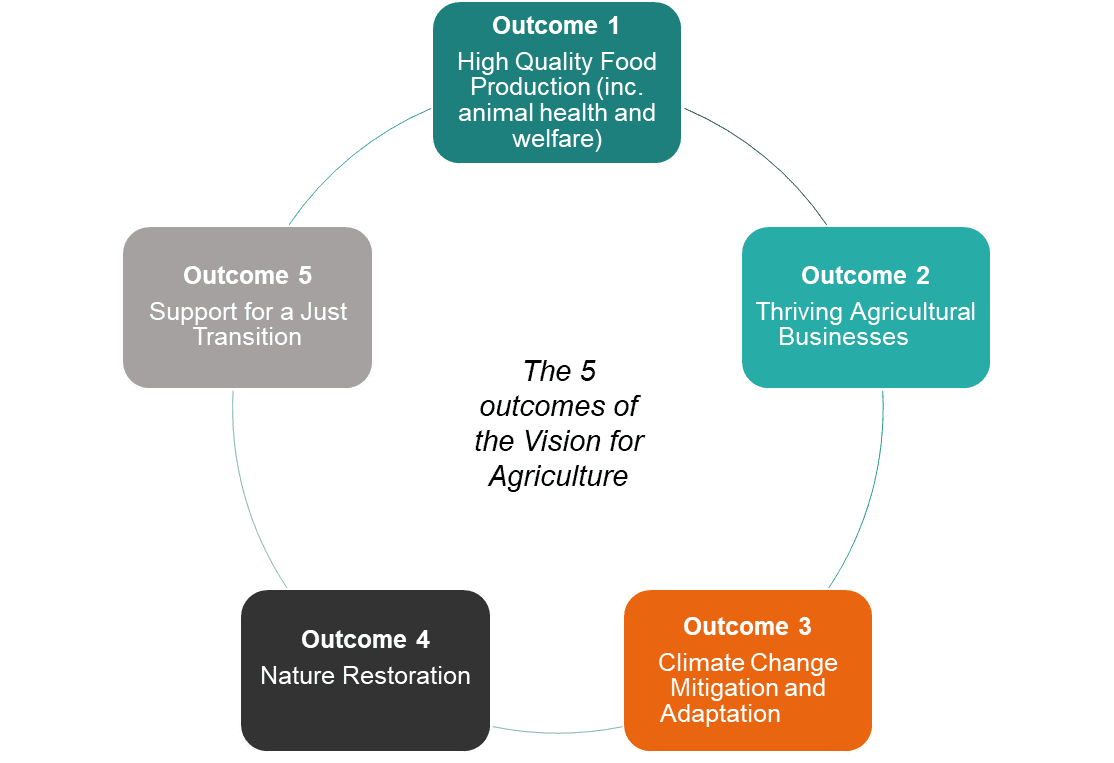
Figure 1: Illustration of the five outcomes of the Scottish Vision for Agriculture
These objectives aim to create a framework that supports environmental and climate goals while ensuring the economic viability and sustainability of Scotland’s agricultural sector.
Cross Compliance
Cross Compliance is a set of rules comprising SMRs (Statutory Management Requirements) and GAECs (Good Agricultural and Environmental Conditions). SMRs are enforced by separate sectorial law in Scotland and include regulations such as the requirements for animal identification. GAECs introduce protections of natural resources such as water, soils & carbon stocks and the minimum level of maintenance required. Therefore, they align closely with Scottish Government climate priorities. Through measures such as maintaining buffer strips, limiting soil erosion or regulating hedge trimming to protect biodiversity, GAECs help mitigate environmental degradation, support ecosystem services and align with several of Scotland’s broader goals of halting biodiversity loss and improving land and water health.
The Cross Compliance rules contribute to Scotland’s environmental targets by setting baseline standards for environmental protection, climate change, good agricultural condition of land, water quality, public health, animal and plant health and animal welfare. Farmers must adhere to these rules to receive support payments, through delivering actions such as buffer strips. Cross Compliance launched in 2005 when the UK was part of the European Union (EU), and Scottish Government has retained the Cross Compliance rules since the UK left the EU in 2020.
Since the UK’s withdrawal from the EU in 2020, Scotland is no longer bound to follow the set of conditionality rules known as “conditionality” included in the Common Agriculture Policy (CAP). This means that Scotland has the legal ability to review and revise Cross Compliance to better support national outcomes and to improve effectiveness. Through the review of GAECs in Scotland there is the potential to have far-reaching climate and biodiversity impacts as roughly 17,000 farmers across Scotland are currently required to meet GAECs requirements.
Aim of this project
This research examines how Cross Compliance contributes to Scotland’s Vision for Agriculture, and to understand whether introducing greater ambition (i.e. conditionality) will support Scotland in achieving its goals. There were three key aims:
- Provide clarity and understanding of the current contribution of Scottish Cross Compliance to the five outcomes of the Vision for Agriculture,
- identify the opportunities and barriers to developing the current set of Cross Compliance rules to better deliver on these outcomes, including from a practical implementation or economic perspective for farmers, crofters and land managers,
- gather any specific lessons from comparable nations in the United Kingdom or the European Union from developments in Cross Compliance in other jurisdictions.
The analysis focusses on GAECS, because SMRs are embedded in separate Scottish Legislation, and therefore GAECs are more likely to be flexible in terms of scope. The research project does not present an analysis of the efficiency and relevance of the current set of Cross Compliance rules in Scotland, nor recommend changing them.
This project looks at the alignment between the Cross Compliance rules and the Vision for Agriculture, exploring differences between these rules in Scotland and other nations with a conditionality policy, and analysing the strengths, weaknesses and macro-environmental considerations of three selected opportunities which could be implemented in order to better align with Scotland’s Vision for Agriculture.
Selection of Cross Compliance opportunities
To select the Cross Compliance opportunities to be analysed for the potential to expand their ambition, a Rapid Evidence Assessment (REA), and stakeholder engagement was undertaken.
Based on the findings, the contribution of the rules was mapped to the outcomes of the Vision for Agriculture, including identifying any evidence gaps, weaknesses and examples of other nations’ Cross Compliance rules showing greater ambition. Based on this assessment and stakeholder inputs, three opportunities were selected for further investigation. The methodological process followed for this project is illustrated in Figure 2.
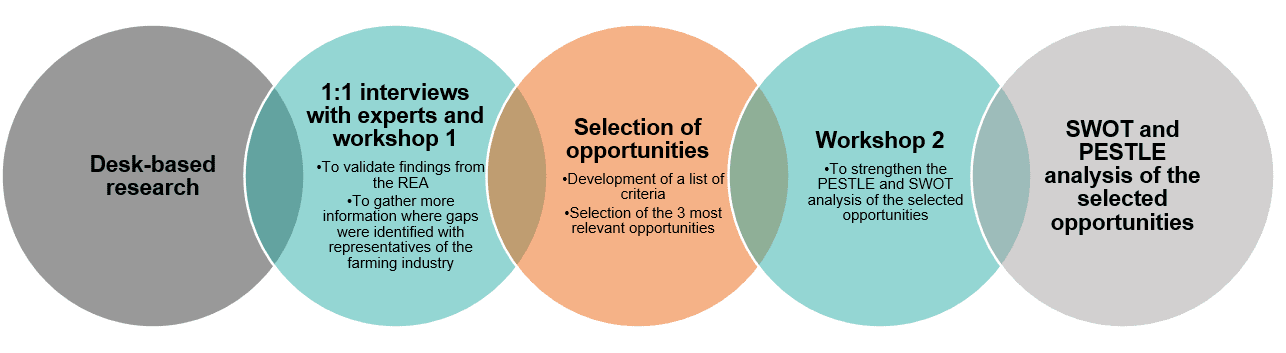
Figure 2: The five-step approach to develop the analysis of Cross Compliance opportunities
Assessment of the published evidence
We explored the role of Cross Compliance in Scotland within the context of the Scottish Government’s Vision for Agriculture.
A structured REA approach was used to ensure transparency and rigour. A search strategy protocol, including key search terms, inclusion criteria and example search strings was developed, reviewed and agreed by the Steering Group. Evidence was gathered systematically, with searches recorded with information on search date and search engine and string used. Sources were screened for relevance and robustness, and relevant evidence was then extracted and appraised to address the research questions and identify knowledge gaps. Appendix A provides further detail and examples on the search strategy developed.
Findings and information gaps
Research question 1:
What are the Cross Compliance requirements in Scotland, which environmental benefits and limitations do they provide and how do they contribute to the Scottish Government’s Vision for Agriculture?
A list of the SMR and GAEC requirements in Scotland was compiled (Table 1) and expert judgement was used to analyse alignment with the five outcomes of Scotland’s Vision for Agriculture, scored using Red-Amber-Green (RAG) rating system:
- ”Strong” indicates strong alignment with the outcome,
- “Partial/moderate” reflects partial or moderate alignment,
- “Negligible” signifies little to no contribution toward that outcome.
This assessment demonstrates that while Scotland’s current Cross Compliance requirements contribute meaningfully to several outcomes within the Vision for Agriculture—particularly in areas such as climate change—their overall impact is uneven. Notably, Outcomes 2 (Thriving Agricultural Businesses) and 5 (Support for a Just Transition) appear to be the least well-supported by existing standards. This is consistent with the intended purpose of Cross Compliance, which focuses on maintaining baseline environmental protections rather than supporting economic or social‑equity outcomes. Nonetheless, for the purposes of this research question- assessing the extent to which current Cross Compliance requirements align with the Vision for Agriculture – these findings point to clear opportunities to improve alignment, raise ambition, and address gaps in delivery.
|
GAEC/SMR |
Contribution to Scottish Governments’ Vision for Agriculture | |||||
|---|---|---|---|---|---|---|
|
Outcome 1- High Quality Food Production (inc. animal health and welfare) |
Outcome 2- Thriving Agricultural Businesses |
Outcome 3- Climate Change Mitigation and Adaptation |
Outcome 4- Nature Restoration |
Outcome 5- Support for a Just Transition | ||
|
GAEC 1 |
Buffer strips along watercourses |
Negligible |
Negligible |
Strong |
Strong |
Negligible |
|
GAEC 2 |
Abstraction of water for irrigation |
Negligible |
Partial/moderate |
Strong |
Partial/moderate |
Negligible |
|
GAEC 3 |
Protection of groundwater against pollution |
Negligible |
Negligible |
Strong |
Partial/moderate |
Negligible |
|
GAEC 4 |
Minimum soil cover |
Partial/moderate |
Negligible |
Strong |
Partial/moderate |
Negligible |
|
GAEC 5 |
Minimum land management reflecting site specific conditions to limit erosion |
Partial/moderate |
Negligible |
Strong |
Negligible |
Negligible |
|
GAEC 6 |
Maintenance of soil organic matter |
Partial/moderate |
Negligible |
Strong |
Partial/moderate |
Negligible |
|
GAEC 7 |
Retention of landscape features |
Negligible |
Negligible |
Strong |
Strong |
Negligible |
|
SMR 1 |
Nitrate Vulnerable Zones |
Partial/moderate |
Partial/moderate |
Strong |
Partial/moderate |
Negligible |
|
SMR 2 |
Conservation of wild birds |
Negligible |
Negligible |
Strong |
Strong |
Negligible |
|
SMR 3 |
Conservation of flora and fauna |
Negligible |
Negligible |
Strong |
Strong |
Negligible |
|
SMR 4 |
Food and feed law |
Strong |
Negligible |
Strong |
Negligible |
Negligible |
|
SMR 5 |
Restrictions on the use of substances having hormonal or thyrostatic action and beta-agonists in farm animals |
Strong |
Negligible |
Negligible |
Negligible |
Negligible |
|
SMR 6 |
Pig identification and registration |
Strong |
Negligible |
Negligible |
Negligible |
Negligible |
|
SMR 7 |
Cattle identification and registration |
Strong |
Negligible |
Negligible |
Negligible |
Negligible |
|
SMR 8 |
Sheep and goat identification |
Strong |
Negligible |
Negligible |
Negligible |
Negligible |
|
SMR 9 |
Prevention and control of TSEs |
Strong |
Negligible |
Partial/moderate |
Partial/moderate |
Negligible |
|
SMR 10 |
Restrictions on the use of plant protection products |
Partial/moderate |
Negligible |
Partial/moderate |
Strong |
Negligible |
|
SMR 11 |
Welfare of calves |
Strong |
Negligible |
Strong |
Negligible |
Negligible |
|
SMR 12 |
Welfare of pigs |
Strong |
Negligible |
Strong |
Negligible |
Negligible |
|
SMR 13 |
Welfare of farmed animals |
Strong |
Negligible |
Strong |
Negligible |
Negligible |
Table 1: Contribution of Cross Compliance requirements to Scottish Governments’ Vision of Agriculture.
Environmental benefits of current Cross Compliance regulations
Information on the environmental benefits of Cross Compliance in Scotland is available in the literature, however available evidence on environmental limitations is limited and largely pre-2020. Based on interviews with the Scottish Government and its agencies, a study by Blackstock et al., 2018 found:
- Concerns that policy instruments that could address soil protection were not as well implemented as they could be (including under GAECs)
- There is scope to strengthen soil protection under the GAECs, and;
- There is potential for policy instruments, including GAECs, to deliver greater biodiversity outcomes if requirements were redesigned or implemented differently.
More recent analysis of the environmental limitations of Cross Compliance was not identified. In this context, ‘environmental limitations’ refers to areas where current Cross Compliance requirements may not fully address all environmental pressures, including emerging risks.
Table 2 presents a summary of the environmental benefits of GAECs (the study was focused on GAECs). A full list including the environmental benefits of SMRs is presented in Appendix B.
Table 2: Main environmental benefits associated with GAEC rules
|
GAEC |
Environmental benefit |
|
Water pollution prevention; soil erosion reduction | |
|
2 – Abstraction of water for irrigation |
Protection of water resources |
|
3 – Protection of groundwater against pollution |
Groundwater protection against pollution |
|
4 – Minimum soil cover |
Food and cover for insects, birds and small mammals; erosion control |
|
5 – Minimum land management reflecting site specific conditions to limit erosion |
Erosion control |
|
6 – Maintenance of soil organic matter |
Biodiversity support; supports air and water quality; Climate change mitigation |
|
7 – Retention of landscape features |
Nature conservation ; Climate change mitigation |
Barriers to implementation
We also identified barriers which can limit the effectiveness of Cross Compliance as a tool for changing the management practises of farmers, crofters, and land managers in Scotland and more widely in the EU. These include:
- Administrative burden: The administrative burden of Cross Compliance, primarily the time and effort required both understand requirements and maintain/collate evidence to demonstrate compliance has been widely discussed and remains a major concern despite attempts by public authorities to reduce the burden. Minimising the administrative burden of Cross Compliance can increase the efficiency of agricultural policy. (El Benni et al., 2025)
- Lack of awareness and training: A lack of awareness around the environmental benefits of compliance indicates the need for a cultural shift within the farming sector. Improved training and communication could help build understanding of how Cross Compliance supports water quality, soil health, biodiversity, and long-term business sustainability. Emphasising the value of environmental protection as part of business resilience, not just for regulatory purposes, may encourage uptake (Blackstock et al., 2018)
- Fear of penalties and inspections: Some farmers and land managers expressed concerns over the risk of prosecution and fines, particularly due to the complexity of rules and fear of inadvertent non-compliance (MacLeod et al., 2008 and Blackstock et al., 2018). This apprehension around inspections can discourage engagement with compliance measures.
- Limited access to advice and guidance: Earlier studies (Baldock et al., 2013 and Bennett at al., 2006) highlighted challenges in accessing clear, practical guidance on Cross Compliance across both Scotland and the EU and suggested that existing support mechanisms were not always user-friendly or well-communicated. While current guidance is now clearly set out by Rural Payments and Services, farmers may still experience difficulties in navigating complex requirements or knowing where to look for further information.
Research question 2: Are there any other UK devolved administrations and/or EU Member States (MS) which have shown greater ambition beyond the basic Cross Compliance requirements?
A key challenge in exploring the second research question was the limited literature sources focussing specifically on Cross Compliance ambition. Many references concentrated on eco-schemes or agri-environment schemes, which, while related, fall outside the scope of this project. Among the sources addressing Cross Compliance directly, the emphasis was often on inspections, breaches, and the communication or interpretation of regulatory requirements rather than their ambition beyond the basic Cross Compliance requirements.
While some sources provided insights into how individual European Member States and other UK devolved administrations implement Cross Compliance, it was often unclear whether these examples represented the most ambitious approaches relative to other countries. In a few cases, sources suggested that certain countries go beyond the basic requirements; however, there was a lack of detailed information on how these enhanced measures were implemented, the outcomes achieved, and any barriers or lessons learned. Table 4 presents some examples. As previously indicated, these examples do not cover each GAEC individually, and it remains unclear whether they represent the most ambitious approaches across Member States. As such, the insights should be interpreted as indicative rather than comprehensive. The examples also largely draw on earlier CAP programming periods, given that comprehensive analysis of implementation and outcomes under the new CAP is less available.
Table 4: Examples of Cross Compliance rules in EU MS presented a wider scope than Scotland
|
Country |
Cross Compliance requirements going beyond current GAEC requirements in Scotland |
Related Scottish GAEC |
References |
|---|---|---|---|
|
France and Spain |
Management of irrigation systems. |
GAEC 2 |
Farmer, M. and Swales, V., 2004. |
|
France |
Unfertilised buffer strips of 5–10 metres width along watercourses. |
GAEC 3 |
European Court of Auditors, 2008 |
|
Belgium Flanders |
Soil analysis (measure related to soil erosion) |
GAEC 5 |
Farmer, M. and Swales, V., 2004 |
|
Netherlands |
|
Jongeneel, R. and Brouwer, F., 2007 | |
|
France |
In the category of other soil erosion standards, France has established an obligation to set up buffer stripes along watercourses. The standard requires farmers who have a watercourse present on the farmland, to set up 5m-10m buffer zones (grass strips) |
Kristensen, L. and Primdahl, J. (2006) | |
|
Netherlands |
Farmers are to report cases of extraordinary erosion | ||
|
Greece & Lithuania |
Arable stubble: incorporation in soil or grazing |
GAEC 6 |
Kristensen, L. and Primdahl, J. (2006) |
|
Czech Republic |
Application of liquid manure | ||
|
Netherlands & Italy |
Green cover on set aside land | ||
|
France & Germany |
Crop rotation providing a yearly cultivation of at least three crops (excluding permanent crops) | ||
|
Greece |
Cultivate grain legumes and incorporate these into the soil on 20 % of the cultivated area of their farm each year to improve soil organic matter (SOM) |
European Court of Auditors, 2008 | |
|
Denmark |
No tillage is allowed on soils with >12% carbon within protected areas |
Environmental Pillar, 2025 |
Due to limited published evidence, we were unable to draw meaningful comparisons with other jurisdictions. The matrix developed and presented in Appendix C provides a high-level overview of EU GAECs that most closely align with the Scottish GAECs, highlights the countries implementing the greatest number of farm practices under these standards, and presents a selected Member State (based on similarity to Scotland climate and agriculture) to illustrate key farm practices and potential opportunities for development of existing GAEC requirements relevant to Scotland. These potential opportunities include:
- GAEC 1- Ploughing bans/restrictions
- GAEC 4- Summer cover crop; ban of ploughing grassland
- GAEC 5- low/no till; Presence of other unproductive areas and strips
- GAEC 6- Crop residues left on soil; biodiversity plan
- GAEC 7- Maintenance and conservation of field margins
The review of published evidence highlighted significant knowledge gaps, and the information available was largely high-level, meaning the insights gathered were not sufficient to identify clear opportunities for Scotland to address the five outcomes of the ‘Vision for Agriculture’ through the current Cross Compliance requirements.
Conclusion
The review of the published evidence found that Scotland’s Cross Compliance requirements align most strongly with environmental and animal welfare outcomes of the Vision for Agriculture but offer limited support for business resilience and a just transition. This is as expected given Cross Compliance’s environmental protection remit. While evidence of more ambitious approaches beyond the baseline was identified, this was generally high-level and often lacked detail on implementation or outcomes. As a result, whilst potential opportunities for Scotland do exist, the lack of detailed evidence makes it challenging to understand how these approaches could be used to enhance Cross Compliance in support of all five Vision outcomes.
Stakeholder engagement
The project engaged with stakeholders through a series of structured interviews and workshops to build on the findings of the REA. The first workshop presented the REA results and worked with expert stakeholders to provide Scottish context, helping to refine the research focus and develop a shortlist of Cross Compliance rules considered to have the greatest potential for positive impact.
The second workshop held with policy experts and the structured interviews focused on a deeper exploration of the selected Cross Compliance opportunities, identifying their strengths, weaknesses and the main macro-environmental factors to be considered, if a change in Cross Compliance rules was implemented.
The stakeholder engagement process involved first the development of a Stakeholder Engagement Plan, an Interview Guide and a Workshop Guide. We conducted 3 structured interviews with experts and then held the first workshop with industry representatives to identify the opportunities to be further analysed. We then conducted a second workshop with Scottish Government representatives and 4 structured interviews with experts to complement and refine our opportunity analysis.
The list of organisations which attended the workshops is presented in Appendix D and the main findings are presented in section 4.1.2.
Stakeholder Engagement research findings
In addition to supporting the identification of opportunities, stakeholders provided input on wider considerations on whether Cross Compliance could or should be evolved to better support the Vision for Agriculture.
- Lack of alignment of Cross Compliance with the Vision for Agriculture: Both the literature analysis and the stakeholder engagement identified that the Vision for Agriculture and the present GAECs are aligned largely on Outcome 3 (Climate Change Mitigation and Adaptation) and to some extend to Outcome 4 (Nature Restoration). Some stakeholders highlighted that compliance with Cross Compliance rules allows the full payment of support schemes such as the Basic Payment Scheme or the Less Favoured Area Support Scheme, and in that regard plays a significant role in contributing to thriving rural communities (Outcome 2), by helping to maintain farm incomes. However, Cross Compliance was created with the intent to help maintaining baseline environmental protections, rather than supporting economic or social‑equity outcomes.
- The need to balance environmental ambition and business profitability, within a broader policy framework: Stakeholders repeatedly highlighted the importance of balancing environmental or social ambition with profitability and farmer’s buy-in. Increasing the level of requirements in the Cross Compliance rules presents some cross-cutting risks such as:
- competitiveness concerns for farmers, crofters and land managers if the enforcement of these rules imply investments, a reduction of productive land, are more labour-intensive, increase the administrative burden, etc.
- Reduced compliance and decrease in enforcement rates, if the rules are not well understood or deemed impractical. This could necessitate more frequent controls from enforcement authorities, that would place an additional burden on public finance.
- An increased number of farmers, crofters or land-managers deciding not to claim Basic Payments, and therefore no longer subject to GAECs, leaving greater gaps in environmental protection.
Several stakeholders stressed the need to consider GAECs within the broader Scottish agricultural policy framework, as Cross Compliance rules interact with other policy mechanisms such as Greening, Tier 2, Agri Environment Climate Scheme, Whole Farm Plan and wider environmental policies and regulations, in order to avoid disconnections and gaps.
- An increase of the environmental ambition of the current Cross Compliance rules could be achieved by introducing new requirements, strengthening the existing ones or by shifting some practices which are currently incentivised by other policy mechanisms such as the Agri-Environment Climate Scheme into the baseline requirements. Depending on the changes, some GAECs may be strengthened without major administrative or economic burden, whereas others may deliver better outcomes with some support through incentivised schemes.
- The involvement of Scottish farmers, crofters and land managers in a co-design process of the rules: The importance of adopting a multi-stakeholder approach to design policy instruments is widely recognised (Reed, M., 2008). Stakeholder participation increases the quality of environmental decisions, improves the legitimacy of the instruments and the likelihood of their adoption. Stakeholders emphasised the importance of engaging with the farming community and co-designing any changes in Cross Compliance rules to ensure practicality, increase buy-in and improve compliance and therefore effectiveness. Several ideas were mentioned, such as the possibility of involving farmers, crofters and land managers in monitoring and self-regulation to improve engagement or strengthen education and awareness by linking compliance to visible environmental outcomes.
- The need for support, training & communication: The importance of improved access to advice, training, and communication has been repeatedly highlighted during the stakeholder engagement activities. For example, soil poaching by livestock near watercourses is a relatively common breach, often due to lack of awareness or habitual livestock management. Training and advice are key to improve compliance, as cumulative impacts of small breaches are poorly understood by farmers.
Information gaps identified
Stakeholder interviews and workshops highlighted several additional research possibilities, which build on the information gaps identified in section 4.1.1. Further research, as detailed below, could improve understanding of how current Cross Compliance supports Scotland’s Vision for Agriculture. It could also indicate how greater ambition in Cross Compliance requirements could support Scotland achieve its goals.
- Strengthening monitoring and scientific evidence, with standardised collation between different farm visit and inspection teams. Stakeholders highlighted the importance of providing evidence-based elements to support any changes in the baseline of Cross Compliance requirements to increase their acceptability. However, the desk-based research performed in this project highlighted the current lack of robust monitoring and evaluation data on GAEC rules and their contribution to economic, environmental or social outcomes.
- A broader mapping of the interaction between the Cross Compliance requirements and the other following schemes included in the Scottish agricultural policy framework, as they related to support of Scotland’s Vision for Agriculture objectives:
- Legal requirements which apply to farmers beyond Cross Compliance (e.g. the General Binding Rules in the Environmental Authorisations (Scotland) Regulations 2018),
- The Whole Farm Plan
- Greening
- The Agri-Environment Climate Scheme
- Farm assurance schemes in Scotland.
- A detailed assessment of comparable EU countries’ Cross Compliance guidelines, to understand real-world standards and practices and their contribution to goals aligned with Scotland’s Vision for Agriculture objectives. This could include a review of the post-2028 CAP proposal to replace enhanced conditionality with “protective practices”.
Selection of opportunities
Based on the results of the evidence assessment, we identified three opportunities for further investigation based on the following criteria:
- Does this opportunity address at least one outcome of the Vision for Agriculture?
- Has this opportunity been implemented elsewhere, to benefit from any lessons learnt?
- Is this opportunity already covered or partly covered by another Scottish Policy?
- Can this opportunity be monitored?
The GAECs selected for further analysis in the final stage of the project were:
- Opportunity 1: Enhancement of buffer areas to be in line with best practice for maximum protection to nature and water pollution (related to GAEC 1 – Buffer strips along watercourses)
- Opportunity 2: Extension of management requirements to reduce soil erosion risk (related to GAEC 5 – Minimum land management reflecting site specific conditions to limit erosion)
- Opportunity 3: Incorporation of hedgerow maintenance requirements (related to GAEC 7 – Retention of landscape features)
Cross Compliance opportunities analysis
This section covers an analysis of the Strengths, Weaknesses, Opportunities and Threats (SWOT), and a high-level assessment of the Political, Economic, Social, Technical, Legal and Environmental (PESTLE) factors associated with the shortlisted opportunities. This analysis was completed using Ricardo’s in house expertise and judgement and findings from the stakeholder engagement activities performed during this project. The full analysis for each opportunity is presented in SWOT and PESTLE tables in Appendix E.
Across all three opportunities, the analysis shows some cross-cutting findings: each option provides additional environmental benefits that contribute to the outcomes of Scotland’s Vision for Agriculture, particularly on climate action, nature restoration, and long‑term resilience. All measures strengthen protection of natural assets: buffer strips or areas improve water quality and riparian habitats; erosion‑focused rules safeguard soils and reduce flood risk; and hedgerow maintenance enhances habitat connectivity, carbon storage and shelter for livestock. These opportunities also support the delivery of stronger environmental standards and visibly demonstrate stewardship, meeting high public expectations.
However, this higher environmental ambition comes with challenges. Each opportunity presents greater management complexity, often requiring a more detailed appreciation of local environmental conditions, seasonal planning, or active maintenance. This raises the cognitive burden on farmers, crofters and land managers, especially where holdings have varied soils, slopes, or landscape features. A recurring theme is the need for substantial advisory support, training, and user‑friendly guidance to bridge knowledge gaps and ensure proportionate, practical rules. All options also increase monitoring and enforcement demands on government, particularly where requirements are context‑specific or condition‑based.
Economically, short‑term costs created by land taken out of production, changes in practice, or additional labour may be balanced by longer‑term productivity and resilience gains, such as reduced soil loss, improved water management, and healthier ecological networks. Politically, all three opportunities align well with current EU conditionality requirements but could be exposed to future divergence, as the EU sets out potential new changes for the future of conditionality. Social considerations also emerge across all opportunities, including the need to ensure fairness between upland and lowland systems, the risk of placing disproportionate demands on smaller farms and crofts, and the possibility of pushback if the rules are viewed as inflexible or overly demanding.
Overall, the common message is that the environmental case for improvement is strong, but successful implementation depends on clarity, flexibility, and well‑resourced support – ensuring that higher ambition complements, rather than compromises, the viability of agricultural businesses.
Opportunity 1: Enhancement of buffer areas to be in line with best practice for maximum protection to nature and water pollution
Opportunity description
This opportunity relates to GAEC 1, which covers buffer strips along watercourses[5], among other practices to protect water against pollution. The requirements, which seek to restrict the storage, application of fertilisers and pesticides and cultivations along watercourses, cover the following:
- Application of manure/fertiliser at a certain distance from a water course or during certain conditions;
- Location of field heaps/storage of manure on holding at certain distances from water courses;
- Cultivation of land a certain distance from top of a bank (exemptions apply).
GAEC 1 was explored as a potential opportunity for improvement to further support and align with the aims of the Vision for Agriculture, particularly outcomes 3 and 4. The proposed opportunity covers an enhancement of buffer areas to increase protections to nature and reduce water pollution, by following best practices guidelines focusing on soil type, watercourse type, buffer strip width, buffer strip species composition, and buffer zone size, based on the REA results with examples from other countries.
Other countries, particularly those in the EU following conditionality rules, have set out various ranges and compositions of buffer zones. GAEC 4 in the EU conditionality rules refers to the establishment of buffer strips along water courses[6]. For example, Ireland, which has similarities in cropping systems to Scotland, has a wider range of buffer zone distances (from 3-250m) for spreading organic fertiliser, and for the storage of farmyard manure (FYM) depending on the type of waterbody and cropping activity. In addition, some EU countries go above the basic GAEC requirements and include practices such as restricting certain crop species, or including specific soil management actions along watercourses.
Summary of the findings
The SWOT and PESTLE analysis identified the potential for strong environmental benefits through the enhancement of watercourse buffer areas. Wider and better‑designed buffer strips help reduce nutrient and soil runoff, which improves water quality and creates healthier habitats along watercourses. Adjusting buffer width, vegetation and management to local soil, slope and watercourse conditions makes them more effective, especially during heavy rainfall. This approach is in line with good practice across a number of EU Member States’ approaches and supports climate adaptation by reducing erosion, stabilising soils and improving soil carbon storage capacity.
However, the changes would make farm management more complex. Different buffer widths and management rules increase the amount of information farmers must keep track of and require greater knowledge of local soils and water systems. Smaller farms or crofts with a higher proportion of land adjacent to watercourses may lose more productive area, which could disproportionately affect their income and long‑term business viability. Regulators would also face higher monitoring demands, as they would need to check site‑specific requirements. In the short term, farmers may face a reduction of productive land and additional maintenance load, although over time the benefits – such as lower water treatment costs and reduced damage from erosion – could be significant.
Finally, farmers, crofters and land manager may push back, and compliance levels may suffer if the rules feel too complicated or punitive, especially without good advisory support.
The full analysis of strengths, weaknesses, opportunities, threats and wider macro-environmental factors is presented in Appendix E, section 8.1.
Opportunity 2: Extension of management requirements to reduce erosion risk
Opportunity description
This opportunity relates to GAEC 5, which currently covers minimum land management reflecting site specific conditions to limit erosion and aims to protect soil against erosion in certain situations. The requirements cover the following:
- Limit erosion from overgrazing or heavy poaching by livestock.
- Put in place measures to limit soil erosion if conditions prevent subsequent crop or cover from being sown (e.g., grubbing and sediment traps/fences)
GAEC 5 was explored as a potential opportunity for improvement to further support and align with the aims of the Vision for Agriculture, particularly outcome 3. The opportunity covers an inclusion of tillage restrictions on specific areas to reduce the risk of erosion.
For EU countries, GAEC 5 is broad and designed to “prevent soil erosion through relevant practices” and different Member States have specific variations on GAEC 5 rules. For example, Ireland includes tillage management rules for both arable and grassland areas:
- For grassland parcels, Ireland’s GAEC 5 mandates that there is no ploughing allowed between the 16th of October and 30th of November, and no ploughing on land with a ≥20% slope between the 1st and 31st of December.
- For arable land, there is no ploughing on land with a ≥15% slope between 1st and 31st of December; if arable land is ploughed between 1st of July to the 30th of November, farmers must sow a green cover within 14 days of ploughing.
In France, ploughing is prohibited downhill during the most sensitive periods (from 1st of December to 15th of February), specifically on plots located on slopes greater than 10%. While there are some exemptions, this greatly reduces soil erosion impacts in these fields.
Summary of the findings
Strengthening erosion‑risk management would bring clear environmental and climate benefits. Limiting tillage on steep or vulnerable land, or during high‑risk periods, helps reduce soil loss and prevents sediment reaching watercourses. These measures improve soil structure, support better water infiltration and reduce runoff, offering stronger protection during increasingly frequent heavy rainfall. Evidence from other countries shows that these targeted restrictions work well in practice and support long‑term soil health.
At the same time, this opportunity would add complexity for farmers. Erosion risk varies widely across Scotland, so rules may differ by field, slope or season. This means farmers may need to build additional knowledge about erosion risks and suitable management options and may have to adjust operations based on conditions each year. Some measures could also reduce flexibility in how land is managed, particularly where steep slopes or varied topography are involved, which may cause concern. The monitoring burden for Scottish Government would also increase due to the need to check more detailed and time‑sensitive requirements.
Short‑term costs may arise through changes to current practice, for example, fencing to protect sensitive areas or establishing ground cover more frequently. But over time, better soil management can deliver important economic benefits, including maintaining soil fertility, reducing remediation needs and preventing more serious erosion damage. As with the other opportunities, acceptance will depend on clear guidance, practical support, and rules that take account of different farm systems and landscapes.
The full analysis of strengths, weaknesses, opportunities, threats and wider macro-environmental factors is presented in Appendix E, section 8.2.
Opportunity 3: Incorporation of hedgerow maintenance requirements
Opportunity description
This opportunity relates to GAEC 7, which currently covers retention of landscape features to protect them. The current GAEC requires the following:
- Dry stone or flagstone dykes, turf and stone-faced banks, walls, hedges, ponds, watercourses or trees must not be removed or destroyed without consent.
- No hedges trimming or lopping of tree branches during the bird nesting and rearing season (there are some exemptions).
- No cultivation of land within two metres of the centre line of a hedge (exemptions apply)
- No application of fertilisers (organic manure, chemical or nitrogen) or pesticides within two metres of the centre line of a hedge (exemptions apply).
GAEC 7 was explored as a potential opportunity to incorporate hedgerow maintenance requirements in Scotland to further support and align with the aims of the Vision for Agriculture.
GAEC 7 in Scotland is equivalent to GAEC 8 in the EU[7], which requires the maintenance of non-productive areas and landscape features, and the retention of landscape features, including hedgerows. As noted previously, other countries have variations on the rules, going further than the minimum requirement. For example, in France, hedges less than or equal to 10 metres wide must be managed for biodiversity, and a hedge may not have any discontinuity (“gap” or portion of the linear feature containing elements that do not meet the definition of a hedge) greater than 5 metres. In Ireland, there is a specific focus on invasive species control on landscape features and non-productive areas, and any replacement hedgerows must consist of traditional local species.
Summary of the findings
Introducing hedgerow maintenance requirements would provide a wide range of environmental, climate and landscape benefits. Well managed hedgerows improve biodiversity, support wildlife movement, store carbon and help reduce wind erosion and runoff. They also play an important role in farming systems by providing shelter for livestock and contributing to healthier soils and water. International experience shows that active management – such as planned cutting, gap filling and using appropriate species – greatly improves hedgerow condition and long‑term function.
However, moving from basic protection to active maintenance increases the workload and knowledge required of farmers. Hedgerows vary in age, type and condition, so it can be difficult to apply one set of rules that fits all situations. This means farmers may need new advice on cutting cycles, species selection and how to manage gaps, while inspectors may need to make more judgement‑based assessments of hedge condition. These factors make monitoring and enforcement more challenging and may increase costs for both farmers and government.
Although farmers could face new short‑term costs – such as replanting, gap filling and more regular maintenance – the potential longer‑term gains could be substantial, including reduced erosion, healthier ecosystems, and improved animal welfare through increased livestock shelter. Public support is likely to be high because hedgerows are visible features and strongly associated with a well‑managed rural environment.
The full analysis of strengths, weaknesses, opportunities, threats and wider macro-environmental factors is presented in Appendix E, section 8.3.
Conclusion
This project examined how Cross Compliance contributes to Scotland’s Vision for Agriculture, and whether introducing greater ambition will support Scotland in achieving its goals. We delivered an analysis of three selected opportunities of enhanced Cross Compliance rules. The selected opportunities do not constitute an exhaustive list of possible improvements to deliver better economic, environmental and social outcomes, nor an indication of future policy changes to be applied to Cross Compliance rules in Scotland.
Current Contribution of Cross Compliance to the Vision for Agriculture
Mapping the current Cross Compliance rules against the five outcomes of the Vision for Agriculture has clarified where Scotland already has a solid foundation (particularly for Outcomes 3 and 4), and where opportunities exist to strengthen alignment.
The project emphasised the importance of considering any revisions to Cross Compliance within the wider Scottish agricultural policy framework, given the interactions between Cross Compliance and mechanisms such as Greening, Tier 2 schemes, the Agri Environment Climate Scheme, Whole Farm Plans, and broader environmental policies and regulations.
Opportunities and barriers to enhanced Cross Compliance
Across the literature, stakeholder engagement, and the analysis of three selected opportunities, a set of cross-cutting themes have been identified.
Common strengths and opportunities
- Enhancing environmental ambition within Cross Compliance through wider buffer areas, strengthened erosion‑control measures, or more active hedgerow maintenance could deliver additional benefits for water quality, biodiversity, soil health, carbon storage, and climate resilience.
- Several improvements would allow for more targeted, locally tailored requirements rather than uniform rules, such as differentiating rules by soil type, slope, etc. Stakeholders noted that this approach is fairer, avoids placing disproportionate burdens on certain farms or crofts, and is likely to deliver better environmental outcomes as it directs effort to the places where risks are highest and benefits greatest.
- These environmental gains could also support long‑term business resilience, for example by reducing erosion damage, improving soil structure, and moderating the impacts of extreme weather.
Shared constraints and risks
- Increasing ambition introduces greater management complexity for farmers, crofters and land managers, and raises the risk of unintentional non‑compliance. For the Scottish Government, there is a risk of increased enforcement challenges where rules are highly site specific or qualitative.
- Stronger rules could lead to increased short‑term economic costs, such as reduced productive area or additional labour, and may create perceptions of competitive disadvantage.
- There is a consistent need for clear guidance, tailored training, advisory support, and co‑design with farmers, crofters and land managers to ensure rules are both practical and acceptable.
The analysis also highlighted the strong role for digital tools, remote sensing, mapping, and precision technologies to support targeting and monitoring. Overall, stakeholders emphasised that environmental ambition must be balanced with profitability, fairness, and proportionality, and must be considered alongside the suite of other policy instruments that also contribute to the Vision’s outcomes.
Lessons from Other Jurisdictions
This project gathered lessons from EU Member States on increasing the ambition of Cross Compliance rules. We identified examples of stronger or more specific requirements, which offered useful indications of possible directions for Scotland. However, the evidence base was high‑level, fragmented, and often outdated, with limited detail on implementation, enforcement, practical delivery, cost-effectiveness or observed outcomes. This makes it difficult to determine which international approaches are genuinely most effective, or most relevant to the Scottish context.
Key information gaps
The literature review found limited evidence on the implementation and outcome of more ambitious Cross Compliance approaches. The project identified several information gaps, limiting Scotland’s ability to make well‑evidenced decisions about increasing ambition within Cross Compliance.:
- Limited monitoring and evaluation data on how existing Cross Compliance requirements perform in practice, and on their contribution to environmental, economic or social outcomes.
- Lack of detailed implementation evidence from other countries, particularly on costs, compliance, enforcement, and effectiveness.
- Unclear interactions between Cross Compliance and other Scottish policy instruments such as Tier 2, Agri Environment Climate Scheme, Whole Farm Plans or Greening, making it difficult to assess the overall contribution to the Vision for Agriculture.
- Ambiguity around future EU conditionality developments, and how Scotland might seek to enhance the Cross Compliance ambition without creating unintended divergence between the EU conditionality and the Scottish Cross Compliance systems.
General considerations
The findings indicate that Scotland has clear opportunities to strengthen environmental outcomes through Cross Compliance. This project identified some overarching considerations for developing the current set of Cross Compliance rules to better deliver on the Vision’s outcomes:
- Balancing environmental ambition with competitiveness
- Developing a strong monitoring and evidence base, including robust data to justify changes and improve the acceptability of policy adjustments
- Co‑designing rules with farmers, crofters, and land managers
- Increasing support, training and communication
References
Baldock, D., Desbarats, J., Hart, K., Newman, S., and Scott, E. (2013) “Assessing Scotland’s Progress in the Environmental Agenda”. Institute for European Environment Policy: London.
Bennett, H., Osterburg, B., Nitsch, H., Kristensen, L., Primdahl, J. and Verschuur, G., 2006. Strengths and Weaknesses of Crosscompliance in the CAP. EuroChoices, 5(2), pp.50-57.
Blackstock K.L, Juarez-Bourke A, Maxwell J.L., Tindale S., Waylen K.A (2018) “Aligning Policy Instruments for Water, Soil and Biodiversity”, Report, James Hutton Institute, Aberdeen, 24pp
Code of good practice – DOs and DON’Ts Guide. (n.d.). Available at: https://www.gov.scot/binaries/content/documents/govscot/publications/advice-and-guidance/2005/03/prevention-environmental-pollution-agricultural-activity-dos-donts-guide/documents/0009561-pdf/0009561-pdf/govscot%3Adocument/0009561.pdf
El Benni, N., Ritzel, C. and Mack, G., 2025. Why the Administrative Burden of Cross Compliance Matters. EuroChoices, 24(1), pp.14-19.
Environmental Pillar (2025) Environmental Pillar response to DAFM’s proposal on GAEC 2. [Online] Available at: Environmental Pillar response to DAFM’s proposal on GAEC 2
European Court of Auditors (2008) Is Cross Compliance an effective policy. [Online] Available at: untitled
European Parliament -Targeted CAP amendments on environmental conditionality (2024) Available at: Targeted CAP amendments on environmental conditionality
Farmer, M. and Swales, V (2004). The development and implementation of Cross Compliance in the EU 15: an analysis (p. 84). Institute for European Environmental Policy.
Farming for a better climate (n.d) -Regenerative Agriculture: Keeping soil covered- practical guide
Friends of the Earth Europe (2022) CAP Strategic Plans: Green Deal or No Deal? . [Online] Available at: FRI-22-Pac-UK6.pdf
Jongeneel, R. and Brouwer, F. (2007) Facilitating the CAP reform: Compliance and competitiveness of European agriculture. Specific Targeted Research or Innovation Project (STREP). Project no. SSPE-CT-2005-006489. [Online] Available at: CROSS COMPLIANCE Facilitating the CAP reform: Compliance and competitiveness of European agriculture Specific Targeted Research or Innovation Project (STREP) Integrating and Strengthening the European Research Area Deliverable 5: Mandatory standards in 7 EU countries and 3 non-EU countries Country Report Netherlands
Kristensen, L. and Primdahl, J. (2006). The Relationship Between Cross Compliance and Agri-environment Schemes Deliverable 13. [online] Available at: https://ieep.eu/wp-content/uploads/2022/12/D13_Cross_compliance_and_agri-environment_schemes.pdf
MacLeod, Moxey, McBain, Bevan, Bell, Vosough Ahmadi and Evans. (2008) “Overview of costs and benefits associated with regulation in Scottish agriculture”. SAC Commercial Ltd, Pareto Consulting, Sue Evans Research
Reed, M. (2008). Stakeholder participation for environmental management: A literature review. Biological Conservation, Volume 141, Issue 10, Available at: https://doi.org/10.1016/j.biocon.2008.07.014
RPS GAECS detailed guidance – Ruralpayments.org. (2025). Good Agricultural and Environmental Conditions (GAECs). [online] Available at: https://www.ruralpayments.org/topics/inspections/all-inspections/Cross Compliance/detailed-guidance/good-agricultural-and-environmental-conditions/
SAC (2024) FARMING FOR NET ZERO: TRANSITIONING SCOTTISH AGRICULTURE available at WWF-Soil-Association-Net-Zero-Farming-Full-Report.pdf
Scot Government (2018). Prevention of environmental pollution from agricultural activity: guidance – gov.scot. [online] Available at: https://www.gov.scot/publications/prevention-environmental-pollution-agricultural-activity-guidance/pages/1/.
Scot Government (2025) Sustainable and regenerative agriculture: code of practice [Online] Section 2: Sustainable and Regenerative Measures – Sustainable and regenerative agriculture: code of practice – gov.scot
SEPA (2009). Engineering in the Water Environment Good Practice Guide Riparian Vegetation Management. [online] Available at: https://www.sepa.org.uk/media/151010/wat_sg_44.pdf.
FAS (2025)- Understanding GAEC 7 and Cross Compliance On-Farm [Online] available: Understanding GAEC 7 and Cross Compliance On-Farm | Helping farmers in Scotland
Appendices
Key words and terms
|
Words and terms |
Notes |
|---|---|
|
REA section1 | |
|
Scotland |
Including Scottish |
|
Cross Compliance |
Including: Conditionality, Direct Payments, Tier 2, enhanced conditionality |
|
Requirements |
Including: Regulations, Conditions, Obligations |
|
Including: Good Agricultural and Environmental Conditions | |
|
SMR |
Including: Statutory Management Requirements |
|
Environmental benefits |
Including: Advantages, Gains, Improvements |
|
Environmental limitations |
Including: Weakness, Constraints, Restrictions, Limits, Gaps, Shortcomings, Limitations, ‘Areas for improvement’ |
|
Vision for agriculture |
Including: Scottish Government, Outcomes, Contribution |
|
Barriers to implementation |
Including: Challenges, Obstacles, Delivery |
|
Farmers |
Including: Crofters and land managers |
|
REA section 2 | |
|
Defra |
Including: England, ELM Scheme |
|
Welsh Government |
Including: Wales |
|
Irish Government |
Including: DAFM, Teagasc, Ireland, Republic of Ireland, ROI, Northern Ireland |
|
European Member States |
Including: EU, European Union, EU-27, EU MS |
|
Greater ambition |
Including: Enhanced impact, Conditionality, Beyond basic Cross Compliance, Pillar 2 |
|
Including: Execution, Delivery, Uptake | |
|
Outcomes |
Including: Impact, Effect, Achievement, output, results, CAP Strategic Objectives |
|
Barriers to implementation |
Including: Challenges, Obstacles, Delivery |
|
Lessons learnt |
Including: Findings, Key takeaways, reflections, insights |
Example search strings
Research question 1:
- TITLE-ABS-KEY “Scotland” AND “(“Cross Compliance” OR “GAEC” OR “SMR”) AND “environmental” (“benefits” OR “limitations”)
- TITLE-ABS-KEY “Scotland” AND (“Cross Compliance” OR “GAEC” OR “SMR”) AND current “environmental” (“weakness* OR “gaps” OR “limitations”)
- TITLE-ABS-KEY “Scotland” AND “(“Cross Compliance” OR “GAEC” OR “SMR”) AND (“implementation” OR “Delivery”) AND (“Barrier*” OR “Challenge*”) AND (“Farmer*” OR “Crofter*”)
Research question 2:
- TITLE-ABS-KEY (“European” OR “member state” OR “Defra” OR “Welsh Government” OR “Irish Government”) AND “ambition” AND “beyond” AND “Cross Compliance”
- TITLE-ABS-KEY “*” AND (“Implementation” OR “Delivery”) AND (“Outcomes” OR “findings”)
*name/detail of increased ambition requirement
Screening criteria
Literature was screened for information on the following inclusion criteria
- Cross Compliance environmental benefits and limitations (REA Section 1)
- Barriers to implementation of current Cross Compliance requirements for farmers and crofters (REA Section 1)
- Cross Compliance requirements contribution to the Scottish Government’s Vision for Agriculture (REA Section 1)
- Cross Compliance gaps or areas of current weakness related to environmental outcomes (REA Section 1)
- Countries which have shown/ are showing requirements with greater ambition beyond the basic Cross Compliance requirements (REA Section 2)
- How these requirements have been implemented, outcomes achieved, barriers to implementation, unexpected consequences and lesson learnt (REA Section 2)
|
Cross Compliance requirement (GAEC/SMR)[8] |
Environmental Benefits |
References |
|
GAEC 1 Buffer strips along watercourses |
|
|
|
GAEC 2 Abstraction of water for irrigation |
|
|
|
GAEC 3 Protection of groundwater against pollution |
| |
|
GAEC 4 Minimum soil cover |
|
|
|
GAEC 5 Minimum land management reflecting site specific conditions to limit erosion |
| |
|
GAEC 6 Maintenance of soil organic matter |
|
|
|
GAEC 7 Retention of landscape features |
|
|
|
SMR 1 Nitrate Vulnerable Zones |
| |
|
SMR 2 Conservation of wild birds |
| |
|
SMR 3 Conservation of flora and fauna |
| |
|
SMR 4 Food and feed law |
| |
|
SMR 10 Restrictions on the use of plant protection products |
|
This table provides a high-level overview of EU GAECs that most closely align with the Scottish GAECs, highlights the countries implementing the highest number of farm practices under these standards, and presents a selected Member State (based on similarity to Scotland climate and agriculture) to illustrate key farm practices and potential opportunities relevant to Scotland.
|
GAEC |
Associated/most closely related GAEC (EU) |
Countries implementing the most farm practices under the GAEC |
Country chosen for comparison |
Farm Practices codes implemented – high level description of basic practices |
Farm Practices codes implemented – high level description of more niche practices |
Potential opportunities to investigate for Scotland |
|
GAEC 1 |
GAEC 4 – Establishment of buffer strips along water courses |
|
Denmark |
|
|
|
|
GAEC 4 |
GAEC 6 – Minimum soil cover to avoid bare soil in periods that are most sensitive |
|
The Netherlands |
|
|
|
|
GAEC 5 |
GAEC 5 – Tillage management, reducing the risk of soil degradation and erosion, including consideration of the slope gradient |
|
Luxembourg |
|
|
|
|
GAEC 6 |
GAEC 2- Protection of wetland and peatland |
|
Sweden |
|
|
|
|
GAEC 3- Ban on burning arable stubble, except for plant health reasons |
|
Belgium (F) |
|
|
| |
|
GAEC 7 |
GAEC 8- Minimum share of agricultural area devoted to non-productive areas or features |
|
Belgium (W) |
|
|
|
|
Other EU GAECs | ||||||
|
GAEC 1 |
|
Luxembourg |
|
| ||
|
GAEC 7 |
|
Ireland |
|
| ||
|
GAEC 9 |
|
Luxembourg |
|
|
The following organisations participated in the first workshop:
- NFU Scotland
- SAOS
- RSPB Scotland
- AHDB Scotland
- Nature Friendly Farming Network
- SAC Consulting
- Land Workers Alliance
- Rural Payments Agency England
The following organisations participated in the second workshop:
- Scottish Government
- Historic Environment Scotland
- SEPA
- RPID
- Crofting Commission
- Scottish Forestry
- NatureScot
Opportunity 1: Enhancement of buffer areas for nature and water pollution
Opportunity 1 – SWOT analysis
|
Strengths |
Weaknesses |
|
|
|
Opportunities |
Threats |
|
|
Opportunity 1 – PESTLE analysis
|
Political |
Economic |
|
|
|
Social |
Technological |
|
|
|
Legal |
Environmental |
|
|
Opportunity 2: Extension of management requirements to reduce erosion risk
Opportunity 2 – SWOT analysis
|
Strengths |
Weaknesses |
|
|
|
Opportunities |
Threats |
|
|
Opportunity 2 – PESTLE analysis
|
Political |
Economic |
|
|
|
Social |
Technological |
|
|
|
Legal |
Environmental |
|
|
Opportunity 3: Incorporation of hedgerow maintenance requirements
Opportunity 3 – SWOT analysis
|
Strengths |
Weaknesses |
|
|
|
Opportunities |
Threats |
|
|
Opportunity 3 – PESTLE analysis
|
Political |
Economic |
|
|
|
Social |
Technological |
|
|
|
Legal |
Environmental |
|
|
How to cite this publication:
Harpham, L , Peters, E, Decherf, C, Gill, D, Wood, C. (2026) How Cross Compliance contributes to Scotland’s Vision for Agriculture, ClimateXChange.
DOI https://doi.org/10.7488/era/7056
© The University of Edinburgh, 2026
Prepared by Ricardo on behalf of ClimateXChange, The University of Edinburgh. All rights reserved.
While every effort is made to ensure the information in this report is accurate as at the date of the report, no legal responsibility is accepted for any errors, omissions or misleading statements. The views expressed represent those of the author(s), and do not necessarily represent those of the host institutions or funders.
This work was supported by the Rural and Environment Science and Analytical Services Division of the Scottish Government (CoE – CXC).
ClimateXChange
Edinburgh Climate Change Institute
High School Yards
Edinburgh EH1 1LZ
+44 (0) 131 651 4783
Agricultural Reform Route Map ↑
Securing a green recovery on a path to net zero: climate change plan 2018–2032 – update – gov.scot ↑
Supporting documents – Biodiversity strategy to 2045: tackling the nature emergency – draft – gov.scot ↑
Agriculture and Rural Communities (Scotland) Act 2024 ↑
Buffer strips along watercourses (GAEC 1) ↑
Conditionality – Agriculture and rural development – European Commission ↑
Conditionality – Agriculture and rural development – European Commission ↑
SMRs 5–9 and 11–13 are not considered to be directly environmentally focused and have therefore been excluded from the table. ↑