
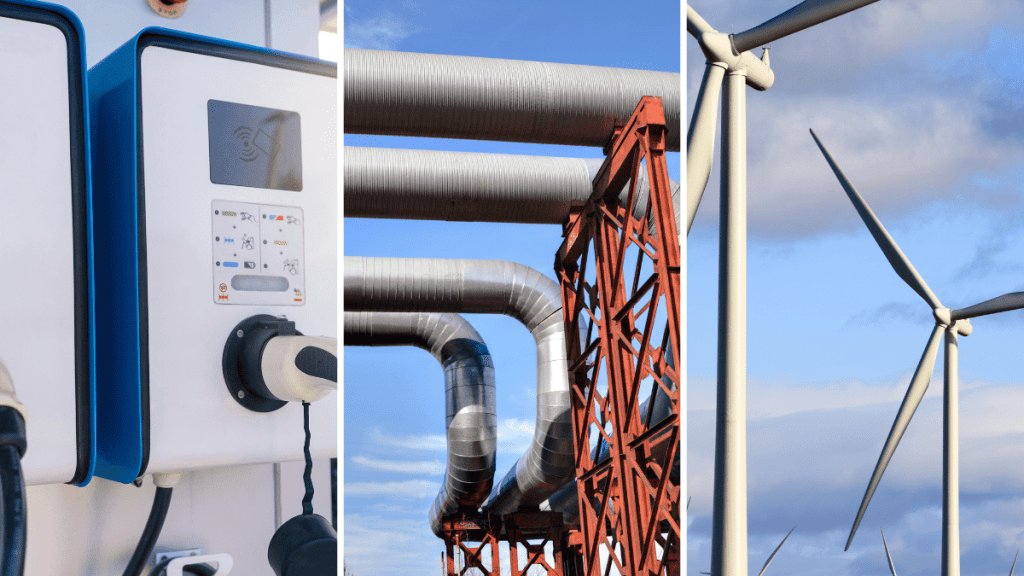
Green skills are imperative to the transition to net zero. Climate research in recent years has consistently highlighted the need for a skilled workforce to help Scotland achieve its climate goals. But there is no troupe of magic fairies that will deliver windfarms, EV charge points, or heat networks to our doorstep. Those with a focus on climate are clear that Scottish education and training providers need to be ready to equip the workforce with the necessary skills – at scale, in the right places, and with the right timing – to ensure a just transition.
Simultaneously, however, education and training providers are likely to be subject to major reforms in the coming years. In recent years a series of reports and consultations have made over 100 recommendations that will see changes in structure, curriculum, and assessment. The reforms, including the creation of new national bodies, are reshaping how schools and colleges operate and deliver education.
But do the educational reform recommendations align with schools, colleges and universities cultivating a workforce that can deliver net zero and support Scotland’s commitment to tackle the climate emergency?
For net zero needs to be prioritised, climate policy makers and researchers need to understand and engage effectively with what is already going on for the educators that we are relying on.
The Royal Society of Edinburgh (RSE) has taken an important step towards that, recently publishing ‘Gaps, overlaps and challenges: assessing the alignment of Scotland’s education reform agenda with national priorities’. This well-timed interdisciplinary research conducted a systematic review of the education reform agenda as it relates to three of the Scottish Government’s stated priorities, one of which is tackling the climate emergency. I had the privilege to speak on the panel at the report launch.
The RSE research findings and recommendations have strong synergy with several findings from CXC commissioned research, but goes further to frame them in the terms and processes of educational reform.
For the onshore wind and solar industries modular and more flexible courses are needed to facilitate targeted and intensive up- and re-skilling that would enable people to make faster and more efficient transitions between industries. The RSE research finds consensus across three of the educational reform reports calling for the enhancement and support of modularisation and short, sharp, industry-specific courses for upskilling and reskilling.
The RSE finding that there is a lack of data and evidence has been the experience of many investigating green skills. RSE states: “Without access to the right evidence, even the most well-intentioned policies are at risk of failure.” This was clearly reflected in the research we commissioned into climate change the land-based labour market and rural land use in Scotland, which found that there was not enough data to sufficiently assess nor, therefore, to plan for jobs and skills in this sector.
Hands-on training is particularly important for many of the roles that are needed, including for people who are already working. RSE’s report recommends a review of the age-related eligibility criteria for the Modern Apprenticeship scheme, recognising, as has our research, the contribution the skills and experience of mature workforce will make to some sectors on the path to net zero.
By amplifying findings and conclusions from climate change policy and research and situating them in the context of education, the RSE research demonstrates the importance of looking beyond our normal horizons. Communication and collaboration between policy disciplines – in Scottish Government and beyond – is essential if we are to successfully transition to net zero.
Related links
Programme for Government 2025 to 2026, Scottish Government
Training provision in Scotland’s onshore wind and solar industries, ClimateXChange
Climate change, the land-based labour market and rural land use in Scotland, ClimateXChange