
By the time Scotland’s greenhouse gas statistics are published, the data can be 18 months old. ‘Nowcasting’ is modelling that estimates what is happening right now, providing more up-to-date estimates of Scotland’s carbon emissions.
This gives policymakers a clearer picture of how emissions are changing across Scotland’s economy while official statistics are still being prepared.
What is nowcasting?
In this project, the nowcasting process uses a computer model to combine different sources of information to estimate carbon emissions from different sectors in Scotland as close to the present day as possible.
Nowcasting is designed to provide earlier estimates of emissions while official statistics are still being prepared. It is not intended to replace the official emissions statistics, but to complement them by providing additional evidence to support policy development and decision-making.
Why was this research needed?
Producing official emissions statistics is a complex process that relies on collecting and analysing large amounts of information from many different sources.
Scotland’s emissions estimates are built on the UK greenhouse gas inventory, which itself takes around 14 months to produce. Scottish Government analysts then carry out additional work to present Scotland-specific statistics. This includes bringing together the data, validating it and preparing the final statistical outputs.
As a result, policy teams have been relying on emissions statistics that are around 18 months old. While this process ensures the statistics are accurate and reliable, it also means policymakers are making decisions using information that reflects emissions from more than a year earlier.
Earlier estimates could help policy teams understand emerging emissions trends, assess whether interventions are having the desired effect and make more informed decisions.
What did the project involve?
ClimateXChange commissioned BIOSS to support the Scottish Government in developing a practical nowcasting approach. Researchers at BIOSS developed a machine learning model that learns patterns from historical and related data. The model combines those patterns with more timely indicators from different sectors of the economy – such as weather and electricity data – to estimate current emissions.
The work focused on simplifying the assumptions used by Scottish Government analysts while ensuring the model remained robust enough to support policy decisions.
What does this mean for policy?
The approach is currently being trialled to estimate current national Scottish emissions. If successful, nowcasting could help Scottish Government policymakers understand whether emissions are moving in the expected direction while policies are being developed and implemented. It could also provide an early warning of shortfalls in meeting targets and flag where additional policy interventions are needed.
Official greenhouse gas emissions statistics will continue to provide the definitive measure of Scotland’s emissions. However, nowcasting could become an important complementary source of evidence for climate policy.
Since this work was completed, academic research has also reported emissions nowcasting in the USA and Sweden. The Office for National Statistics has also started producing more up-to-date estimates of UK emissions. However, these estimates do not provide the same level of subsector detail.
Beyond greenhouse gas emissions, the approach developed through this project could also be applied to other Scottish statistics that are only available after a significant delay. It could help produce earlier estimates in areas such as agriculture, as well as more detailed information to support a wider range of policy and analytical questions.
As new data become available and the methods continue to develop, nowcasting could become an increasingly valuable tool for evidence-based policymaking across government.
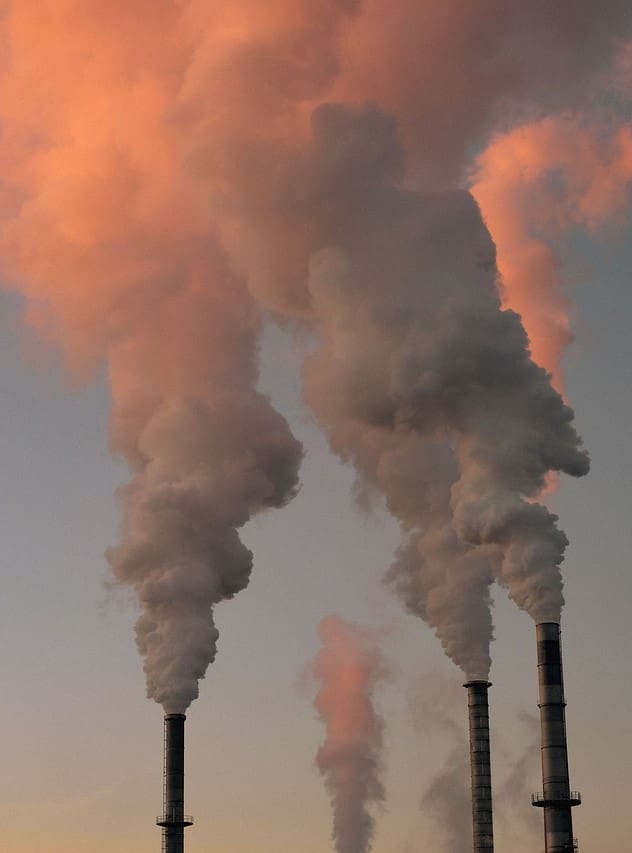
Photo by Anne Nygård on Unsplash
What do you think of when you hear the word ‘industry’? Most people will conjure images of smoking towers and dirty lorries. Despite a sense that it is probably quite important, many of us would rather ignore its existence.
However, with energy-intensive industry being responsible for up to 15% of Scotland’s greenhouse gas emissions, decarbonising industry cannot be ignored. Indeed, it is essential if Scotland is to reach net zero greenhouse gas emissions by 2045.
I went to the Industrial Decarbonisation Research and Innovation Centre (IDRIC) conference to hear about the newest research from industrial clusters across the UK.
Multiple voices
Decarbonising industry is a behemoth challenge. The IDRIC conference highlighted just how many areas of expertise are needed to develop and deliver the change we need.
Striking up conversation with other attendees, I never knew whether the person I was addressing was a seismologist, engineer, chemist or hydrologist. I had coffee with regulators, industry representatives and policymakers. Economists and finance specialists were also present to share their perspectives on funding the transition. Had the contributions stopped there, it would have been a fascinating, rich and full agenda.
However, industrial decarbonisation is not just a technical goal to be achieved. The people impacted by the transition away from traditional industrial methods were also strongly represented.
Labour market analysts and trade unions considered the implications for the thousands of jobs that may be impacted. Wider communities will also be affected, as highlighted by a workshop considering factors present in a place-based just transition.
These issues are critically relevant for Scottish communities such as Grangemouth and Peterhead, with deeply embedded industrial histories.
Challenging perspectives
The conference showcased that the conversation about decarbonising industry has expanded far beyond fuel switching, energy efficiency and carbon capture.
For example, IDRIC researchers are innovating methods to incorporate circular economy principles into carbon accounting, so that businesses can be incentivised to reuse resources.
IDRIC-funded researchers are also interrogating decarbonisation tools through life cycle analysis studies, calculating which tools will really achieve emissions reductions from the ‘cradle to grave’.
Importantly, they are also evaluating other environmental impacts, considering the best result for the environment beyond solely emissions reduction. I was particularly encouraged that a focus on equality, diversity and inclusion at IDRIC means that sharp minds from a variety of perspectives are considering these complex challenges.
Future steps
The changes needed to decarbonise industry are not going to happen tomorrow. Each industrial cluster has developed a roadmap charting key steps over the coming decades.
The interdisciplinarity and innovation present at the IDRIC conference demonstrated that these steps are being approached with a strong commitment to phased learning and knowledge exchange. Surely, these are the building blocks to success alongside the necessary infrastructure development, investment and strong policy development.
ClimateXChange continues to work with Scottish Government policymakers, commissioning research that informs Scotland’s industrial decarbonisation route. The IDRIC conference was an excellent opportunity to ensure that our research includes a wide range of relevant perspectives and draws on current thinking, meaningfully adding to the decarbonisation of industry in Scotland and beyond.
Related links
Industrial Decarbonisation Research and Innovation Centre
Related ClimateXChange projects
Driving emission reductions through the public sector supply chain