

Assessing the socioeconomic impacts of nature networks
Research completed August 2026
DOI: https://doi.org/10.7488/era/7510
Executive summary
One of the key drivers of biodiversity loss is habitat fragmentation, or the “process by which larger areas of habitats are broken up into smaller patches that become isolated from each other” (Scottish Government & NatureScot, 2024, p. 14). Plant and animal species’ health depends on their abilities to move through and between habitats and landscapes to support genetic diversity, adapt to changes due to climate change, and build resilience to other habitat stressors. Therefore, developing natural corridors or stepping stones between habitats, which allow plant and animal species to move between habitats, ecosystems, or landscapes, can decrease their fragmentation and lead to improved biodiversity outcomes. The Scottish Government has embedded the delivery of ‘nature networks’ as a key policy action in the Scottish Biodiversity Strategy Delivery Plan. Nature networks are intended to generate these connectivity corridors and stepping stones between habitats to improve species and landscape resilience.
As nature networks are primarily a biodiversity policy action, other potential benefits for communities can be under-appreciated by local decision-makers. In order to ensure that climate-resilient and biodiversity-rich places are protected and developed across Scotland, decisionmakers need evidence of the wider value of nature networks.
Aims
We aim to bring together the existing evidence base on socioeconomic benefits associated with nature networks and habitat connectivity, linking of existing habitats in the landscape as well as restoring areas with newly created habitats, to inform policy implementation at a local level. To do so, we conduct a rapid evidence review of peer-reviewed academic literature and ‘grey’ literature for the socioeconomic benefits of nature or habitat connectivity. Then, we assess the evidence of socioeconomic benefits of nature networks in two Scottish case studies areas: Moray Council and Edinburgh City Council.
Findings
We find evidence of socioeconomic benefits associated with habitat and nature connectivity in the existing literature. The benefits we found were categorised as ecosystem services, health and wellbeing, communities and people, economic, and climate adaptation and resilience. However, the existing literature also points to trade-offs between socioeconomic benefits, some benefits depend on the context, and in some cases benefits do not arise.
The case studies in Moray and Edinburgh, representing rural and urban contexts, explore the expansion of nature connectivity and delivery of nature networks. They indicate that socioeconomic benefits, or anticipated socioeconomic benefits, have been observed across the categories of across ecosystem services, health and wellbeing, communities and people, economic, and climate adaptation and resilience. Similarly to the literature review, the case studies showed that these benefits are not universal but rather can involve trade-offs and depend on the context they are in.
In addition, the research finds that clear measurement of socioeconomic benefits associated with nature connectivity in Scotland is lacking. It finds also that the evidence base is not currently sufficient to support key messages to stake-holding groups—in particular, farmers and landowners—regarding the potential for generating socioeconomic benefits. In particular, cost-benefit analysis of nature network development would be most useful to these groups. Finally, the research stresses the importance of community engagement during the development and delivery of nature networks in order to ensure benefits arise from nature network development.
Recommendations
- Development of clear guidance on what nature networks are expected to deliver
- Development of a monitoring and evaluation system for socioeconomic benefits of nature networks that is dynamic, accounts for place-based characteristics, and relies on existing tools where possible in order to decrease reporting burdens
- Develop strategies to speak to particular stake-holding groups, such as farmers and landowners.
- Develop approaches to ensuring consistent community engagement and widespread distribution of socioeconomic benefits.
Glossary / Abbreviations table
Nature network | A nature network connects together nature-rich sites, including restoration areas and other environmental projects, through a series of areas of suitable habitat, habitat corridors, and stepping-stones (Scottish Government and NatureScot, 2024). |
Connectivity corridor | Natural corridors or stepping stones between habitats, which allow plant and animal species to move between habitats, ecosystems, or landscapes (Scottish Government and NatureScot, 2024). |
Ecosystem services | Processes by which the environment produces benefits useful to people, akin to economic services (Scottish Government and NatureScot, 2024). |
Habitat/nature connectivity | Building connectivity means linking existing habitats in the landscape as well as restoring areas with newly created habitats (Department of Environment, 2026) |
Habitat fragmentation | The process by which larger areas of habitats are broken-up into smaller patches that become isolated from each other (Scottish Government and NatureScot 2024, p. 14). |
Place-based approaches | Approaches that centre the unique specificity of places in development of policy or projects |
Socioeconomic benefit | Benefits to the economy, people, or society resulting from a policy, project, or other intervention. |
Nature-based solutions | Actions to protect, sustainably manage, and restore natural or modified ecosystems, that address societal challenges effectively and adaptively, simultaneously providing human wellbeing and biodiversity benefits (Scottish Government and NatureScot, 2024). |
Natural Capital | Natural capital includes certain stocks of the elements of nature that have value to society, such as forests, fisheries, rivers, biodiversity, land and minerals. Natural capital includes both the living and non-living aspects of ecosystems. Stocks of natural capital provide flows of environmental or ‘ecosystem’ services over time (Department of Environment, 2026) |
Introduction
A biodiversity crisis is ongoing both globally and within Scotland. One of the key drivers of biodiversity loss is habitat fragmentation (Scottish Government & NatureScot, 2024). Plant and animal species’ health depends on their abilities to move through and between habitats and landscapes to support genetic diversity, adapt to changes due to climate change, and build resilience to other habitat stressors. Fragmenting connectivity between these habitats, particularly due to human activity such as the building of roads, urban expansion, green space removal, and lack of joined up approaches to nature across landholdings, leads to biodiversity decline. Therefore, improving connectivity by developing natural corridors or stepping stones between habitats can decrease their fragmentation and lead to improved biodiversity outcomes.
Policy Context
As part of the overarching strategy to address the decline of Scotland’s species resulting from habitat fragmentation (Scottish Government & NatureScot, 2024) the Scottish Government has embedded the delivery of nature networks as a key policy action in the Scottish Biodiversity Strategy Delivery Plan. Recognising that ecologically-connected landscapes are more resilient to climate change, nature networks are also a key objective of the third Scottish National Adaptation Plan (Scottish Government, 2024). Nature networks are intended to generate connectivity corridors and stepping stones between habitats to improve species and landscape resilience. They are intended to “radiate from, and extend into, all landscapes, across inner cities to towns and villages, rural areas, mountains, lochs and coasts” (Scottish Government & NatureScot, 2024, p.11), linking up the whole of Scotland through a series of coordinated and intentional natural corridors. This involves linking existing habitats to each other as well as restoring and creating new habitats (Scottish Government & NatureScot, 2024).
Nature networks are defined and delivered at local authority level, in partnership with other organisations (Scottish Government and NatureScot, 2024). It is intended that local communities help to contribute to the delivery of nature networks by offering local knowledge to deliver a place-based, locally informed network.
While each local authority’s nature network will be delivered separately, the implementation across Scotland will eventually create a pan-Scotland nature network. To fund the creation of nature networks, “public and private funding and finance will be delivered through properly resourced, clearly directed, long-term, simple, and accessible means” (Scottish Government and NatureScot, 2024, p. 7). Nature network development requires each local authority to conduct a thorough mapping exercise to develop a bespoke and place-based nature network plan, to implement the map by conducting connectivity and nature restoration work across the council area, and to maintain and continually expand the nature network over time. In addition, it requires each of these processes to be socially inclusive, co-created and bottom up (Scottish Government and NatureScot, 2024), which is both time-intensive and costly. Local authorities are tasked with delivering these networks, but most are operating under a reality of constrained budgets and limited capacity. With many critical issues facing Scotland, biodiversity is not always prioritised in cases where trade-offs must be made between priority policy areas.
Evidence gaps
The evidence base around the socioeconomic benefits of nature restoration in general is quite well-established (de Bell et al., 2017; Juntti et al., 2025; LoTemplio et al., 2023). This indicates that organised efforts to improve the connectivity of Scotland’s nature may provide important socioeconomic benefits to people and communities. However, the specific benefits associated with habitat connectivity or connected-up nature restoration are less easily accessible in the evidence base. Interrogating the evidence for socioeconomic benefits of nature networks in Scotland could help support public bodies, including local authorities, to dedicate resources to the implementation of nature networks as a means of delivering on other socioeconomic goals.
Filling this evidence gap to provide tailored evidence of the benefits of nature connectivity, rather than of nature in general, could support local authorities and partners to deliver nature networks. It may allow them to identify the multiple benefits that are most valuable to their particular areas and to approach nature network delivery in a way that emphasizes these place-based and unique priorities.
Research Aims
We seek to inform delivery of nature networks across Scotland by generating an evidence base of the ‘multiple benefits’ that nature network development could deliver across Scotland, beyond the valuable benefits to biodiversity.
As nature networks are primarily a biodiversity policy action, other potential benefits for communities can be under-appreciated by local decision-makers. In order to ensure that climate-resilient and biodiversity-rich places are protected and developed across Scotland, decisionmakers need access to evidence of the wider value of nature networks. We aim to bring together the existing evidence base on socioeconomic benefits associated with nature networks and habitat connectivity to inform policy implementation at a local level. We also seek to clearly define the state of the evidence, helping to identify remaining evidence gaps. We add to this evidence base by conducting two case studies of Scottish local authorities to determine the multiple benefits currently being realised by habitat connectivity projects. The research is guided by the following questions:
- To what extent is there a consolidated evidence base of the multiple benefits of nature networks and habitat connectivity for communities? This includes benefits across climate adaptation, economic impacts, health and wellbeing benefits, and more.
- What are the different categories of socioeconomic benefit associated with nature connectivity and nature networks?
- Do the socioeconomic impacts of nature connectivity vary across scales and complexity of nature network implementation?
- How are communities engaged with development or delivery of nature networks, and how does this impact delivery of multiple benefits?
Methodology
To address the above research questions, we take two main research approaches. First, we conducted a rapid evidence review (RER). This uncovers existing research across academic and grey literature which may evidence the multiple benefits of habitat connectivity in contexts comparable to Scotland. Focusing on global North countries from the period of 2010-2026, we considered evidence from 29 pieces of literature and used this to build a central account of the existing evidence for the socioeconomic benefits of nature connectivity. Through content analysis, we extracted data around the measurement of the multiple benefits of habitat connectivity.
Secondly, we present two case studies of nature networks from Scotland. We conducted 16 interviews with stakeholders and community members in January and February of 2026 across the Edinburgh nature network (urban) and the Moray nature network (rural). Content analysis of these interviews provides insights into the multiple benefits experienced in each area resulting from habitat connectivity and nature network delivery, particularly in the absence of published reporting of these impacts. For a detailed record of our methodology, see Appendix A.
Analysing the existing evidence base on socioeconomic benefits of habitat connectivity
Introduction
To understand the existing evidence around the socioeconomic benefits of nature and habitat connectivity, we conducted a systematic rapid evidence review. This rapid evidence review conducted systemic searches of both the peer reviewed academic literature alongside grey literature to uncover existing reporting around the multiple benefits of habitat connectivity in order to generate a clear evidence base. This review sought to answer the following questions:
- To what extent is there a consolidated evidence base that sets out the existing/potential impacts of Nature Networks for local communities, including making places climate resilient and benefitting people who live and work in those communities?
- To what extent is that evidence base sufficiently robust to support key messages for future communication and engagement on Nature Network development?
- Do benefits/impacts vary with scale and complexity of nature network implementation? How do these benefits change when implementing different scales of nature network, or assessing benefits at different geographical scales?
- What are the different categories of socioeconomic benefit?
Results: existing evidence on socioeconomic benefits of nature networks
Clear categories of socioeconomic benefits emerged from this rapid review. The literature indicates that habitat connectivity contributes to the social, cultural, economic, health, and climate change resilience of communities across various contexts. We outline these categories and identify the benefits that have emerged across the grey and academic literature.
Ecosystem Services
A focus on the benefits of nature connectivity for the provision of ecosystem services, or the “goods and services derived from biophysical processes that benefit human well-being and support societal functions” (Ernstson, 2013, p.8) emerges in the literature. In the UK and Scottish context, flows of ecosystem services are understood to be provided by stocks of natural capital, or “the elements of nature that have value to society, such as forests, fisheries, rivers, biodiversity, land and minerals” (Department of Environment, 2026, p. 6). Taking a natural capital approach implies generating valuation, usually of an economic nature, of the environment, helping to “account for [nature’s] contribution to the economy” (Department of Environment, 2026, p. 7). The Millenium Ecosystem Assessment splits ecosystem services into four clear categories: provisioning, supporting, regulating or maintaining, and cultural benefits (Egerer & Anderson, 2020). Provisioning services are materials used by people or communities, like food. Regulating services include processes such as water purification or climate regulation. Supporting services include processes like nutrient cycling and soil formation (Butler et al., 2022). Each of these categories has particular implications for human survival or wellbeing. Connectivity can be similarly categorised into landscape, habitat, geo-physical, and eco-social categories (Butler et al., 2022). These support different types of ecosystem services, often overlapping to produce synergies of benefits. For example, growing food in urban gardens serves a connectivity purpose while addressing food insecurity and generating a positive economic impact from micro-agriculture (Butler et al. 2021) crossing provisioning and supporting services.
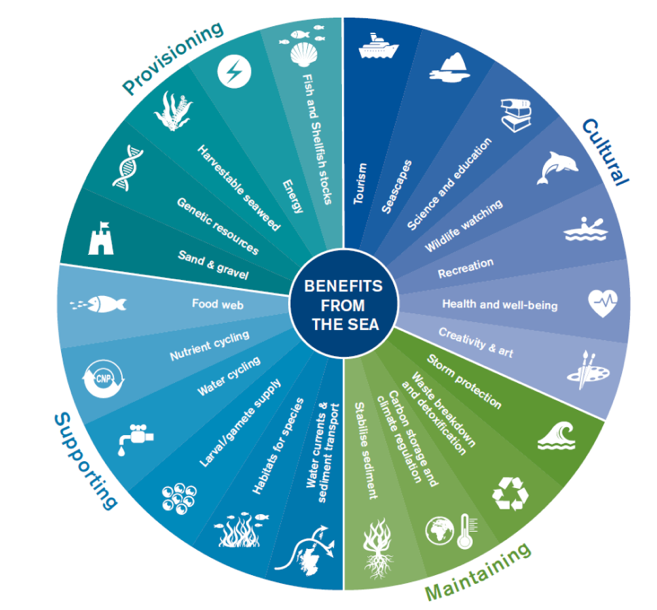
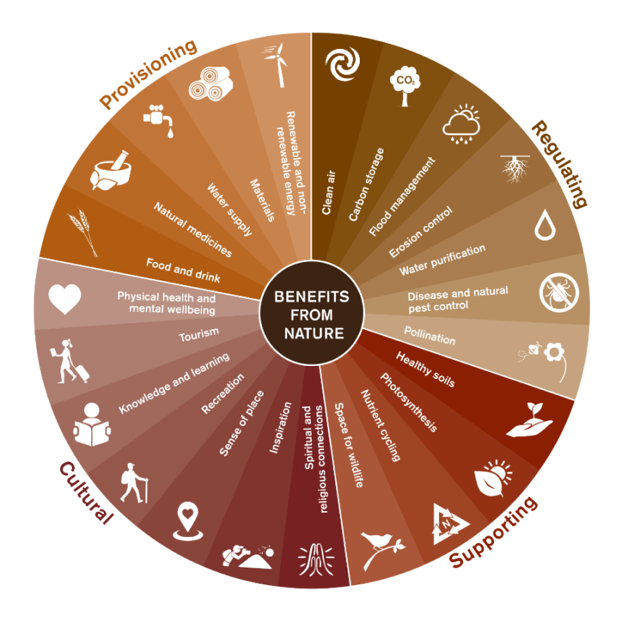
Figure 1: Ecosystem services wheels. NatureScot: www.nature.scot/scotlands-biodiversity/scottish-biodiversity-strategy/ecosystem-approach/ecosystem-services-natures-benefits
Evidence from Hungary indicates that ecosystem service provision in rural contexts is improved in protected areas (Kuttner et al., 2014). Yet importantly, non-protected areas which neighbour protected areas produce higher than average ecosystem services (Kuttner et al., 2014), suggesting that “large and effectively managed nature reserves” (p. 17) play a role in supporting ecosystem service provision even outside of protected areas, including by increasing connectivity. In forested contexts, delivery potential of multiple ecosystem services is most impacted by the age of the forest (Valdés et al., 2020), yet forest management practices can help to boost the delivery of ecosystem services which people rely on, such as wood production or recreation, while prioritising biodiversity conservation (Vangansbeke et al., 2017) in part through strategic prioritisation of connectivity.
Non-academic reporting from the WWF (World Wildlife Fund, 2026) finds that deforestation, which fragments forests, decreases the capacity of the forests to support agriculture and grow food, naturally capture carbon, and prevent soil erosion, all of which impact communities’ ability to thrive. The WWF (Leemans & Miklasinska, 2023) reports that Germany’s largest ecosystem restoration project, the Emscher Landscape Park, produces €21 million of direct ecosystem services. Its scale, spanning 20 cities and over 100 projects, perhaps enables an econometric measurement of ecosystem services of this quality.
Health and wellbeing benefits
Much of the literature around increasing habitat connectivity contains conceptual and general links between nature connectivity and human wellbeing. Indeed, the concept of ecosystem services “represent[s] the contributions that ecosystems make to human well-being” (Brockerhoff et al., 2017, p. 3009). Therefore, much of the literature on the multiple benefits of nature connectivity necessarily considers wellbeing. Taking a social-ecological approach and mapping ecosystem services can help to identify habitat connectivity priority areas, enabling decisionmakers to find a balance between ecological considerations and human well-being priorities (Ghasemi et al., 2025). Similarly, the WWF’s reporting around the benefits of habitat restoration points to the B-Lines project’s goal to strengthen the connectivity of insect pathways in the UK while “improving the health and wellbeing of local communities by bringing them closer to nature” (Leemans & Miklasinska, 2023, p. 5). This indicates that the goals of improving human health and nature connectivity can be linked by organisations or projects.
The evidence of benefits for human health is also reported. However, particular health indicators are not clearly agreed upon across the literature, and there is a lack of causal analysis linking connectivity measures to particular health outcomes. The Center for Large Landscape Conservation (2022) highlights the ties between health and increased outdoor recreational opportunities provided by the development of wildlife corridors. CEEweb for Biodiversity, a network of organisations from Central and Eastern Europe that works to conserve the region’s natural heritage, evaluated the benefits of wetland restoration projects through data evaluation and interviews with project leaders, finding general improvements in societal health (Siuta M & Nedelciu C E, 2016). Similarly, greening school yards can benefit public health by way of improving environmental factors like air quality, reducing urban heat island effects, and increasing students’ physical activity (Clauzel et al., 2025). Butler et al.’s (2022) review collects evidence around the services associated with particular nature connectivity features. It cites evidence that mental health benefits are associated with wildlife sightings and street trees (McEwan et al., 2020). Their review also points to evidence indicating that children living in close proximity to a trail system tended to have lower body mass index (Kim et al., 2020). Therefore, urban greening can address health challenges alongside social and climate priorities (Clauzel et al., 2025).
Health risks associated with heat can be addressed in urban areas through tree planting, which often also serve connectivity purposes in urban areas (Hardy et al., 2022; Korpilo et al., 2025). However, the evidence of these benefits remains limited (Korpilo et al., 2025).
Cultural ecosystem services: benefits to communities and people
While health and wellbeing benefits tend to centre around individuals, benefits to groups of people and communities also arise from increased nature connectivity. Sometimes called cultural ecosystem services, these are impacts on collectives, defined as “ecosystems’ contributions to the nonmaterial benefits that arise from complex and dynamic relationships between ecosystems and humans” (Brockerhoff et al., 2017, p. 3023). While these can be intangible and hard to measure, they may relate to cultural practices, spiritual values, knowledge systems, aesthetics, and recreation (Brockerhoff et al., 2017). Brockerhoff et al.’s (2017) review of the literature finds a range of benefits for communities and collectives associated with nature connectivity, including aesthetic, recreational, and safety benefits; benefits to social cohesion including improving community involvement and sense of place; and educational benefits.
Research shows the benefits of schoolyard greening for social cohesion and enhancing learning environments for students in four European cities (Clauzel et al., 2025). Similarly, multi-habitat seascape restoration can provide opportunities for alternative forms of learning, such as living laboratories (McAfee et al., 2022, p. 6). Garden-based citizen-science programmes focused on wilding can serve as an opportunity for residents to “strengthen their sense of place and increase environmental literacy” (Lerman et al., 2023, p. 677). The B-Lines project in the UK created 8 wildflower areas at local schools to engage community members in order to bring communities and people closer to nature while strengthening the connectivity of insect pathways (Leemans & Miklasinska, 2023).
Restoration of seascape connectivity projects have provided opportunities for community involvement, which can improve peoples’ interpersonal interactions, community agency, and feelings of attachment to nature (McAfee et al., 2022). Similarly, homeowners participating in certified biodiversity garden projects in Winnipeg, Canada reported “increased connection to nature and natural history knowledge, stronger place attachment, and several other well-being measurements including satisfaction and attention restoration” (Lerman et al., 2023, p. 677).
Restoration of multi-habitat areas can contribute to improved aesthetic value and recreational experiences for the surrounding communities (McAfee et al., 2022). Similarly, increasing the visibility of green amenities near households serves aesthetic purposes for residents (Pham et al., 2025). Aesthetic values and recreation opportunities emerged cross many case studies of wetland restoration in Central Europe, resulting from river and wetland connectivity, including removing dams (Siuta M & Nedelciu C E, 2016). Finally, Butler et al.’s (2022) review highlights research showing an inverse relationship between tree canopy and crime in two American cities (Troy et al., 2012; Wolfe & Mennis, 2012).
Economic benefits
The literature points to some benefits to businesses and the economy as a result of nature connectivity. This is emphasised more in the grey literature compared to the academic literature. WWF’s “Factsheet for the Economic Benefits of Investing in Nature Restoration” (Leemans & Miklasinska, 2023) reports that the “largest ecosystem restoration project in Europe” (p. 12), the Emscher Landscape Park, results in 21 million euros of ecosystem service provision. Similarly, the United States National Oceanic and Atmospheric Administration researched the impact of a $167 million investment in 125 habitat restoration projects, many of which involved connectivity and defragmentation (Samonte et al., 2017). Using input-output analysis on the expenditures of projects funded by the American Reinvestment and Recover Act, they found a huge economic impact. For example, restoration projects supported over 2,000 jobs; generated a $12 million increase in property values in Michigan alone; and generated carbon storage and sequestration benefits in California equalling $130,000 per year for 50 years. Overall, this resulted in over $143 million in expanded economic activity across the country. Importantly, the extent of the original investment and scale of the project enables equally significant returns on investment.
CEEweb for Biodiversity reports general, if unspecified, monetary returns from the benefits associated with increased tourism, ecotourism, recreation, job creation, and development of local businesses resulting from wetland connectivity restoration (Siuta M & Nedelciu C E, 2016). Relatedly, the Network EU Common Agricultural Policy Network (2023) reports that local business relies on habitat functionality. Biodiversity losses can result in resource scarcity, value chains disruption, and increases in operational costs, so “fully functional habitats are business assets in many ways” (p. 2) as connecting landscapes can mitigate risks and provide more diverse business opportunities for farmers and foresters. Additional case studies showed benefits to water management and flood control.
Indirect economic benefits are associated with green infrastructure initiatives such as the engagement of labour and job creation, purchase and use of materials, which can generate local economic benefits (Hardy et al., 2022). Economic benefits are also associated with restoring connectivity in seascapes. Improving the health of harvestable fish “helps promote the certification of sustainable sources high-quality seafood, and empowers managers, authorities, and consumers to champion sustainable production” (McAfee et al., 2022, p. 5). Evidence points to the economic returns on the process of constructing wildlife corridors, in particular around local job creation. Labour needed to remove fencing, plant native vegetation, and remove dams can be locally sourced, providing jobs and income to the local economy (Center for Large Landscape Conservation, 2022).
Some academic literature paints a more nuanced picture, finding that “the costs of restoring connectivity may be prohibitively high in terms of the benefits that can be expected” (Akpalu & Stage, 2021, p. 11). Yet the limitations of economic valuations lead Butler et al. (2022) to “advocate for a focus on societal values determined by local communities” (p. 3). While creating economic valuations of nature and conservation is becoming more common (Butler et al., 2022) “critics assert that assigning market values to nature fails to capture the full worth of resources, undermines natures intrinsic value, and creates inequities” (p. 3). Considering biodiversity and ecosystem services jointly can “optimise landscape-scale conservation and planning efforts and maximise their return on investment” (Butler et al., 2022, p. 5). Trade-offs between biodiversity and ecosystem services are also relevant and discussed in section 4.2.3.1.
The Scottish Government produced an Interim Evaluation of the Nature Restoration Fund which assesses the projects it has funded (Stevens et al., 2025), reporting specifically on outcomes of investment in nature connectivity and other nature restoration. However, it does not explicitly link investment in nature restoration to economic evaluations of the project outcomes. The report suggests that comparing data from different restoration projects is complex, and that evaluations must consider variations in cost, geography, and project complexity when comparing projects funded by different funding streams (Stevens et al., 2025).
Climate adaptation and resilience benefits
Nature connectivity can have important implications for both climate adaptation and resilience, which are increasingly important for individuals and communities as they increasingly experience the effects of climate change. It is associated with a range of climate adaptation benefits including “climate regulation and carbon sequestration, disease and pest control, soil formation and fertility, flood protection, [and] nutrient and water cycling” (EU Common Agricultural Policy Network, 2023, p. 1) and provision of soil, water, and air quality. In the United States’, $167 million of investment in costal restoration, involving connectivity restoration and development, contributed to storm and erosion protection and carbon sequestration (Samonte et al., 2017). World Wildlife Fund (2026) reports a key benefit of connectivity as reduction of both flood risk and drought.
Research considering the benefits of yard or garden management practices for climate resiliency and people finds that individual wilding of gardens does not necessarily make significant steps towards connectivity, land sharing, or “the management of yards as a habitat” (Lerman et al., 2023, 679). However, it does find that these activities can facilitate wildlife movement across gardens, neighbourhoods, and metropolitan regions towards protected land (Lerman et al., 2023). Their review finds a range of person-centred and community benefits associated with yard wilding: “increasing and maintaining plant biomass (e.g. trees and shrubs) and reducing management intensity (e.g. lawnmowing and fertilizer application)” (p. 2023) and improving living conditions by reducing extreme temperatures. Improving wetland and river connectivity in Central and Eastern Europe also helped regulate the local climate, creating more bearable temperatures (Siuta M & Nedelciu C E, 2016).
Hardy et al. (2022) cite research showing that nature fragmentation across built environments in urban areas reduces resilience to a range of severe weather events such as floods, storms, and extreme heat. This implies that nature networks would have mitigatory benefits against these events, each of which can damage the socioeconomic flourishing of a built environment. Increasing urban tree canopy serves not only as a habitat connectivity mechanism but can play an important role in urban climate adaptation by offering temperature regulatory service, air and water filtration, and soil stabilisation (Hardy et al., 2022, p. 2), which have clear benefits for local communities.
Complexities around socioeconomic benefits of nature networks
Alongside evidence of benefits that arise from nature connectivity are indications that habitat connectivity is not necessarily or universally beneficial to humans and communities. While the grey literature reviewed reported positively on benefits of nature connectivity, some academic evidence paints a more nuanced picture. Trade-offs exist between biodiversity and socioeconomic benefits; benefits are dependent on contextual factors such as scale of restoration; the economic return on investment of habitat restoration does not always financially break even. Data which clearly enables measurement of quantitative and causal relationships between restoration and benefit provision is still insufficient (Brockerhoff et al., 2017).
Benefits Trade-offs
Evidence indicates that there are clear trade-offs between the benefits associated with nature connectivity, with some benefits coming at the expense of others. For example, hydropower plants fragment rivers. Yet even in cases where it would have been socially preferred not to develop hydropower plants in the first place, restoring connectivity after hydropower development is equally not socially desirable (Akpalu & Stage, 2021). Even under a set of generous assumptions, restoring connectivity would likely be economically harmful if it entailed losing any more than one fifth of the hydropower being generated (Akpalu & Stage, 2021). This case draws attention to the trade-offs between increasing connectivity for the benefit of biodiversity, social desirability, and economic considerations.
While overlaps and synergies emerge between landscape, habitat, geo-physical, and eco-social categories of nature connectivity (Butler et al., 2022) and the ecosystem services they deliver, some conflicts also emerge between these categories. A more robust evidence base investigating how they interact is needed to “help build a common understanding of the value of connectivity to maximise its benefits” (Butler et al., 2022, p. 1). Taking an ecosystems services approach to targeting environmental interventions can help to identify priority areas, while acknowledging the trade-offs between ecosystem services such as “carbon storage, habitat quality, pasture production, timber production, and outdoor recreation” (Ghasemi et al., 2025, p.8). An integrated approach, which considers links between human activities and conservation in management interventions, is needed to “balance environmental conservation with human wellbeing” (Ghasemi et al., 2025, p.10).
Maintaining connected habitats in increasingly urbanised environments poses challenges. Establishing multiple urban centres is preferred in urban planning, yet this can work against maintaining well-connected habitat networks (Khiali Miab et al., 2022). Increasing the number of urban centres alongside habitat connectivity requires interventions as significant as “changing the distributions of jobs and people” (Khiali Miab et al., 2022, p. 1) across mid-sized municipalities and stronger collaboration between municipalities in order to be successful. Similarly, the aesthetic value nature provides near peoples’ residences do not always align with connectivity. In fact, residents in urban contexts tend to prefer more fragmented scenery, and sometimes the aesthetics of landscapes that have low ecological potential (Pham et al., 2025).
Trade-offs between ecosystem services, like wood production and recreation, and conservation of indicator species have also been observed in habitat restoration involving connectivity (Vangansbeke et al., 2017). Similarly, evidence shows that “the roads and trails that support eco-social connectivity can fragment habitats, deter wildlife, and impact watersheds, but at broader scales can justify and incentivise the protection of large, well-connected natural landscapes” (Butler et al., 2022, p. 14).
The relationship between isolation of protected areas and various ecosystem services like carbon sequestration, timber production, pasture production, habitat quality, and outdoor recreation in Egmont National Park in New Zealand was explored in order to better enhance habitat connectivity (Ghasemi et al., 2025). The authors find that provision of ecosystem services can be at odds with each other, underscoring that in the process of improving connectivity, conservation goals and agricultural activities must be weighed. Similarly, evaluating whether the value of socioeconomic benefits to people outweighs costs “will depend on how the value of non-market benefits are weighted against the costs of reduced agricultural and timber production” (Newton et al., 2012, p. 571). However, this will pose less of a challenge for the restoration of otherwise unproductive land.
Trade-offs also exist between habitat defragmentation and preventing forest fires, as one way to minimise the spread of fires in certain locations is to ensure landscapes remain fragmented (Brockerhoff et al., 2017). In the contexts where fires pose a particular threat, perhaps the benefits associated with landscape connectivity do not outweigh the threat to safety and biodiversity associated with fires.
Context-dependent benefits
Evidence indicates that contextual factors impact the delivery of multiple benefits from nature connectivity.
Scale can impact the benefits that nature connectivity delivers. Lerman et al. (2023) set an agenda for garden management actions that local people can take to promote biodiversity, climate resilience, and benefits to people. They assert that connectivity via garden rewilding is beneficial to climate adaptation and to people, but that effectiveness depends on linking up across larger scales and landscapes.
Similarly, coordinating river infrastructure decisions across larger areas can improve cost-benefit efficiency (Roy et al., 2020). The WWF (Leemans & Miklasinska, 2023) reports the ecosystem services of the Emscher Landscape Park to be worth upwards of 21 million euros. This is the largest ecosystem restoration project in Europe, bringing together 20 cities and over 100 complementary green projects. The project provides over 50,000 jobs in the region and expansive recreational activities that draw about a million visitors per year. This speaks to the scale of restoration needed to meaningfully accrue gains of such economic value.
However, increasing scale may also negatively impact the distribution of resources. Newton et al. (2012) find that restoration across agricultural landscapes is unlikely to deliver net economic benefits as a valuation of non-market benefits, like flood risk mitigation, cultural value, recreational, and aesthetic value, will need to be weighed against market losses in agricultural production.
There can also be particularities of nature connectivity benefits across different types of landscapes and land uses between urban and rural contexts. Investigation by Newton et al. (2012) into the cost effectiveness of landscape-scale restoration for ecosystem service delivery shows that because of the high cost of ecological network restoration in agricultural landscapes, this restoration is unlikely to generate economic benefits.
Lack of benefits
Evidence indicates that increasing habitat connectivity does not always generate socioeconomic benefits. No evidence for benefits of habitat connectivity for ecosystem services provision emerged in a study of 224 woodlands across Europe (Valdés et al., 2020). While the smallest and most ancient woodlands showed the highest multiservice delivery potential, “the amount of forest cover around each woodland had no effect on … multiservice delivery potential and individual services, which indicates that habitat availability within the landscape did not influence the service supply potential” (Valdés et al., 2020, p. 12). Similarly, re-establishing ecological activity in rivers fragmented by hydropower may not be socially desirable, even where the fragmentation was also not desirable, due to the additional costs associated with restoration and the economic loss resulting from removal of hydropower (Akpalu & Stage, 2021). Korpilo et al.’s (2025) review of the literature around urban greening concludes “simply greening cities and their streets does not mean that benefits will follow” (p. 1612).
Evidencing the benefits produced by connectivity
Better data is needed to evidence the benefits produced by connectivity. Brockerhoff et al.’s (2017) review points to a lack of quantitative evidence linking forest biodiversity and important ecosystem services. It stresses that the “the impacts of forest fragmentation and modern forest practices remain largely unknown despite these forests’ high conservation value and their considerable role in the provision of ecosystem services” (p. 3016). Planners and decision-makers need a clearer understanding of how co-benefits arise, including “more empirical and context-specific evidence on what type, where and for whom to increase or plant new vegetation” (Korpilo et al., 2025, p. 1612) in order to ensure that co-benefits arise from nature and nature connectivity development across cities. The lack of clear cost-benefit analysis of restoration is particularly important, as “any restoration measures will tend to be long-term in nature” (Akpalu & Stage, 2021, p. 2) and therefore require clearer evidence to support delivery. This type of analysis should include devising means of measuring both the financial and societal returns on investment of restoring nature connectivity, including potential differences between investment type.
Research also evidences a need for priorities of nature connectivity measures to be clearly defined. These priorities should be locally determined and serve place-based needs. This involves creating a clearer picture of “how the benefits provided to people are valued, and on how the value of non-market benefits are weighted against the costs” (Newton et al., 2012, p. 571). Where benefits are positively related to each other, maximising services is not difficult. However, where benefits or ecosystem services “show strong negative relationships at local scales” (Brockerhoff et al., 2017, p. 3025), place-based and bespoke prioritisation must take place to deliver benefits that are most important in each context. Even where trade-offs between benefits exist, innovative management planning across forests or other contexts could be used to create “a final scenario that combines biodiversity conservation with a restricted impact on” services like wood production or recreation (Vangansbeke et al., 2017, p. 3214). Thus, while prioritisation is a complicated and often subjective process, dedicated, place-based planning which engages diverse stakeholders and communities can overcome some challenges around issue prioritisation.
Collaboration is required for evidence of benefits to be most effectively gathered. Research sets out the need to break down administrative silos, enabling open and transparent conversations around how land is used and how it can provide the most benefits to both people and nature. While nature restoration projects are often focused on biodiversity, this should be understood “as a cross-cutting issue that creates synergies with other urban sustainability goals such as climate adaptation or social cohesion” (Hansen et al., 2023, p.1). The literature suggests some ways to do this. Lennon et al. (2017) show that traditional approaches to green infrastructure delivery can reinforce restrictive siloed decision-making. This has negative impacts on green infrastructure’s ability to transform land use in a way that promotes social-ecological resilience. The Connectivity Benefits Framework (CBF) put forth by Hardy et al. (2022) suggests a way to manage trade-offs through by “prioritis[ing] localised societal needs while protecting biodiversity and ecosystem function” (p. 1). Local authorities and delivery partners could prioritise collaboration across policy areas to ensure a connected-up approach to nature network delivery that offers socioeconomic benefits that are place-specific alongside biodiversity benefits.
Case Studies: Generating Evidence for the Socioeconomic Benefits of Nature Networks
Introduction
This section adds to the literature by generating evidence of the socioeconomic benefits associated with nature connectivity in Scotland. Informed by the evidence found in literature discussed above, we explored the socioeconomic impacts of nature connectivity through case studies of nature network implementation in Scotland.
This is a relatively new policy area, with different local authorities at different stages of implementation. Therefore, we looked at Scottish local authorities which have begun implementation of nature networks, or which have active nature connectivity projects that will contribute to the nature network, to generate a clearer picture of the socioeconomic benefits associated with nature connectivity in the Scottish context.
Scottish local authorities are implementing nature networks and contributing projects across their urban, peri-urban and rural landscapes. The benefits, trade-offs, community engagement, and other factors may differ between these contexts. Therefore, we conducted a rural case study in Moray and an urban case study in Edinburgh. In these case study areas, we sought to answer the following questions:
- What are the different categories of socioeconomic benefit in Scotland?
- What are the key impacts of nature networks related to climate adaptation?
- Do benefits/impacts vary with the scale and complexity of nature network implementation? How do these benefits change when implementing different scales of nature network, or assessing benefits at different geographical scales?
- In what ways has the community been involved in developing the nature network/contributing projects? What are the opportunities to further engage with the local community (i.e. schools, landowner groups, community climate hubs etc.) on nature network implementation?
The evidence review revealed categories of socioeconomic benefits that emerged from nature connectivity. These categories structured the case study approach, both by feeding into the design of semi-structured interviews and in presentation of results. Interview participants were asked about the benefits associated with their nature network or nature connectivity projects that aligned with these categories. They were also asked if (a) any other benefits or (b) any unexpected benefits have emerged to their knowledge. When the interviews were thematically analysed, these results fitted within the existing broad categories.
Rural Context: Moray Nature Network
Background
Moray, located in the north-east of Scotland, is the eighth largest council area in Scotland (Moray Council, n.d.), yet its population of 95,000 is ranked as the 24th most populated of Scotland’s 32 local authority area (National Records of Scotland, 2025). It is made up of mostly rural landscape, with most of the population living in the five biggest towns of Elgin, Forres, Buckie, Lossiemouth, and Keith (Moray Council, n.d.). This rural landscape contains important natural environments, including “the Cairngorms [National Park], the Spey and the Moray Firth’s rich marine ecosystems… Moray is also one of the most forested areas in Scotland” (Moray Council, n.d., p. 2).
To investigate the socioeconomic benefits of the Moray nature network, and ongoing nature connectivity projects in the area, 7 interviews were conducted with key stakeholders and participants, including individuals from the Moray Council, the Moray Farm Cluster, catchment initiatives, climate action groups, representatives from the Moray council and Joint Community Councils, and a representative of the farming community. To maintain participants’ anonymity, they are referred to by participant numbers.
Level of implementation
The Moray nature network is currently in very early stages. At present, the nature network has been mapped and will be included in both the Local Development Plan, which is expected to be adopted in 2027, and Moray Council’s first Biodiversity Strategy, with anticipated adoption in 2026 (Participant 10). Nevertheless, according to one participant, “the nature network itself has also been in delivery long before we ever started talking about nature networks” (Participant 10). Nature connectivity across river corridors have been a priority of both the Findhorn and Spey Catchment Initiatives before development of the current nature network policy by the Scottish Government. Actions have focused on riparian woodland restoration, with particular emphasis on key salmon spawning tributaries (Participant 12). The Moray Farm Cluster similarly brings together 12 farms across 7,000 hectares, and has identified potential areas across their land holdings where increased nature connectivity would be most beneficial for biodiversity and farmers’ interests (Participant 11). The Moray Climate Action Hub is currently implementing small-scale projects which contribute to nature connectivity across the region (Participant 14).
This research brings together evidence of socioeconomic benefit of these various nature connectivity activities, which, when considered together and fully delivered, will contribute to the Moray nature network.
Governance and community involvement
Mapping of the nature network has been undertaken by the local authority. While the joint Community Council was engaged with the mapping process there have been challenges, particularly around engaging the community and stakeholders: “right from the beginning… it has been really difficult to engage, particularly with the rural sphere beyond that group. We invited lots of different organisations to engage with us, because obviously we don’t have contacts with every single landowner” (Participant 10). Although participation was sought from various organisations, including farming and land estates unions, the Council was keen not to engage with the interests of individual landowners at the mapping stage (Participant 10). At the time of this research, the Joint Community Council had been a part of online, informative meetings before the maps were produced by consultants, and attended one meeting just before it was finalised and published for consultation (Participant 15).
Yet, while so far community involvement with the Council’s nature network has been quite minimal, the council did get “quite a lot of engagement with our recent consultation on the draft biodiversity strategy” (Participant 10). In the biodiversity strategy the nature network will play a role, and point out that organisations like the catchment initiatives have deep engagement with their communities.
However, most of the small-scale initiatives in Moray pay close attention to the relationships between humans and nature in their development. The nature network framework itself “talks about connectivity, but it’s not just about physical biodiversity… it’s about people connecting to nature as well” (Participant 10). For instance, the Findhorn Catchment Initiative was designed “from the outset to have this integrated approach to weave together the actual nature recovery work with the kind of human relationships of the nature world and the socio-cultural relationship to nature recovery” (Participant 12).
Existing Monitoring and Evaluation
Due to the early stage of the nature network itself, measurement and evaluation of the socioeconomic benefits of connectivity and the nature network have not yet been developed or reported. Reporting around existing nature connectivity projects is also in early stages for existing catchment initiatives or has been specific to grant funders (Participant 12) and therefore not publicly available. One participant mentioned the Woodland Water Code as a vehicle through which benefits could be quantified or monetised, yet also pointed to the problem of scale: “at the scale that we’re working at, [it is] really unlikely to unlock any significant monetary benefit through the Woodland Water Code” (Participant 13).
Findings
Overall, even in the extremely early stages of the nature network and in absence of clear monitoring and evaluation, interviews exposed a range of benefits across multiple socioeconomic categories. These categories were health and wellbeing, communities and people, economic, and climate adaptation and resilience. The research also exposes the complexities of delivering socioeconomic benefits via nature connectivity, including trade-offs, specifics of urban/rural contexts, and limitations around scale. Although ecosystem services played a prominent role in the literature review, none of the interview participants focused on this as a category of benefit.
Health and wellbeing
Participants pointed to a few benefits related to health and wellbeing that can be connected to habitat connectivity and nature networks. Participant 15 anticipates that benefits “could come from improving people’s health. I think it’s reasonably well proven that increasing activity and contact with nature does improve people’s health.” The Moray Climate Action Network conducted their own research into why individuals in the region grow their own food, a process that could provide connectivity and/or connect with particular patches of the nature network, and found that “mental health and wellbeing came out on top of actually healthy food. All the stuff that we’re doing is actually good for your mental health” (Participant 14).
Similarly, a Moray Farm Cluster participant pointed to the mental health benefits not only of the outcomes of increased nature connectivity, but of the communal aspect related to governance of such initiatives. The isolated nature of farm work can contribute to poor mental health and higher suicide rates for those working in the farming sector. Participant 11 “noticed that bringing these 12 farmers together to work together on something good, something that creates a community among themselves… has been really, really positive, and they’ve all said that it’s felt positive.” The nature network therefore could not only improve human health by way of improving the health of nature but can also serve as a forum and issue around which people can gather, providing key mental health benefits.
Communities and people
There was significant evidence across interview participants of the benefits to people and communities, as nature connectivity projects are about “so much more than just the physical land” (Participant 10). Working towards restoring nature connectivity, and nature in general, provides an issue around which the community can rally. The Moray Climate Action Network has both a Community Growing Network and groups across community gardens (Participant 14). One of these groups took action to plant pollinator-friendly flowers in the corner of a car park, which spurred their interest in considering the effects of climate change. For this reason, they have planted native species across other areas as well, which are impactful for promoting habitat connectivity (Participant 14). This demonstrates the reciprocal benefits between community involvement and implementation of greater habitat connectivity. This sort of ad-hoc nature development work contributes to the wider goal of expanding connectivity and simultaneously improving people’s experiences of their physical spaces. Planting wildflowers in public spaces with an accompanying sign explaining the benefits for biodiversity results in community members’ mindset shifting. For Participant 14 it went from “cutting grass to within an inch of its life [to thinking wildflowers] actually look better, and now they’ve got other stretches for the nature network”. The community and aesthetic benefits that arise can therefore push forward support for biodiversity practices.
Particularly through the work of the Spey Catchment Initiative, the community benefits through increasing their cohort of nature volunteers who help with tree planting and other nature-based projects (Participant 10). An environmental education charity led restoration work in Elgin Oakwood, engaging “volunteers [to do] that restoration work, so then we’re developing skills as well as getting people outside, being fit and healthy and enjoying…being in nature… I see that as being a massive benefit in terms of getting people involved and understanding it as well as being physically involved” (Participant 10). A catchment initiative participant explains:
“What we’ve heard in feedback from community stakeholders around the natural ecosystem being healthy and connected and intact, [that] has intrinsic value for people’s experience and connection to the natural world. And that’s sort of like a self-fulfilling process. You know, we want people to love the river – whether they’re into swimming or hiking or cycling or whatever it is like, there’s huge well-being on a human level that comes from that. But also, our theory of change is very much rooted in [the idea that] the more people feel connected to this place and [have] a sense of belonging as part of it, [then] they’re more motivated to also do their part in taking care of it. So, there’s also sort of a pro nature conservation behaviour change that could potentially come from that deeper sense of connection and enjoyment of the landscape through the nature being healthier and more intact” (Participant 12).
Economic
Evidence of economic benefit from the case study in Moray focuses on wide-scale benefit rather than being based in econometric measurement of benefits. For instance, Participant 15 points to the economic benefits of increased health that could come from nature network development: “I think it’s reasonably well proven that increasing activity in contact with nature does improve people’s health and therefore that has a long-term economic benefit to the country.” Participants point to the benefit for tourism and outdoor activities. Participant 12 spoke about how “making the river more hospitable for the wild Atlantic salmon” can have direct impacts on angling and tourism.
Economic benefit can come in the form of preventative spending as well as profitability. Participant 14 points out both aspects: “it’s good for tourism, it’s good for the environment. Sometimes it’s cheaper to plant some trees instead of a wall when it comes to flooding, and for the shade, it’s 1,000 [more] benefits.” Findhorn Catchment Initiatives projects have “really leaned into community wealth building principles for all of [their] contractors. The people putting up fences or planting the trees or supplying the trees… we have really prioritised working with organisations within our catchments, or as close to as possible. So that’s just a very tangible [benefit from] keeping money locally.”
Participants indicated in general that farmers could benefit from connectivity, but that these benefits are contingent, costly, time dependent, and poorly evidenced. For instance, “all of the well-documented ideas of greater infiltration, potentially reduced runoff, can be locally beneficial to a farmer, but it’s going to take many, many years for them to see it and believe it” (Participant 13). Even where farmers and landowners could anticipate some benefit, “there’s no compensation I can give them for loss of grazing. So, until they join the dots and they see the benefits of a more biodiverse landholding, it’s difficult; you often find that upland sheep farmers are totally obsessed by sheep and don’t often have a great deal of interest in trees” (Participant 13).
Nature networks and connectivity can also draw in funds. Nature Restoration Funds awarded to the Moray Farm Cluster means that “they’ll be able hopefully to draw in a long term, sustainable income to their farms” (Participant 10). Local nature-related contracting organisations have been able to secure funding through catchment initiatives, contributing to community wealth-building (Participant 12).
The Findhorn Catchment Initiative, in their capacity as the coordinator between land holdings to create a forum for deer management, created a trickle-down economic impact. Deer management became a critical issue, as over-grazing was causing peatland degradation and damage to riparian woodlands. Culling the deer population created a chain reaction:
“We wanted to make sure that that kind of sustainable, healthy protein was staying in the local food chain. So, we have hosted a whole bunch of trainings and workshops on venison butchery and encouraging local communities to eat more venison. And then some people that we were collaborating with have, off their own account, set up a venison larder. So, they’ve now got a whole business of keeping venison locally. And so that kind of snowballed. But that theme is quite a good example of how the benefits build from, just like ‘we need less deer.’” (Participant 12)
Similarly, when it comes to potential opportunities to graze cattle in the lower Findhorn woods to support the habitat, “a by-product of that would be woodland-feed beef… so there’s these kinds of unexpected bonus economic opportunities that come out of just trying to support the habitat” (Participant 12).
Climate adaptation/resilience
A range of benefits for climate adaptation also emerged, with a particular focus on heating, flooding, water management, and soil health. These aspects of climate adaptation have direct impacts on people and communities in Moray.
Degradation of riparian woodlands has meant that in many rivers and burns, “temperatures are now going through the roof in summer because of lack of shading, and this is becoming a real top priority” (Participant 13). Even small-scale restoration work can be effective if “they’re in top priority areas that we really see as so important…it’s where it is that really matters” (Participant 13). Flood risk is also a main concern, partially due to degraded peatland: “no one can argue with the fact that if [the peatland] was restored, you would have much less volatile surges of water coming down through the system” (Participant 12). Planting also helps to prevent floods (Participant 14).
Equally, the flood prevention impacts that peatland restoration and planting can offer are valuable for water security and drought:
“if you look at last summer… the north-east was in water scarcity for a big chunk of the year. And that had a direct effect on distilleries being shut down and abstraction for farmers being reduced or paused. And so, the more the landscape can hold that water… [this has] multiple benefits” (Participant 12).
Increasing planting both prevents flooding and improves soil health, which is especially important as “[Moray’s] soil is in a really bad state. We can’t grow food without fertiliser these days because of the state” (Participant 14).
Therefore, the human benefits of nature connectivity are present: “if we are working to lower water temperatures, or mitigate flood risk, or improve water security in terms of climate resilience, [then] especially downstream communities are going to see over time a tangible benefit in that way. There’s a kind of resilience piece that nature restoration creates, which is ultimately a community benefit and benefits local businesses” (Participant 12).
Complexities in the delivery of socioeconomic benefits
Rural context
In order for socioeconomic benefits to arise, humans must interact in some way with the nature network. Yet, in the case of Moray, some of the nature restoration work is done in sparsely populated areas. The Spey Catchment Initiative focuses more on the upper catchment area for its restoration and connectivity work, which is less populated than the lower catchment. This is due to the fact that “there are fewer opportunities for nature restoration, [and] more constraints” (Participant 13) in the lower catchment. One participant questioned the ability of the nature network to increase usage of footpaths: “the Speyside way runs right along close to the Spey right along, top to bottom of our Community Council area, and that will be within the supporting area of the nature network. I doubt honestly if it’s going to increase footfall [just] because we’re on a nature network” (Participant 15). Participant 11 was hesitant that the nature network will draw more tourists than already visit the area: “not saying that it wouldn’t, but I think there’s quite a lot going on in that area anyway that’s tourism-based… it might increase wildlife watchers who probably do typically go to the highlands”.
Expanding habitat connectivity across rural landscapes necessitates working with landowners and farmers, who own or manage large tracts of land. While organisations like the Moray Farm Cluster demonstrate a willingness amongst farmers to engage with nature connectivity and other activities which benefit biodiversity or the climate resilience of the landscape, the costs associated with this participation are significant (Participant 11, 15, 16). The Moray Farm Cluster was developed out of a desire of farmers to do more for nature in a joined-up way that could spread costs and increase scale of action, bringing together 12 farms across 7,000 hectares (Participant 11). For these stakeholders, the biggest barrier is financial: “it’s all money… these farmers want to do [biodiversity work], there’s no resistance from them in terms of land use… [but] it obviously costs money. You’ve got to find money to actually do the work and then maintain those networks for decades to keep them in good condition” (Participant 11). The Moray Farm Cluster has worked closely with the council to ensure that their areas are included in the nature network plan with the aim that it will “give it some strategic significance for future funding bids, because [The Moray Farm Cluster] want to deliver it” (Participant 11).
Some reactions to nature network planning have demonstrated opposing viewpoints.
“[Some] people are just a bit suspicious of how the nature network effects landowners in the rural space. They don’t get it. They think it’s yet another designation being put on them that’s’ going to either restrict what they can do, or [that it might] deter investors in their natural capital projects” (Participant 10).
Other farmers are “very wary about giving up ground that is available for grazing unless it’s really poor ground” (Participant 13), demonstrating that contributing land to restoration or connectivity may be envisaged as ‘giving up’ land rather than an investment which will create a more resilient landscape. Even where evidence of the benefit to farmers is available, “all of the well-documented ideas of [how] greater infiltration, potentially reduced runoff, can be locally beneficial to a farmer, but it’s going to take many, many years for them to see it and believe it” (Participant 13).
This indicates that, in the rural context, tailored communication with landowners and farmers about the benefits associated with habitat connectivity and restoration could be improved. Econometric analysis of the costs and benefits, across short and long terms, of participating in nature connectivity projects could help support this message. Instilling the confidence in farmers to participate in nature network implementation could contribute to both wider socioeconomic benefits as well as economic and climate resilience benefits for individual landholdings.
Benefits trade-offs
Participants also pointed out that human interaction with the nature network is not necessarily desirable from a biodiversity point of view, and were keen to mention the trade-offs between biodiversity goals and benefits to humans. For instance, Participant 15 points out that “if you increase human access to the rural network too much then you slightly destroy the whole reason for the network… an area that already kind of has walking paths and things that people use, but it’s not necessarily looking to expand that, and maybe for good reason.” Participant 16 echoed a similar feeling:
“There are certainly places where you wouldn’t necessarily want to have [human access]. If [for example] you’re using a corridor for wildlife, you wouldn’t want people with dogs walking around it. So, I can see there’s very much that tension… I could see why there were health benefits associated with it, but actually, from an ecological side of it, it didn’t’ seem to make much sense.”
Therefore, it is important not to overstate the benefits associated with each piece of a nature network. Rather, some aspects will likely generate socio-economic benefits, while other aspects may intentionally seek to minimise human involvement in order to meet biodiversity goals.
Scale
Participants also asserted that many benefits will only be realised when habitat connectivity is implemented at scale. Participant 13 gives two examples: while planting six hectares up an upland stream will have biodiversity benefits, only doing “that times 100 will have an impact on natural flood management”. Similarly, taking 10 hectares out of a 3000 hectare-sized grazing area for riparian woodland restoration will likely not demonstrate significant benefit to water quality. Therefore Participant 13 asserts: “I think it’s important not to get too carried away that we can demonstrate that there are real, tangible, demonstrable benefits for schemes of the size that we’re talking about.”
Conclusion
Whilst at the time of writing this report, the Moray nature network has not yet been implemented, many nature connectivity actions have been taken across the region. These help to evidence some of the community benefits that have already been felt as well as those anticipated to increase in scale with the delivery of the network. Overall, some benefits for people and communities arise in terms of improving physical health, mental health, community cohesion, economic opportunities, and climate adaptation. However, existing reporting or clear measurement of these benefits is lacking. Complexities around the trade-offs between benefits, and difficulties posed by scale and Moray’s rural context, may indicate that the provision of socioeconomic benefits requires clear planning and weighing of the multiple benefits that are of most value to the community.
Urban Context: Edinburgh Nature Network
Background
Edinburgh is an urban area with the second highest population of all council areas in Scotland (National Records of Scotland, 2025a). However, it has the “highest proportion of greenspace of any large city in the UK. Around 48% of Edinburgh land is greenspace and the Council manages 24% of this” (Lawrence, 2023). City of Edinburgh Council prioritises nature in part by developing a Thriving Greenspaces Vision and Strategy 2050 (Lawrence, 2023) that works with partners to envision “that greenspaces are the heart of our communities, and help make Edinburgh an outstanding city for wellbeing, quality of life and heritage… [it aims for] greenspaces that are connected, thriving, valued, and resourced” (Lawrence, 2023). A delivery action plan is currently being developed (Edinburgh’s Thriving Greenspaces, n.d.).
In order to collate the socioeconomic benefits of the Edinburgh nature network, and ongoing nature connectivity projects in the area, eight interviews were conducted with key stakeholders and participants, including individuals from the Edinburgh City Council, NatureScot, the Scottish Wildlife Trust, Edinburgh University, Wilding Wee Spaces, and the Royal Botanic Garden, all of whom work or have worked directly in the development or ongoing delivery of the nature network or related projects.
Level of implementation
The Edinburgh nature network is significantly further along the journey to delivery in comparison to the Moray nature network. The Edinburgh nature network began development around 2020 with a city-wide mapping exercise (Participant 4). Since then, 200 actions have been identified across the city to deliver the nature network. 40 are currently in delivery (Participant 2). These actions range in scale; “some are very big and ambitious, and then some of them are more low-hanging fruit” (Participant 2). Many of these actions have been focused in Leith, which was identified as a priority area for greenspace development (Participant 2). These projects have been led by a range of actors such as project partners, conservation volunteers, schools and the Council. Organisations with an interest in progressing nature projects can fill in an online form and map where their projects are to be included, if informally, in the nature network (Participant 2).
Governance and Community Involvement
The Edinburgh nature network has been developed with co-creation embedded from the outset. Rather than traditional development where a plan is developed and then put out for public consultation, the Edinburgh nature network took an iterative, co-design approach. Beginning with a stakeholder mapping exercise to determine who needed to be in the room (Participant 4), these stakeholders were brought together in workshops. The workshops focused on “getting maps of all the habitats that they’ve got, printing out big old maps, getting people to a local community hall around a table talking about ‘where do you want to be connecting stuff up? Where can we feasibly do things?’ This was very, very people focused… but we were also engaging with subject matter experts on connectivity” (Participant 4). A very clear focus of the approach was “the development with stakeholders, with people, decisionmakers, with local communities, making sure the actions reflect things they want to see but also still rooted in science and evidence as well” (Participant 4).
The aim of the Edinburgh nature network was, from the beginning, focused on delivering benefits to people. In the development and mapping phases, “we weren’t just looking at nature for nature’s sake… but we also brought in the ecosystem services element, and we did different models on ecosystem services benefits” (Participant 4). These ecosystem benefits included air purification, noise regulation, temperature regulation, and access to nature. The idea was to develop the nature network such that these ecosystem services were able to be delivered across the city.
Existing Measurement or Evaluation
The Scottish Wildlife Trust created a monitoring and evaluation framework for the Edinburgh nature network that includes a core “Society” theme with indicators across greenspace use, experience of nature, outreach and education, and access and equity. However, evaluation against these metrics has not been published at this stage (Edinburgh Living Landscape, n.d.). The project GroundsWell has conducted separate work around the health and wellbeing aspect of particular projects associated with the nature network, such as park development. Part of this evaluation involved putting QR codes in parks where people could report their experiences, yet encouraging uptake has been difficult (Participant 5). One participant stated: “I think one of the things we’ve realised is that when people are out in a space enjoying themselves, the last thing they do is [get their phone out to fill out a survey]… it’s not been as highly used as we would have anticipated” (Participant 5). A current project with the University of Edinburgh is looking at natural capital accounting, urban greening, biodiversity, and net gain, “looking essentially at what are the best ways that we can monitor using frameworks that are out there, and the kind of returns you get in urban environments, because it can be quite difficult to report against when you’re working at smaller scales” (Participant 2). This project may shed more light on the delivery of multiple benefits across Edinburgh as a result of the nature network.
Findings
Respondents reported a range of benefits associated with the increased nature connectivity across Edinburgh, and the expectations around future benefits that will expand with increased delivery. These fell into the categories of ecosystem services, health and wellbeing, communities and people, economic, and climate adaptation and resilience. They also highlighted trade-offs between benefits and other complexities around the delivery of the multiple benefits of nature networks.
Ecosystem services
The Edinburgh nature network was mapped alongside not only habitat corridors but also the supply and demand of ecosystem services across the city. “Air quality, noise regulation, temperature regulation, water quality and flood regulation, health and wellbeing, and insect pollination” (Participant 1) were all modelled. While there is no up-to-date reporting on delivery of these ecosystem services resulting from the nature network, “the mapping framework [used in Edinburgh] is the same system that has now been used by NatureScot to develop their national natural capital tool” (Participant 3). This approach may therefore be useful for quantifying some of the multiple benefits that arise across Edinburgh with increased nature network delivery.
Health and wellbeing benefits
Two projects in particular have measured the health-related benefits associated with the nature network. The Good City Project by Bush and Ellis (2025) investigated more than 400 Edinburgh-resident young people’s experiences with nature. They found that 45% of their responding young people experience mental health, physical health, and leisure benefits associated with nature and connectivity in Edinburgh. The ecosystem services valued most by young people include “beauty, wildlife, leisure, inspiration, and mental and physical wellbeing” (Bush & Ellis, 2026, p 2). Importantly, access to these health benefits depend on their access to nature. As Edinburgh’s least green neighbourhoods are concentrated in Edinburgh’s central and coastal regions (Bush & Ellis, 2026), the health benefits experienced by young people can be unequally experienced across these neighbourhoods. The surveyed young people’s engagement with nature takes place mostly in their daily commutes to and from school, “leaving little room for personal decision-making” (Bush & Ellis, 2026), p. 2). Therefore, nature networks can play a key role in developing the nature pockets that young people interact with habitually, for example on their way to and from school, contributing to their health and wellbeing on a regular basis without requiring behaviour change.
Wildling Wee Spaces is a project that works across Edinburgh to restore and develop nature in small areas across the city, serving a clear connectivity purpose. Working extensively with schools to involve children in the re-wilding process, the project allows young people to reap the health and mental well-being benefits of engaging with their local nature. As one interview participant described, “that feeling [of being] connected to something bigger than yourself is probably underlying why getting outside is so helpful for health and wellbeing… we see all the time in outdoor education how children who are very dysregulated in the classroom are actually much more regulated outside, much more able to focus on learning tasks than they are when they’re in the classroom” (Participant 6). The project also engages with the fact that children are aware of and worried about climate change, and “taking practical steps to improve [their] immediate environment within the school… helps empower [them]” (Participant 6). This type of empowerment can help abate the negative mental health consequences of climate anxiety.
Communities and People
Many participants indicated that the nature network created a benefit for community engagement (e.g. Participant 1). From the inception of the nature network design, community groups have been engaged. One participant said:
“really engaged community groups [are] one of my favourites… they’re brilliant because a lot of the time they maybe don’t have the funds, but they’ve got their collective power together and they have this cohesive plan of what they want to see as a community. And then we’re providing them with the tools to be able to empower them and then deliver on that” (Participant 4).
Another participant noted that nature networks projects allow people to connect locally with people in their neighbourhood (Participant 2). After delivery of various projects, communities feel a sense of value: “We’ve had other people, even when [it’s been] early days of putting in a few trees, but there was so much more coming to the project, just going, ‘oh my god, you’ve put in trees. We feel cared for’” (Participant 2).
Educational benefits arise from the nature network particularly via the Wilding Wee Spaces project. Not only do school children get to spend time outside engaging with nature by rewilding their local spaces, “it can be a lot bigger than that. There’s so much more learning for the students and the pupils about these huge, big issues and how they manifest locally. Flooding is a really good example where we are working quite closely with the [Council] flooding team” (Participant 6) to inform students around why flooding happens and how it can be dealt with. The educational benefit extends to the type of learning children experience while rewilding: “once you’re outside, the learning you’re doing is so much more tangible and practical. It’s not a textbook telling you 2+2=4, you’re actually seeing [the learning]” (Participant 6).
Economic
Economic impacts were linked by interview participants directly to work of nature restoration and nature network development: “there were a lot of discussions around the issues that businesses face as a result of climate change… the impact on their structures and buildings, for example, and the financial impact that has on them with storm damage, etcetera” (Participant 1). However, there has not been measurement of direct economic costs and benefits associated with both climate change and the nature network development. One respondent said: “I think we’ve probably still got a bit more work that we could do around the economic side… that’s still quite a developing [area of work]” (Participant 2).
Participant 3 offered informed speculation that the flood regulatory aspect of nature networks would likely have an important economic impact, alongside the cost savings associated with a more active population with increased access to green space. Those are “large economic benefits that are really hard to calculate with great certainty, but they do lead to massive cost savings” (Participant 3). In addition, improving parks could build in opportunities for businesses to thrive, such as coffee and ice cream vendors, dog walkers, outdoor or after-school clubs, or nurseries, “where you provide a sort of habitat for [these] things to happen” (Participant 3).
Even in the absence of economic reporting, Participant 7 points out:
“people live in Edinburgh… because of the access to green space… [it has] fantastic access to green space compared to most cities in the world. There is absolutely no way we can quantify that, really. You could do rough estimations, but I don’t know how many people work in finance in Edinburgh because it’s a really nice place to live. And I think you could argue that the Edinburgh nature network was a pretty strong part of that.”
So, even in the absence of clear econometric reporting, participants were able to offer qualitative evidence of economic benefit associated with nature network development.
Climate adaptation/resilience
The nature network links in with existing city climate strategies and approaches (Participant 1). For example, nature network delivery ties in with the flood management team in order to generate multiple benefits. For instance,
“we are looking at a lot at, ‘is this a priority area where there is surface runoff and that’s contributing to those problems with water levels in the city?’ and then, ‘ok, what can we do if we’re increasing areas for nature within our parks—can we also increase drainage and have that kind of multi-benefit system?’… we’re always trying to think how we join up” (Participant 2).
This joined up approach may contribute to more effective climate adaptation, and may mitigate costs to the Council by coordinating projects.
Wilding Wee Spaces integrates flood risk into their programming with school children: “one of [the] schools actually had people from the flooding team within the council come visit their site and help do sessions with the class looking at the flooding in their area and deciding what kind of trees to plant, [and] where would help with flooding in their area, and deciding what kind of trees to plant [to] help with flooding in their playground” (Participant 6). This restoration activity therefore can contribute to climate resilience, determined by specific and place-based climate need.
Addressing flooding and temperature regulation were key priorities during development of the nature network (Participant 3) in order to adapt to warmer temperatures and more intense storms. Yet, Participant 1 estimates that:
“[in] the implementation phase, [it is] a little too early to see the adaptation benefits. A lot of the work that has been done, whether it’s putting in new sub features [and] creating new habitat alongside those… it’s all been done really in the last 12 to 24 months, a lot of the pilot infrastructure, so it’s too early to answer that I think.”
With clear climate priorities linked to nature network delivery across Edinburgh, climate adaptation benefits may need more time to materialise in a measurable way in some cases.
Complexities or lack of benefits
Urban Context and Trade-offs
The urban context inherently means that nature and humans are in close proximity to each other, requiring a clear weighing of biodiversity and human benefits. For instance, active travel networks can quite easily also serve habitat connectivity purposes. However, in particular instances these goals conflict. Closed railway lines which have evolved into active travel routes are also identified as local biodiversity sites, and the “connectivity that they offer and the linear nature of them is the ecological value. And there’s a tension between that, and wanting to expand the standards that we have to meet for active travel infrastructure… [such as needing] lighting where maybe areas are not lit at the moment, so there can be quite a lot of negative impacts” (Participant 1). Trade-offs between biodiversity goals and human interaction with nature therefore play a role in urban contexts similarly to rural contexts.
Further trade-offs between human interaction with nature include the potential for humans to do harm to natural spaces and nature connectivity projects. This can cause conflicts between attempting to “keep [nature] pristine and keep it for nature’s sake… but then there is that trade off of responsible access… [Some ecologists] concerns come from a place of seeing nature get trashed by people abusing it. And you see it all the time in summer. There’s always reports of people not taking away their trash, or wildfires” (Participant 4). Treading the line between human and biodiversity benefits can be challenging in urban areas, especially if a space is “earmarked as a biodiversity place… you [could] ruin one intervention at the kind of benefit of another, getting people out and involved” (Participant 5). For this reason, finding a balance is incredibly important because “in an urban area, you’re never going to have that perfect baseline of complete wilderness of habitat… it is about just making it the absolute best we can” (Participant 2).
Reaching target communities
Respondents touched on the difficulty of ensuring that benefits are distributed across populations equitably. The GroundsWell Project identifies that the primary users of developed parks are those that live within 50 yards of them, so extending usage is key to ensuring these benefits are felt across communities. One respondent reported that
“we’re good at creating a nice park, but it’s not always the case [of] ‘build it and they will come’. There needs to be some kind of behavioural level intervention that accompanies that to get people to use spaces. Things like social prescribing, or even just community level perceived safety is an issue in these areas as well. Although Edinburgh is generally safe, this specific part of Edinburgh [where this park is] is above average crime for the whole of Scotland. So, there’s other things going on that impede people using spaces” (Participant 5).
Participant 5 also points out that the greatest users of small parks identified in the GroundsWell Project were those who lived within 50 yards, and that usage dropped off with those residing further away. Therefore, it could be that additional steps, like targeted stakeholder engagement or communication, are needed to ensure that diverse groups of people engage with the nature network to gain socioeconomic benefits.
Scale
Scale emerges again as an impediment to delivering the full potential range of socioeconomic benefits. The GroundsWell project is collecting data on health indicators such as sleep, general health, and physical activity with the aim of creating a small longitudinal study that follows individuals through time, but due to the fact that “biodiversity interventions generally take 20 to 30 years sometimes to really embed and actually reach the benefit that they’re meant to” (Participant 5) ability to effectively measure benefits against these indicators is limited. The small scale of urban nature connectivity projects also poses a challenge to reaching certain goals. For instance, “if a local authority is thinking about offsetting [emissions] or something like that, this is not really the way to do it. You’re not going to make a huge benefit [on] the climate regulation [side]” (Participant 3).
Conclusion
The Edinburgh nature network has been in delivery since around 2020 and has delivered clear benefits across the city both for biodiversity and people. However, similarly to the Moray nature network evaluation, there is a lack of clear reporting around the multiple benefits it can help deliver. Although the nature network has a clear monitoring and evaluation framework, this data has yet to be openly published, limiting our understanding of its impacts to qualitative information provided by interview participants.
Overall, the Edinburgh nature network indeed provides benefits across health, wellbeing, the community, economics, and climate adaptation. Similar to the rural context, much of the same trade-offs and priority conflicts also arise in this urban context.
Conclusions and Next Steps
Conclusions
The research set out to determine the extent of the evidence base around existing or potential socioeconomic impacts of nature networks or nature connectivity, including evidence of increased climate resilience. The existing evidence base setting out the potential impacts of nature networks is quite strong. Revealed by both the literature review, and the case studies based on interviews with 16 participants in Scotland. The multiple benefits of nature networks are identified across particular categories, i.e. ecosystem services, communities and people, health and wellbeing, economic, and climate adaptation. Community stakeholders are included in both the mapping and delivery phases in order for the nature network to include the perspective and needs of these communities in terms of the benefits they will deliver outside of biodiversity. In the case of the Edinburgh nature network, extensive mapping of ecosystem services played a key role in the design of the nature network itself. Interview participants demonstrated a clear understanding of the multiple benefits that nature networks could deliver outside of biodiversity.
However, clear measurement of the existing benefits of nature networks in Scotland is lacking. In neither case study area are the socioeconomic outcomes associated with increased nature network delivery reported, econometrically or otherwise. Particularly in the Moray case, this is largely due to the very early stage of development of the nature network. While many habitat connectivity actions have been taken across the region, these have not yet been formally integrated to the nature network, let alone reported on as such. Reporting across these individual projects, where it exists, is not available publicly and, according to interview participants, is usually targeted at grant funders. Having such data more widely available, alongside clearer baseline data for comparison, would be helpful to decisionmakers in assessing the benefits and trade-offs of individual nature restoration actions and connectivity.
This research also seeks to assess the extent to which the evidence base is sufficiently robust to support key messages for future communication and engagement with nature network development. The evidence base clearly suggests a range of socioeconomic benefits that could arise from increased habitat connectivity across Scotland. This evidence base should inform local authorities that delivery of nature networks could positively impact local communities economically and by improving health outcomes, by supporting communities and people, and by increasing community resilience to climate change. However, the existing evidence is not currently sufficient to support key messages to other stake holding groups, including farmers and landowners, who will likely bear a significant expense (both in delivery of nature connectivity and in loss of income related to delivery) if they apply their land to a larger habitat connectivity scheme. Key messages for these groups could provide specific econometric evaluations of nature connectivity outcomes, relevant directly to farmers and landowners by including valuations associated with the impacts of connectivity as well as valuations around loss of grazing or planting capacity.
Participant 15 points out that not only is each nature network unique, but that “we must be prepared to allow [nature networks policy] to develop and change because things will change… climate change is going to change things. New research will change things, changes in populations of different animals will change things, and we must be flexible and prepared to modify it considerably if required.” The dynamic nature of nature network delivery will therefore also be impacted by a range of external forces, so accounting for these dynamics will be important to ensure that socioeconomic benefits can be realistically delivered.
We investigated if the benefits of nature connectivity vary with complexity or scale of implementation. Particularly in rural cases, the evidence indicates socioeconomic and climate adaptation benefits, like flood resilience, will vary with scale of nature network implementation and therefore impact people and communities to varying degrees. According to some interview participants, large scale restoration will be needed to meaningfully impact climate adaptation and its associated socioeconomic benefits via flood mitigation and cooling. Similarly, the small scale of nature development in urban settings will be likely ineffective in, for instance, offsetting carbon emissions or having a meaningful economic benefit to local businesses. However, local benefits for health and wellbeing, community engagement, and young people’s experiences of their environments emerge prominently in urban contexts, particularly for those who live in close proximity to parks and those who seek involvement.
Both the evidence reviews and case study interviews revealed that the process of establishing nature networks can generate socioeconomic benefits. Therefore, community engagement from the outset is key to maximising the potential for multiple benefits. In this research we sought to identify opportunities to engage with local communities, like schools and landowner groups, on nature network implementation and understand the ways in which communities have been involved in developing to the nature network. The case studies indicate that communities have been meaningfully involved in both the rural and urban nature network development and implementation, but that this engagement is both more accessible and direct in the urban environment. Particularly in the Edinburgh nature network, which has been in place for more than 5 years, community members and stakeholders were engaged in an iterative process of co-creation from the very beginning, and the community is still meaningfully engaged with delivery. Moray’s nature network is still being mapped and developed, and despite clear effort and goodwill of the local authority to engage the community, this engagement is harder to achieve due to its sparser population. The extent to which the community will be involved in the delivery of the nature network itself remains to be seen.
Lessons learnt
Clear reporting on agreed-upon categories of socioeconomic benefit is needed
The clearest evidence gap is measurement and open reporting of the direct benefits of nature connectivity, and nature networks, for people and communities in Scotland. While interview respondents offered qualitative evidence of ongoing or anticipated benefits of their projects, systematic measurement towards agreed-upon indicators of socioeconomic benefit is lacking.
The Scottish Wildlife Trust developed a monitoring and evaluation framework for the Edinburgh nature network which includes a Society theme. This theme sets out four indicators: greenspace use, experience of nature, outreach and education, and access and equity. Without clearer information on how this data will be collected, it is unclear if these indicators will be measured at the individual level, or a level above such as neighbourhood, community, etc. which could impact the insights generated by an evaluation. While this framework could shed light on people or communities’ experiences of the nature network, it does not specifically allow for measurement of some of the categories of benefit identified in this research, including health and wellbeing, community engagement, or climate resilience impacts.
Importantly, this framework fails to set forth an econometric indicator, which could measure financial impacts or benefits across stakeholder groups like homeowners or businesses. Should a similar monitoring and evaluation framework be introduced in rural nature network contexts, econometric evaluations would be particularly valuable for farmers and landowners.
Clear messaging for stakeholders is needed
The lack of systematic measurement of the socioeconomic benefits of nature connectivity and nature networks impacts the messaging around nature network delivery for some key stakeholders more than others. For the local authorities that are tasked with mapping and implementing their networks, qualitative evidence of multiple benefits could help encourage them to prioritise nature network implementation as a means of meeting a range of people- and community-centred goals that they must deliver on alongside biodiversity, such as managing air quality and contributing to climate change adaptation. However, for stakeholders like landowners and farmers, the economic benefits are by necessity of higher priority than other benefits.
Suggested Next Steps
Based on the evidence generated in this report, suggested next steps include:
Development of clear guidance on what nature networks are expected to deliver
The evidence presented here addresses the trade-offs that can arise between biodiversity goals and socioeconomic goals when it comes to nature networks. These arise in both urban and rural contexts. Because nature networks as a policy approach were created to address issues related to biodiversity, i.e. habitat fragmentation, there must be clear advice on how to implement nature networks such that they can deliver multiple benefits, particularly where delivering both categories of benefits are opposing and trade-offs are required. Because nature networks are by essence place-specific, the variance in landscapes, places, and contexts could be accounted for in this guidance. Applications of tools, such as the forthcoming Natural Capital Tool developed by NatureScot, can help inform decisions with regard to ecosystem services trade-offs, however expanded guidance could focus more on the socioeconomic categories evidenced here. It should also be dynamic and account for the place-based quality of nature networks.
Interview participants drew attention to the unequal distribution of benefits associated with habitat connectivity (Participant 5; Participant 6). For this reason, addressing issues of equal distribution of benefits should be considered as a part of the wider guidance around the delivery of multiple benefits. This could involve exploring measures to engage harder to reach communities such as urban residents who live farther away from parks, or farmers in rural contexts.
Development of socioeconomic monitoring and evaluation systems for nature networks
Creating a system of monitoring and evaluation of socioeconomic benefits could inform what these benefits look like: by building the measurement of socioeconomic benefits into nature networks as they develop, strategic decision-making around nature restoration and the benefits it can provide. This system should both be dynamic and account for place-based contexts, and also be mindful not to increase burden on delivery partners and local authorities. This could draw on existing tools, including NatureScot’s Natural Capital Tool and the Tree Equity Score UK, which could be applied to measurement and evaluation exercises. Because nature networks will vary across Scotland, a framework could encompass the range of benefits while allowing local authorities to prioritise benefits that are relevant to their contexts. This could ensure that consistent socioeconomic data is captured without adding pressure to local authorities to deliver on benefits with less relevance to their contexts.
This system should also take into account the subjectivity of each nature network for a few reasons. First, the evidence presented in this report demonstrates that benefits are not universal across regions but rather are contingent on the characteristics of the nature network, such as their urban or rural context. Second, “there isn’t similar levels of capacity within different local authorities” (Participant 7); rather, capabilities, priorities, and the extent of existing nature connectivity projects will vary across council areas. Monitoring and evaluation systems would be more likely to be adopted if they were flexible and/or tailored to account for these place-based needs and priorities.
Development of strategies that speak to the needs of particular groups, like farmers and landowners
This report demonstrates that the evidence of socioeconomic benefit to farmers and landowners is thin. While the costs associated with implementing nature networks rest largely on local authorities, farmers and landowners are private citizens upon whom costs would be disproportionately imposed in order to deliver nature networks, despite existing support such as compensation for taking nature friendly approaches through the agricultural reform programme, particularly in rural areas. Participant 13 argues that, particularly in the rural context, “the bottom line is we are only able to do anything by working with and through farmers and other landowners, so we’re always trying to find that thing that is not just an issue they can tolerate, but something that they might see as a long-term benefit.”
For many farmers and landowners, such as those who make up the Moray Farm Cluster, the will to participate in biodiversity augmentation is not lacking. For these stakeholders, contributing to nature network delivery, and therefore the biggest barrier is financial: “it’s all money… these farmers want to do [biodiversity work], there’s no resistance from them in terms of land use… [but] it obviously costs money. You’ve got to find money to actually do the work and then maintain those networks for decades to keep them in good condition” (Participant 11). Engaging meaningfully with these groups around nature network development could build better understanding of the desires, willingness, capacity, opportunities, and challenges, including financial constraints, faced by farmers and landowners. Farmers and landowners who are not informed on issues of biodiversity and its multiple benefits could be supported by offering clearer evidence and guidance around the costs and benefits they will incur from both action and inaction.
Development of approaches to ensuring wide distribution of socioeconomic benefits and community engagement
The evidence suggests that the socioeconomic benefits that come from habitat connectivity projects are not necessarily equally distributed across local authorities. Evidence around how communities interact with nature networks could inform our understanding of how their associated socioeconomic benefits are distributed across groups. This could differ across age groups, depend on people’s preferred mode of travel, and location of their residences.
Similarly, community engagement has the potential to skew influence, in terms of which voices feed into decision-making and delivery and therefore how socioeconomic benefits materialise from nature networks. Particularly in rural areas, widespread engagement can be challenging. For this reason, “it’s just really important to recognise that if you’re target audience isn’t going to show up at a community meeting, that doesn’t mean to say you’ve done a good community consultation. It means you’ve talked to the people that like to go to meetings… we have to engage with people where they are” (Participant 13).
Therefore, during the early stages of developing an approach to ensuring socioeconomic benefits of nature networks, it is worthwhile to consider approaches that ensure a) the widest distribution of benefits across populations and b) the meaningful engagement of target populations.
References
Akpalu, W., & Stage, J. (2021). Connectivity at a cost: Economic dynamics of restoring habitat connectivity. Natural Resource Modeling, 34(1). https://doi.org/10.1111/nrm.12294
Brockerhoff, E. G., Barbaro, L., Castagneyrol, B., Forrester, D. I., Gardiner, B., González-Olabarria, J. R., Lyver, P. O. B., Meurisse, N., Oxbrough, A., Taki, H., Thompson, I. D., van der Plas, F., & Jactel, H. (2017). Forest biodiversity, ecosystem functioning and the provision of ecosystem services. In Biodiversity and Conservation (Vol. 26, Number 13, pp. 3005–3035). Springer Netherlands. https://doi.org/10.1007/s10531-017-1453-2
Bush, E. R., & Ellis, C. J. (2026). What Makes a Good City? Exploring Young People’s Experiences of Urban Nature. https://doi.org/10.5281/zenodo.19195207
Butler, E. P., Bliss-Ketchum, L. L., de Rivera, C. E., Dissanayake, S. T. M., Hardy, C. L., Horn, D. A., Huffine, B., Temple, A. M., Vermeulen, M. E., & Wallace, H. (2022). Habitat, geophysical, and eco-social connectivity: benefits of resilient socio–ecological landscapes. Landscape Ecology, 37(1). https://doi.org/10.1007/s10980-021-01339-y
Center for Large Landscape Conservation. (2022). The Road to Recovery How Wildlife Corridors are Smart Economic Investments Center for Large Lands. https://largelandscapes.org/news/wildlife-corridors-economics/
Clauzel, C., Louis-Lucas, T., Bortolamiol, S., Blanc, N., Grésillon, E., Bouteau, F., Laurenti, P., & Clavel, J. (2025). Schoolyard greening to improve functional connectivity in the city and support biodiversity. Urban Forestry and Urban Greening, 112. https://doi.org/10.1016/j.ufug.2025.128937
de Bell, S., Graham, H., Jarvis, S., & White, P. (2017). The importance of nature in mediating social and psychological benefits associated with visits to freshwater blue space. Landscape and Urban Planning, 167, 118–127. https://doi.org/10.1016/j.landurbplan.2017.06.003
Department of Environment, F. and R. A. (2026). Enabling a Natural Capital Approach guidance. www.gov.uk/defra
Edinburgh Living Landscape. (n.d.). Edinburgh Nature Network.
Edinburgh’s Thriving Greenspaces. (n.d.). Retrieved May 6, 2026, from https://www.thrivinggreenspaces.scot
Egerer, M., & Anderson, E. (2020). Social-ecological connectivity to understand ecosystem service provision across networks in urban landscapes. Land, 9(12), 1–14. https://doi.org/10.3390/LAND9120530
Ernstson, H. (2013). The social production of ecosystem services: A framework for studying environmental justice and ecological complexity in urbanized landscapes. Landscape and Urban Planning, 109(1), 7–17. https://doi.org/10.1016/j.landurbplan.2012.10.005
EU Common Agricultural Policy Network. (2023). Habitat connectivity: good for the environment and good for business. https://eu-cap-network.ec.europa.eu/publications/habitat-connectivity-good-environment-and-good-business_en
Ghasemi, M., González-García, A., & Serrao-Neumann, S. (2025). Ecosystem services modelling to analyse the isolation of protected areas from a social-ecological perspective. Journal of Environmental Management, 386. https://doi.org/10.1016/j.jenvman.2025.125459
Hansen, R., Mattes, A., Meier, M., & Kurths, A. (2023). Reorienting urban green infrastructure planning towards biodiversity – Perspectives and ongoing debates from Germany. Urban Forestry and Urban Greening, 90. https://doi.org/10.1016/j.ufug.2023.128155
Hardy, C. L., de Rivera, C. E., Bliss-Ketchum, L. L., Butler, E. P., Dissanayake, S. T. M., Horn, D. A., Huffine, B., Temple, A. M., Vermeulen, M. E., Wallace, H., & Karps, J. (2022). Ecosystem Connectivity for Livable Cities: a Connectivity Benefits Framework for Urban Planning. Ecology and Society, 27(2). https://doi.org/10.5751/ES-13371-270236
Juntti, M., Özsezer-Kurnuç, S., & Dash, N. (2025). ‘It’s not necessarily a social space’ − Institutions, power and nature’s wellbeing benefits in the context of diverse inner-city neighbourhoods. Landscape and Urban Planning, 254. https://doi.org/10.1016/j.landurbplan.2024.105241
Khiali Miab, A., Gret-Regamey, A., Axhausen, K. W., & van Strien, M. J. (2022). A network optimisation approach to identify trade-offs between socio-economic and ecological objectives for regional integrated planning. City and Environment Interactions, 1–13.
Kim, B., Thomsen, M. R., Nayga, R. M., Fang, D., & Goudie, A. (2020). MOVE MORE, GAIN LESS: EFFECT OF A RECREATIONAL TRAIL SYSTEM ON CHILDHOOD BMI. Contemporary Economic Policy, 38(2), 270–288. https://doi.org/10.1111/coep.12448
Korpilo, S., Willberg, E., Müürisepp, K., Klein, R., Taylor, R., Torkko, J., Hasanzadeh, K., & Toivonen, T. (2025). Restoring nature, enhancing active mobility: The role of street greenery in the EU’s 2024 restoration law. Ambio, 54(10), 1611–1620. https://doi.org/10.1007/s13280-025-02178-w
Kuttner, M., Schneidergruber, A., Wrbka, T., Neusiedl, L., & Hanság Nati-, F. (2014). Do landscape patterns reflect ecosystem service provision?-A comparison between pro-tected and unprotected areas throughout the Lake Neusiedl region Profile Protected area. Research Eco.Mont, 6(2).
Lawrence, P. (2023). Thriving Greenspaces 2050 Vision and Strategy: Culture and Communities Committee. https://democracy.edinburgh.gov.uk/documents/s55314/7.12%20-%20Thriving%20Greenspaces%202050%20Vision%20and%20Strategy%20-%20FINAL.pdf
Leemans, S., & Miklasinska, O. (2023). Factsheet 2: Economic Benefits of Investing in Nature Restoration. https://wwfeu.awsassets.panda.org/downloads/wwf_factsheet_nature_restoration_soc_economic_web.pdf#:~:text=All%20in%20all%2C%20investing%20in%20large%2Dscale%20nature,7%2D30%20(EUR%206%2D25)%20for%20every%20euro%20spent5.
Lennon, M., Scott, M., Collier, M., & Foley, K. (2017). The emergence of green infrastructure as promoting the centralisation of a landscape perspective in spatial planning—the case of Ireland. Landscape Research, 42(2), 146–163. https://doi.org/10.1080/01426397.2016.1229460
Lerman, S. B., Larson, K. L., Narango, D. L., Goddard, M. A., & Marra, P. P. (2023). Humanity for Habitat: Residential Yards as an Opportunity for Biodiversity Conservation. BioScience, 73(9), 671–689. https://doi.org/10.1093/biosci/biad085
LoTemplio, S., McDonnell, A. S., Nadkarni, N., Walker, S., Gallegos-Riofrío, C. A., Scott, E. E., Bettmann, J. E., Rojas-Rueda, D., Dahl, J., Tomasso, L. P., Lawler, J. J., Davalos, D., & Strayer, D. L. (2023). Healthy by Nature: Policy Practices Aimed at Maximizing the Human Behavioral Health Benefits of Nature Contact. Policy Insights from the Behavioral and Brain Sciences, 10(2), 247–255. https://doi.org/10.1177/23727322231197578
McAfee, D., Reis-Santos, P., Jones, A. R., Gillanders, B. M., Mellin, C., Nagelkerken, I., Nursey-Bray, M. J., Baring, R., da Silva, G. M., Tanner, J. E., & Connell, S. D. (2022). Multi-habitat seascape restoration: optimising marine restoration for coastal repair and social benefit. Frontiers in Marine Science, 9. https://doi.org/10.3389/fmars.2022.910467
McEwan, K., Ferguson, F. J., Richardson, M., & Cameron, R. (2020). The good things in urban nature: A thematic framework for optimising urban planning for nature connectedness. Landscape and Urban Planning, 194. https://doi.org/10.1016/j.landurbplan.2019.103687
Moray Council. (n.d.). Appendix 1 AREA PROFILE: Moray. Retrieved May 6, 2026, from http://www.moray.gov.uk/downloads/file59352.pdf
National Records of Scotland. (2025a). Council area profile: Edinburgh City.
National Records of Scotland. (2025b, August). Council Area Profile: Moray. https://www.nrscotland.gov.uk/statistics-and-data/council-area-profiles/moray/
Newton, A. C., Hodder, K., Cantarello, E., Perrella, L., Birch, J. C., Robins, J., Douglas, S., Moody, C., & Cordingley, J. (2012). Cost-benefit analysis of ecological networks assessed through spatial analysis of ecosystem services. Journal of Applied Ecology, 49(3), 571–580. https://doi.org/10.1111/j.1365-2664.2012.02140.x
Page, M. J., Moher, D., Bossuyt, P. M., Boutron, I., Hoffmann, T. C., Mulrow, C. D., Shamseer, L., Tetzlaff, J. M., Akl, E. A., Brennan, S. E., Chou, R., Glanville, J., Grimshaw, J. M., Hróbjartsson, A., Lalu, M. M., Li, T., Loder, E. W., Mayo-Wilson, E., Mcdonald, S., … Mckenzie, J. E. (2021). PRISMA 2020 explanation and elaboration: Updated guidance and exemplars for reporting systematic reviews. In The BMJ (Vol. 372). BMJ Publishing Group. https://doi.org/10.1136/bmj.n160
Pham, T., Hilal, M., & Legras, S. (2025). Valuing habitat provision and aesthetic ecosystem services in built environments: landscape visibility and connectivity indicators in a choice experiment study. Journal of Environmental Planning and Management. https://doi.org/10.1080/09640568.2025.2500957
Roy, S. G., Daigneault, A., Zydlewski, J., Truhlar, A., Smith, S., Jain, S., & Hart, D. (2020). Coordinated river infrastructure decisions improve net social-ecological benefits. Environmental Research Letters, 15(10). https://doi.org/10.1088/1748-9326/abad58
Samonte, G., Edwards, P., Royster, J., Ramenzoni, V., & Morlock, S. (2017). Socioeconomic Benefits of Habitat Restoration. https://spo.nmfs.noaa.gov/sites/default/files/TM-OHC-1.pdf
Scottish Government. (2024). Scottish National Adaptation Plan (2024-2029). https://www.gov.scot/binaries/content/documents/govscot/publications/strategy-plan/2024/09/scottish-national-adaptation-plan-2024-2029-2/documents/scottish-national-adaptation-plan-2024-2029/scottish-national-adaptation-plan-2024-2029/govscot%3Adocument/scottish-national-adaptation-plan-2024-2029.pdf
Scottish Government, & NatureScot. (2024). A Framework for Nature Networks in Scotland. https://www.nature.scot/sites/default/files/2024-11/30×30-nature-networks-november-2024-accessible-1.pdf
Siuta M, & Nedelciu C E. (2016). Report on Socio-Economic Benefits of Wetland Restoration in Central and Eastern Europe. https://www.ceeweb.org/ducuments/publications/report_on_socio_economic_benefits_of_wetland_restoration_in_CEE.pdf
Stevens, B., Barthelmess, V., & Cole, L. (2025). Scottish Government’s Interim Evaluation of the Nature Restoration Fund. https://www.gov.scot/binaries/content/documents/govscot/publications/research-and-analysis/2025/08/interim-evaluation-nature-restoration-fund/documents/interim-evaluation-nature-restoration-fund/interim-evaluation-nature-restoration-fund/govscot%3Adocument/interim-evaluation-nature-restoration-fund.pdf
Troy, A., Morgan Grove, J., & O’Neil-Dunne, J. (2012). The relationship between tree canopy and crime rates across an urban-rural gradient in the greater Baltimore region. Landscape and Urban Planning, 106(3), 262–270. https://doi.org/10.1016/j.landurbplan.2012.03.010
Valdés, A., Lenoir, J., De Frenne, P., Andrieu, E., Brunet, J., Chabrerie, O., Cousins, S. A. O., Deconchat, M., De Smedt, P., Diekmann, M., Ehrmann, S., Gallet-Moron, E., Gärtner, S., Giffard, B., Hansen, K., Hermy, M., Kolb, A., Le Roux, V., Liira, J., … Decocq, G. (2020). High ecosystem service delivery potential of small woodlands in agricultural landscapes. Journal of Applied Ecology, 57(1), 4–16. https://doi.org/10.1111/1365-2664.13537
Vangansbeke, P., Blondeel, H., Landuyt, D., De Frenne, P., Gorissen, L., & Verheyen, K. (2017). Spatially combining wood production and recreation with biodiversity conservation. Biodiversity and Conservation, 26(13), 3213–3239. https://doi.org/10.1007/s10531-016-1135-5
Wolfe, M. K., & Mennis, J. (2012). Does vegetation encourage or suppress urban crime? Evidence from Philadelphia, PA. Landscape and Urban Planning, 108(2–4), 112–122. https://doi.org/10.1016/j.landurbplan.2012.08.006
World Wildlife Fund. (2026). Why Ecological Connectivity Matters World Wildlife Fund. https://www.worldwildlife.org/resources/explainers/why-connectivity-matters-to-wildlifeand-people/
Methodology
PRISMA guidelines (Page et al., 2021) were followed during this rapid evidence review to ensure comprehensive consideration of the literature. First, inclusion and exclusion search criteria were determined. Because the term “Nature Network” is both relatively new and unique to the Scottish context, the search criteria was broadened to include descriptors of habitat and nature connectivity. The search terms deployed on Web of Science, and supplemented with an additional search of Google, can be found in Appendix A.
Following this search, additional inclusion/exclusion criteria was adhered to in order to limit the field of literature to a reasonable pool while ensuring inclusion of literature that specifically relates to the research questions. To do so, only literature from the period of 2010 onward and related to the geographic region of Europe, North America, and Australia/New Zealand was included. This ensures that the literature is recent enough to have continued relevance, while being related to the Scotland in terms of overall geography, state development level, and governance norms. Results not written in the English language were eliminated, and only open-access search returns were included to allow for replication. Document types were limited to articles and book chapters. The final search pool contained 1,596 returns at the time of search (3 November 2025).
Each item returned was screened by a trained researcher by looking at paper titles, abstracts, and full texts according to the predefined eligibility criteria.
Table 1: Inclusion and exclusion criteria used to identify studies for the review.
Criteria | Detail |
Geography | Europe, North America, Australia, New Zealand |
Socioeconomic benefits | Can include health, economy, community, business, etc. |
Nature networks |
Should measure effects of nature connectivity (networks, ecological networks, etc).
Exclude socio-ecological/social-ecological networks (networks between people and nature) |
Language | English |
Years | 2010-2026 |
Open access | Only open access |
Document type | Article; book chapter |
Literature deemed potentially appropriate for inclusion were screened by the second researcher. Each piece of literature which survived screening was then analysed in NVivo.
Having completed the search and screening processes using the above criteria, 26 references were deemed to either meet criteria for inclusion in the evidence review or required a full reading to deem their relevance. At full reading 11 were excluded due to irrelevance, leaving 15 that were relevant enough (though some tangentially so) to be included in the rapid evidence review.
In addition to the systemic search, an additional Google search was performed to ensure relevant sources were collected for the review. Searching “socioeconomic benefits of habitat connectivity” and screening the first 10 pages of search returns yielded a further 9 academic papers for inclusion in the RER.
Included in the final content analysis were 24 pieces of academic literature, two of which were subsequently removed from the review as they did not evaluate benefits associated with habitat or nature connectivity, leaving 22 pieces of literature. Just three papers were written in or before 2015, with the remaining literature published between 2016 and 2025. Eight of the papers were reviews, theoretical, or presenting a framework, while the remaining 14 conducted empirical analyses which in some way measured the benefits associated with nature connectivity.
Grey literature was found in a less systematic way due to database search constraints. Google searches for “socioeconomic benefits of habitat connectivity” were conducted and the first ten pages of search returns were screened, at which point saturation was reached. From this search 9 pieces of grey literature were downloaded and analysed in NVivo, with two ultimately removed for irrelevance.
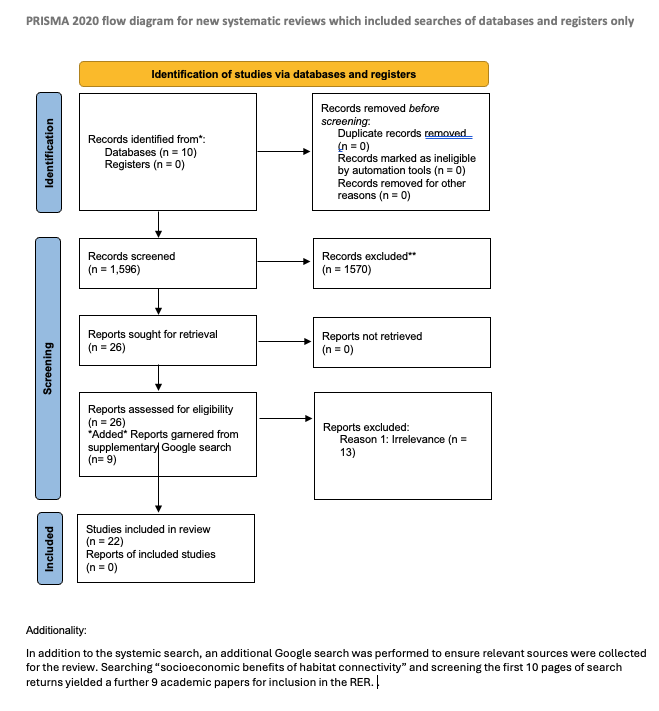
Figure 2: PRISMA 2020 flow diagram for new systemic reviews which included searches of databases and registers only.
Note: In addition to the systemic search, an additional Google search was performed to ensure relevant sources were collected for the review. Searching ‘socioeconomic benefits of habitat connectivity’ and screening the first 10 pages of search returns yielded a further nine academic papers for inclusion in the RER.
Rapid evidence review search terms
[1] “nature network*” OR (nature NEAR/5 network*) OR “habitat networks” OR (habitat NEAR/3 connect*) OR “habitat defragmentation” OR “ecological network*” OR (“protected area*” NEAR/3 network*) “green bridge*” OR ((nature OR wildlife OR habitat OR ecological NEAR/2 corridor*)) (Topic); [2] benefit* NEAR/15 (socioeconomic OR economic OR public OR people OR communit* OR sociocultural OR societal OR social OR “climate adaptation” OR recreation*) (Topic); [3] “co benefit*” OR “wider benefit*” OR “multiple benefits” (Topic); [4] ecotourism OR “social capital” OR “social connectedness” OR health OR wellbeing OR “well being” (Topic); [5] climate NEAR/3 (adaptation OR mitigation OR resilience) (Topic); [6] flood NEAR/2 (alleviation OR mitigation) (Topic); [7] carbon NEAR/3 (capture OR store OR storage) (Topic); [8] “clean water” (Topic); [9](provide OR provision OR improve* OR increas*) NEAR/2 “ecosystem service*” (Topic); [10] #2 OR #3 OR #4 OR #5 OR #6 OR #7 OR #8 OR #9; [11] #10 AND #1
Case Study methodology
The main research method used to conduct case studies was interviews with key stakeholders and those who have interacted with the nature networks. Ethical approval was sought and received by the University of Glasgow College of Social Sciences’ ethics committee. These interviews were garnered via the author’s own networks, Scottish government colleagues’ networks, and snowballing. Each interview participant was presented with a data protection policy info sheet, a participant info sheet, and a consent form, which they signed and returned to indicate their willingness for their interviews to be recorded and used as data.
Interview questions followed roughly the same question topics, but each interview participant was asked bespoke questions based on their positions.
Example interview schedule
Please introduce yourself to me including your organisation, role, and specific work on your nature network
At what stage of development/age is your nature network? How would you describe its level of implementation/embeddedness?
We know that nature networks are important for biodiversity, but were there any other reasons that this nature network was implemented, particularly in terms of human/community benefits?
Does the community get involved in decision-making or implementation? Could this be improved?
How aware would you say the community is of the nature network? How do people in the community interact with the nature network? What would you say community members most “get out” of the nature network?
Does your nature network play a notable role in climate change adaptation, for instance in preventing or dealing with flooding?
Do community members, local businesses benefit from this? If so, how?
How would you say that local businesses/ the local economy interacts with/gets out of the nature network?
What other types of economic benefits have you observed as a result of the nature network? (i.e. preventing expenses incurred from flooding; driving up visitors to the area who interact with the local economy, etc)?
Have you observed any unexpected benefits to the community as a result of the nature network?
What evidence of socioeconomic benefits would be most useful to your organisation (or your local authority, etc) in order to support increased implementation of nature networks?
Have you observed any resistance to/barriers to the implementation of your nature network, in or out of your organisation? If so, what do you think could overcome these?
Is there particular evidence of benefits that could mitigate opposition?
Has your Nature Network (or any related projects habitat connectivity projects) conducted any reporting on impacts/benefits that you could share with me?
Interview methodology
Ethical approval to carry out this research was granted by the University of Glasgow College of Social Sciences on 18 November 2025. Interviews were conducted via MS Teams, and were recorded with participants’ consent. Teams auto-transcription feature was used to generate a transcript of each interview. These were reviewed by the research team, and corrections were made manually to any errors in the automated transcript. These transcripts were converted to PDF or Word document files. Content analysis of these documents was processed using the software NVivo, and was carried out by research team members.
Analysis pulled quotes from interviews which fit into the following categories in each case study: nature network level of implementation, governance and community involvement, existing measurement or evaluation, ecosystem services, health and wellbeing, communities and people, economic, climate adaptation and resilience, complexities or lack of benefits, capacity, money, awareness/participation, benefits trade-offs or lack of benefits.
How to cite this publication:
Salamon, H. (2026) ‘Assessing the Socioeconomic Benefits of Nature Networks’, ClimateXChange. DOI: https://doi.org/10.7488/era/7510
© The University of Edinburgh, 2026
Prepared by University of Glasgow on behalf of ClimateXChange, The University of Edinburgh. All rights reserved.
While every effort is made to ensure the information in this report is accurate, no legal responsibility is accepted for any errors, omissions or misleading statements. The views expressed represent those of the author(s), and do not necessarily represent those of the host institutions or funders.
This work was supported by the Rural and Environment Science and Analytical Services Division of the Scottish Government (CoE – CXC).
ClimateXChange
Edinburgh Climate Change Institute
High School Yards
Edinburgh EH1 1LZ
+44 (0) 131 651 4783
If you require the report in an alternative format such as a Word document, please contact info@climatexchange.org.uk or 0131 651 4783.